I was 20 when I wrote this piece back in 1995 for The Elvis Beat #11, my official Elvis Presley Fan Club newsletter. You can save your Elvis stamps, as there is no need to send any letters. Spoiler alert: Elvis would be inducted into the Country Music Hall of Fame in 1998.
When Elvis Presley first started in the music business, he owed country music a small debt of gratitude, for his rockabilly style had been derived from a combination of country, rhythm & blues, and gospel music. Forty-one years later, it is country music that owes Elvis Presley a debt of gratitude.
At the Country Music Hall of Fame & Museum in Nashville, there are many Elvis items on display. However, despite these exhibits, Elvis has not been inducted into the Country Music Hall of Fame.
There was never any doubt that Elvis would become a part of the Rock ‘n’ Roll Hall of Fame, and indeed he was among the first so honored. But has Elvis contributed enough to country music to become a part of that hall of fame as well?
From the very beginning, Elvis’ music was recognized on the Billboard country charts. In fact, Elvis achieved his first top ten hit on any chart when “Baby, Let’s Play House” hit #10 on the Country Best-Seller chart and #5 on the Country Disc Jockey chart in July 1955. Elvis was four months away from signing with RCA and was still recording on Memphis’ Sun record label.
Many have been led to believe that “Heartbreak Hotel” was Elvis’ first number one hit, however his first number one was actually an RCA re-issue of “I Forgot To Remember To Forget,” which topped both the Country Best-Seller and Country Disc Jockey charts in February 1956.
Over the years, Elvis has scored 29 top ten hits on the country charts, including 11 number ones. Appropriately, Elvis’ last number one hit on any chart occurred in 1981 when a re-mix of his “Guitar Man” attained the position on the Country chart.
Although influenced by country music, most of Elvis’ 1954-1960 recordings were either rockabilly or rock ‘n’ roll songs. For most of the 1960s, Elvis’ music suffered since many of his releases were from the frequently poor soundtracks of his movies. His non-soundtrack material, which included gospel and slow-tempo songs, was notable but often lost among the enormous number of movie tunes. With the advent of the Beatles and others, rock music drastically changed, and it seems Elvis never truly identified with it again.
In September 1967, Elvis began to rebuild his music career and the logical place to start was by returning to his country roots. At the Nashville recording session, with country legend Jerry Reed on lead guitar, Elvis sounded better than ever. His selection of songs included “Guitar Man” and “Just Call Me Lonesome” and indicated a new direction for him.
From this point on, Elvis began leaning more towards recording country-type songs in his own unique style, rather than catering to the rock or even country music of the day. Elvis pointed out in 1970 that he did not consider himself strictly a country music singer, and he certainly was not. He continued to record pop, gospel, rhythm & blues, as well as the occasional rock ‘n’ roll song.
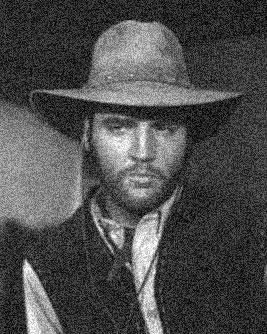
Elvis Presley in 1968. Although he has 29 top ten hits on BILLBOARD’s country charts, he is not a member of the Country Music Hall of Fame (Original Photo Credit: Greg Howell/GRACELAND EXPRESS)
However, the majority of Elvis’ 1967-1976 studio recordings could be considered country songs, or at least derived from the style. These recordings really did not quite fit the label of “country” in the 1970s, for once again Elvis had redefined music and was ahead of the times.
Although he was among its early pioneers, Elvis’ influence on modern rock music is not often easily detected. Rock has gone off on its own and often takes paths that Elvis probably would have avoided.
It is modern country music in which Elvis’ influence can still loudly be heard. His music from the last ten years of his life has grown into today’s country music. Indeed, many of its greatest stars often acknowledge Elvis as an influence, including Garth Brooks, Vince Gill, Travis Tritt, Trisha Yearwood, Ricky Van Shelton, Ronnie McDowell, Aaron Tippin, Patty Loveless, Dwight Yoakam, Tanya Tucker, Billy Ray Cyrus, Mark Chesnutt, Pam Tillis, Marty Stuart, Faith Hill, Doug Supernaw, Wynonna Judd, and the Mavericks. Although Elvis has been gone for almost 18 years, these stars and others continue to incorporate parts of Elvis’ style into their own.
Elvis has found a home in modern country music. He has been accepted by both its performers and its fans at a time when he is often shunned by others. It is time to make this home a permanent one.
In 1954, Elvis was rejected by the Grand Ole Opry. Will the Country Music Hall of Fame make the same mistake?
Join the campaign
Don’t let the Country Music Foundation continue to gloss over Elvis and his achievements. The Foundation will ultimately decide if Elvis will be inducted into the Country Music Hall of Fame. Write them a letter today expressing your opinion. The address is: [. . .].
Discover more from The Mystery Train
Subscribe to get the latest posts sent to your email.
 The Mystery Train