IF I CAN DREAM Promises yet Another Elvis Illusion [Pastimescapes blog]

Released last week, the If I Can Dream CD includes a sticker on its cover touting:

ELVIS IS BACK WITH A BRAND NEW ALBUM!
Newly Recorded with the Royal Philharmonic Orchestra

I wish that were so. Instead, If I Can Dream, of course, features familiar Elvis Presley vocals placed against new audio backdrops supplied by the Royal Philharmonic Orchestra (RPO).

Some Elvis fans are automatically against this sort of concept, which has been tried with varying degrees of success a number of times since the artist passed away in 1977.

Just to name a few:

  • 1980’s Guitar Man album of overdubs (“remixes”)
  • 2002’s “A Little Less Conversation” JXL remix
  • 2008’s Christmas Duets album of artificial duets and remixes
  • 2010’s Viva Elvis album of remixes and artificial duets

The underlying goal of most of these projects is to help attract a new audience for a singer no longer around to promote his own work or create contemporary recordings. A secondary goal, of course, is to give something “new” to his existing fans.

As for me, I have nothing against creating new art through the use of old. I try to approach each of these new takes on Elvis with an open mind. As long as the original Elvis versions remain available, then I think it is fine to experiment. In fact, it is often fun to hear Elvis in a new context, and if it brings along a few new fans, all for the better.

With all of that out of the way, I have to admit, the first time I played through Sony’s If I Can Dream on Friday, I was underwhelmed. Having one of the great rock ‘n’ roll songs of all time, “Burning Love,” preceded by an orchestral introduction seemed incongruous.

Should rock ‘n’ roll mix with orchestra? This is a debate that goes back to at least 1968 for Elvis fans – for If I Can Dream is hardly the first Elvis album to include an orchestra. Many of his actual recordings featured orchestral backing, including some of the ones on this very release. I have tended to be in favor of a full sound on appropriate songs.

I also love orchestral music in general, having been introduced to it at a young age by the Star Wars and Superman soundtracks of John Williams, which led me to start exploring true classical music in more recent years. Add that to the fact that I am a lifelong Elvis fan, and I should be a natural fit for this album.

Yet, from that first listen, I walked away thinking If I Can Dream was barely a mediocre effort overall. It seemed neither as creative as Viva Elvis nor as entertaining as “A Little Less Conversation.”

I tried If I Can Dream a second time on Saturday, and something snapped into place for me. The first time, I was thinking of it as an Elvis album to which the RPO had been added. For the second listen, I thought of it as an RPO album to which Elvis had been added. A subtle difference, I know, but it is one that made me listen in a different way.

I closed my eyes and imagined I was sitting in Cadogan Hall listening to the RPO perform in London, with a surprise guest vocalist by way of Memphis.

Suddenly, it did not seem weird for “Burning Love” to include an orchestral introduction, for how else would the RPO begin one of their performances?

Prior to this album’s release, I saw a promotional video of Elvis singing “What Now My Love,” with the RPO providing orchestral backing (a track not included here). In some ways, I would say that video did this album no favors, for the impression I had with “What Now My Love” was two different recordings of the same song playing at the same time. Fortunately, that is not how the If I Can Dream album sounds. Instead, the meld is usually natural.

For instance, Michael Bublé features in a duet on “Fever.” While I would have preferred a female counterpart for that particular song (say, Beyoncé), the duet is quite convincing from a technical standpoint – much more convincing than what I can remember of 2008’s Christmas Duets (not an album I often revisit).

Bublé turns in a fine performance, and their voices blend particularly well on “Everybody’s got the fever, that is something you all know…” as if they are standing next to one another. Think Elvis and Frank Sinatra in their real-life duet on the last lines of “Love Me Tender” in 1960. The novelty factor makes “Fever” the highlight of the album.

The distinctive sound of an Elvis contemporary and fellow rockabilly legend is included in new guitar work on “Bridge Over Troubled Water” and “An American Trilogy.” A nice surprise that I will not otherwise spoil here.

The orchestral concept works extremely well for several other songs. “How Great Thou Art” is stunning in its fully orchestrated version. The original is a true Elvis masterpiece, so there was certainly danger in changing anything.

“Love Me Tender” and “It’s Now Or Never” are also highlights, with the latter featuring Il Volo on new background vocals.

None of these versions exceed the originals (“There’s Always Me” comes closest), but that does not make them any less enjoyable as new experiences.

Not as successful are “In The Ghetto” (less is always more on accompaniment for this song, as guitar-only outtakes have proven) and “Steamroller Blues” (way too much going on).

The real puzzler of If I Can Dream is the choice of “And The Grass Won’t Pay No Mind,” an awful song in its original master version to which even the RPO can add no favors.

Beyond that, my only real gripes are with the “additional backing vocals” newly supplied by Miriam Grey, Shena Winchester, and Andy Caine on nearly all of the tracks. I would have preferred the original backing vocals (the Sweet Inspirations, J.D. Sumner and the Stamps, the Imperials, etc.) remained prominent in the mix, as the new ones only detract from the experience. Perhaps there was some technical limitation that necessitated this, or maybe it is just the nature of a pseudo-new album.

As emblazoned on its sticker, If I Can Dream offers up the promise of illusion delivered via the magic of technology. From that perspective, the album usually makes good on its word.

For a moment, if you are willing to accept the mirage, Elvis is indeed back.

Overall Rating: 7 out of 10.

IF I CAN DREAM (2015)

IF I CAN DREAM (2015)

Tracks

If I Can Dream
Elvis Presley with the Royal Philharmonic Orchestra

  1. Burning Love [Elvis portions recorded March 28, 1972, Hollywood]
  2. It’s Now Or Never [Elvis portions recorded April 3, 1960, Nashville]
  3. Love Me Tender [Elvis portions recorded August 24, 1956, Hollywood]
  4. Fever (with Michael Bublé) [Elvis portions recorded April 3, 1960, Nashville]
  5. Bridge Over Troubled Water [Elvis portions recorded June 5, 1970, Nashville]
  6. And The Grass Won’t Pay No Mind [Elvis portions recorded February 17, 1969, Memphis]
  7. You’ve Lost That Lovin’ Feelin’ [Elvis portions recorded live August 12, 1970, Dinner Show, Las Vegas]
  8. There’s Always Me [Elvis portions recorded March 12, 1961, Nashville]
  9. Can’t Help Falling In Love [Elvis portions recorded March 23, 1961, Hollywood]
  10. In The Ghetto [Elvis portions recorded January 20, 1969, Memphis]
  11. How Great Thou Art [Elvis portions recorded May 25, 1966, Nashville]
  12. Steamroller Blues [Elvis portions recorded live January 14, 1973, Honolulu]
  13. An American Trilogy [Elvis portions recorded live February 15, 1972, Midnight Show, Las Vegas, and January 14, 1973, Honolulu]
  14. If I Can Dream [Elvis portions recorded June 23, 1968, Burbank]

The Royal Philharmonic Orchestra recorded December 10, 2013, and April 9-10, 2014, at Abbey Road Studio 2, London.
MORNING SKY by Elvis Presley (Playlist Recipe)[Pastimescapes blog]

One of the things I enjoy doing in iTunes is creating playlists for my iPod. Below is the recipe for one I recently baked. For fun here on Pastimescapes, I have divided it up as an imaginary 2-record set.

All songs are the master versions, unless otherwise indicated. For those Elvis fans baking along at home, feel free to substitute your favorite version if you are missing a specific ingredient, as I know everyone’s spice collection is slightly different.

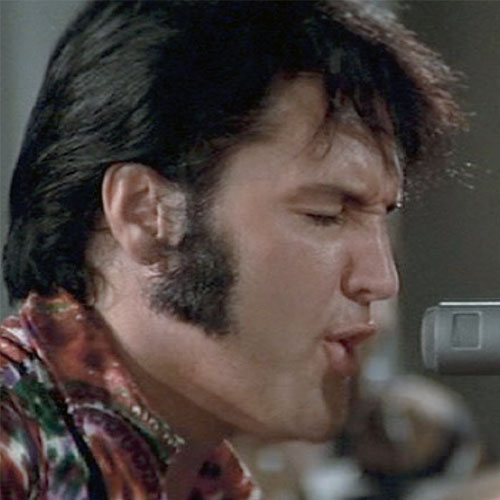
Elvis Presley in 1970

Morning Sky – Elvis Presley

Side A

  • Burning Love
  • Early Morning Rain
  • Where Did They Go, Lord
  • I’m Leavin’
  • We Can Make The Morning
  • The First Time Ever I Saw Your Face (Rehearsal) [Elvis On Tour: The Rehearsals]

Side B

  • I Shall Be Released (Informal) [Walk A Mile In My Shoes]
  • Don’t Think Twice, It’s All Right (Informal-Master, Extended, Alternate Mix) [Our Memories Of Elvis: Volume 2]
  • It’s Only Love
  • For Lovin’ Me
  • It’s Still Here (Master, Extended, Alternate Mix) [Walk A Mile In My Shoes]

Side C

  • I Just Can’t Help Believin’ (Live) [That’s The Way It Is (2014 Deluxe Edition) (Disc 5)]
  • Patch It Up (Live Master, Alternate Mix) [That’s The Way It Is (2014 Deluxe Edition) (Disc 5)]
  • I’ve Lost You (Live Master, Alternate Mix) [That’s The Way It Is (2014 Deluxe Edition) (Disc 3)]
  • You’ve Lost That Lovin’ Feelin’ (Live) [That’s The Way It Is]
  • Johnny B. Goode (Rehearsal) [Elvis On Tour: The Rehearsals]

Side D

  • Separate Ways
  • My Way [Walk A Mile In My Shoes]
  • Whole Lotta Shakin’ Goin’ On (Master, Alternate Mix) [Walk A Mile In My Shoes]
  • Amazing Grace
  • For The Good Times (Re-recording) [Elvis On Tour: The Rehearsals]
  • Always On My Mind (Re-recording/Overdubbed) [This Is Elvis]

Download the End of Lonely Street: Top 5 Elvis Starter Albums on iTunes [Pastimescapes blog]

While I buy much of my music online these days, the overwhelming majority of my Elvis Presley purchases continue to be in the form of CDs.

The times I tend to download Elvis are when I only need a few tracks from a new album or set. For instance, I purchased a December 15, 1956, concert and various non-music tracks as online downloads from the Young Man with the Big Beat: The Complete ’56 Elvis Presley Masters set a few years back, as I already owned all of the other content.

However, iTunes and other online music stores certainly present great oppotunities to find jumping-on places for many artists, including Elvis. With that in mind, I thought I would take a look at the current iTunes offerings and suggest various starting points for exploring the music of Elvis Presley.

There are many possible paths when first listening to Elvis. The below starter albums represent only a few of those possibilities, focusing on different aspects of his career, avoiding duplication, and keeping a maximum $10 US budget in mind.

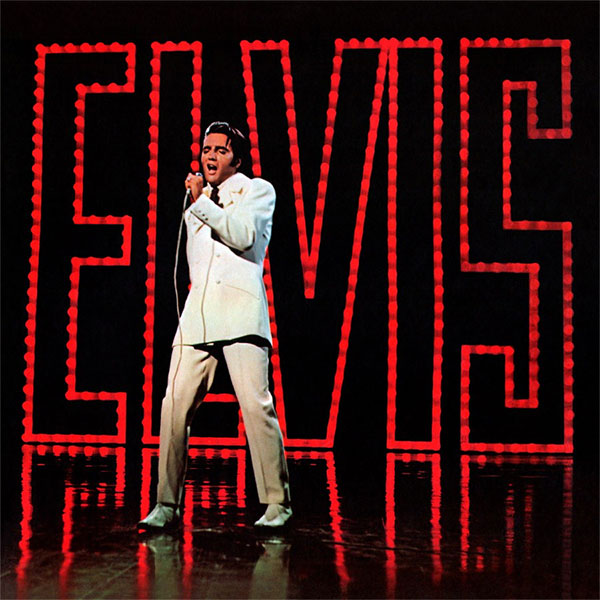
Cover of ELVIS-TV SPECIAL (1968 album)

1968’s ELVIS-TV SPECIAL is a strong starter album for those new to Elvis Presley.

#1 ELVIS-TV Special

This is the soundtrack of the 1968 television special that marked a turning point for Elvis. As he finally began to break away from repetitive movies that dominated so much of his 1960s career, he adopted a new, mature sound on songs like “If I Can Dream” and reinterpreted many of his older hits, such as a pounding version of “Heartbreak Hotel.”

The ELVIS-TV Special album thus serves both as an overview of his career to that point as well as a navigation beacon for the direction of his future, reinvigorated work.

#2 Promised Land (Expanded)

The first ten tracks of this release represent the original Promised Land album proper. Recorded in 1973 at Stax Studios in Memphis, Promised Land features a perfect blend of rock ‘n’ roll (the title track), country (“It’s Midnight”), and inspirational (“Help Me”).

This 2000 expanded edition includes several tracks from the inferior Good Times album, recorded at the same sessions. While this has the benefit of adding choice cuts “Good Time Charlie’s Got The Blues,” “Lovin’ Arms,” and “My Boy,” it also detracts by including clunkers “She Wears My Ring,” “If That Isn’t Love,” and “I Got A Feelin’ In My Body.”

#3 Elvis At Sun

Whoever decided to lead off this collection of Elvis’s earliest professional recordings with the lightweight “Harbor Lights” and nearly unlistenable “I Love You Because” allowed recording order to dictate over common sense and entertainment value. Producer and SUN founder Sam Phillips wisely rejected both of these cuts. Had they become Elvis’s first record, there might not have been a second.

Elvis then “stumbled upon” what became his first single, “That’s All Right” b/w “Blue Moon of Kentucky,” which should have started this collection of 1954-1955 recordings. Despite the sequencing issues, Elvis At Sun is a stellar release, with career highlights including “Mystery Train,” “Baby, Let’s Play House,” “Good Rockin’ Tonight,” “That’s All Right,” “Blue Moon,” and “Tryin’ To Get To You.”

There is a certain appeal to starting an Elvis musical journey at the literal beginning, and this 2004 release does a fine job without delving too far into outtakes and alternates best left for more seasoned fans.

#4 Elvis’ Golden Records

Essentially picking up where Elvis At Sun left off, Elvis’ Golden Records captures the singer in his early years at RCA Records. These 1956-1957 recordings include many of his best known hits.

Along with his SUN records, these cuts represent some of his most influential work. Every song here is a classic, but “Jailhouse Rock” and “Love Me” manage to shine even among the top-notch competition.

#5 From Elvis In Memphis

After the success of the ELVIS television special in 1968, Elvis recorded for the first time in Memphis since his SUN days. His 1969 recordings at American studios eventually produced two albums and several singles.

From Elvis In Memphis was easily the strongest of the two albums and certainly one of the best of his career. Stand-outs include “Power Of My Love,” “Wearin’ That Loved-On Look,” “After Loving You,” “Any Day Now,” and “Long Black Limousine.”

The End of Elvis Was Only the Beginning [Pastimescapes blog]

While the soundtrack of my life has varied over the years, there has been one constant – Elvis Presley.

Some of my earliest memories involve listening to 45-RPM Elvis records that Mom played loudly on her record player console. I was about 2-years-old.

This was not only a record player, but also a massive piece of wooden furniture with record storage and integrated speaker(s). You could also stack albums or singles so that it automatically played the next record after one finished.

Years later, that console finally gave out, and we dumped it to free up space. How I wish we had saved it.

I must have fancied myself quite the Elvis impersonator as a toddler, because I remember singing along to those records while holding a blue stick with a red ball on top – a toy’s handle that served as my “microphone.” To “dance,” I simply turned around in circles. Sadly, my dance moves have not improved since then.

Another early memory is Mom crying as she told me that Elvis had died. At 2, I did not really understand death. I believe she explained it to me as a kind of permanent sleep. She probably mentioned Heaven, too. I do not remember for sure.

What I do remember for sure, though, was the innocent question I asked next, “Will his voice still be on the records?” My heart sank as I imagined playing records of silence.

“Yes, his voice will always be there,” Mom said. This made me feel better.

I remember our family watching press conferences and tributes that night. There was more talking than music, and I understood little of the talking.

I remember watching the funeral procession with Mom a couple of days later on TV. Reporters wore large headsets with microphones, as if covering a sports event.

Surrounded by motorcycle officers, a white hearse led a trail of white cars from Graceland, while thousands of people lined the streets of Memphis trying to catch a final glimpse.

From that moment on, Elvis was gone forever.

Gone, but the story continued.

Goodbye From Elvis

Goodbye From Elvis

Yesterday marked 38 years since Elvis passed away. Along with millions of others, that little 2-year-old is still listening.

Due to alternate takes, outtakes, and live recordings, exponentially more Elvis music has been released since his death than ever came out during his lifetime.

I own over 4,000 different Elvis tracks. If I were to play Elvis constantly without sleeping, I could go for over a week without hearing a duplicate track.

This is a staggering number, yet I do not even have every Elvis track officially available. Not even close.

When it comes to the music, it truly is as if Elvis never died.

After 38 years, that magic vault of unreleased music is no doubt starting to look barren. However, I believe there will still be a few genuine Elvis surprises to emerge in coming years.

If I am wrong, and all the valuables have already escaped, it is hard to dispute that 38 years makes for a long encore.

Besides, as a wise woman once said, “His voice will always be there.”