Valley Of Echoes

You’re traveling through a curious dimension of ideas . . . the edge of reality.
 Where Nothing's Real - Artwork created for The Mystery Train with assistance from ChatGPT

“Where Nothing’s Real” (Artwork created for The Mystery Train with assistance from ChatGPT)

The Elvis Odyssey

Part IV: Valley of Echoes

It is a time of transition. Fresh from two years of military service, Elvis Presley has returned to the top of the music world, his voice more powerful than ever.

As the industry begins to shift, however, a quiet threat emerges. Lucrative movie deals bring steady success, but at the cost of creative fire.

For loyal fans, glimpses of the dwindling spark that once ignited almost every recording can still shine through. . . .

Listen along on Spotify.

#145 I’m Comin’ Home (1961)
Something For Everybody
Nashville, TN

This song. Wow, just wow. Give me a second, I need to turn the jukebox up again.

I’ve loved “I’m Comin’ Home” since first hearing it in 1987. Floyd Cramer’s magnificent piano absolutely drives this one. The song takes interesting lyrical turns between an almost blues quality and a hopeful note.

This stretch of three songs–“I’m Comin’ Home” through “I Want You With Me”–is another of my favorite sequences in The Elvis Odyssey. All three were recorded in March 1961 at RCA’s Nashville studio.

#146 I Feel So Bad (1961)
I Feel So Bad (Single)
Nashville, TN

“I Feel So Bad” peaks at #5.

In the stereo version of “I Feel So Bad,” listen out for the sax of Boots Randolph moving from left to center in the midst of his solo. This was reportedly due to Elvis being so enthralled by Randolph’s performance that he walked over to him, causing the sax to be picked up through his vocal microphone.

#147 I Want You With Me (1961)
Something For Everybody
Nashville, TN

More Cramer goodness on piano here. That man could play! You’ll hear him on many songs in today’s segment of The Elvis Odyssey. Elvis was blessed to be able to surround himself with top-notch musicians for most of his recordings.

#148 No More (1961)
Blue Hawaii
Hollywood, CA

As Elvis soundtrack albums go, Blue Hawaii is certainly one of the better ones. It is cohesive and has several great songs.

#149 Can’t Help Falling In Love (1961)
Blue Hawaii
Hollywood, CA

“Can’t Help Falling In Love” peaks at #2.

#150 Rock-A-Hula Baby (1961)
Blue Hawaii
Hollywood, CA

After recording the Blue Hawaii soundtrack in Hollywood, Elvis arrives in Hawaii. Before location shooting begins, he performs a benefit concert for the USS Arizona Memorial at Pearl Harbor, which gives the long-stalled tribute to fallen heroes the final push it needs after more than a decade of fundraising struggles.

#151 His Latest Flame (1961)
His Latest Flame (Single)
Nashville, TN

“His Latest Flame” peaks at #4.

#152 Little Sister (1961)
His Latest Flame (Single)
Nashville, TN

“Little Sister” peaks at #5.

#153 Follow That Dream (1961)
C’mon Everybody
Nashville, TN

#154 Good Luck Charm (1961)
Good Luck Charm (Single)
Nashville, TN

“Good Luck Charm” earns Elvis a number one hit.

#155 Night Rider (1961)
Pot Luck With Elvis
Nashville, TN

“Night Rider” is yet another stellar Elvis album cut that should have been a single.

#156 King Of The Whole Wide World (Alternate-1961)
Return Of The Rocker16
Hollywood, CA M7-Take 4 [unedited master]

This extended version of “King Of The Whole Wide World” included the full Randolph sax solo that was unfortunately truncated in the released master.16A Randolph was another key session player from this period that featured on a number of highlights from this timeframe.

#157 You’ll Be Gone (1962)
Do The Clam (Single)
Nashville, TN

I’m not saying that “You’ll Be Gone” would have lit up the charts when it was finally released in 1965, but surely it would have made a better A-Side than “Do The Clam” from the Girl Happy movie? Of course, that would have gone against the approach of Elvis’ manager, Tom Parker, to let the music sell the movies and the movies sell the music.

#158 Suspicion (1962)
Pot Luck With Elvis
Nashville, TN

#159 She’s Not You (1962)
She’s Not You (Single)
Nashville, TN

“She’s Not You” peaks at #5.

#160 Return To Sender (1962)
Return To Sender (Single)
Hollywood, CA

“Return To Sender” peaks at #2.

Elvis: “I’d like to do something someday where I feel that I’ve really done a good job as an actor in a certain type role, but I feel that it comes with time and a little living and a few years behind you. I think that, really. I think that it will come, eventually. That’s my goal.”AF

#161 Bossa Nova Baby (1963)
Bossa Nova Baby (Single)
Hollywood, CA

“Bossa Nova Baby” peaks at #8.

#162 Devil In Disguise (1963)
Devil In Disguise (Single)
Nashville, TN

“Devil In Disguise” peaks at #2.

#163 Witchcraft (1963)
Bossa Nova Baby (Single)
Nashville, TN

#164 Long Lonely Highway (1963)
I’m Yours (Single)
Nashville, TN

Elvis: “[My mother] never really wanted anything, anything fancy. She just stayed the same all the way through the whole thing. I wish–there’s a lot of things happened since she passed away that I wish she could have been around to see that would’ve made her very happy and very proud, but that’s life. I can’t help it.”AG

#165 Viva Las Vegas (1963)
What’d I Say (Single)
Hollywood, CA

The fact that a stone-cold Elvis classic like “Viva Las Vegas” was apparently released as a B-Side to an inferior cover of a Ray Charles tune boggles my mind.16B

#166 It Hurts Me (Alternate-1964)
Kissin’ Cousins (Single-Italy)16C
Nashville, TN [master, alternate mix]

From “It Hurts Me”: “If you ever tell him you’re through, I’ll be waiting for you. Waiting to hold you so tight. Waiting to kiss you goodnight. Yes, darling, if I had someone like you.”

Elvis is now averaging three movies a year. His music begins to take a backseat to those demands. Other than three songs recorded in January 1964, including “It Hurts Me,” 1964-1965 consists only of movie soundtrack sessions for Roustabout, Girl Happy, Harum Scarum, Frankie and Johnny, and Paradise, Hawaiian Style.17

Meanwhile, the Beatles arrive in America and begin the “British Invasion” with an appearance on the Ed Sullivan Show in February 1964.

Elvis: “At a certain stage, I had no say-so in it. I didn’t have final approval of the script, which means I couldn’t say, ‘This is not good for me.’ . . . I don’t think anybody was consciously trying to harm me. It was just Hollywood’s image of me was wrong, and I knew it, and I couldn’t say anything about it. I couldn’t do anything about it.AH

#167 Run On (1966)
How Great Thou Art
Nashville, TN

In 1966, Elvis’ passion for music finally begins to re-emerge with the recording of How Great Thou Art, a gospel album that earns him his first Grammy Award.

Elvis: “Gospel is really what we grew up with, more than anything else.”AI

#168 In The Garden (1966)
How Great Thou Art
Nashville, TN

#169 Indescribably Blue (1966)
Indescribably Blue (Single)
Nashville, TN

“Indescribably Blue” is one of those midnight brooding Elvis songs, in the vein of “Blue Moon” or “Mystery Train.”

On May 1, 1967, 32-year-old Elvis marries Priscilla Beaulieu in Las Vegas, shortly before her 22nd birthday.

#170 You Don’t Know Me (1967)
Elvis Sings Guitar Man
Nashville, TN

#171 Speedway (1967)
Speedway
Hollywood, CA

Elvis: “I was doing a lot of pictures close together. And the pictures got very similar. A lot of them got very similar. If something was successful, they’d try to re-create it the next time around. So, I’d read the first four or five pages, and I knew it was just a different name with twelve new songs in it. The songs were mediocre in most cases. You can’t get good songs.”AJ

#172 Suppose (Alternate-1967)
Double Features: Easy Come, Easy Go/Speedway
Hollywood, CA Take 1

#173 Guitar Man (1967)
Clambake
Nashville, TN

When no one can duplicate rising country star Jerry Reed’s original guitar style for Elvis’ cover of his “Guitar Man,” producer Felton Jarvis calls in Reed himself, who then plays in a couple of Elvis sessions.

#174 Mine (1967)
Speedway
Nashville, TN

#175 High Heel Sneakers (1967)
Guitar Man (Single)
Nashville, TN

With “High Heel Sneakers,” we hear a hint of the raw, bluesy voice that Elvis will spotlight in his 1968 television special.

#176 Singing Tree (1967)
Clambake
Nashville, TN

#177 You’ll Never Walk Alone (Alternate-1967)
A Life In Music
Nashville, TN Take 2

“You’ll Never Walk Alone” features Elvis on the piano, and in this alternate take he just won’t let the song go. A beautiful performance. While “You’ll Never Walk Alone” is technically a non-secular song, Elvis transforms it into a spiritual song of inspiration.

#178 All I Needed Was The Rain (1967)
Singer Presents Elvis Singing Flaming Star And Others
Nashville, TN

Elvis: “I was never indifferent [about the movies]. I was so concerned until that’s all I talked about. It worried me sick. . . . It was nobody’s fault except maybe my own. I didn’t know what to do. I just felt I was obligated very heavy at times to things I didn’t fully believe in, and that was very difficult.”AK

#179 Stay Away (1968)
US Male (Single)
Nashville, TN

On February 1, 1968, Lisa Marie Presley is born in Memphis to Priscilla and Elvis.

#180 Wonderful World (1968)
Singer Presents Elvis Singing Flaming Star And Others
Hollywood, CA

From “Wonderful World”: “Heaven is found right here on the Earth. It surrounds us in wonderful things all around in this wonderful, wonderful, wonderful, wonderful world.”

#181 Edge Of Reality (Alternate-1968)
Double Features: Live A Little, Love A Little / Charro / The Trouble With Girls / Change Of Habit
Hollywood, CA [unedited master]

Elvis: “So, I had thought they would try to get a new property for me or give me a chance to show some kind of acting ability or do a very interesting story, but it did not change. It did not change. And so I became very discouraged. They couldn’t have paid me no amount of money in the world to make me feel any self-satisfaction inside.”AL

#182 A Little Less Conversation (Alternate-1968)
Memories
Hollywood, CA Take 2 [acetate version]18

Recorded for the movie Live A Little, Love A Little, the single version of “A Little Less Conversation” barely makes it into the top 70.

With Elvis’ movies and records no longer attracting the audiences they once did, no one is sure how an upcoming television special devoted to the star will turn out.

Elvis Presley will return in The Elvis Odyssey Part V: Electric Dawn.


Assorted Rambles

16Return Of The Rocker (1986) was the first Elvis album I ever personally owned. I was 11-years-old. It obviously influenced me for I realized just now that all 12 songs on that compilation made The Elvis Odyssey. Not even That’s The Way It Is, another favorite album of mine, can say that.

Return Of The Rocker is another well-edited and sequenced release from the Gregg Geller era. It really is a perfect compilation of the 1960-1963 timeframe for Elvis, managing to blend his soundtrack and non-soundtrack recordings in an effective way.

While Ernst Jorgensen’s much broader ELVIS: From Nashville To Memphis – The Essential 60s Masters I (1994) was revelatory in that it resurrected tons of Elvis’ non-soundtrack recordings from being filler cuts on albums otherwise devoted to often poor movie tunes, it also can feel a bit antiseptic. Intersperse the tracks of ELVIS: Command Performances – The Essential 60s Masters II into the former’s sequence, though, for quite a different and improved listening experience. Adhering so strictly to the 5-CD format established by the ’50s set was a detriment to both the ’60s and ’70s sets.↩︎

16AThough I don’t know that it was really publicized at the time, Return Of The Rocker actually featured the debut of this extended master of “King Of The Whole Wide World” with the full concluding sax solo by Randolph. The standard version fades way too early and always sounds incomplete to me. Unfortunately, Spotify had only the standard master and an inferior outtake to choose from so I went with the standard master on that variant of this playlist.↩︎

16BI say “apparently” because some sources list “Viva Las Vegas” as the A-Side, but I’m going by Ernst Jorgensen’s definitive Elvis Presley: A Life In Music – The Complete Recording Sessions from 1998 for this kind of information. However, I have discovered in life that “definitive” does not always mean “perfect.”↩︎

16CWhen “It Hurts Me” was first released as a single in Italy, it sounded quite different from its U.S. counterpart. It turned out that solely the left channel from the stereo recording had been accidentally used for the mono version in Italy, rather than including the right channel as well. This had the distinct advantage of leaving out the Jordanaires, which makes it my go-to version of the song. Though I had to use the standard version on the Spotify playlist, the standard version actually would not have made The Elvis Odyssey and we would have jumped from 1963 to 1966. ↩︎

171964-1965 was the true nadir of Elvis’ career. Though The Elvis Odyssey is essentially a career-spanning retrospective, it is, admittedly, a bit of a cheat. It is most noticeable here in the “valley.” We skip more than 95% of 1964 and 100% of 1965. I could have included a couple of those songs, I suppose. Despite how bad the movie and most of the tunes are, there are actually two or three good songs on the Paradise, Hawaiian Style album, for instance. But are they better than any of the 200 songs of The Elvis Odyssey? Not to me, anyway. At least not at this time in my life when I am compiling this list.

The problem with skipping all of these low points, though, is that it makes the slow comeback a little less noticeable when playing through. A false impression could be given listening to the tracks the way I have arranged them here that Elvis was solid throughout the 1960s. The thing to keep in mind, though, is that these are the fleeting “glimpses” of his old creative fire that will soon be returning in force. Whereas this 1961–March 1968 stretch produced a whopping 43% of his lifetime studio masters, I’ve cherrypicked to such a degree that this timeframe represents only 19% of the tracks of The Elvis Odyssey.↩︎

18When first released in 1998, this backup acetate recording of “A Little Less Conversation” was reported to be an unused vocal from a remake of the song dropped from Elvis’ 1968 television special. The previously unreleased performance soon took on a life of its own far beyond the original single. It was included in the remake of Ocean’s Eleven (2001) and became the theme song to the television series Las Vegas (2003-2008). It has also shown up in multiple other projects.

In 2002, most notably, the track was remixed by DJ and producer Junkie XL (JXL) for a Nike commercial and later released as a single that topped the charts in multiple countries. While the remix reached only #50 in the US, its inclusion on ELV1S: 30 #1 Hits (2002) helped propel that compilation to the top of the US album charts.

Though it is often still wrongly associated with the June 1968 recordings for the television special, the acetate recording of “A Little Less Conversation” was later revealed to be take 2 from the original March 1968 studio session, whereas the single master had been take 16 from the same date. I have to say, Take 2 has a heck of a lot more bite to it than Take 16 or even Take 10, the version used on the Almost In Love (1970) album. It is unfortunate that the blander takes were chosen for release during his lifetime.↩︎


Sources for Elvis Quotes

AFca. September 1962, Interview, Hollywood, CA↩︎

AGca. September 1962, Interview, Hollywood, CA↩︎

AHca. July 1972 Interview↩︎

AIca. July 1972 Interview↩︎

AJca. July 1972 Interview↩︎

AKca. July 1972 Interview↩︎

ALca. July 1972 Interview↩︎


“But those who trust in the LORD will find new strength. They will soar high on wings like eagles. They will run and not grow weary. They will walk and not faint.”
Isaiah 40:31

Elvis Movies: EASY COME, EASY GO

Up next in my rewatch of Elvis Presley movies is Easy Come, Easy Go – his 23rd movie to be released.


“Excitement! Adventure under the sea! Skin-diving for treasure, adventure and fun!”

Easy Come, Easy Go (Paramount)
Wide Release: March 22, 1967 (United States)
Starring: Elvis Presley, Dodie Marshall, Pat Priest
Screenplay By: Allan Weiss, Anthony Lawrence
Music Score By: Joseph J. Lilley
Produced By: Hal B. Wallis
Directed By: John Rich
Running Time: 95 Minutes


1967’s EASY COME, EASY GO features multiple underwater scenes (Paramount)

Easy Come, Easy Go premiered only two weeks before Double Trouble, which was actually filmed first.

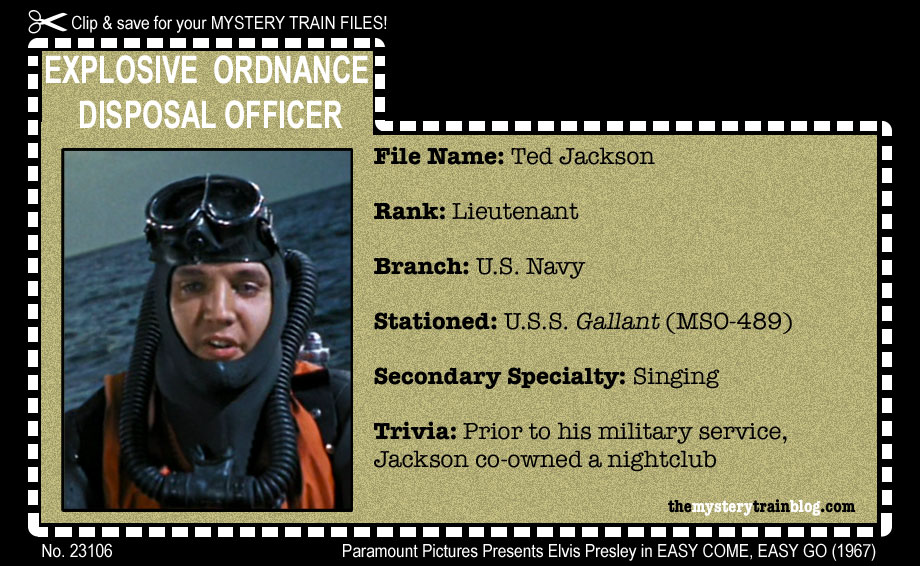
Elvis stars as Lieutenant Ted Jackson, a US Naval officer who serves aboard the USS Gallant, an Aggressive Class minesweeper. Ted is nearing the end of his military service and during his final Explosive Ordnance Disposal (EOD) mission, he discovers a sunken treasure chest. Wealthy Dina Bishop (Pat Priest) skippers a civilian boat in the area and deploys her boy-toy Gil Carey (Skip Ward) to obtain a photo of the Naval officer, interfering with Ted’s work.

Elvis Presley is Ted Jackson and Dodie Marshall is Jo Symington in 1967’s EASY COME, EASY GO (Paramount)

Once he leaves the Navy, Ted is determined to raise the treasure chest. He enlists help from Judd Whitman (Pat Harrington) and Jo Symington (Dodie Marshall). Ted was former partners with Judd in a nightclub business, while Jo is a free spirit looking to open an art center with her share of the pending fortune. Both Marshall and Harrington are strong in their roles. Marshall, in particular, brightens the movie whenever she appears.

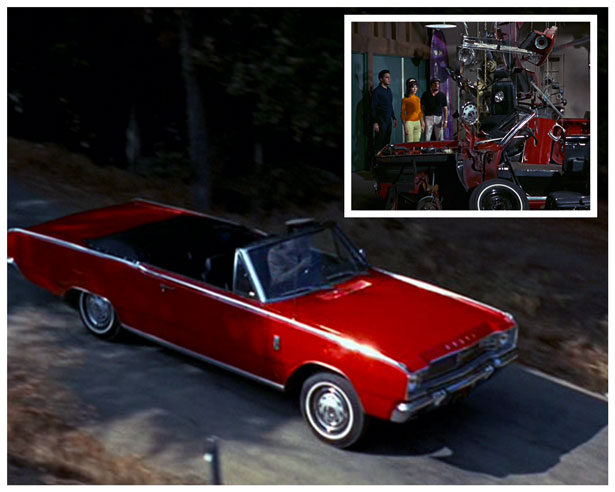
A 1967 Dodge Dart becomes a work of modern art in EASY COME, EASY GO (Paramount)

Dina and Gil find out about the treasure, too, and begin trying to thwart Ted’s plans in order to get the treasure for themselves. Gil’s motivation is that if he becomes wealthy through the treasure, Dina might begin treating him as an equal.

Jo and Ted are usually friendly to one another through most of Easy Come, Easy Go, but a romance between the two late in the film seems to happen only out of obligation to the Elvis movie formula rather than as a natural result of the story.

Elvis Presley is Ted Jackson in 1967’s EASY COME, EASY GO (Paramount)

Easy Come, Easy Go makes a good second movie in a double feature with Spinout, for Marshall appears briefly near the end of the latter (as a different character, for Elvis never made a sequel to one of his narrative films). In fact, Spinout was the Elvis movie released just prior to Easy Come, Easy Go, so her appearance almost acts as a kind of advertisement for the next movie in the Elvis Cinematic Universe.

Easy Come, Easy Go reflects the culture of its time by the mostly sexist ways it portrays women – the worst of which is exemplified by a dreadful musical number, “The Love Machine.” Navy men spin a wheel of fortune where the “prizes” are available ladies, complete with photos, measurements, and phone numbers.

Elvis Presley is Ted Jackson and Dodie Marshall is Jo Symington in 1967’s EASY COME, EASY GO (Paramount)

The movie includes a number of well-filmed underwater scenes, though they often drag on too long by modern standards – especially considering that the underwater version of “Ted Jackson” is not portrayed by Elvis. Though Elvis often did many of his own stunts in his movies, scuba-diving was not among his skillsets. At one point, Gil even attempts to kill Ted underwater – pretty intense for an Elvis movie.

Elsa Lanchester and Elvis Presley in 1967’s EASY COME, EASY GO (Paramount)

As for the music, there are no real stand-out numbers – at least not for the right reasons. The legendary Elsa Lanchester (Bride Of Frankenstein) appears briefly as a yoga instructor – just long enough to become one of the few people ever to sing a duet with Elvis. Unfortunately, “Yoga Is As Yoga Does” is a disservice to both stars, and I’ll just leave it at that.

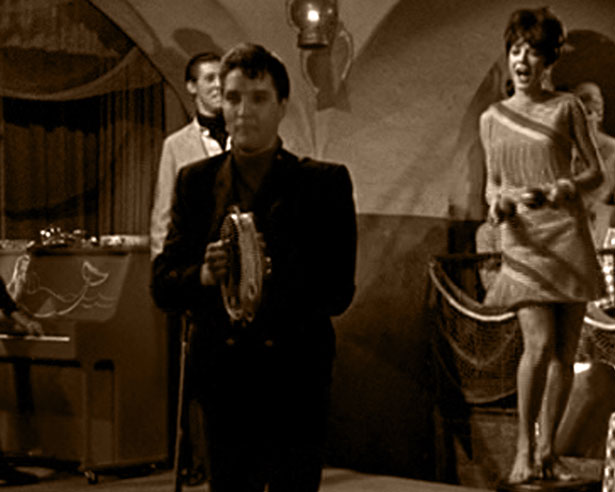
Ted performs “Easy Come, Easy Go” during the opening credits on a small Navy boat – even using a paddle to play air guitar along to an unseen background music source (Elvis movies had long ago given up trying to make such scenes make logical sense).

Ted Jackson (Elvis Presley) tries to part the waters of a crowded party in 1967’s EASY COME, EASY GO (Paramount)

Faring better in the music department are “Sing You Children,” an inspirational number that Ted uses to “part the waters” of a crowd and “I’ll Take Love,” which serves as the film’s finale.

Easy Come, Easy Go is a good example of an average Elvis movie. It is not very ambitious, but it manages to entertain.

Elvis Presley is Ted Jackson in 1967’s EASY COME, EASY GO (Paramount)


Boldly Go

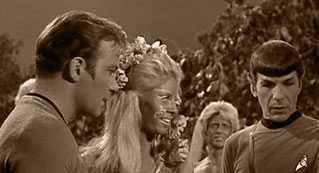
Shari Nims, who played Mary, one of Dina’s friends, in 1967’s Easy Come, Easy Go, appeared as Sayana, a Vaalian, later that same year in the Star Trek episode “The Apple.”

I knew where Nims was in Star Trek, but I sure couldn’t find her in Easy Come, Easy Go. Instead, my friend and Elvis movie superfan Gary Wells over at SoulRide Blog tracked down one of her scenes for me. Thanks, Gary!

Shari Nims is Mary in 1967’s EASY COME, EASY GO (Paramount)

William Shatner is James T. Kirk, Shari Nims is Sayana, and Leonard Nimoy is Spock in the 1967 STAR TREK episode “The Apple” (Paramount)


Easy Come, Easy Go Tote Board

  • Punches: 11
  • Songs: 6
  • Kisses: 5

Songs In Easy Come, Easy Go

  1. Elvis Presley: “Easy Come, Easy Go” (1966), written by Sid Wayne & Ben Weisman
  2. Elvis Presley: “The Love Machine” (1966), written by Gerald Nelson, Fred Burch, & Chuck Taylor
  3. Elvis Presley & Elsa Lanchester: “Yoga Is As Yoga Does” (1966), written by Gerald Nelson & Fred Burch
  4. Elvis Presley: “You Gotta Stop” (1966), written by Bill Giant, Bernie Baum, and Florence Kay
  5. Elvis Presley: “Sing You Children” (1966), written by Gerald Nelson & Fred Burch
  6. Elvis Presley: “I’ll Take Love” (1966), written by Dolores Fuller & Mark Barkan

The Mystery Train’s Easy Come, Easy Go Scorecard

  • Story: 4 (out of 10)
  • Acting: 5
  • Fun: 7
  • Songs: 5
  • Overall: 5 (For Elvis Fans Only)

Easy Come, Easy Go Around The Web


Click image for larger, full-color version


“Then Moses raised his hand over the sea, and the LORD opened up a path through the water with a strong east wind. The wind blew all that night, turning the seabed into dry land. So the people of Israel walked through the middle of the sea on dry ground, with walls of water on each side!”
Exodus 14:21-22 NLT

Thomas Sails Away With Elvis Trivialities #18

No stranger to The Mystery Train’s Night Riders, Thomas correctly answered Elvis Trivialities #18 after nearly 24 hours. I was planning to end the challenge and declare the train stumped only 41 minutes later, so he answered in the nick of time.

And the answer is…

Even Elvis movie superfan Gary Wells missed this one!

The above image slice is from the Elvis movie Easy Come, Easy Go.

Another mystery solved!

The 1967 movie happens to be the next post in my random rewatch of Elvis Movies (coming soon). Pictured next to Elvis Presley (Ted Jackson) is Pat Harrington (Judd Whitman), who is perhaps best known for his 1975-1984 role of Schneider on the TV series One Day At A Time.

As for eight-time winner Thomas, he receives a yacht full of bragging rights. Congratulations to Captain Thomas!


The Mystery Train’s Night Riders – Trivia Winners Hall Of Fame

  • April 2, 2023: Thomas (23:19)
  • October 30, 2020: Tmydee (0:15)*
  • October 7, 2020: Sammy (3:18)
  • June 14, 2013: Alec (0:18) | Honorable Mention: Wellsy (3:01)
  • February 22, 2013: Thomas (13:36)
  • January 11, 2013: George Millar (4:19)
  • December 23, 2012: Thomas (0:36)
  • October 9, 2012: David (14:38) | Honorable Mention: John (22:06)
  • February 4, 2012: Thomas (13:52)
  • February 3, 2012: Thomas (2:18)
  • December 21, 2011: Wellsy (2:37)
  • October 31, 2011: Thomas (17:32)
  • October 1, 2011: Jimmy Cool (1:01)
  • September 9, 2011: Steve Brogdon (0:17)
  • August 6, 2011: Thomas (2:26)
  • July 9, 2011: Thomas (5:26)
  • June 23, 2011: Fred Wolfe (0:18)
  • June 22, 2011: Ty stumps the train (no winner)

*Record time

Elvis Movies: BLUE HAWAII

After an eight month break, I am continuing my rewatch of Elvis Presley movies. Next up in the random sequence is Blue Hawaii – his eighth movie. Except for the Elvis: That’s The Way It Is documentary, I’ve probably seen this one more than any of the others.


“Ecstatic romance … Exotic dances … Exciting music in the world’s lushest paradise of song!”

Blue Hawaii (Paramount)
Wide Release: November 22, 1961 (United States)
Starring: Elvis Presley, Joan Blackman, Angela Lansbury
Screenplay By: Hal Kanter
Story By: Allan Weiss
Music Score By: Joseph J. Lilley
Produced By: Hal B. Wallis
Directed By: Norman Taurog
Running Time: 101 Minutes


Just before filming began on Blue Hawaii, Elvis performed a benefit concert for the USS Arizona Memorial in Pearl Harbor. It would prove to be his last live performance until the June 1968 shows captured for the ELVIS television special (NBC) and his August 1969 concert series at the International Hotel in Las Vegas.

Elvis Presley is Chad Gates in 1961’s BLUE HAWAII (Paramount)

In Blue Hawaii, Elvis stars as Chadwick Gates – and I can’t even get started on this post without noting that if there was ever a less Elvis character name than “Chadwick” in one of his movies, I sure don’t know what it is. Anyway, after a 2-year stint in the U.S. Army, where he served in Europe, Chad returns to Kahalo, Hawaii, where he has lived for the last 15 years with his parents. His father is an executive at the Great Southern Hawaiian Fruit Company, and Chad’s entire future has been neatly laid out for him there – mostly by his mother.

Chadwick’s mother has entire life plotted out for him in 1961’s BLUE HAWAII (Paramount)

Chad is having none of it, though. Instead, he hides out for a week at a beach shack until his father gets word through Chad’s girlfriend, Maile Duval, that he needs to come home before his mother finds out. The return home does not go well, particularly for the audience.

This is where we are introduced to one of the most annoying characters in any Elvis movie ever: Chad’s mother, Mrs. Sarah Lee Gates – portrayed by Angela Lansbury, who was only nine years older than Elvis.

Angela Lansbury is Mrs. Sarah Lee Gates and Elvis Presley is Chad Gates in 1961’s BLUE HAWAII (Paramount)

Mrs. Gates is from Georgia, and, as much as the Hawaiian portrayals in this film unfortunately are often stereotypes, so, too, is Blue Hawaii‘s portrayal of a Southerner. Mrs. Gates, of course, has to speak in an over-the-top Southern accent, call her husband “Daddy,” and bring up the Civil War, including a required reference to General “Stonewall” Jackson of the Confederacy. She also notes embarrassment around the fact that a war hero relative was a “Yankee” (i.e., he fought for the North/Union, rather than the South/Confederacy).

Mrs. Gates is alcoholic, racist, classist, and just all around insufferable.

All that said, Roland Winters, who plays Mr. Fred Gates, Chad’s father, does an excellent job playing off of Lansbury’s outlandishness. Winters gets two of the funniest lines of the movie – in two separate scenes. In the first, Mr. Gates has just commented to his wife that Maile is pretty.

Mrs. Gates: “Daddy, aren’t you forgetting yourself?”
Mr. Gates: “I’m trying, Mother. I’m trying.”

Later, Chad storms out of the house after an argument with his parents.

Mrs. Gates: “Oh, Daddy, what did we do wrong?”
Mr. Gates: “Offhand, I’d say, we got married.”

Maile is portrayed by Joan Blackman. The character’s father is French and mother is Hawaiian. Blackman and Elvis often seem wooden together in Blue Hawaii, though they would have much better chemistry in the following year’s Kid Galahad.

Joan Blackman is Maile Duval in 1961’s BLUE HAWAII (Paramount)

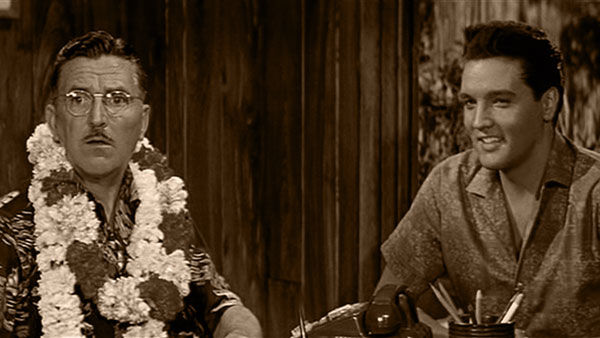
Shunning the fruit company, Chad instead decides to become a tourist guide and is soon hired by Floyd the Barber (Howard McNear), who owns the tourism company where Maile works. Okay, it’s not really Floyd the Barber, but Mr. Chapman does appear otherwise to be the exact same character that the beloved McNear played on the Andy Griffith Show from 1961 to 1967.

Howard McNear is Mr. Chapman and Elvis Presley is Chad Gates in 1961’s BLUE HAWAII (Paramount)

Chad’s first assignment? Escorting an attractive schoolteacher and four teenage girls around Hawaii, naturally. Jealousy and hilarity ensues. Well, jealousy anyway.

Jennie Maxwell’s portrayal of angry teenager Ellie Corbett soon livens up the movie, including this zinger she launches at Chad: “I believe you’re being paid to show us a good time. When does it start?”

Jennie Maxwell is Ellie Corbett and Elvis Presley is Chad Gates in 1961’s BLUE HAWAII (Paramount)

Considering that Blue Hawaii is his eighth movie overall and his fourth since returning from the Army in real life, Elvis’ acting is disappointingly poor several times – particularly when he does this high-pitched yelling thing that he tends to revert to in his movies when he seems uncomfortable in a scene (e.g., “I’ll getcha!” in one of the scenes of this movie).

I suspect director Norman Taurog was simply not focused on getting the best acting performance out of Elvis, and Hal Kanter’s flimsy script doesn’t help matters, either. Elvis had natural talent as a singer and musician, but he should have taken acting classes to hone his craft if he was serious about making films. 1957’s King Creole had already proven what Elvis could do under the guidance of an inspiring director (Michael Curtiz).

While Elvis may stumble on the acting side at times in Blue Hawaii, he brings his A-game on the music side. There are a number of stone-cold classic songs here, especially “Can’t Help Falling In Love” – which he sings in a beautiful version to Maile’s grandmother on her 78th birthday.

Years later, Elvis would reminisce about another musical highlight, saying, “We did a movie called Blue Hawaii, and in the movie, there was a song called the ‘Hawaiian Wedding Song,’ and it was so real, it took me two years before I realized, it was just a movie.”

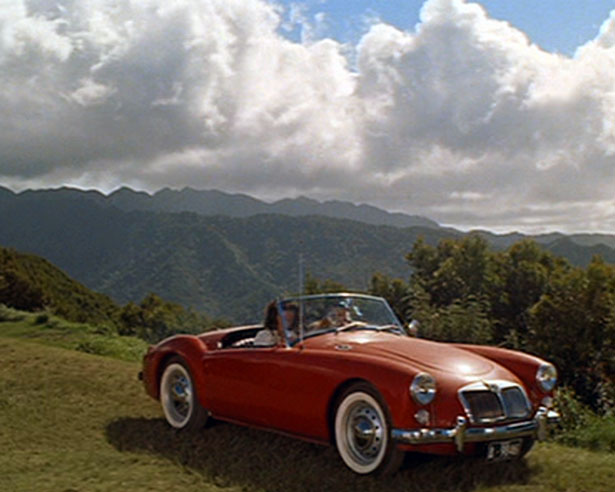
Hawaii is the real star of 1961’s BLUE HAWAII (Paramount)

Blue Hawaii has some highlights, including the idyllic locations, great music, and a sense of escapism, but overall, it feels like a missed opportunity. Its subsequent success at the box office, however, would help lock Elvis into mostly similar movies going forward.


Boldly Go

Frank Atienza, who played Ito O’Hara in Blue Hawaii, later played a Kohn villager in “The Omega Glory” (1968) episode of Star Trek.

Frank Atienza is Ito O’Hara and Elvis Presley is Chad Gates in 1961’s BLUE HAWAII (Paramount)

Frank Atienza (far right) is a Kohn villager in the 1968 STAR TREK episode “The Omega Glory” (Paramount)

Ron Veto, who has an uncredited role as a Hawaiian in Blue Hawaii, later appeared in numerous Star Trek episodes as a member of the crew of the USS Enterprise as well as other uncredited roles on the show.


Blue Hawaii Tote Board

  • Punches: 21+
  • Songs: 16
  • Kisses: 13

Songs In Blue Hawaii

  1. Elvis Presley: “Blue Hawaii” (1961), written by Leo Robin & Ralph Rainger
  2. Elvis Presley: “Almost Always True” (1961), written by Fred Wise & Ben Weisman
  3. Elvis Presley: “Aloha Oe” (1961), written by Queen Liliuokalani
  4. The Surfers: “Hawaiian Beach Chant (Slap Happy/Shave And A Hair Cut)” (1961) [performed twice], written by unknown
  5. Elvis Presley: “No More” (1961), written by Don Robertson & Hal Blair, based on “La Paloma” by Sebastián Iradier
  6. Elvis Presley: “Can’t Help Falling In Love” (1961), written by George Weiss, Hugo Peretti, & Luigi Creatore, based on the classical composition “Plaisir d’Amour” by Giovanni Martini
  7. Elvis Presley: “Rock-A-Hula Baby” (1961), written by Fred Wise, Ben Weisman, & Florence Kay
  8. Elvis Presley: “Moonlight Swim” (1961), written by Sylvia Dee & Ben Weisman
  9. Elvis Presley: “Ku-U-I-Po” (1961), written by George Weiss, Hugo Peretti, & Luigi Creatore
  10. Elvis Presley: “Ito Eats” (1961), written by Sid Tepper & Roy C. Bennett
  11. Elvis Presley: “Slicin’ Sand” (1961), written by Sid Tepper & Roy C. Bennett
  12. Elvis Presley: “Hawaiian Sunset” (1961), written by Sid Tepper & Roy C. Bennett
  13. Elvis Presley: “Beach Boy Blues” (1961), written by Sid Tepper & Roy C. Bennett
  14. Elvis Presley: “Island Of Love” (1961), written by Sid Tepper & Roy C. Bennett
  15. Elvis Presley: “Hawaiian Wedding Song (Ke Kali Nei Au)” (1961), written by Charles E. King, Al Hoffman, & Dick Manning

The Mystery Train’s Blue Hawaii Scorecard

  • Story: 2 (out of 10)
  • Acting: 3
  • Fun: 7
  • Songs: 8
  • Overall: 5 (For Elvis Fans Only)

Blue Hawaii Around The Web


Click image for larger, full-color version


“Get rid of all bitterness, rage, anger, harsh words, and slander, as well as all types of evil behavior. Instead, be kind to each other, tenderhearted, forgiving one another, just as God through Christ has forgiven you.”
Ephesians 4:31-32 NLT

Elvis Movies: KID GALAHAD

Before we get started with the main feature, I want to take a brief moment to remind you that Baz Luhrmann’s ELVIS movie begins playing next week in many locations around the world. Based on the trailers, the attention to detail looks amazing. I love that this trailer throws in a couple of brief shots of the real Elvis as well.

I have also watched and read a few interviews with Austin Butler, who plays Elvis Presley, and he seems completely invested in the role. Many actors have tried and mostly failed to fill Elvis’ shoes before him, but this 30-year-old really seems to have discovered his spirit. We’ll find out soon.

As I’ve said before, after seeing so many horrible attempts to tell the Elvis Presley story in the past, I never even thought I’d watch this movie at all, much less go to the theater opening weekend as I’m now planning to do. The trailer above concludes with “Suspicious Minds (Caught In A Trap),” my mom’s favorite song. She would have been excited to see this movie with me and, though she passed away over three years ago now, I know she’ll be there next to me.

Continuing my rewatch of movies featuring the real Elvis Presley, next up is Kid Galahad – his 10th movie. I have only seen this one a couple of times before.


“Presley Packs the Screen’s Biggest Wallop…with the Gals…with the Gloves…with the Guitar!”

Kid Galahad (United Artists)
Wide Release: August 29, 1962 (United States)
Starring: Elvis Presley, Gig Young, Lola Albright, Joan Blackman
Screenplay By: William Fay
Story By: Francis Wallace
Music Score By: Jeff Alexander
Produced By: Davis Weisbart
Directed By: Phil Karlson
Running Time: 96 Minutes


Sugarboy Romero (Orlando de la Fuente) faces off against Kid Galahad (Elvis Presley) in the climax of 1962's KID GALAHAD (United Artists)

Sugarboy Romero (Orlando de la Fuente) faces off against Kid Galahad (Elvis Presley) in the climax of 1962’s KID GALAHAD (United Artists)

Elvis Presley stars as Walter Gulick in Kid Galahad. After a stint in the Army, Walter returns to his hometown of Cream Valley, New York, for the first time since becoming an orphan at 14-months-old. The 22-year-old is looking for a job fixing cars, but since he arrives too early in the morning for the auto shop to be open, he naturally checks out a nearby boxing camp instead to see if they need a mechanic.

The fictitious Cream Valley, New York, coincidentally enough, looks remarkably like Idyllwild, California. I suppose that’s better than trying to pass off California as Europe, at least. “Cream Valley” – the name sounds like a magical place where they make salad dressing or something like that.

Shockingly enough, the boxing camp doesn’t need a mechanic. However, Walter does find a job there as a sparring partner. It turns out his Army background has provided him with both auto repair and boxing experience.

As a sparring parter, Walter is a bit of a failure. He stands there and takes a beating from the fighter – over 70 punches. Walter doesn’t try to defend himself or even at first throw any punches in return. He finally throws one punch, proceeding to knock out the now worn-out fighter. While this doesn’t make for a great sparring partner, the boxing camp’s owner, Willy (Gig Young), sees dollar signs and soon puts Walter on the professional boxing circuit.

Several movies before this one, the screenplay adaptation of A Stone For Danny Fisher was changed once Elvis was attached to the project such that the boxer lead character became a singer instead. That 1958 movie, one of Elvis’ best performances as an actor, was also eventually renamed King Creole, after one of the songs in the film.

A few years later, in Kid Galahad, Elvis finally got his chance to play a boxer. According to longtime friend Sonny West, if Elvis had his way, he would have reunited with King Creole director Michael Curtiz (Casablanca) on this film, which was produced in late 1961. Curtiz had also directed the original 1937 version of Kid Galahad, starring Edward G. Robinson, Bette Davis, and Humphrey Bogart. Despite Elvis’ campaign, Phil Karlson received the directing nod instead. Curtiz passed away in April 1962 at the age of 74.

Willy (Gig Young) and Lew (Charles Bronson) listen as Walter (Elvis Presley) sings "Riding The Rainbow" while driving a Model T Ford in 1962's KID GALAHAD (United Artists)

Willy (Gig Young) and Lew (Charles Bronson) listen as Walter (Elvis Presley) sings “Riding The Rainbow” in a Model T Ford in 1962’s KID GALAHAD (United Artists)

Charles Bronson appears in Kid Galahad as Lew, who acts as Walter’s trainer. Lew seems genuinely enamored of “the kid” and tries to look out for him. Bronson does a terrific job in this role and is a highlight of the film. This is apparently one of the few movies where Bronson smiles – and he smiles early and often in Kid Galahad.

Elvis Presley is Walter Gulick in 1962's KID GALAHAD (United Artists)

Elvis Presley is Walter Gulick in 1962’s KID GALAHAD (United Artists)

Willy, it turns out, has gambling and other problems that are putting his boxing camp in jeopardy. A mobster leaves two thugs to stay at the camp for insurance.

When Ralphie (Jeff Morris), one of the goons, makes an unwanted advance at Willy’s long-time fiancée, Dolly (Lola Albright), Walter knocks him flat out without even needing to take a beating first this time. “It wouldn’t have happened, but he don’t know how to behave himself with a lady,” explains Walter.

Dolly says, “Thanks, Galahad” to Walter, and the name sticks.

“Dolly, please take the Eagle Scout out of here before Ralphie wakes up and kills him,” quips Lew before they find a loaded gun on Ralphie. Incidentally, I must note that it is hard to take a mafia henchman seriously with a name like “Ralphie.”

Joan Blackman is Rose in 1962's KID GALAHAD (United Artists)

Joan Blackman is Rose in 1962’s KID GALAHAD (United Artists)

Willy’s kid sister, Rose (Joan Blackman), travels in from the Bronx to reorganize the camp when he keeps phoning her for money. She owns half of the business, apparently an inheritance from their father. Galahad is immediately all googly eyes for her. Blackman had appeared with Elvis before in Blue Hawaii, and the pair here manage to show more chemistry together than they did in that 1961 movie – which is admittedly a pretty low bar.

Willy is not too happy when the couple gets engaged. “You can’t yell loud enough to make me shut up,” Galahad tells him during a heated argument. “I’m not marrying Rose because she’s your sister, Willy, but in spite of it.”

Hearing the ruckus, Dolly intervenes and asks Willy what’s wrong as he is about to punch Galahad. “What’s the matter with me? This cream-headed clown wants to marry my sister, that’s what’s the matter with me,” he answers.

The long-suffering Dolly delivers this stinger, causing Willy to storm off: “Well, at least he’s not asking her to hang around for three or four years, Willy.”

Soon enough, Dolly leaves Willy (what is with the names in this movie?). This exchange is one of my favorites in the film – great acting from Lola Albright. Dolly at first seems happily surprised when Willy appears to give in, thinking he is finally going to marry her – but then realization dawns and she becomes sad again.

Dolly: “It’s just that you and marriage have never learned to mix.”
Willy: “All right.”
Dolly: “‘All right’ what?”
Willy: “I’ll lay you 3-to-1, angel, I never bet on another horse. … What’s the matter? What did I do now?”
Dolly: “You’ll probably never know. Excuse me.”

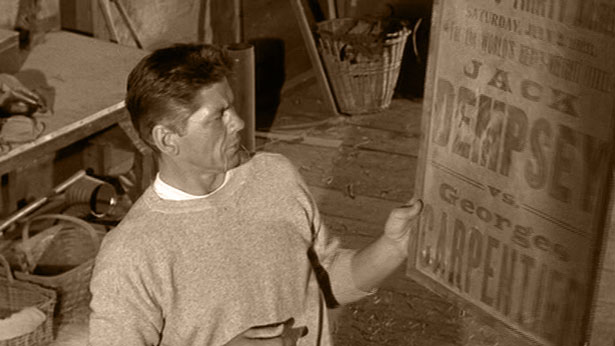
Lew (Charles Bronson) holds up an old poster found advertising 1921's Dempsey vs. Carpentier fight in 1962's KID GALAHAD (United Artists)

Lew (Charles Bronson) holds up an old poster found advertising 1921’s Dempsey vs. Carpentier fight in 1962’s KID GALAHAD (United Artists)

In a fun, blink-and-you-miss-it moment, Galahad tosses Lew an old boxing poster he found. The poster advertises a real match that took place on July 2, 1921: Jack Dempsey vs. Georges Carpentier – “the fight of the century.” The event was over 40 years old at the time of Kid Galahad and is, of course, over 100 years old now.

Galahad proves an unexpected success in boxing. He uses the same strategy each time – stand and take a beating for awhile and then throw one punch to knock out the other fighter. He identifies himself as being from Cream Valley, and the little town loves him for it. One of the locals notes, “All these other muscleheads up here, not one of them said he was from Cream Valley.”

I kept expecting a relative or at least an old family friend to show up from Galahad’s past – especially when a priest looks incredulously at his 1939 Cream Valley baptism certificate. Alas, Lew is apparently not Galahad’s long-lost older brother.

Ed Asner is Frank Gerson in 1962’s KID GALAHAD (United Artists)

The legendary Ed Asner makes his first appearance in a feature film in Kid Galahad, playing a district attorney who is trying to get Willy to testify against the mobsters.

Galahad (Elvis Presley) trains with Lew (Charles Bronson) for the big fight in 1962's KID GALAHAD (United Artists)

Galahad (Elvis Presley) trains with Lew (Charles Bronson) for the big fight in 1962’s KID GALAHAD (United Artists)

Willy signs Galahad up for a fight against an especially tough opponent, Ramon “Sugarboy” Romero (Orlando de la Fuente), so Lew works hard with him to prepare for the climactic battle. All that’s missing is the Rocky theme.

Speaking of music, most of the songs in Kid Galahad are unfortunately mediocre or worse. Though not mentioned if he learned this skill in the Army as well, Galahad, of course, is a singer.

“I Got Lucky” is a bit of a highlight, including Galahad doing “the Twist” with Rose.

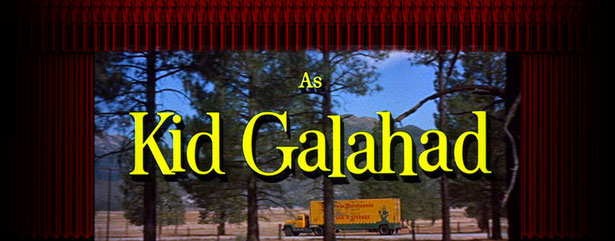
The film’s best song, the clever “King Of The Whole Wide World,” is ruined by jazzy overdubs during the movie’s opening titles. The best version of this song can still be found on 1986’s Return Of The Rocker album – the first release of the extended master including Boots Randolph’s complete saxophone solo.

One thing I will note is, I doubt there are any other boxing movies out there where the fighter who was knocked out in the previous scene invites the guy who just walloped him to sing a song with him. Ah, Elvis Movies, you’ve gotta love them.

Kid Galahad is notable for another reason – Elvis’ hair. This is one of only two color movies for which Elvis did not dye his hair black. Instead, he opted for his natural brown hair.

Elvis Presley is Walter "Kid Galahad" Gulick in 1962's KID GALAHAD (United Artists)

Elvis Presley is Walter “Kid Galahad” Gulick in 1962’s KID GALAHAD (United Artists)

Kid Galahad is often enjoyable and certainly stands apart from many of Elvis’ other movies, particularly in terms of effort – most notably with the boxing details. Though it never quite delivers a knockout punch, Kid Galahad is still a winner.


Boldly Go

Michael Dante plays Joie in Kid Galahad and appears as Maab in the 1967 Star Trek episode “Friday’s Child.”

Joie (Michael Dante) spars with Galahad (Elvis Presley) in 1962's KID GALAHAD (United Artists)

Joie (Michael Dante) spars with Galahad (Elvis Presley) in 1962’s KID GALAHAD (United Artists)

Michael Dante is Maab in the 1967 STAR TREK episode "Friday's Child" (Paramount)

Michael Dante is Maab in the 1967 STAR TREK episode “Friday’s Child” (Paramount)

In addition, multiple uncredited cast members from Kid Galahad went on to appear in Star Trek, including:

  • Dave Cadiente [Kid Galahad: Boxer | Star Trek: Enterprise Crewmember in “The Tholian Web” (1968) and the Klingon Sergeant in Star Trek III: The Search For Spock (1984)]
  • Al Cavens [Kid Galahad: Fight Spectator | Star Trek: Klingon Crewman in “Day Of The Dove” (1968) and Second Fop in “All Our Yesterdays” (1969)]
  • Louie Elias [Kid Galahad: Boxer | Star Trek: Various roles in “Dagger Of The Mind” (1966), “And The Children Shall Lead” (1968), “Is There In Truth No Beauty?” (1968), “The Tholian Web” (1968), and “The Cloud Minders” (1969)]
  • Seamon Glass [Kid Galahad: Boxer | Star Trek: Benton in “Mudd’s Women” (1966)]
  • Gil Perkins [Kid Galahad: Freddie | Star Trek: Slave #3 in “Bread And Circuses” (1968)]
  • Paul Sorensen [Kid Galahad: Joe | Star Trek: Merchantman Captain in Star Trek III: The Search For Spock (1984)]
  • Bill Zuckert [Kid Galahad: O’Grady | Star Trek: Johnny Behan in “Spectre Of The Gun” (1968)]

Honorable mentions:

  • Nick Dimitri [Kid Galahad: Boxer | Various roles in Star Trek: The Next Generation and Star Trek: Deep Space Nine in the 1990s]
  • Bert Remsen [Kid Galahad: Max | Kubus in Star Trek: Deep Space Nine – “The Collaborator” (1994)]

While researching the various Star Trek connections, I also noticed there are tons of cast and crew crossovers between Kid Galahad and the Rocky movies. I just don’t have the energy to capture them here, so I leave it to a more industrious Elvis or Rocky fan in the future to document them elsewhere.


Elvis Presley is Kid Galahad and Orlando de la Fuente is Sugarboy Romero in 1962’s KID GALAHAD (United Artists)

Kid Galahad Tote Board

  • Punches: 334 (including 11 knockouts)
  • Kisses: 10
  • Songs: 7

Songs In Kid Galahad

  1. “King Of The Whole Wide World” (1961), written by Ruth Batchelor & Bob Roberts
  2. “This Is Living” (1961), written by Fred Wise & Ben Weisman
  3. “Riding The Rainbow” (1961), written by Fred Wise & Ben Weisman
  4. “Home Is Where The Heart Is” (1961), written by Sherman Edwards & Hal David
  5. “I Got Lucky” (1961) [performed twice], written by Dolores Fuller, Fred Wise, & Ben Weisman
  6. “A Whistling Tune” (1961), written by Sherman Edwards & Hal David

The Mystery Train’s Kid Galahad Scorecard

  • Story: 6 (out of 10)
  • Acting: 8
  • Fun: 4
  • Songs: 4
  • Overall: 6 (Worth Watching)

Kid Galahad Around The Web


Click image for larger, full-color version


“I run with purpose in every step. I am not just shadowboxing. I discipline my body like an athlete, training it to do what it should. Otherwise, I fear that after preaching to others I myself might be disqualified.”
1 Corinthians 9:26-27

Elvis Movies: ROUSTABOUT

Earlier this year, I began a rewatch of Elvis Presley’s movies. Today’s focus is one that I have not seen as often as some of the others – Elvis’ 16th movie, Roustabout.


“Elvis Presley as a Roving, Restless, Reckless, Roustabout”

Roustabout (Paramount)
Wide Release: November 11, 1964 (United States)
Starring: Elvis Presley, Barbara Stanwyck, Joan Freeman
Screenplay By: Anthony Lawrence and Allan Weiss
Story By: Allan Weiss
Music Score By: Joseph J. Lilley
Produced By: Hal B. Wallis
Directed By: John Rich
Running Time: 101 Minutes


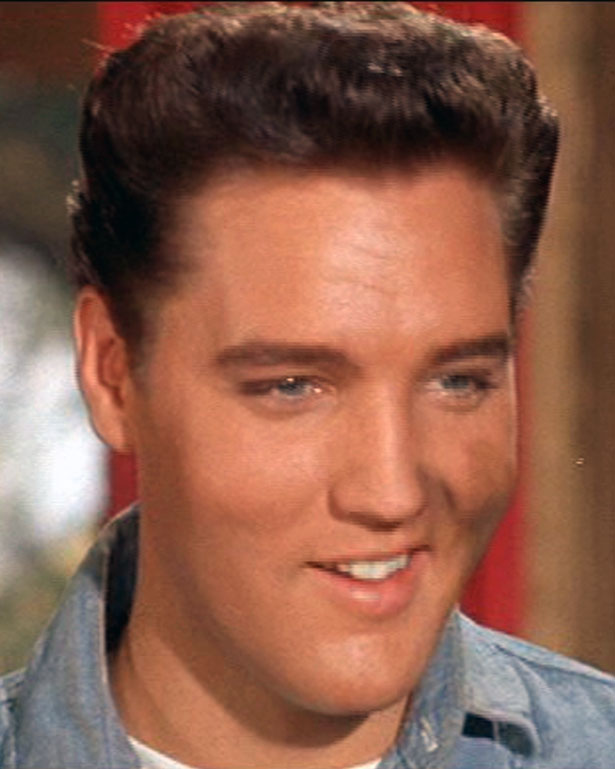
Elvis Presley is Charlie Rogers in 1964’s ROUSTABOUT (Paramount)

Elvis Presley is Charlie Rogers in 1964’s ROUSTABOUT (Paramount)

In Roustabout, Elvis Presley stars as Charlie Rogers, a singer who ends up working at a carnival when Joe (Leif Erickson), a grouchy old carny, runs him off the road, damaging his motorcycle and destroying his guitar. Ah, Elvis Movies, you gotta love ’em.

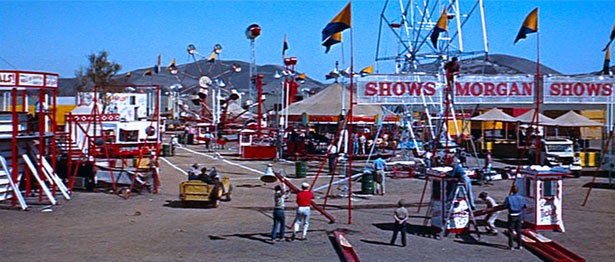
The Morgan Shows carnival in 1964's ROUSTABOUT (Paramount)

The Morgan Shows carnival in 1964’s ROUSTABOUT (Paramount)

Despite the inane setup, Roustabout is pretty good! When Maggie (Barbara Stanwyck), the owner of the carnival, pays for a new guitar and repairs to his motorcycle, Charlie stays on as a roustabout until his bike is ready in order to spend more time with Cathy (Joan Freeman), Joe’s daughter. Joe, of course, is not amused by this turn of events.

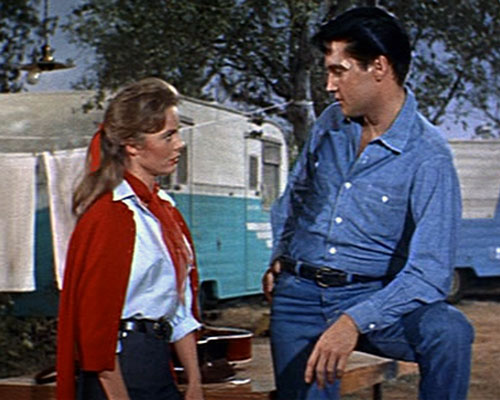
Joan Freeman is Cathy and Elvis Presley is Charlie in 1964's ROUSTABOUT (Paramount)

Joan Freeman is Cathy and Elvis Presley is Charlie in 1964’s ROUSTABOUT (Paramount)

Outside of this movie, “roustabout” is not a term I have encountered. It essentially means an unskilled laborer. It seems to be used most often today in the oil rigging industry. In this case, Charlie does odd jobs at the carnival, such as helping to set up rides or even filling in at a candy apple stand.

When attempting to attract players for a game that Cathy is promoting, Charlie winds up singing and drawing a crowd. His roustabout days are soon behind him, for Maggie signs him on as a singer instead.

Charlie Rogers (Elvis Presley) begins to draw a crowd for Morgan Shows when the carnival signs him on as a singer in 1964's ROUSTABOUT (Paramount)

Charlie Rogers (Elvis Presley) begins to draw a crowd for Morgan Shows when the carnival signs him on as a singer in 1964’s ROUSTABOUT (Paramount)

It turns out that Maggie has a habit of bailing Joe out of trouble, and her carnival is facing financial ruin because of it. Charlie brings in the teen money, and the situation begins to improve until things come to a head between him and Joe, causing Charlie to switch to a rival carnival.

Barbara Stanwyck is Maggie Morgan in 1964's ROUSTABOUT (Paramount)

Barbara Stanwyck is Maggie Morgan in 1964’s ROUSTABOUT (Paramount)

Elvis does a fine job acting in certain parts of Roustabout. A scene between him and Barbara Stanwyck is my favorite of the film:

Charlie: “You collect strays, Maggie. And you got one in Joe. Why don’t you stop recruiting? They don’t make a family.”
Maggie: “What would you know about a family?”
Charlie: “Nothing!”

After Maggie walks away and can no longer hear him, Charlie repeats the line again, softly, sadly: “Nothing…” It is a quick moment, but certainly one of Elvis’ best in his 1960s movies.

Elvis Presley is Charlie Rogers in 1964's ROUSTABOUT (Paramount)

Elvis Presley is Charlie Rogers in 1964’s ROUSTABOUT (Paramount)

The rebellious Charlie is reminiscent of some of Elvis’ earliest film roles. For instance, Charlie remarks early on, “Look, if you’re not tough in this world, you get squashed, honey.” These words could have been taken right out of Vince Everett’s mouth in Jailhouse Rock (1957). Charlie also has traces of Deke Rivers from Loving You (1957) and even a little bit of Danny Fisher from King Creole (1958). At 29 during production of Roustabout, however, Elvis does seem a little old at times to be playing a rebel.

Even some of Elvis’ mannerisms in Roustabout remind me of his 1950s presence, otherwise left out of many of his 1960s movies. Elvis’ performance of “One Track Heart” in Roustabout, for instance, is quite reminiscent of his 1956 “Blue Suede Shoes” screen test, except with a less exciting song. Later on, during “Hard Knocks,” he does his more typical 1960s movie hand-clapping thing, though.

Elvis’ natural flair for comedy comes into play a few times in Roustabout. One example:

Cathy: “You must get your face slapped a lot.”
Charlie: “About 50–50.”

Pat Buttram does a terrific job playing the villainous Harry, the owner of the big-time carnival that is looking to put Maggie out of business. Another great couple of lines:

Charlie: “Not everybody is as big a crook as you are, Harry.”
Harry: “Well, everybody tries.”

Pat Buttram is Harry and Elvis Presley is Charlie in 1964's ROUSTABOUT (Paramount)

Pat Buttram is Harry and Elvis Presley is Charlie in 1964’s ROUSTABOUT (Paramount)

Charlie’s show goes over well, and Harry asks him to do an encore. “Nah,” says Charlie. “Always leave ’em wanting more.” This phrase, of course, was the philosophy of a real-life carny huckster, “Colonel” Tom Parker, when it came to managing Elvis. Parker also served as technical advisor on Roustabout and most of Elvis’ other films.

I try not to review soundtrack albums in this series, focusing any discussion of songs instead on how they appear in the movies themselves. However, I do want to point out in this case that Roustabout has one of the worst soundtrack albums – with nary a hit or highlight in sight. I was surprised, then, that just about all of the songs work perfectly in the context of the actual film. Perhaps based on the fun of seeing the movie, fans propelled the otherwise lackluster Roustabout soundtrack to Billboard‘s number one album position in January 1965. It would be over eight years before Elvis scored another number one album (1973’s Aloha From Hawaii via Satellite).

Joan Freeman is Cathy and Elvis Presley is Charlie in 1964’s ROUSTABOUT (Paramount)

Elvis Presley in a production number taped for 1968's ELVIS television special (NBC)

Elvis Presley in a production number taped for 1968’s ELVIS television special (NBC)

Roustabout obviously had an influence on some of the production numbers created for the 1968 ELVIS television special, even down to costuming. The denim outfit that Elvis wears at times in the movie is almost identical to one he wears during portions of the special, for instance. Roustabout is also one of the few times we see Elvis in leather prior to the special. The barker lines on the ELVIS-TV Special soundtrack album might even have been directly lifted from recordings made for this movie. The performance of “Little Egypt” in the ’68 special is better than the cringey one in Roustabout, incidentally, though the outdated song is a detriment to both productions anyway.

Charlie Rogers (Elvis Presley) at Harry’s carnival in 1964’s ROUSTABOUT (Paramount)


Boldly Go

Multiple uncredited cast members from Roustabout went on to play roles in Star Trek.

K.L. Smith plays the Sheriff in Roustabout and appears as a Klingon in the Star Trek episode “Elaan Of Troyius” in 1968.

Elvis Presley is Charlie and K.L. Smith is the Sheriff in 1964's ROUSTABOUT (Paramount)

Elvis Presley is Charlie and K.L. Smith is the Sheriff in 1964’s ROUSTABOUT (Paramount)

K.L. Smith is a Klingon captain in the 1968 STAR TREK episode "Elaan Of Troyius" (Paramount)

K.L. Smith is a Klingon captain in the 1968 STAR TREK episode “Elaan Of Troyius” (Paramount)

Other cross-overs include:

  • Dick Cherney [Roustabout: Carnival patron | Star Trek: A council member in “A Taste Of Armageddon” (1967) and a passerby in “The City On The Edge Of Forever” (1967)]
  • Carey Foster [Roustabout: College girl | Star Trek: An Enterprise crewmember in “The Squire Of Gothos” (1967), “This Side Of Paradise” (1967), and “The Alternative Factor” (1967)]
  • Teri Garr [Roustabout: Carnival dancer | Star Trek: Roberta Lincoln in “Assignment: Earth” (1968)]
  • Marianna Hill [Roustabout: Viola | Star Trek: Helen Noel in “Dagger Of The Mind” (1966)]
  • Jesse Wayne [Roustabout: Carnival worker | Star Trek: Chekov stunt double in “The Tholian Web” (1968)]

Some of these players will show up again in other Elvis movies not yet covered, giving them another chance to be featured here on The Mystery Train Elvis Blog.

An honorable mention goes to Elvis’ pal Lance LeGault, who appears as a barker in Roustabout and plays Captain K’Temoc in the Star Trek: The Next Generation episode “The Emissary” in 1989.


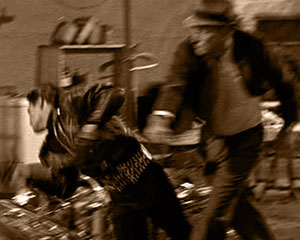
Elvis Presley takes a pummeling as Charlie Rogers in 1964's ROUSTABOUT (Paramount)

Elvis Presley takes a pummeling as Charlie Rogers in 1964’s ROUSTABOUT (Paramount)

Roustabout Tote Board

    • Songs: 12
    • Punches: 11
    • Kisses: 8
    • Karate Chops: 4
    • Slaps: 2
    • Motorcycle Crashes: 2

Songs In Roustabout

  1. “Roustabout” (1964), written by Bill Giant, Bernie Baum, & Florence Kay
  2. “Poison Ivy League” (1964), written by Bill Giant, Bernie Baum, & Florence Kay
  3. “Wheels On My Heels” (1964), written by Sid Tepper & Roy C. Bennett
  4. “It’s A Wonderful World” (1964), written by Sid Tepper & Roy C. Bennett
  5. “It’s Carnival Time” (1964) [performed twice], written by Ben Weisman & Sid Wayne
  6. “Carny Town” (1964), written by Fred Wise & Randy Starr
  7. “One Track Heart” (1964), written by Bill Giant, Bernie Baum, & Florence Kay
  8. “Hard Knocks” (1964), written by Joy Byers
  9. “Little Egypt” (1964), written by Jerry Leiber & Mike Stoller
  10. “Big Love, Big Heartache” (1964), written by Dolores Fuller, Lee Morris, & Sonny Hendrix
  11. “There’s A Brand New Day On The Horizon” (1964), written by Joy Byers

The Mystery Train’s Roustabout Scorecard

  • Story: 6 (out of 10)
  • Acting: 8
  • Fun: 8
  • Songs: 6
  • Overall: 7 (Worth Watching)

Roustabout Around The Web


Click image for larger, full-color version


“Since Jacob was in love with Rachel, he told her father, ‘I’ll work for you for seven years if you’ll give me Rachel, your younger daughter, as my wife.’ ‘Agreed!’ Laban replied. ‘I’d rather give her to you than to anyone else. Stay and work with me.’ So Jacob worked seven years to pay for Rachel. But his love for her was so strong that it seemed to him but a few days.”
Genesis 29:18-20

Elvis Movies: SPINOUT

Mike McCoy tests his #11 427 Cobra in 1966's SPINOUT (MGM)

Mike McCoy tests his #11 427 Cobra in 1966’s SPINOUT (MGM)

Today, we will look at Elvis Presley’s 22nd movie, Spinout. Before we do that, however, I want to take a sidetrack to mention Baz Luhrmann’s ELVIS film. I usually dislike movies that attempt to portray Elvis, so I was fully intending to skip this one. That is, until I saw the preview trailer that Warner Brothers released last week.

Credit: Warner Bros. Pictures channel (YouTube)

The ELVIS trailer shocked me. Austin Butler seems to have captured the essence of Elvis. He has the body language and moves down without looking like an impersonator. I figured he would look like a clown once they showed him in a jumpsuit, but he pulls that difficult look off, too. I loved the unexpected use of “Unchained Melody” from 1977, which gave me chills. The production design is obviously top-notch, with a keen attention to detail.

The story of Elvis is a challenge to portray in an effective way. It is a tale of both triumph and tragedy. His life is both inspiring and depressing. He achieves the American dream many times over, but slowly allows it all to erode.

“The image is one thing, the human being is another,” Elvis said in 1972. “It’s very hard to live up to an image.” Once Elvis died in 1977, the image won and the human that he once was all but disappeared. Can Luhrmann’s film humanize Elvis again? If the script is as solid as the trailer, this could really turn out to be something special. ELVIS opens in the United States on June 24.

No need to wait until June to enjoy Elvis, though. Let’s take a drive with the real Elvis in Spinout.

Elvis Presley is Mike McCoy in 1966's SPINOUT (MGM)

Elvis Presley is Mike McCoy in 1966’s SPINOUT (MGM)


“It’s Elvis with his foot on the gas and no brakes on the fun!!!”

Spinout

Spinout (MGM)
Wide Release: November 23, 1966 (United States)
Starring: Elvis Presley, Shelley Fabares, Diane McBain
Written By: Theodore J. Flicker & George Kirgo
Music Score By: George Stoll
Produced By: Joe Pasternak
Directed By: Norman Taurog
Running Time: 93 Minutes


In Spinout, Elvis Presley stars as Mike McCoy. Is Mike a racecar driver who also sings or a singer who also races cars? Folks, we don’t ask such questions when watching an Elvis Movie. We just sit back and enjoy the ride.

View from the #9 car, driven by Mike McCoy, during the Santa Fe Road Race in 1966's SPINOUT (MGM)

View from the #9 car, driven by Mike McCoy, during the Santa Fe Road Race in 1966’s SPINOUT (MGM)

Outside of the cars, there is not a lot of action in Spinout. The film focuses more on the romance side of the Elvis Movie formula. Three, count them, three women are vying for Mike’s affections. There’s heiress Cynthia (Shelley Fabares), who runs him off the road in the opening scene. There’s also author Diana (Diane McBain), who declares him the “perfect American male,” with the prize being herself, naturally. Even the drummer in his band, Les (Deborah Walley), has been secretly holding feelings for him.

Deborah Walley is Les, Diane McBain is Diana, and Shelley Fabares is Cynthia in 1966’s SPINOUT (MGM)

Deborah Walley is Les, Diane McBain is Diana, and Shelley Fabares is Cynthia in 1966’s SPINOUT (MGM)

Mike is initially unable to decide what to do about his admirers. “I’ve gotta think about it,” he says. “I’ll let you know after the race. I think better when I’m driving.”

Shelley Fabares is Cynthia Foxhugh in 1966's SPINOUT (MGM)

Shelley Fabares is Cynthia Foxhugh in 1966’s SPINOUT (MGM)

Spinout is the second of three Elvis Movies in which Shelley Fabares appears. She is one of my favorite Elvis co-stars, so I really don’t understand how Mike found deciding among the three women to be so difficult. Anyway, the movie also includes a couple of fun in-jokes in regards to Elvis’ real-life past – the Ed Sullivan Show warrants a mention and Mike refers to a wandering canine as a “hound dog.”

Though production on Spinout began only a few months after the premiere of the Get Smart television series, be sure to listen out for Mike doing what sounds to my ears like a quick Don Adams impression with Agent 86’s “Would you believe?” catch-phrase.

Mike McCoy (Elvis Presley) rehearses "Never Say Yes" in 1966's SPINOUT (MGM). Note the 12-string guitar.

Mike McCoy (Elvis Presley) rehearses “Never Say Yes” in 1966’s SPINOUT (MGM). Note the 12-string acoustic electric guitar.

Mike does sing quite a bit in the movie. “All That I Am,” “Am I Ready,” “Never Say Yes,” and “Spinout” are all strong songs. “Never Say Yes” is rare in the Elvis catalog in that it includes the “Bo Diddley Beat,” which is fun to hear. On the other side of the coin, “Smorgasbord” is awful.

Mike McCoy drives the #9 car during the Santa Fe Road Race in 1966’s SPINOUT (MGM)

Mike McCoy drives the #9 car during the Santa Fe Road Race in 1966’s SPINOUT (MGM)

For a movie named Spinout, there is less racing than you might expect. The Santa Fe Road Race featured in the finale is well-filmed. A humorous subplot involving Mike’s #11 car being stolen by another man vying for Cynthia becomes tiresome, though. Mike ends up substituting for Shorty Bloomquist (James McHale) in car #9 to chase after his own car. Look quick and you’ll see Elvis’ friends Red West and Joe Esposito in Shorty’s pit crew. Cynthia also winds up driving onto the road course, so she and Mike tangle again, creating a bookend of sorts to the opening.

Spinout sometimes qualifies as fun, but all too often feels like it is running on empty.

Mike McCoy (Elvis Presley) races in 1966’s SPINOUT (MGM)

Mike McCoy (Elvis Presley) races in 1966’s SPINOUT (MGM)


Spinout Tote Board

  • Kisses: 28
  • Songs: 10
  • Cars Driven By Mike: 4
  • Women Chasing Mike: 3
  • Cars Crashed Into Water: 2
Audience members look on as Mike McCoy (Elvis Presley) sings "Adam And Evil" in 1966's SPINOUT (MGM)

Audience members look on as Mike McCoy (Elvis Presley) sings “Adam And Evil” in 1966’s SPINOUT (MGM)

Songs In Spinout

  1. “Spinout” (1966) [performed twice], written by Sid Wayne, Ben Weisman, & Dolores Fuller
  2. “Stop, Look, and Listen” (1966), written by Joy Byers
  3. “Adam And Evil” (1966), written by Fred Wise & Randy Starr
  4. “All That I Am” (1966), written by Sid Tepper & Roy C. Bennett
  5. “Never Say Yes” (1966), written by Doc Pomus & Mort Shuman
  6. “Am I Ready” (1966), written by Sid Tepper & Roy C. Bennett
  7. “Beach Shack” (1966), written by Bill Giant, Bernie Baum, & Florence Kaye
  8. “Smorgasbord” (1966), written by Sid Tepper & Roy C. Bennett
  9. “I’ll Be Back” (1966), written by Sid Wayne & Ben Weisman
Elvis Presley is Mike McCoy and Shelley Fabares is Cynthia Foxhugh in 1966's SPINOUT (MGM)

Elvis Presley is Mike McCoy and Shelley Fabares is Cynthia Foxhugh in 1966’s SPINOUT (MGM)

The Mystery Train’s Spinout Scorecard

  • Story: 2 (out of 10)
  • Acting: 5
  • Fun: 4
  • Songs: 6
  • Overall: 4 (For Elvis Fans Only)

Further Spinout Reading


TMT Files: Mike McCoy

Click image for larger, full-color version


“I do everything to spread the Good News and share in its blessings. Don’t you realize that in a race everyone runs, but only one person gets the prize? So run to win! All athletes are disciplined in their training. They do it to win a prize that will fade away, but we do it for an eternal prize.”
1 Corinthians 9:23-25