Elvis’ new CDs highlight gospel, Christmas, and love songs [The Elvis Beat newsletter]

I was 20 when I wrote this piece back in 1995 for The Elvis Beat #11, my official Elvis Presley Fan Club newsletter.


RCA has issued three new Elvis albums since the last Elvis Beat newsletter.

Elvis Presley: Amazing Grace – His Greatest Sacred Performances is a two-CD set containing over 50 songs from his gospel releases. It also contains a previously unreleased jam session captured in 1972 for Elvis On Tour, including the songs “You Better Run,” “Turn Your Eyes Upon Jesus,” and “Nearer My God To Thee.”

If Every Day Was Like Christmas contains 24 recordings and, and for the first time, gathers all of his Christmas songs on one CD. It also contains four previously unreleased versions. Some editions of this album include a 3-D Graceland pop-up, featuring the mansion as it is decorated for Christmas.

Elvis’ latest album, Heart & Soul, made its debut in February. It contains previously released love songs from the 1950s, 1960s, and 1970s. There are only two or three songs of real interest to long-time fans. “Love Me Tender” and “I’ve Lost You” are in stereo for the first time. The studio version of “Bridge Over Troubled Water” is without the artificially-dubbed applause used on its original That’s The Way It Is release.

The long anticipated boxed set for The 70s Masters is due to be released by the end of this year.

‘Elvis Country’ lives on in the 1990s [The Elvis Beat newsletter]

I was 20 when I wrote this piece back in 1995 for The Elvis Beat #11, my official Elvis Presley Fan Club newsletter. You can save your Elvis stamps, as there is no need to send any letters. Spoiler alert: Elvis would be inducted into the Country Music Hall of Fame in 1998.


When Elvis Presley first started in the music business, he owed country music a small debt of gratitude, for his rockabilly style had been derived from a combination of country, rhythm & blues, and gospel music. Forty-one years later, it is country music that owes Elvis Presley a debt of gratitude.

At the Country Music Hall of Fame & Museum in Nashville, there are many Elvis items on display. However, despite these exhibits, Elvis has not been inducted into the Country Music Hall of Fame.

There was never any doubt that Elvis would become a part of the Rock ‘n’ Roll Hall of Fame, and indeed he was among the first so honored. But has Elvis contributed enough to country music to become a part of that hall of fame as well?

From the very beginning, Elvis’ music was recognized on the Billboard country charts. In fact, Elvis achieved his first top ten hit on any chart when “Baby, Let’s Play House” hit #10 on the Country Best-Seller chart and #5 on the Country Disc Jockey chart in July 1955. Elvis was four months away from signing with RCA and was still recording on Memphis’ Sun record label.

Many have been led to believe that “Heartbreak Hotel” was Elvis’ first number one hit, however his first number one was actually an RCA re-issue of “I Forgot To Remember To Forget,” which topped both the Country Best-Seller and Country Disc Jockey charts in February 1956.

Over the years, Elvis has scored 29 top ten hits on the country charts, including 11 number ones. Appropriately, Elvis’ last number one hit on any chart occurred in 1981 when a re-mix of his “Guitar Man” attained the position on the Country chart.

Although influenced by country music, most of Elvis’ 1954-1960 recordings were either rockabilly or rock ‘n’ roll songs. For most of the 1960s, Elvis’ music suffered since many of his releases were from the frequently poor soundtracks of his movies. His non-soundtrack material, which included gospel and slow-tempo songs, was notable but often lost among the enormous number of movie tunes. With the advent of the Beatles and others, rock music drastically changed, and it seems Elvis never truly identified with it again.

In September 1967, Elvis began to rebuild his music career and the logical place to start was by returning to his country roots. At the Nashville recording session, with country legend Jerry Reed on lead guitar, Elvis sounded better than ever. His selection of songs included “Guitar Man” and “Just Call Me Lonesome” and indicated a new direction for him.

From this point on, Elvis began leaning more towards recording country-type songs in his own unique style, rather than catering to the rock or even country music of the day. Elvis pointed out in 1970 that he did not consider himself strictly a country music singer, and he certainly was not. He continued to record pop, gospel, rhythm & blues, as well as the occasional rock ‘n’ roll song.
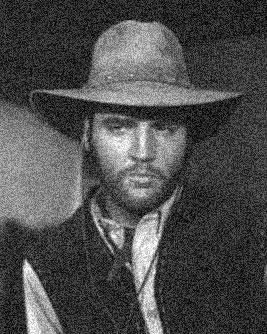
Elvis Presley in 1968. Although he has 29 top ten hits on BILLBOARD's country charts, he is not a member of the Country Music Hall of Fame (Original Photo Credit: Greg Howell/GRACELAND EXPRESS)

Elvis Presley in 1968. Although he has 29 top ten hits on BILLBOARD’s country charts, he is not a member of the Country Music Hall of Fame (Original Photo Credit: Greg Howell/GRACELAND EXPRESS)

However, the majority of Elvis’ 1967-1976 studio recordings could be considered country songs, or at least derived from the style. These recordings really did not quite fit the label of “country” in the 1970s, for once again Elvis had redefined music and was ahead of the times.

Although he was among its early pioneers, Elvis’ influence on modern rock music is not often easily detected. Rock has gone off on its own and often takes paths that Elvis probably would have avoided.

It is modern country music in which Elvis’ influence can still loudly be heard. His music from the last ten years of his life has grown into today’s country music. Indeed, many of its greatest stars often acknowledge Elvis as an influence, including Garth Brooks, Vince Gill, Travis Tritt, Trisha Yearwood, Ricky Van Shelton, Ronnie McDowell, Aaron Tippin, Patty Loveless, Dwight Yoakam, Tanya Tucker, Billy Ray Cyrus, Mark Chesnutt, Pam Tillis, Marty Stuart, Faith Hill, Doug Supernaw, Wynonna Judd, and the Mavericks. Although Elvis has been gone for almost 18 years, these stars and others continue to incorporate parts of Elvis’ style into their own.

Elvis has found a home in modern country music. He has been accepted by both its performers and its fans at a time when he is often shunned by others. It is time to make this home a permanent one.

In 1954, Elvis was rejected by the Grand Ole Opry. Will the Country Music Hall of Fame make the same mistake?


Join the campaign

Don’t let the Country Music Foundation continue to gloss over Elvis and his achievements. The Foundation will ultimately decide if Elvis will be inducted into the Country Music Hall of Fame. Write them a letter today expressing your opinion. The address is: [. . .].

Is Greed Alive? [The Elvis Beat newsletter]

I was 19 when I wrote this piece back in 1994 for The Elvis Beat #10, my official Elvis Presley Fan Club newsletter.


The headline “Elvis is alive” on the front page of The Richmond Times-Dispatch, a legitimate and respectable newspaper, was a bit surprising. Unfortunately, the theories presented in the article were old news, worthy only of The National Enquirer.

Phil Aitcheson called a press conference on September 16 in Moneta, Virginia, to announce the findings of his two-year investigation into Elvis’ death. He alleges that the singer faked his death.

Aitcheson explained that Elvis had been made a federal agent at large in 1971 after meeting with President Richard Nixon, and then became involved in a major FBI investigation of organized crime. Aitcheson says that Elvis faked his death on August 16, 1977, to enter the federal witness protection program. “Elvis wanted to help his country out any way he could,” he said.

Aitcheson’s “Presley Commission,” which consisted of 14 other members who apparently wish to remain anonymous, assembled The Presley Report, a 300-page document that supposedly proves their findings.

A 1981 recording, made four years after Elvis died, was played for reporters at the press conference. The recording was analyzed by an “expert” who found that the voice on the recording was Elvis Presley.

Similar claims were made by author Gail Brewer-Giorgio in her 1990 book The Elvis Files. Her book and a 1991 television special of the same name, hosted by Bill Bixby, used similar documents and the same recording as “evidence.”

Brewer-Giorgio previously wrote The Most Incredible Elvis Presley Story Ever Told (1987) and Is Elvis Alive? (1988) about Elvis faking his death. She also wrote a 1979 novel, Orion, about a singer loosely based on Elvis who faked his death.

Brewer-Giorgio’s evidence was shot down in a 1992 follow-up television special, The Elvis Conspiracy. Also hosted by Bixby, the second special had the tape analyzed by a new expert who found that the voice was not that of Elvis. The program also found all of the other major evidence false as well and concluded that Elvis is dead.

One can only speculate if Brewer-Giorgio is somehow connected with Aitcheson’s project as well, attempting to cash in on Elvis’ loyal fans once again. The Presley Report sells for $29.95, and Aitcheson claims that profits will go to the National Multiple Sclerosis Society in Elvis’ name.

The Elvis Beat recommends that fans contribute to their favorite charities in a more direct fashion.

Coroner cleared in new report on Elvis’ death [The Elvis Beat newsletter]

I was 19 when I wrote this piece back in 1994 for The Elvis Beat #10, my official Elvis Presley Fan Club newsletter.


Medical examiner Jerry Francisco, who was in charge of the autopsy performed following Elvis’ death in 1977, has been cleared of allegations that he lied on Elvis’ death certificate. Dr. Francisco ruled that Elvis had died of coronary arrhythmia, an irregular beating of the heart resulting from hypertensive heart disease.

For years there has been speculation that Francisco’s findings were part of a cover-up and that Elvis’ death was actually drug related. The controversy prompted the Tennessee health department to review the case several months ago.

The health department issued a two-page statement on September 29. “There is no basis to conclude that any person willfully and knowingly made false statements on  the death certificate of Elvis Presley,” the statement read.

The statement did not mention drugs or indicate whether heart disease was the best diagnosis. Due to privacy regulations, the full report will not be released.

Elvis honored at tribute [The Elvis Beat newsletter]

I was 19 when I wrote this article back in 1994 for The Elvis Beat #10, my official Elvis Presley Fan Club newsletter.


Elvis: The Tribute concert took place in Memphis at the Pyramid on October 8 and was broadcast live on pay-per-view television. It featured many stars, including Bryan Adams, Chet Atkins, Tony Bennett, Michael Bolton, Cheap Trick, Cher, Billy Ray Cyrus, Melissa Etheridge, Chris Isaac, Jerry Lee Lewis, Aaron Neville, Carl Perkins, and Dwight Yoakam. Elvis’ ex-wife, Priscilla Presley, also appeared.

Lisa Marie Presley-Jackson, her new husband, Michael Jackson, and his sister, Janet Jackson, were among the 18,000 people who attended the event. There had been plans for Lisa Marie and Michael Jackson to sing a duet in the show, but they eventually decided not to perform.

Along with Elvis songs performed by other music stars, the show included footage of Elvis singing several songs, including “If I Can Dream.”

Several performers originally slated to appear had to back out for different reasons. Among these were Billy Joel, Elton John, and Jon Bon Jovi.

Portions of the profits will go to the TJ Martell Foundation and the St. Jude’s Children’s Research Hospital.

Elvis: The Tribute will be re-broadcast in December on ABC.

Elvis statue to move [The Elvis Beat newsletter]

I was 19 when I wrote this article back in 1994 for The Elvis Beat #9, my official Elvis Presley Fan Club newsletter.


The Elvis statue on Beale Street in Memphis will soon be moving. Eric Parks’ 1979 bronze statue has fallen prey to erosion and other deterioration in its current location, which is outside at Elvis Presley Plaza. The 10-foot statue, which is a stunning likeness of Elvis, will be completely restored before being moved inside to a new multi-million dollar welcome center being built in downtown Memphis.

Todd Morgan, Director of Communications for Graceland, said, “The center’s lobby is expected to feature imagery celebrating Memphis music, with the Elvis statue dominating the area as its centerpiece.”

Morgan reports that Graceland is planning to place a weather-proof statue or tribute at the old Beale Street location.

The new Memphis welcome center is scheduled to open by the end of this year.

Elvis restoration project continues [The Elvis Beat newsletter]

I was 19 when I wrote this piece back in 1994 for The Elvis Beat #9, my official Elvis Presley Fan Club newsletter.


RCA’s effort to digitally restore all of Elvis’ songs and release them on the compact disc format is still going strong. A 2-CD boxed set of gospel and inspirational songs will be released by end of this year. The set will contain some of the songs not included in ELVIS: From Nashville To Memphis – The Essential 60s Masters I.

To be released in 1995 is The 70s Masters boxed set, which will contain at least 5 CDs.

In May, RCA continued the Elvis Double Features series with the release of the following 1960s movie soundtracks, one of which is actually a triple feature:

  • Frankie & Johnny/Paradise, Hawaiian Style
  • Spinout/Double Trouble
  • Kissin’ Cousins/Clambake/Stay Away, Joe