Royal Philharmonic Orchestra Makes Me Wonder If I Really Need a New Elvis CHRISTMAS Album [Pastimescapes blog]

If there is one constant at Christmastime, it is that there will be a “new” Elvis Christmas album available for purchase. These are normally just reshuffled sequences of selections from the two dozen or so seasonal songs Elvis Presley first released in 1957, 1966, 1968, and 1971. Only occasionally has there been any creativity in these posthumous releases–such as 1982’s Memories of Christmas or 2008’s Elvis Presley Christmas Duets albums.

While Christmas Duets was mostly a “miss,” at least it was an attempt to try something new. Now, in 2017, RCA/Sony/Legacy attempts again to freshen up the classics with Christmas. The album features the Royal Philharmonic Orchestra (RPO) providing new backing music for Elvis’ vocals. How does this latest attempt fare?

As I enjoyed both of the previous Elvis/RPO offerings (2015’s If I Can Dream and 2016’s The Wonder of You), I mostly knew what to expect going in. One aspect I found surprising this time, though, is that I immediately loved this album. With the two former albums, I had to play them through a couple of times to really “get” them. You could say I learned to love the If I Can Dream and The Wonder of You Elvis/RPO albums, while it was love at first listen with Christmas.

The Deluxe Edition of Christmas includes the Elvis vocals from all 12 (8 Christmas and 4 gospel) songs on 1957’s Elvis’ Christmas Album. It also contains Elvis performances of five Christmas selections originally part of 1971’s Elvis Sings the Wonderful World of Christmas. I recommend the Deluxe Edition (red cover) because it contains four more tracks than the standard version (tan cover), yet is at a similar price point.

I must admit, I was skeptical of the track listing before actually playing the album. Surely, the RPO would not mix well with bluesy classics like “Santa Claus Is Back In Town” and “Merry Christmas Baby.” While the originals are stone-cold classics, these new interpretations also manage to work in their own right.

What really makes this album stand out, though, are the Elvis vocals. They are so crystal clear. It is frustrating that they do not sound this way more often on standard releases, without newly recorded backgrounds, but I can only assume there is some technological reason that prevents this.

Though strong albums, If I Can Dream and The Wonder of You both had a few tracks where the RPO concept just did not work very well. Not so here. Every track on Christmas works. This is the best of the Elvis/RPO trilogy.

While I consider this a near-perfect album, given the concept, there is, unfortunately, a missed opportunity. “I’ll Be Home On Christmas Day,” which ranks second only to “Santa Claus Is Back In Town” as the best Elvis Christmas song of all, is missing in action here. Unless they plan an EP for some future Christmas, there are really not enough Elvis Christmas songs remaining to warrant a second full-length album, so they are probably not holding it back for that reason. I am not sure what happened, but perhaps an orchestral arrangement for the song simply did not work.

Unlike Christmas Duets, which had a pedestrian approach to many tracks, the arrangements here, by Robin Smith and Sally Herbert, offer much interest. I love the fuller sound. Also unlike Christmas Duets, I suspect this album will become a permanent fixture in my Christmas music rotation in the years ahead – alongside the originals, of course.

Do I really need a new Elvis Christmas album? It turns out the answer is, yes. This year, more than ever.

Christmas is a beautiful album.

Overall Rating: 10 out of 10.

CHRISTMAS (2017) [Deluxe Edition]

CHRISTMAS (2017) [Deluxe Edition]

Tracks

Christmas
Elvis Presley with the Royal Philharmonic Orchestra

  1. Santa Claus Is Back In Town [Elvis portions recorded 1957, Hollywood]
  2. White Christmas [Elvis portions recorded 1957, Hollywood]
  3. Here Comes Santa Claus [Elvis portions recorded 1957, Hollywood]
  4. Merry Christmas Baby [Elvis portions recorded 1971, Nashville]
  5. Blue Christmas [Elvis portions recorded 1957, Hollywood]
  6. I’ll Be Home For Christmas [Elvis portions recorded 1957, Hollywood]
  7. Winter Wonderland [Elvis portions recorded 1971, Nashville]
  8. Santa Bring My Baby Back [Elvis portions recorded 1957, Hollywood]
  9. Silver Bells [Elvis portions recorded 1971, Nashville]
  10. O Little Town Of Bethlehem [Elvis portions recorded 1957, Hollywood]
  11. O Come All Ye Faithful [Elvis portions recorded 1971, Nashville]
  12. The First Noel [Elvis portions recorded 1971, Nashville]
  13. Silent Night [Elvis portions recorded 1957, Hollywood]
  14. Peace In The Valley (Deluxe Edition only) [Elvis portions recorded 1957, Hollywood]
  15. I Believe (Deluxe Edition only) [Elvis portions recorded 1957, Hollywood]
  16. Take My Hand, Precious Lord (Deluxe Edition only) [Elvis portions recorded 1957, Hollywood]
  17. It Is No Secret (Deluxe Edition only) [Elvis portions recorded 1957, Hollywood]

The Royal Philharmonic Orchestra recorded 2017 at Abbey Road Studio 2, London.

IF I CAN DREAM Promises yet Another Elvis Illusion [Pastimescapes blog]

Released last week, the If I Can Dream CD includes a sticker on its cover touting:

ELVIS IS BACK WITH A BRAND NEW ALBUM!
Newly Recorded with the Royal Philharmonic Orchestra

I wish that were so. Instead, If I Can Dream, of course, features familiar Elvis Presley vocals placed against new audio backdrops supplied by the Royal Philharmonic Orchestra (RPO).

Some Elvis fans are automatically against this sort of concept, which has been tried with varying degrees of success a number of times since the artist passed away in 1977.

Just to name a few:

  • 1980’s Guitar Man album of overdubs (“remixes”)
  • 2002’s “A Little Less Conversation” JXL remix
  • 2008’s Christmas Duets album of artificial duets and remixes
  • 2010’s Viva Elvis album of remixes and artificial duets

The underlying goal of most of these projects is to help attract a new audience for a singer no longer around to promote his own work or create contemporary recordings. A secondary goal, of course, is to give something “new” to his existing fans.

As for me, I have nothing against creating new art through the use of old. I try to approach each of these new takes on Elvis with an open mind. As long as the original Elvis versions remain available, then I think it is fine to experiment. In fact, it is often fun to hear Elvis in a new context, and if it brings along a few new fans, all for the better.

With all of that out of the way, I have to admit, the first time I played through Sony’s If I Can Dream on Friday, I was underwhelmed. Having one of the great rock ‘n’ roll songs of all time, “Burning Love,” preceded by an orchestral introduction seemed incongruous.

Should rock ‘n’ roll mix with orchestra? This is a debate that goes back to at least 1968 for Elvis fans – for If I Can Dream is hardly the first Elvis album to include an orchestra. Many of his actual recordings featured orchestral backing, including some of the ones on this very release. I have tended to be in favor of a full sound on appropriate songs.

I also love orchestral music in general, having been introduced to it at a young age by the Star Wars and Superman soundtracks of John Williams, which led me to start exploring true classical music in more recent years. Add that to the fact that I am a lifelong Elvis fan, and I should be a natural fit for this album.

Yet, from that first listen, I walked away thinking If I Can Dream was barely a mediocre effort overall. It seemed neither as creative as Viva Elvis nor as entertaining as “A Little Less Conversation.”

I tried If I Can Dream a second time on Saturday, and something snapped into place for me. The first time, I was thinking of it as an Elvis album to which the RPO had been added. For the second listen, I thought of it as an RPO album to which Elvis had been added. A subtle difference, I know, but it is one that made me listen in a different way.

I closed my eyes and imagined I was sitting in Cadogan Hall listening to the RPO perform in London, with a surprise guest vocalist by way of Memphis.

Suddenly, it did not seem weird for “Burning Love” to include an orchestral introduction, for how else would the RPO begin one of their performances?

Prior to this album’s release, I saw a promotional video of Elvis singing “What Now My Love,” with the RPO providing orchestral backing (a track not included here). In some ways, I would say that video did this album no favors, for the impression I had with “What Now My Love” was two different recordings of the same song playing at the same time. Fortunately, that is not how the If I Can Dream album sounds. Instead, the meld is usually natural.

For instance, Michael Bublé features in a duet on “Fever.” While I would have preferred a female counterpart for that particular song (say, Beyoncé), the duet is quite convincing from a technical standpoint – much more convincing than what I can remember of 2008’s Christmas Duets (not an album I often revisit).

Bublé turns in a fine performance, and their voices blend particularly well on “Everybody’s got the fever, that is something you all know…” as if they are standing next to one another. Think Elvis and Frank Sinatra in their real-life duet on the last lines of “Love Me Tender” in 1960. The novelty factor makes “Fever” the highlight of the album.

The distinctive sound of an Elvis contemporary and fellow rockabilly legend is included in new guitar work on “Bridge Over Troubled Water” and “An American Trilogy.” A nice surprise that I will not otherwise spoil here.

The orchestral concept works extremely well for several other songs. “How Great Thou Art” is stunning in its fully orchestrated version. The original is a true Elvis masterpiece, so there was certainly danger in changing anything.

“Love Me Tender” and “It’s Now Or Never” are also highlights, with the latter featuring Il Volo on new background vocals.

None of these versions exceed the originals (“There’s Always Me” comes closest), but that does not make them any less enjoyable as new experiences.

Not as successful are “In The Ghetto” (less is always more on accompaniment for this song, as guitar-only outtakes have proven) and “Steamroller Blues” (way too much going on).

The real puzzler of If I Can Dream is the choice of “And The Grass Won’t Pay No Mind,” an awful song in its original master version to which even the RPO can add no favors.

Beyond that, my only real gripes are with the “additional backing vocals” newly supplied by Miriam Grey, Shena Winchester, and Andy Caine on nearly all of the tracks. I would have preferred the original backing vocals (the Sweet Inspirations, J.D. Sumner and the Stamps, the Imperials, etc.) remained prominent in the mix, as the new ones only detract from the experience. Perhaps there was some technical limitation that necessitated this, or maybe it is just the nature of a pseudo-new album.

As emblazoned on its sticker, If I Can Dream offers up the promise of illusion delivered via the magic of technology. From that perspective, the album usually makes good on its word.

For a moment, if you are willing to accept the mirage, Elvis is indeed back.

Overall Rating: 7 out of 10.

IF I CAN DREAM (2015)

IF I CAN DREAM (2015)

Tracks

If I Can Dream
Elvis Presley with the Royal Philharmonic Orchestra

  1. Burning Love [Elvis portions recorded March 28, 1972, Hollywood]
  2. It’s Now Or Never [Elvis portions recorded April 3, 1960, Nashville]
  3. Love Me Tender [Elvis portions recorded August 24, 1956, Hollywood]
  4. Fever (with Michael Bublé) [Elvis portions recorded April 3, 1960, Nashville]
  5. Bridge Over Troubled Water [Elvis portions recorded June 5, 1970, Nashville]
  6. And The Grass Won’t Pay No Mind [Elvis portions recorded February 17, 1969, Memphis]
  7. You’ve Lost That Lovin’ Feelin’ [Elvis portions recorded live August 12, 1970, Dinner Show, Las Vegas]
  8. There’s Always Me [Elvis portions recorded March 12, 1961, Nashville]
  9. Can’t Help Falling In Love [Elvis portions recorded March 23, 1961, Hollywood]
  10. In The Ghetto [Elvis portions recorded January 20, 1969, Memphis]
  11. How Great Thou Art [Elvis portions recorded May 25, 1966, Nashville]
  12. Steamroller Blues [Elvis portions recorded live January 14, 1973, Honolulu]
  13. An American Trilogy [Elvis portions recorded live February 15, 1972, Midnight Show, Las Vegas, and January 14, 1973, Honolulu]
  14. If I Can Dream [Elvis portions recorded June 23, 1968, Burbank]

The Royal Philharmonic Orchestra recorded December 10, 2013, and April 9-10, 2014, at Abbey Road Studio 2, London.

EPE sues Spankox over unauthorized Christmas Remixes album

I remember being slightly surprised last year that Elvis Presley Enterprises had authorized Christmas Remixes, containing dance remixes by DJ Spankox of 1957’s entire Elvis’ Christmas Album. Sure, I could point to the rubber duckies or the potato heads as other examples of severe lapses in judgment when it comes to protecting Elvis’ legacy, but a dance remix version of Elvis’ Christmas Album? Really?

Turns out that EPE may have been just as surprised as I was to hear about the release of the album. In a lawsuit for which they recently won a summary judgment, EPE alleges they gave no such authorization to Spankox (Spankox Sued By EPE – ElvisNews.com).

EPE previously worked with Spankox in an authorized fashion on Re:Versions (2008) and Re:Mixes (2010). Re:Versions had uneven results, though I did enjoy the new take on “Too Much.” The Re:Mixes follow-up was rather poor, with few real highlights – perhaps, only “Hound Dog” (but it is, after all, the power of Elvis’ performance shining through and not the remix itself that makes that one compelling).

Compared to the stellar remix efforts by others on 2010’s Viva Elvis: The Album, 2002’s “A Little Less Conversation,” and 2003’s “Rubberneckin,'” Spankox’s attempts seemed insignificant and worn out. I never bothered to seek out his Christmas Remixes album, and it turns out that I made the right choice. Allegedly attempting to pass off something like that as being an authorized product just isn’t cool.

February 7 Update: The official Elvis.com site has posted an item about winning the Spankox lawsuit.

Viva Elvis “Burning Love” video fails to ignite, while Elvis.com makes embarrassing mistake (Conductor’s Reflections #7)

The official Elvis Presley Enterprises site reports that the folks behind Viva Elvis: The Album have released a new music video for “Burning Love.” Sadly, the Elvis.com news item states, “The video features archival footage of Elvis’ iconic Las Vegas performance.”

Uh, hello official Elvis site? Are you there? That footage is from Elvis’ iconic Aloha From Hawaii performances. You know, the ones that Elvis Presley Enterprises owns and occasionally promotes on DVD? The Aloha From Hawaii concerts took place, oddly enough, in Hawaii. White jumpsuit does not always equal Vegas. E! and other idiotic entertainment sites make this kind of mistake all of the time, but the official Elvis site should know better.

I loved the Viva Elvis album, including this track, so I figured I’d check this video out (“Burning Love” from Viva Elvis: The Album video — YouTube). First of all, it is miles ahead of the horrible video released last month for the otherwise incredible Viva Elvis version of “Suspicious Minds.” At least this “Burning Love” video doesn’t shy away from featuring footage of Elvis singing the song.

The first video, on the other hand, would have you believe that Elvis sang “Suspicious Minds” during the ELVIS (’68 Comeback) special. “Because, like, black leather is just so much cooler than a white jumpsuit,” was their way of thinking, I’m sure. That video mostly stars shadowy images of either 1968 Elvis or, it appears at times, an elvis impersonator dancing around on the screen. At least, that’s what I remember of it. I couldn’t bare to watch that thing twice.

By the way, they could have actually featured “archival footage of Elvis’ iconic Las Vegas performance” of this song. There was a fantastic 1970 version of “Suspicious Minds” filmed in Las Vegas for That’s The Way It Is. Granted, Elvis Presley Enterprises doesn’t own that movie footage (they only own Elvis’ three 1968-1977 television specials), but I’m sure they could have worked something out with Warner Home Video. They cross-promoted and worked together on Warner’s recent Elvis On Tour release, after all.

Though it may represent a switch in the targeted market for Viva Elvis: The Album from newcomers to established fans, I love the fact that this “Burning Love” video actually embraces the jumpsuited Elvis as he appeared in the Aloha concerts. Elvis did not die in 1968 (or, worse, 1958), despite what some would have you believe.

What doesn’t work for me at all, though, is the juxtaposition of Viva Elvis musicians thrown into the Aloha footage. Perhaps it is because I have watched the real Aloha so many times, but there is no illusion established that these people are all playing together on stage. It looks like you are watching two different concerts at once. Maybe that’s one of the problems some fans have with Viva Elvis: The Album. I guess the visual mash-ups bother me more for some reason than the audio ones.

The “Burning Love” video also suffers from a bit of the same problem as “Don’t Be Cruel” on the 2010 version of Elvis On Tour. About halfway through “Burning Love,” the video producers decide to cut to Elvis dramatically taking off his guitar (in reality, from the end of the song). This allows Elvis to move around freely, dance a bit, and interact with the audience. Suddenly, he is back with guitar at the end of the song – and then dramatically removes it again for the song finale. Ugh.

It makes Elvis look silly to apparently do this guitar removal bit twice in this “Burning Love” video – much like hearing Elvis apparently sing his funny “Please let’s forget the past, before I kick your —” line twice for “Don’t Be Cruel” did in the 2010 Elvis On Tour. That’s the problem with the realm of video and audio trickery. Some people do not know how to properly use the toys.

If they just had to show him with the guitar again, why not at least show him putting the guitar back on first? Then, just have him leave the guitar on when the song ended. The footage was there to do both, using elements from “See See Rider.”

The whole thing just seems sloppy, cheap, and rushed. At least it’s better than “Suspicious Minds,” though.

Listen to Elvis again for the first time in Viva Elvis-The Album

Viva Elvis: The Album is the Elvis surprise of the year for me. Since I have no interest in the Cirque du Soleil show that inspired it, I was pretty much ignoring this release until a preview trailer appeared before the theatrical showing of Elvis On Tour. That preview perfectly sets up this album – in fact, it is essentially the opening track. Next, I heard the modernized version of “Suspicious Minds” and I was hooked. (The accompanying music video released yesterday on elvis.com, however, is atrocious.)

From the sound clips on Amazon and other sites, I was pretty sure this album would be about one-third great, one-third okay, and one-third awful. I missed the mark on that assessment, by a mile. The entire album is a creative show of force that left me in absolute shock. The out-of-context song clips do not even begin to do this artistic album justice. Not even the “Suspicious Minds” single is an adequate representation, for this album is an experience.

Unlike other remix-type albums, I recommend listening to Viva Elvis in one sitting from beginning to end – rather than in the segmented form that iPod convenience so often brings us. Though the Elvis vocals are mostly from studio masters, this often feels like a live show – that is, if Elvis was alive in 2010 and gave a multimedia extravaganza concert reflecting on his career.

The backing on these tracks may have changed from the familiar versions, but the heart of this music remains the same. The originals will always maintain their rightful prominence over fancy remixes, but Viva Elvis: The Album offers a chance to listen to Elvis for the first time – all over again. It is so great that I wish I could shout about it from mountaintops – but I’m really not much of a climber. Instead, I’ll just have to use my little blog.

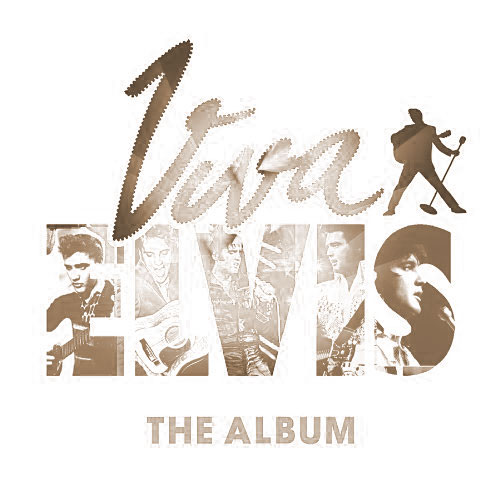
Viva Elvis The Album, 2010

Viva Elvis The Album, 2010

Suspicious Minds remix now available on iTunes (USA)

Suspicious Minds - Viva Elvis Version (2010)

Suspicious Minds - Viva Elvis Version (2010)

For those in the United States, the Viva Elvis remix version of “Suspicious Minds” is now available for download from iTunes. They’ve knocked this one of out the ballpark, folks. Fantastic job. Looking forward to the full album in November.

Go to iTunes to download “Suspicious Minds” (Viva Elvis Version).

Update: The new “Suspicious Minds” single is also available on Amazon.

New site for Viva Elvis album

Sony has unveiled a new website, www.suspicious-minds.com, to promote the November release of Viva Elvis: The Album – which features remixed versions of Elvis classics like “Suspicious Minds.” Five song samples are available there by default. You can hear more if you share the page on Facebook or Twitter. (Hint: Or you could just go to Amazon’s Elvis page and listen to all of the samples.) Two or three of the samples sound amazing, two or three sound like total duds, and the others are probably somewhere in between. We’ll have to hear the whole album to find out for sure, though. It hits stores November 9. Internationally, there will be several different variations available.