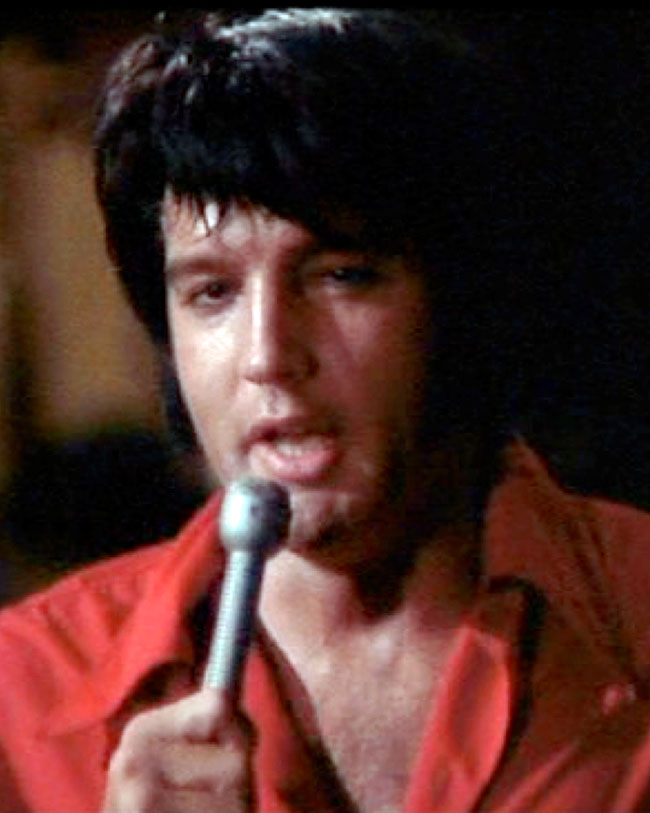
REVIEW – Live In Vegas: August 26, 1969 Dinner Show (FTD CD)

Live In Vegas: August 26, 1969 Dinner Show CD (Follow That Dream Records, 2011)

If you believe some fans, surely we’ve already heard enough 1969 Las Vegas concerts. Now that Live In Vegas: August 26, 1969 Dinner Show is available from FTD, let’s take a closer look at their claims.

Claim: If you’ve heard one 1969 show, you’ve heard them all.
Verdict: FALSE

For those who believe there are no more revelations to discover in these shows, I can easily pull one example of many from this release alone. For over 40 years now, Elvis fans have listened to the 1969 compilation Elvis In Person. How many ever realized that Elvis dedicated the specific performance of “Suspicious Minds” contained on that album to Barbara McNair, one of his Change Of Habit co-stars?

Elvis evidently thought a lot of McNair, who played Sister Irene, for he plugged her upcoming TV series, The Barbara McNair Show, when presenting her to the audience. As mentioned, Elvis’ introduction of the familiar version of “Suspicious Minds” is now slightly different: “A new record that just came out, ladies and gentlemen, I hope you like it, I’d like to do this especially for Barbie, it’s called ‘Suspicious Minds.'”

Though it is the sixth full-length show released from this engagement, Live In Vegas actually marks the first release of a concert that contributed songs to the Elvis In Person compilation (“Suspicious Minds” and “Can’t Help Falling In Love”). One of the joys of being able to hear complete 1969 shows like this one is re-discovering a song within its original context.

Claim: Every 1969 show had the same set list.
Verdict: FALSE

Live In Vegas is actually the first full show released thus far to include “My Babe” (previously compiled on Elvis Aron Presley) or “Inherit The Wind” (previously compiled on Collectors Gold). This is also the first full show so far where Elvis omits “Are You Lonesome Tonight” and only the second where he omits “What’d I Say.”

Incidentally, the inane argument that the set lists were always the same wasn’t even true of the first five shows released. Don’t get me wrong – of course, the core set lists are similar. These shows were all recorded within less than a week’s time, after all. The amusing part is that some fans apparently expect that Elvis should have completely revamped his show night after night. The 1969 concerts were about as perfect as any Elvis did in his career, but that’s not good enough for some.

Claim: If you’ve already heard the Midnight Show from this same date on All Shook Up, Live In Vegas will just be more of the same.
Verdict: FALSE

Though indeed recorded just a few hours apart from one another, the shows captured on All Shook Up and Live In Vegas are quite different from one another and do not play like repeats of the same show. The biggest difference is tone. While Elvis seems unable to control his infectious laughter through much of All Shook Up – including the fantastic “Are You Laughing Tonight” – he is much more focused on Live In Vegas. In fact, other than a few snickers here and there, there is little foreshadowing in the Dinner Show as to what will occur in the Midnight Show.

As far as the songs performed for these specific shows, the Dinner Show (Live In Vegas) features “Memories,” “My Babe,” and “Inherit The Wind,” which are not present on the later show. The Midnight Show (All Shook Up), on the other hand, features “I Can’t Stop Loving You,” “Are You Lonesome Tonight,” “Rubberneckin’” and “This Is The Story,” which are not present on the earlier show.

I find being able to listen to two shows from the same day during this incredible time of Elvis’ career to be one of the most positive aspects of this release, certainly not a drawback. It is fascinating to imagine being there for that single day, somehow fortunate enough to have tickets to both shows.

Show & Sound Quality

I’m just glad Ernst Jorgensen and the rest of Sony’s Follow That Dream team do not subscribe to the sort of claims refuted above. If they did, we might have missed out on Live In Vegas.

With that out of the way, we can now move on to more important things, like show and sound quality. The first few times I played this disc, my opinion was that no 1969 show had ever sounded this vibrant.

I have played all six full shows this week and part of me believes that Live In Vegas is the best of the complete 1969 shows released so far, in terms of Elvis’ performance. I am not quite ready to say that yet, though. I want to give more time for the newness to wear off and allow myself to compare the various shows more objectively. Like all of the other 1969 shows thus far released, though, this is without a doubt one of Elvis’ greatest concerts.

Elvis treats his classics with more respect in 1969 than he would in later years. “Blue Suede Shoes,” “All Shook Up,” “Love Me Tender,” “Jailhouse Rock,” and “Don’t Be Cruel” are all contenders as his best 1969 versions.

“You see, they fixed these lights up for Nancy Sinatra. They wouldn’t do it for me. That shows where the pull is. . . . I’ll show ’em, I won’t come back,” Elvis states shortly after welcoming the audience early on. Nancy’s engagement on the same stage would begin on August 29, just a day after Elvis’ would end. Elvis stuck around and caught her show and, despite his joke, returned to the International for another engagement just six months after this first one.

“Hound Dog” is also great, once you get past his cringe-inducing introduction of the song that also plagues every other version released so far from this engagement.

There are two tracks I always pay close attention to on the 1969 shows. One is “Suspicious Minds” – already a known factor on this album – and the other is the “Mystery Train/Tiger Man” medley. Elvis does a kickin’ rendition of this medley on Live In Vegas.

While Ronnie Tutt’s jungle drums are the focus in the first bits of “Tiger Man” before the second guitar break, the mix turns over to James Burton’s rockin’ guitar riffs for the other half of the song. It makes for a great compromise and one of the best versions of the song yet released.

I have yet to hear a bad version of “Runaway” from these shows, and this one is no exception. What a terrific performance from Elvis, driven again by James Burton. Too bad it was dropped from the show after 1969.

“Yesterday” is the typical “I’m not half the stud…” version and, as usual, the tacked on “Hey Jude” ending is no help.

After introducing the band, Elvis has Barbara McNair stand and introduces her as “a young lady that I just got through making a picture with called Change Of Habit, and I found her to be one of the nicest, warmest, lovingest people I’ve ever met.” When audience members complain they could not see her, he has the lights turned back on so she can stand up again.

It’s really cool hearing Elvis promote one of his movies on stage. Since he took a break from concerts through most of the 1960s, when he made the bulk of his movies, this was not an opportunity he had very often.

“In The Ghetto” is beautiful, similar to the Elvis In Person version.

On both of his August 26 shows, Elvis omits his breakneck speed version of “What’d I Say” and, in my opinion, the shows are all the better for it. “Suspicious Minds” is the ideal penultimate song, segueing perfectly into “Can’t Help Falling In Love.”

Speaking of “Can’t Help Falling In Love,” the Elvis In Person version has always been my favorite from 1969, and it sounds even better here.

* * *

Live In Vegas showcases Elvis Presley at his best on stage in a sound presentation that is richly mastered and crystal clear.

Sony reportedly has another six full shows from this engagement in its vault, including three more that contributed songs to the Elvis In Person album: the August 25 Dinner Show and the August 24 & 25 Midnight Shows.

There will always be complainers–even when Elvis was alive, he couldn’t please everyone, not even in 1969–but here’s hoping the rest of those 1969 shows, particularly the Elvis In Person ones, are eventually released. I’m looking forward to hearing each and every one of them.

REVIEW: Elvis Now CD Set (2010 FTD Edition)

Elvis Now CD set (Follow That Dream Records, 2010)

Elvis Now: What’s in a name?

Apparently, we Elvis fans are not supposed to like Elvis Now. Even the new liner notes provided by Follow That Dream Records in this Classic Albums version of the release seem on the verge of being apologetic.

“With three older recordings, and precious few songs in the folk genre, neither the title of the album nor the original intent is of any importance anymore it seems,” the notes state in an entry about the album’s release in February 1972.

I think some people, including the unnamed author of FTD’s liner notes, get too hung up on the title. Three of the four Elvis releases in the seven months leading up to Elvis Now contained much older recordings, some dating all the way back to the 1950s.

Due to similar cover art featuring Elvis in concert in the early 1970s, the “Now” in Elvis Now simply distinguishes the album from the likes of C’Mon Everybody and I Got Lucky as containing current, post-Comeback Special material.

Additionally, “Elvis Now” was one of the marketing slogans used during his Vegas engagements. To complain about one song out of ten being three years old, and two others being nearly two years old, is to miss the point.

Compared to some of his other efforts at the time, Elvis Now is certainly a mellow album. The closest thing to a rocker is probably the gospel-infused “Put Your Hand In The Hand,” and that is a stretch.

In 1970, Elvis pointed out that he hated to be labeled a “strictly country” singer. The corollary to this is that he also should not be labeled as “strictly rock ‘n’ roll,” “strictly gospel,” or “strictly rhythm & blues.”

Elvis resisted such labels right from the start. “I don’t sound like nobody,” a much younger Elvis told Marion Keisker at the Memphis Recording Service in 1953.

You see, that is the real secret to the appeal of Elvis’ body of work as an artist. Those who judge his career based solely on various rock ‘n’ roll milestones do Elvis a disservice by overlooking his multi-faceted approach to music.

While rock ‘n’ roll mostly takes a back seat in Elvis Now, the album offers slices of some of the other kinds of music that he enjoyed creating. If you are willing to listen in new ways, the album can even be interpreted to include an emotional and thematic journey.

“I don’t want to be alone”

In “Sylvia,” love has been lost – although the hero-singer is in denial. (Side note: Elvis sings, “…here I am on the phone, wondering when she will call.” Uh, Elvis, maybe Sylvia was trying to call you all along but could not get through because you were on the phone!)

Bruce Springsteen once said that Elvis took away people’s loneliness, yet ended up so alone. You can feel this loneliness in the compelling “Help Me Make It Through The Night,” where the hero-singer begs to a lost love – maybe Sylvia, maybe someone before her – to remain by his side just one more night.

With apologies to Kris Kristofferson, had Elvis been a writer, “Help Me Make It Through The Night” sure sounds like a song he might have written to fight some of his own demons.

Though not as strong of a composition, “Until It’s Time For You To Go” shows the hero-singer later that night still wanting to hold on to this doomed romance for as long as possible. “I’m not a king, I’m just a man,” he intones, pleading for understanding.

In “We Can Make The Morning,” the hero-singer continues to fight the darkness, singing, “It’s a long, long lonely night, we can make the morning if we try.” This stunning performance is an often-overlooked gem.

When the couple finally makes it to a new day, “Early Morning Rain,” the album’s best song, reveals that it is not as bright as the hero-singer expected. It is the same as the day before, and he is still down. “I’m stuck here on the ground,” he sings, for as it always does, night will come again – and with it the loneliness.

“Take a sad song and make it better”

Finding no consolation with his lost love, the hero-singer now seeks another cure to his loneliness in “Put Your Hand In The Hand” and “Miracle Of The Rosary.” He places faith in God, seeking the same comfort in music as he sought in life.

Faith leads to hope in “Hey Jude” and the tides begin to change. Much underrated, Elvis recorded this entertaining jam only months after the original release of the Beatles classic. Yes, Elvis mixes up some of the lyrics, but that is all part of the fun. This is another highlight of the album.

The hero-singer realizes his hope by falling in love yet again in “Fools Rush In,” the weakest song here. The mood is vibrant yet cautionary: “When we met, I felt my life begin, so open up your heart and let this fool rush in.”

He has fallen for someone new, but we are left to wonder if she returns this love. Otherwise, this new interest may go the way of Sylvia and lead to yet another long, lonely night.

Were it not for the strength of the other songs on Elvis Country, “I Was Born About Ten Thousand Years Ago” could very well have ruined that album due to the senseless decision to edit it in between each tune. On Elvis Now, the complete song works much better – tying everything up.

“I Was Born About Ten Thousand Years Ago” is a song about mankind and the human experience. In the end, the human experience is what Elvis Now is about, too: loneliness, despair, faith, hope, and love. An exciting album? No. A worthwhile album? Very much so.

Outtakes

Unfortunately, there are not a lot of revelations this time around with the outtakes. The best of the outtakes are takes 7 and 15 of “Help Me Make It Through The Night” (tracks 9 and 17, respectively, on disc 2). Outtakes of “Fools Rush In” prove as mundane as the master version. The outtakes of “Early Morning Rain” are disappointing in their mediocrity – considering the brilliance of the master take.

Bonus Songs

While it’s always great to hear the top-notch songs “I’m Leavin’,” “It’s Only Love,” and “The First Time Ever I Saw Your Face,” the real stand-out among the bonus songs is the unedited master of the “Don’t Think Twice, It’s All Right” jam, clocking in at over nine minutes.

You are there as Elvis and the band take this Bob Dylan song through its paces. Like “Hey Jude,” he does not know all of the words – and, again, that is not the point here. This is Elvis making music with a joy that is noticeably absent from many of the other tracks on this release.

Though the same words are repeated over and over, the nine minutes goes by before you know it. I love this kind of thing, so I must have listened to it four or five times in a row. The edited version of this song (shortened to under three minutes) first appeared on 1973’s Elvis (“Fool”) album, so my hope is that the full-length version is presented on Elvis Now because the FTD upgrade of the Elvis album will have too many other outtakes to accommodate it.

Also of note are impromptu versions of the Beatles’ “Lady Madonna” and Dylan’s “I Shall Be Released,” both of which were first released on Walk A Mile In My Shoes. “Lady Madonna” is slightly longer here.

Final verdict

Perhaps the best part of FTD’s Elvis Now is that every song sounds better than it ever has before. If you love Elvis in the 1969 – 1971 era represented by this album and care about audio quality, you will be thrilled with these sound upgrades – particularly on the master takes. Kudos to FTD for much improvement in this area over the years.

Elvis Now is a different kind of listening experience than that of From Elvis In Memphis or That’s The Way It Is. While those two albums are monumental, their greatness should not take away from the understated achievement that Elvis Now represents.

A refreshing portrait of Elvis after the Army [The Film Frontier blog]

I run across cool stuff every now and then that I just want to point out to you. Peter Guralnick’s Last Train To Memphis: The Rise of Elvis Presley represents the definitive account of Elvis’ early years. Though many herald it along with Last Train, his follow-up volume, Careless Love: The Unmaking of Elvis Presley, often leaves something to be desired.

Guralnick at least treats his subject with a sympathetic eye, which is better than most Elvis biographers, but his disdain for much of Elvis’ post-Army career is still evident. As someone who happens to love and enjoy this later Elvis, I do not like to see those years so easily dismissed. The great thing is, someone else has already said all of this far better than I ever could.

Drjohncarpenter over on the For Elvis CD Collectors message board recommended “Elvis In The Dark” by Daniel Wolff. It contains a critical look not only at the post-Army Elvis, but also at Guralnick’s biography. Wolff is the author of a Sam Cooke biography as well as a couple of volumes on Bruce Springsteen. After reading this piece, one of the best I have ever seen about Elvis, my hope is that Wolff will write a Presley biography some day as well.

* * *

There was a sad announcement this week in the Elvis world. Sylvia Shemwell recently passed away. She was a member of the Sweet Inspirations, the vocal group that backed Elvis on stage from his return to live performances in 1969 through his death in 1977.

Before becoming part of Elvis’ show, the Sweet Inspirations were already a Grammy-winning gospel group that once backed Aretha Franklin. Outside of their time with Elvis, their best known hit was “Sweet Inspiration,” released in 1968.

Sylvia appears with Elvis in the documentary movies That’s The Way It Is (1970) and Elvis On Tour (1972). She also appears with him in the television specials Aloha From Hawaii (1973) and Elvis In Concert (1977) as well as countless live concert albums.

You see a more recent photo of her over on ElvisNews.com: Sylvia Shemwell Passed Away.

As for the official Elvis site, as far as I could find, there was no mention of her in their news section. They did, however, find the time to promote a so-called Elvis “Tribute” Artist competition.

My thoughts and prayers are with her family and friends during this time. Sylvia: Thank you for the music.

* * *

Myrna Smith, another member of the Sweet Inspirations who backed Elvis during the same time and events, was recently hospitalized in Great Britain. It sounds like she is doing better, though, and will hopefully be released soon.

John Wilkinson played rhythm guitar for Elvis in the 1969 through 1977 era, again appearing in those same events. Wilkinson is battling cancer and was recently hospitalized in Missouri.

I was thinking the other day, because of Elvis, I have been listening to these people for pretty much my entire life. I wish all of them well.

REVIEW: Good Times CD Set (2009 FTD Edition)

Good Times CD set (Follow That Dream Records, 2009)

A perfect presentation for an imperfect album

Good Times marked the second album released from Elvis’ 1973 sessions at Stax studio in Memphis. This version from the Follow That Dream collectors label includes all ten tracks from the original album and thirty-seven additional tracks of alternate takes and undubbed masters. FTD’s Classic Album series serves as the best possible format for this album, with sound quality in most cases as good or better than previous releases.

Take Good Care Of Her

  • Disc 1, Track 01, Master—Take 6: You have to give Elvis credit. Musically, he openly dealt with his relationship issues from just about every angle imaginable. In “Always On My Mind,” the singer begged forgiveness and asked for another chance from his wife. In “Separate Ways,” he accepted the split as inevitable. In “Take Good Care Of Her,” Elvis even directed a surprisingly benign message at his soon-to-be ex-wife’s new love interest. Whether his real-life actions measured up to his song choices is a debate for another time, but certainly, Elvis found creative sparks in his relationship problems that fueled many of his later recordings. Though many could be labeled as “dark” or “depressing,” these deeply personal recordings also may be the best insight into how Elvis was feeling during the last few years of his life. Though “Take Good Care Of Her” is not a great song by itself, it is Elvis’ personal conviction and passion that somehow make it more than it really should be.
  • Disc 1, Track 11, Rehearsal & Take 1: Here, we get a short rehearsal segment, followed by Elvis’ first attempt to record the song. Elvis almost sings to himself during the rehearsal, an interesting listen just for the “fly on the wall” aspect. Absent from the master take, you can hear a hint of bitterness in Elvis’ voice as he goes through Take 1. “Just to be around her was my greatest pleasure, she was everything my future held in store,” he sings sadly.
  • Disc 2, Track 06, Takes 2, 3: Take 2 falls apart just seconds into the song. Take 3 is complete, but unremarkable.
  • Disc 1, Track 23, Take 4: Nothing special here, either, though you can still hear more bitterness than on the master.
  • Disc 2, Track 17, Take 5: Producer Felton Jarvis apparently brings this take to an early close, causing Elvis to curse and comment, “Now I know how Jesus felt with that thorn in his side.”
  • Disc 2, Track 18, Take 6 (Undubbed Master): One of the best services that FTD provides us Elvis fanatics is supplying the undubbed versions of many of his master recordings. These stripped-down versions are often revelations, sometimes sounding better than the released recordings. For this song, though, I actually slightly prefer it with the overdubs. It is nice to have both options for this and the other songs on this album, though – a real selling point for this release and many others in the Classic Album series.

Loving Arms

  • Disc 1, Track 02, Master—Take 3: “Loving Arms” is one of Elvis’ best country songs – ranking right up there with just about anything on Elvis Country. This is a superb performance, one of the highlights of Good Times. This FTD release is the best this song has ever sounded, as if you are standing in the studio with Elvis as he pleads, “If you could only hear me now. . . .”
  • Disc 1, Track 12, Take 1 & Rehearsal: Elvis plays around with the tempo of “Loving Arms” during Take 1, obviously trying to find the “sweet spot.” By the end, you can hear the confidence in his voice as he begins to get it just right. After the take, Elvis and the other musicians work out a new ending for the song.
  • Disc 2, Track 02, Take 2: This is another faster take on the song. It’s probably too fast, but the power of his voice still makes it a worthwhile listen.
  • Disc 2, Track 12, Take 3 (Undubbed Master): I must note again that sound quality here is simply amazing, especially considering these recordings are over 35 years old. I prefer the dubbed version, mostly because the ending of the song is improved by removing the obnoxiously loud chorus on the last note.

I Got A Feelin’ In My Body

  • Disc 1, Track 03, Master—Take 3: There are three songs that drag Good Times down from being a real contender for one of the top albums of his career. Unfortunately, they all come right in a row. First up among the losers is “I Got A Feelin’ In My Body,” a fast-paced gospel number on which Elvis sounds like he is trying too hard. The song is not very good, and Elvis is unable to save it this time.
  • Disc 1, Track 13, Take 1: By the end of Take 1, Elvis begins playing around with the words, yet keeps the song from completely falling apart.
  • Disc 2, Track 03, Take 2: This sounds more like a rehearsal than an actual attempt, particularly at the beginning. Elvis obviously knows it’s not quite there yet as well, for he laughs near the end.
  • Disc 2, Track 13, Rehearsal & Take 3 (Undubbed Master): Even this master take does not sound like they have quite worked the song out, probably the source of some my issues with this recording. This is marginally better than the dubbed version, though. Outside of the context of playing this album in its entirety, I would still rarely, if ever, play this song.
  • Disc 1, Track 21, Take 4: A take beyond the master, which is actually somewhat rare at an Elvis session. Perhaps evidence that they were not completely satisfied with Take 3, either. Still not something I would choose to hear often, but I do like it better than Take 3. Elvis sounds more comfortable with the song than on previous takes.
  • Disc 2, Track 19, Take 7: Elvis sounds tired on Take 7. The pace is a little slower, but not a real improvement. By the end, I was hoping they would speed up to just get the thing over.

If That Isn’t Love

  • Disc 1, Track 04, Master—Take 4: It is evident on Disc 4 of the Live In Las Vegas boxed set when Elvis introduces Dottie Rambo, writer of “If That Isn’t Love,” that he thinks a lot of her. That is why it pains me to criticize this song. Elvis recorded many great gospel numbers in his career, but unfortunately, this is not one of them. As is often the case, Elvis puts a lot of effort into the song, but it is just sub-par material.
  • Disc 1, Track 14, Take 1: This take was a surprise for me. I actually liked it, certainly better than the master. It turns out this was first released on Rhythm & Country, but it did not stand out to me back then.
  • Disc 2, Track 07, Take 4 (Undubbed Master): This undubbed take is better than the released master, but not as good as Take 1.
  • Disc 1, Track 24, Splice of Takes 5 (LFS) & 7: Referring to Take 4, Elvis tells Jarvis to “save that last one” before beginning Take 5. This splice of Take 5 (a long false start) and the end of Take 7 is also better than the master Take 4. The song is still lacking, but at least is more listenable.
  • Disc 2, Track 14, Takes 6, 7: A mistake on piano ends Take 6 just seconds in. Next, is Take 7, complete but forgettable.

She Wears My Ring

  • Disc 1, Track 05, Master—Take 10: “She Wears My Ring” is the worst song on Good Times, and one of the worst from Elvis’ mostly stellar 1970s studio work.
  • Disc 2, Track 09, Takes 1-7: Elvis and the band get a case of the laughs in these early takes, which go by rather quickly. Much like some of the 1960s movie tunes, studio chatter and laughter is far more interesting than the actual song in question.
  • Disc 1, Track 15, Take 8: Elvis and company manage to cool the laughter and make a decent take, better than the master.
  • Disc 2, Track 15, Take 10 (Undubbed Master): Elvis sounds bored to me but Jarvis declares, “That’s a gas!” at the end.

I’ve Got A Thing About You Baby

  • Disc 1, Track 06, Master—Take 15: The payoff for making it through the last three songs begins with “I’ve Got A Thing About You, Baby.” This one is from Tony Joe White, familiar to Elvis fans as the writer and original performer of “Polk Salad Annie.” While Elvis’ early versions of “Polk Salad” more or less followed White’s original, Elvis’ take on “I’ve Got a Thing About You, Baby” is faster and funkier than White’s. This mostly positive, upbeat song is exactly what this album needs. Elvis only briefly falls into more jaded territory with the “Ain’t it just like a woman” verse. This one deserved to be a big hit.
  • Disc 1, Track 16, Take 1: Fourteen takes would separate this take from the master, and it shows. Elvis sings it slightly differently, and stumbles over a few of the words in this fast-paced version.
  • Disc 2, Track 8, Take 5: This is a fun song, so listening to take after take is no problem. Enjoyable but unremarkable take.
  • Disc 2, Track 16, Takes 6, 8, 10, 11: Multiple takes on a single FTD track can mean only one thing: lots of false starts. These takes are slower than 1 and 5, about the speed of the released version. Elvis flubs the lyrics on the otherwise promising 6 and 8, then calls for a “big, huge idiot board” to show the words. He flubs Take 10 as well. “I’m too crazy to be serious,” Elvis notes and then pulls off a longer Take 11, flubbing some of the lines near the close and finally ending the song slightly early.
  • Disc 1, Track 22, Take 14: Elvis makes it all the way through this spirited take of the song. With the overly complicated lyrics, it’s no wonder this song did not become a mainstay of his concert repertoire.
  • Disc 2, Track 1, Takes 15 (Rough Mix of Master): This rough mix is pretty close to the released version.

My Boy

  • Disc 1, Track 07, Master—Take 3: On “My Boy,” Elvis worries about the effects of a potential breakup on a child. My impression is that Elvis fans either love or hate this song. I’ll take this soul-searching performance over “Hound Dog” or “Teddy Bear” any day.
  • Disc 1, Track 17, Take 1: Elvis approaches “My Boy” seriously from the start, making it obvious that the song is important to him. I love this take, which is a little slower and has a simpler sound than the released version. Though Elvis misses a note near the end, this one is nevertheless as great as the master.
  • Disc 2, Track 5, Take 2: Another serious attempt. Elvis stutters a bit about halfway through, but marches on through the song anyway. An okay take, but the lesser of the three. “I can’t sing it no more,” Elvis jokes when Jarvis calls for another take.
  • Disc 2, Track 20, Take 3 (Undubbed Master): Despite his joke, Elvis delivers on Take 3. An interesting listen here without the overdubs.

Spanish Eyes

  • Disc 1, Track 08, Master—Take 4: “Spanish Eyes” is a good example of “standard fare” for Elvis’ studio work in the 1970s – not his best, and not his worst. According to the liner notes, he recorded this one at the request of girlfriend Linda Thompson. Enjoyable as much for the acoustic guitar work as Elvis’ vocals. Sound quality is a huge improvement over the prior CD release of this album.
  • Disc 1, Track 18, Takes 1, 2: Elvis flubs Take 1 early, and then delivers a decent second take. Again, be sure to listen out for the beautiful acoustic guitar on this one.
  • Disc 2, Track 21, Take 3: Pianist David Briggs hits a sour note, so Elvis’ portion of this short take consists only of him singing the first word, “Blue.” Some fun studio chatter starts this track out, though. Briggs also spoils a first attempt at Take 4. “He’s gettin’ crazy!” Elvis says. With no new take called, the track ends just in time for the official Take 4 on the next track.
  • Disc 2, Track 22, Take 4 (Undubbed Master): Nice to have, but I prefer the dubbed version.

Talk About The Good Times

  • Disc 1, Track 09, Master—Take 4: Elvis’ version of “Talk About the Good Times” just doesn’t work as well as two of his other Jerry Reed covers, “Guitar Man” and “US Male.” Perhaps it’s because Reed is not present in the studio to provide guitar accompaniment this time. The underlying song and its associated message are strong. Lyrics like “Most folks couldn’t tell you who their neighbors are. All the guns are loaded, front doors are bolted,” are even more relevant now than in the 1970s. However, Elvis could have done so much better than just the okay version he delivered of this song. Instead, the finished product just sounds like a frantic rush job.
  • Disc 2, Track 10, Takes 1, 2: Take 1 starts out promisingly enough, guitar driven in the vein of “Promised Land” with less of the often annoying piano of the released version. Elvis stumbles over the lyrics, though, and curses the take to an early close. Take 2 is even shorter. Elvis looks away from the lyrics and misses them again. He then recites part of the Lord’s Prayer in a mock serious tone. Odd stuff.
  • Disc 1, Track 19, Take 3: Other than the master, this is apparently the only other complete take Elvis did of this song. Piano is unfortunately more prominent than on the first take. By the next take, it really takes over.
  • Disc 2, Track 11, Take 4 (Undubbed Master): They obviously took a “good enough” approach on this song. A real missed opportunity.

Good Time Charlie’s Got The Blues

  • Disc 1, Track 10, Master—Take 9: The album’s best song is saved for last. Like “Loving Arms,” “Good Time Charlie’s Got The Blues,” is one of Elvis’ greatest country performances – as good or better than anything on Elvis Country. Sound quality is the best it has ever been. You are there.
  • Disc 2, Track 4, Takes 1, 4, 6: “Just keep it down to Earth,” Elvis reminds the band as they start Take 1 of “Good Time Charlie’s Got The Blues.” Elvis starts cursing about his cord before he can even sing, though. On Take 4, Elvis makes it through about the first third of the song before he gets distracted and thinks they’re at the end of the song. He jokingly blames it on his pal Charlie Hodge. Take 6 is complete, but Elvis still sounds distracted. The song is not quite together yet.
  • Disc 1, Track 20, Takes 7, 8: Elvis flubs the lyrics in the first verse, and then does an impromptu parody of the song as only Elvis can. A must-listen. When Jarvis notes that this is now Take 8, Elvis is surprised. “It is? Damn, these takes are going by fast.” “Some of them have been very short,” Jarvis points out, getting a chuckle out of Elvis. Take 8 is just about as good as the released version.
  • Disc 2, Track 23, Take 9 (Unedited, Undubbed Master): The expanded FTD version of Good Times closes out with a surprise, an unedited, undubbed version of the “Good Time Charlie’s Got The Blues” master that is even better than the released version. This track alone makes the FTD Good Times an essential release.

* * *

FTD does a fine job on the accompanying booklet this time out. One of the things that has always bothered me about Good Times is that Elvis doesn’t look quite right on the cover, particularly his lips. I won’t give it away here, but the booklet finally reveals why this is so.

FTD’s version of Good Times turns out to be a fine upgrade of the original album, truly capturing the spirit of a collectors label by bringing the original cuts together in pristine sound quality along with tons of additional takes. Ten years in, FTD seems to have hit its stride, and its Classic Album series has become essential.

Songs: 6 (out of 10)

Audio Quality: 10

Liner Notes/Booklet: 7

Original Album Cover Art: 6

Overall Experience: 9


Celebrate 75 years of Elvis with his best recordings [The Film Frontier blog]

75 Years of Elvis PresleySeventy-five years ago today, on January 8, 1935, Elvis Aaron Presley was born in a humble, two-room house in the small town of Tupelo, Mississippi. His twin brother, Jesse Garon, was stillborn. Elvis would remain an only-child.

Two decades later, Elvis led a cultural revolution through the introduction of a new style of music that fused country, rhythm & blues, and gospel. Eventually, it would become known as rock ‘n’ roll . . . and Elvis as the King.

Freely moving back and forth among his favorite musical genres rather than limiting himself only to rock ‘n’ roll, Elvis recorded nearly 750 different songs in his lifetime. In celebration of what would have been his 75th birthday, here is a ranking of what I consider Elvis Presley’s best recordings.

#1: Always On My Mind (Rehearsal-1972)
[Writers: Mark James/Wayne Carson/Johnny Christopher]
Album: This Is Elvis
Just a day after his formal recording of the song, Elvis poured his heart even more into this rehearsal of “Always On My Mind” staged for MGM. The cameras were rolling for the movie Elvis On Tour, but this performance unfortunately hit the cutting room floor in favor of the similarly-themed “Separate Ways.” 1981’s posthumous documentary and soundtrack This Is Elvis later resurrected it. A window into his soul, this is the finest Elvis performance yet released.
Other notable version: 1972 master (Separate Ways).

#2: If I Can Dream (Alternate-1968)
[W. Earl Brown]
Memories
In the United States, 1968 saw the assassinations of civil rights leader Martin Luther King, Jr. and Presidential candidate Robert F. Kennedy. However, television provided two quiet visions of hope to close the year. First, there was this tremendous recording by Elvis, which ended his December 3 TV special. With its message of peace and brotherhood, “If I Can Dream” transcended even Elvis, ultimately meaning far more than yet another hit or the beginning of a comeback. He would never sing with more conviction than on this song. Exactly three weeks later, the crew of Apollo 8, in orbit around the moon on a test flight, read from the book of Genesis to a live TV audience. These separate yet linked moments in television history helped begin the healing process.
Other notable versions: 1968 master (ELVIS-TV Special); 1968 alternate (A Life In Music).

#3: Suspicious Minds (Live-1969)
[Mark James]
Elvis At The International
Other notable versions: 1969 master (Worldwide 50 Gold Award Hits, Volume 1); 1970 live (That’s The Way It Is: Special Edition [2000]).

#4: Mystery Train (1955)
[Herman “Little Junior” Parker/Sam Phillips]
For LP Fans Only
Other notable versions: 1969 live (Collectors Gold); 1969 live (From Memphis To Vegas/From Vegas To Memphis); 1970 live (That’s The Way It Is: Special Edition [2000]); 1970 live (One Night In Vegas).

#5: Can’t Help Falling In Love (1961)
[George Weiss/Hugo Peretti/Luigi Creatore]
Blue Hawaii
Other notable versions: 1961 alternate (Blue Hawaii [1997 Special Edition]); 1968 live (ELVIS-TV Special); 1969 live (From Memphis To Vegas/From Vegas To Memphis); 1970 live (That’s The Way It Is: Special Edition [2000]).

#6: Are You Lonesome Tonight (1960)
[Roy Turk/Lou Handman]
Elvis’ Golden Records, Volume 3
Other notable versions: 1969 live/”laughing” version (Elvis Aron Presley); 1968 live (Memories); 1969 live (Elvis: Viva Las Vegas-Limited Edition [2007]).

#7: Reconsider Baby (1960)
[Lowell Fulson]
Elvis Is Back!

#8: Jailhouse Rock (1957)
[Jerry Leiber/Mike Stoller]
Elvis’ Golden Records
Other notable version: 1968 live (ELVIS-TV Special).

#9: One Night (1957)
[Dave Bartholomew/Pearl King]
50,000,000 Elvis Fans Can’t Be Wrong: Elvis’ Gold Records Volume 2
Other notable version: 1968 live (Memories [Disc 2, Track 15]).

#10: Baby, Let’s Play House (1955)
[Arthur Gunter]
A Date With Elvis

#11: Love Me (1956)
[Jerry Leiber/Mike Stoller]
Elvis
Other notable versions: 1968 live (Memories); 1970 live (That’s The Way It Is: Special Edition [2000]); 1970 live (Live In Las Vegas).

#12: How The Web Was Woven (1970)
[Clive Westlake/Dave Most]
That’s The Way It Is
Other notable version: 1970 alternate (The Nashville Marathon).

#13: Baby, What You Want Me To Do (Live-1968)
[Jimmy Reed]
Tiger Man [Track 6]
Other notable version: 1968 live (Memories [Disc 2, Track 16]).

#14: Kentucky Rain (1969)
[Eddie Rabbitt/Dick Heard]
Worldwide 50 Gold Award Hits, Volume 1
Other notable version: 1970 live (Elvis Aron Presley).

#15: Santa Claus Is Back In Town (1957)
[Jerry Leiber/Mike Stoller]
Elvis’ Christmas Album
Other notable version: 1968 live (Tiger Man).

#16: Don’t Be Cruel (1956)
[Otis Blackwell]
Elvis’ Golden Records
Other notable versions: 1957 live (A Golden Celebration); 1968 live (Memories).

#17: Polk Salad Annie (Live-1970)
[Tony Joe White]
Today, Tomorrow & Forever
Other notable versions: 1970 live master (On Stage); 1970 live (That’s The Way It Is: Special Edition [2000]).

#18: I’ve Lost You (1970)
[Ken Howard/Alan Blaikley]
Worldwide Gold Award Hits, Volume 2

#19: Stranger In The Crowd (1970)
[Winfield Scott]
That’s The Way It Is
Other notable version: 1970 live (That’s The Way It Is: Special Edition [2000]).

#20: You’ve Lost That Lovin’ Feelin’ (Live-1970 [Extended])
[Barry Mann/Cynthia Weil]
That’s The Way It Is: Special Edition (2000) [Disc 2]

#21: Walk A Mile In My Shoes (Live-1970)
[Joe South]
Live In Las Vegas [Disc 2]
Other notable versions: 1970 live (Polk Salad Annie); 1970 live master (On Stage).

#22: Just Pretend (1970)
[Doug Flett/Guy Fletcher]
That’s The Way It Is
Other notable version: 1970 live (Live In Las Vegas).

#23: The Wonder Of You (Live-1970)
[Baker Knight]
On Stage

#24: Lawdy, Miss Clawdy (Live-1968)
[Lloyd Price]
Memories
Other notable version: 1956 master (For LP Fans Only).

#25: Trying To Get To You (Live-1968)
[Rose Marie McCoy/Margie Singleton]
A Life In Music
Other notable version: 1955 master (Elvis Presley).

* * *

Though his life was relatively short, Elvis made good use of his time here by bringing joy to many people and making the world better than it would have been without him. That is just about the most any of us can really hope to accomplish on this Earth. Today, his songs continue to inspire millions – including me. I cannot imagine my life without his music.

Happy birthday, Elvis, and thank you.

An imaginary Elvis boxed set to replace Good Rockin’ Tonight [The Film Frontier blog]

Chasing The Dream, The Legend of Elvis“Every dream that I ever dreamed has come true a hundred times.” –Elvis Presley

Sony Legacy is releasing in the US on Tuesday a new Elvis Presley boxed set. Arriving a month before the 75th anniversary of his birth, Elvis 75: Good Rockin’ Tonight is a four CD set claiming to be the “first major Elvis Presley retrospective to cover the full spectrum of the artist’s world-changing career.”

If you have been an Elvis fan longer than five minutes, you no doubt know the first career-spanning retrospective bit is all marketing hype. There have been countless career-spanning compilations since Elvis’ death in 1977, many on CD.

I think the only kernel of “truth” here is that this is the first release containing both the acetate demo of “My Happiness” that Elvis paid to record in 1953, ostensibly leading to the start of his career a year later, and 2002’s JXL remix of “A Little Less Conversation,” his most recent chart-topper.

Judging by Sony Legacy’s From Elvis In Memphis release, I’m sure the sound quality on Good Rockin’ Tonight will be outstanding. However, I already have all of these recordings from other releases, and this set really is not aimed at longtime fans like me.

For fun, I decided to try out the listening experience anyway by assembling a playlist on my iPod using the Good Rockin’ Tonight track listing – which you can view over on the Sony Legacy site.

While enjoyable (they are Elvis, after all), the 100 tracks Sony Legacy selected for Good Rockin’ Tonight ultimately left me unsatisfied when taken as a whole. Though I agree with about 70% of the song choices, I would probably not give this set to a new fan as a way of explaining, “This is Elvis.”

This left me to wonder what songs I would choose to accomplish such a goal. Which 100 songs would I select to represent best Elvis’ entire career for new fans or those who have only collected a small portion of his recordings? How would I sum up my concept of Elvis in 100 songs?

I soon found that I could not do much better in 100 songs than Sony Legacy did. Attempting to cover a career as wide-ranging as that of Elvis Presley in only 100 songs turned out to be a no-win scenario.

As any Star Trek fan can tell you, there is only one way to beat a no-win scenario.

Therefore, I cheated. For my imaginary Elvis boxed set, I decided to use five CDs rather than only four. The fifth disc, combined with using up more of the space on the first four than Sony did, allowed my ultimate Elvis retrospective to contain 145 songs.

When selecting songs, I followed a couple of rules.

1. Each song must have been officially released at some point in 1954 through 1977 (the years of Elvis’ career). This eliminated a lot of alternate takes and live performances released in the years after his death that are actually among my favorites, but really do not belong on this kind of retrospective.

2. Songs of historical significance to Elvis’ career must be given extra weight. This meant that certain well-known songs had to make the set, regardless of my personal preference.

By no means, therefore, would this be a listing of “my 145 favorite Elvis songs.” Instead, I will save a list like that for another time. Though some of the best-known Elvis songs are actually not particular favorites of mine, the purpose of this imaginary boxed set is to place his hits and other best-known songs within the context of his overall career. Expanding to 145 songs still left me plenty of room to add some of the lesser-known material that I tend to prefer.

Here is what I came up with for my imaginary five CD boxed set.

Chasing The Dream: The Legend of Elvis

DISC 1
01. That’s All Right (1954)
02. Blue Moon of Kentucky
03. Good Rockin’ Tonight
04. Baby, Let’s Play House (1955)
05. Mystery Train
06. Trying To Get To You
07. Heartbreak Hotel (1956)
08. I Was The One
09. Blue Suede Shoes
10. My Baby Left Me
11. Lawdy, Miss Clawdy
12. Shake, Rattle & Roll
13. I Want You, I Need You, I Love You
14. Hound Dog
15. Don’t Be Cruel
16. Any Way You Want Me
17. Love Me Tender
18. Love Me
19. Paralyzed
20. Too Much
21. Rip It Up
22. All Shook Up (1957)
23. Mean Woman Blues
24. Peace In The Valley
25. Teddy Bear
26. Is It So Strange
27. I Beg Of You
28. One Night
29. When It Rains, It Really Pours
30. Jailhouse Rock
31. Young and Beautiful
32. Baby, I Don’t Care
33. Treat Me Nice
34. Don’t

DISC 2
01. Hard Headed Woman (1958)
02. As Long As I Have You
03. Wear My Ring Around Your Neck
04. I Need Your Love Tonight
05. A Big Hunk O’ Love
06. A Fool Such As I
07. I Got Stung
08. Make Me Know It (1960)
09. Stuck On You
10. Fame And Fortune
11. A Mess Of Blues
12. Like A Baby
13. It’s Now Or Never
14. Dirty, Dirty Feeling
15. I Gotta Know
16. Such A Night
17. Are You Lonesome Tonight
18. Reconsider Baby
19. Surrender
20. Crying In The Chapel
21. Working On The Building
22. I’m Coming Home (1961)
23. I Feel So Bad
24. I Want You With Me
25. Sentimental Me
26. Can’t Help Falling In Love
27. Kiss Me Quick
28. His Latest Flame
29. Little Sister
30. Follow That Dream
31. Good Luck Charm
32. Anything That’s Part Of You
33. Night Rider

DISC 3
01. King Of The Whole Wide World
02. Fountain Of Love (1962)
03. You’ll Be Gone
04. Suspicion
05. She’s Not You
06. Return To Sender
07. Bossa Nova Baby (1963)
08. Devil In Disguise
09. Witchcraft
10. Long, Lonely Highway
11. Viva Las Vegas
12. Memphis, Tennessee (1964)
13. It Hurts Me
14. Please Don’t Stop Loving Me (1965)
15. Run On (1966)
16. How Great Thou Art
17. Indescribably Blue
18. I’ll Remember You
19. City By Night
20. Let Yourself Go (1967)
21. Guitar Man
22. Hi-Heel Sneakers
23. You’ll Never Walk Alone
24. All I Needed Was The Rain
25. US Male (1968)
26. If I Can Dream
27. Memories
28. Tiger Man (Live, Burbank)
29. Heartbreak Hotel/Hound Dog/All Shook Up (Live, Burbank)
30. Clean Up Your Own Backyard

DISC 4
01. Long Black Limousine (1969)
02. Wearin’ That Loved On Look
03. Don’t Cry Daddy
04. In The Ghetto
05. Rubberneckin’
06. Suspicious Minds
07. Stranger In My Own Home Town
08. Power Of My Love
09. After Loving You
10. Do You Know Who I Am
11. Kentucky Rain
12. Any Day Now
13. My Babe (Live, Las Vegas)
14. The Wonder Of You (Live-1970, Las Vegas)
15. Polk Salad Annie (Live, Las Vegas)
16. I’ve Lost You
17. Little Cabin Home On The Hill
18. How The Web Was Woven
19. Stranger In The Crowd
20. Just Pretend
21. I Really Don’t Want To Know
22. You’ve Lost That Lovin’ Feelin’ (Live, Las Vegas)
23. Amazing Grace (1971)
24. Early Morning Rain

DISC 5
01. Don’t Think Twice, It’s All Right
02. It’s Still Here
03. I’m Leavin’
04. Separate Ways (1972)
05. Burning Love
06. Always On My Mind
07. The Impossible Dream (Live, New York)
08. An American Trilogy (Live-1973, Honolulu)
09. I’ve Got A Thing About You, Baby
10. It’s Midnight
11. Thinking About You
12. Good Time Charlie’s Got The Blues
13. Promised Land
14. Your Love’s Been A Long Time Coming
15. Why Me, Lord (Live-1974, Memphis)
16. Shake A Hand (1975)
17. Bringing It Back
18. Moody Blue (1976)
19. For The Heart
20. Hurt
21. Way Down
22. Pledging My Love
23. He’ll Have To Go
24. My Way (Live-1977, Rapid City)

I made a playlist on my iPod with these songs, and I absolutely love it. If you already have these songs, you should try it, too. Once you listen to them in sequence, you feel as if you have experienced Elvis’ entire music career, as if you were with him on the journey.

If Sony Legacy would only make this “Fan Edition” CD set some day, this is something that I would gladly give any new fan, a release that perfectly captures the career of Elvis Presley. A fan can dream, can’t he?

Though it may look like it at first glance, the above is not simply Elvis 75: Good Rockin’ Tonight plus 45 more tracks. In addition to bumping up the total number of tracks, I also tossed out a fair number from Good Rockin’ Tonight to make room for others.

REMOVED
My Happiness (1953)
I Forgot To Remember To Forget (1955)
I Got A Woman (1956)
One-Sided Love Affair
I’m Gonna Sit Right Down And Cry
Blue Christmas (1957)
Trouble (1958)
King Creole
Thrill Of Your Love (1960)
Doin’ The Best I Can
Pocketful Of Rainbows
There’s Always Me (1961)
Judy
I Need Somebody To Lean On (1963)
This Is My Heaven (1965)
Adam And Evil (1966)
Tomorrow Is A Long Time
Big Boss Man (1967)
Too Much Monkey Business (1968)
Only The Strong Survive (1969)
The Fool (1970)
Funny How Time Slips Away
I Washed My Hands In Muddy Water
I Just Can’t Help Believin’ (Live, Las Vegas)
An American Trilogy (Live-1972, Las Vegas)
Steamroller Blues (Live-1973, Honolulu)
Loving Arms
T-R-O-U-B-L-E (1975)
Unchained Melody (Live-1977, Ann Arbor)
A Little Less Conversation (Remix-2002)

Some of the above were harder to part with than others, but these decisions helped expand the horizons of the imaginary set.

ADDED
Trying To Get To You (1955)
Shake, Rattle & Roll (1956)
Any Way You Want Me
Rip It Up
Is It So Strange (1957)
I Beg Of You
When It Rains, It Really Pours
Young And Beautiful
Baby, I Don’t Care
As Long As I Have You (1958)
I Got Stung
Make Me Know It (1960)
Fame And Fortune
Like A Baby
Dirty, Dirty Feeling
I Gotta Know
Working On The Building
I’m Coming Home (1961)
I Want You With Me
Sentimental Me
Kiss Me Quick
Follow That Dream
Anything That’s Part Of You
Night Rider
King Of The Whole Wide World
Fountain Of Love (1962)
You’ll Be Gone
Witchcraft (1963)
Memphis, Tennessee (1964)
Please Don’t Stop Loving Me (1965)
Run On (1966)
Indescribably Blue
I’ll Remember You
City By Night
Let Yourself Go (1967)
Hi-Heel Sneakers
You’ll Never Walk Alone
All I Needed Was The Rain
Tiger Man (Live-1968, Burbank)
Heartbreak Hotel/Hound Dog/All Shook Up (Live, Burbank)
Clean Up Your Own Backyard
Long Black Limousine (1969)
Wearin’ That Loved On Look
Rubberneckin’
Power Of My Love
After Loving You
Do You Know Who I Am
Any Day Now
My Babe (Live, Las Vegas)
The Wonder Of You (Live-1970, Las Vegas)
I’ve Lost You
Little Cabin Home On The Hill
How The Web Was Woven
Stranger In The Crowd
Just Pretend
I Really Don’t Want To Know
You’ve Lost That Lovin’ Feelin’ (Live, Las Vegas)
Amazing Grace (1971)
Early Morning Rain
Don’t Think Twice, It’s All Right
It’s Still Here
Separate Ways (1972)
The Impossible Dream (Live, New York)
An American Trilogy (Live-1973, Honolulu)
I’ve Got A Thing About You, Baby
It’s Midnight
Thinking About You
Your Love’s Been A Long Time Coming
Why Me, Lord (Live-1974, Memphis)
Shake A Hand (1975)
Bringing It Back
Moody Blue (1976)
Pledging My Love
He’ll Have To Go
My Way (Live-1977, Rapid City)

To be fair, what would happen if Sony actually released my imaginary set? Other Elvis fans would likely come up with their own improved versions on their MP3 players. I guess that is all part of the fun of being an Elvis fan in the 21st century.

* * *

Update: Wow, folks. Check out Elvis: The Complete Masters Collection, a 36-CD, 711 song Elvis set being released by The Franklin Mint. The cost is $500, which works out to only 70 cents a song – much cheaper than downloading them separately on iTunes or Amazon. It looks like an incredible set: https://www.franklinmintelvis.com/. You can also order them on a subscription basis where you receive three CDs a month for a year. It is about $100 more expensive that way, but allows you to pay in installments. I am not sure what to make of the “creative” way they have compiled the tracks over the 36 volumes, though. Seems a bit strange, plus the first three volumes are only 10 songs each.

REVIEW: The Christmas TV Companion book [The Film Frontier blog]

The Christmas TV Companion:
A Guide to Cult Classics, Strange Specials, & Outrageous Oddities
1701 Press, softcover
Release date: November 10, 2009
Author: Joanna Wilson

The Christmas TV CompanionI cover many subjects here on The Film Frontier. Beyond key ones like Star Trek, Star Wars, Superman, and Elvis Presley, I also give love to, among others, The Twilight Zone, Mystery Science Theater 3000, and Charles Schulz’ Peanuts gang from time-to-time. I like to think this is a rather eclectic combination not soon to be found anywhere else.

To some degree, however, all of these topics and more are covered in The Christmas TV Companion by Joanna Wilson. (Fair warning to Superman fans: the associated reference is just an “also appeared in” credit for Margot Kidder on one page.) The book’s main revelation to me is demonstrating a common thread among all of these topics I previously thought were so diverse: Christmas.

The Christmas TV Companion takes readers on a journey through some of pop-culture’s best and worst Christmas moments. Hold on tight for this ride from the traditional to the blasphemous and every point in between.

Core sections of the book are Macabre, Sci-Fi, Variety, Animation, and Dark. With dozens, perhaps hundreds of productions referenced, Wilson is obviously well-versed on her topic. When reading books like this, I fact check by looking at what the writer states about topics on which I am knowledgeable. Wilson’s Elvis, Star Trek, and Star Wars references are all correct – which leads me to trust her on the multitude of other topics covered.

While some shows warrant a line or two, 1978’s infamous Star Wars Holiday Special (is it possible to write the name of that special without including “infamous” in front?) merits five pages of coverage, including a photo of Harvey Korman and Bea Arthur from the show. The special was actually my first exposure to Star Wars, as a three-year-old. I remember very little of it, as I likely fell asleep – which is probably a good thing.

One of my favorite features of this book is the “Make Your Own Marathon” concept. We geeks have been doing this for years, and Wilson’s suggestions add new and creative elements to setting up such marathons. A Star Trek-themed marathon and an Elvis-themed marathon are among the several she provides. She also includes tips on creating your own based on a subject of your choice.

Fellow Trekkies, I can hear you asking, “The only Christmas scene was in Star Trek Generations. How can you have a Star Trek Christmas marathon?” I will not reveal all, but I will throw you a clue as to how these marathons of loose associations work: A certain Star Trek: The Next Generation actor has also appeared as Ebenezer Scrooge.

The Elvis marathon mentions the 1968 ELVIS television special, which aired during the holidays that year, as well as several other Christmas TV shows that have included Elvis in some fashion. An unfortunate omission was Perry White (Lane Smith)’s appearance as “Santa Elvis” in the 1994 “Season’s Greedings” episode of Lois & Clark: The New Adventures of Superman. Superman even pulls Santa Elvis’ sleigh to deliver toys to orphans. Written by series star Dean Cain, it is one of my favorite episodes of the series.

Very little else is left out, though, and the variety that serves as this book’s strength may also leave your head spinning at times. The Christmas TV Companion works best as a fun reference to thumb through, rather than something to read cover-to-cover. You probably want to keep this book near a computer or notepad, too, as you will find yourself wanting to seek out certain specials or look up more about some topics.

For instance, one of my favorite Christmas songs is “Have Yourself A Merry Little Christmas.” I had no idea until reading this book that the song’s original lyrics were actually quite depressing and changed at the last moment for its first appearance in the Judy Garland movie Meet Me In St. Louis. Curious about the original lyrics? You can find them here. You can bet I will start keeping an eye out for Carol for Another Christmas, Rod Serling’s take on A Christmas Carol that aired in 1964, too.

I must give credit to 1701 Press for including an index. A book like this demands one. A couple of recent Elvis books by other publishers lack indexes, and I was beginning to think they were going out of style.

If you are a Christmas special addict like me, you will be glad to know that Wilson’s current project (of which this book is actually derived) is a “comprehensive encyclopedia of Christmas on TV,” due out next year.

With about 135 pages of content outside of the thorough index, it would be easy to underestimate The Christmas TV Companion. Do not let this book’s seemingly short length fool you, though. Each page is full of information. Often Wilson even covers the margins with more trivia on the various productions, performers, or creative types mentioned. Whether by design or fortuitous accident, The Christmas TV Companion appears just small enough to make a perfect stocking stuffer.

The Christmas TV Companion goes on sale Tuesday. It is available for pre-order on Amazon.

Overall Experience: 9 (out of 10)

(1701 Press provided a review copy of this book free-of-charge.)