King Creole: The Making Of The Movie

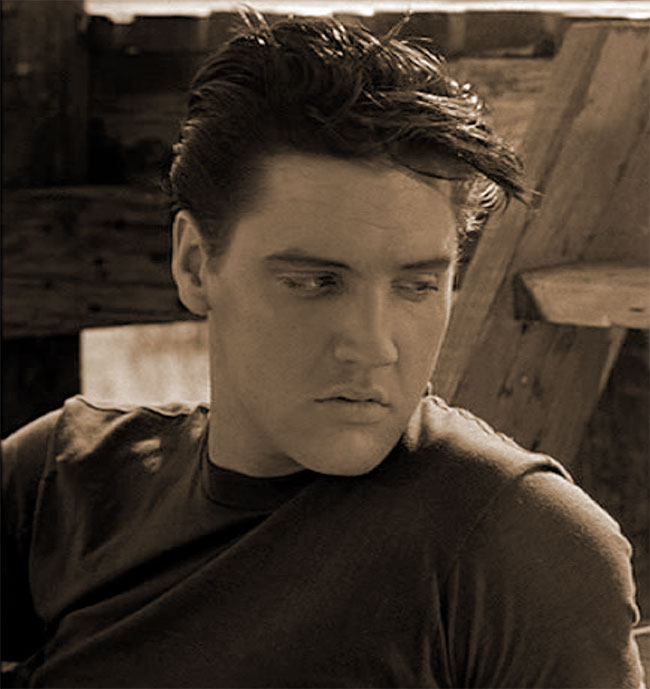
Elvis Presley, 1958

Elvis Presley in King Creole, 1958

King Creole was based on the 1952 novel A Stone For Danny Fisher by Harold Robbins. The novel’s protagonist is a boxer in New York, which the movie adapted into a singer in New Orleans to better suit audience expectations of its star, Elvis Presley. Elvis read the novel as part of his preparations for the role of Danny Fisher.

Producer Hal Wallis had been trying to get the film version of A Stone For Danny Fisher off the ground since 1955, long before Elvis was attached to the project. At that time, A Stone For Danny Fisher was also playing as an off-Broadway production.

James Dean was even rumored to have been in the running for the movie’s lead at one point. This was Wallis’ second Elvis movie. He would go on to produce nine Elvis movies in all.

Hal Wallis: “Michael Curtiz directed the film and he has a very sharp but romantic instinct. Walter Matthau made an excellent heavy and we had marvelous locations in New Orleans” (1).

Controversy swirled around King Creole before shooting even began. In late 1957, Elvis received his draft notice ordering him into the US Army as of January 1958.

With production slated to begin in Hollywood that same month, Paramount requested a deferment from the Memphis draft board, citing $300,000 it had already pumped into the movie during pre-production. Milton Bowers of the draft board replied that a deferment might be possible under the circumstances, but that Elvis would have to be the one to request it.

On Christmas Eve, 1957, Elvis wrote a letter requesting extra time before reporting to the Army in order to make King Creole. He completed the letter by wishing a “Merry Christmas” to the draft board members. Bowers and the draft board indeed granted his extension request, but soon received heat from other organizations – including the national chapter of the American Legion – calling for the immediate induction of Elvis.

Milton Bowers: “You know what made me angry about the entire thing is that he would have automatically gotten the extension if he hadn’t been Elvis Presley the superstar” (2).

Elvis Presley: “I’m glad they were nice enough to let me make this picture because I think it will be the best one I’ve made” (3).

On January 10, 1958, just two days after celebrating his 23rd birthday, Elvis departed Memphis on a train for Los Angeles. He brought along several friends, including Alan Fortas.

Alan Fortas: “Every town we passed through, no matter what time of morning or night, the whole station was jam-packed. These people knew as soon as Elvis finished this movie, he was going in the Army, so most of them considered it the last time to see him. […] People knew and they were lined up along the tracks all the way across America” (4).

Elvis arrived in Hollywood on January 13 and reported for pre-production. During the week, he also began work on the soundtrack at Radio Recorders.

During pre-production, the movie was titled Sing, You Sinners. This title was changed to Danny, and finally King Creole, based on the strength of the rock ‘n’ roll tune Jerry Leiber and Mike Stoller wrote for the soundtrack.

Filming began on January 20. Many of Elvis’ early scenes were with Jan Shepard, who played his sister, Mimi.

Jan Shepard: “[W]e worked together alone for about a week, because we did the opening of the show. He was […] just a lot of fun and buoyant, not guarded at all. There was a five-and-dime store on our set, and in the morning I would find earrings and little bracelets, little five-and-dime stuff on my dressing room table. I used to call him the last of the big-time spenders!” (5)

Because of his character’s name, Elvis often sang “Danny Boy” on set. He would return to the folk song many times over the years, including a 1959 home recording captured while he was stationed in Germany (available on the posthumous release A Golden Celebration). He formally recorded the song in 1976 at Graceland for the album From Elvis Presley Boulevard, Memphis, Tennessee. An organist played the song at the beginning of Elvis’ funeral in 1977.

Dolores Hart appeared as Nellie, one of Danny’s love interests. She had previously appeared with Elvis in 1957’s Loving You, also a Hal Wallis production.

Elvis Presley: “[King Creole] was quite a challenge for me because it was written for a more experienced actor” (6).

Dolores Hart: “Elvis, no matter what anyone says, deserves credit as a person of talent. There is no reason he shouldn’t soar to the heights the kings [of the screen] occupy now” (7).

Jan Shepard: “[Elvis] was very concentrated, very focused on playing Danny. For a kid coming in and just beginning his career he had a great sense of timing; there was great honesty in his acting. He was a very good listener, and he just became the young boy […]. Just like in his music, he really got involved in his acting” (5).

Walter Matthau played Fisher’s antagonist, Maxie Fields. It was his sixth film.

Walter Matthau, 1958

Walter Matthau in King Creole

Walter Matthau: “I almost hesitate, I creep up to the sentence, [Elvis] was an instinctive actor. Because that is almost a derogation of his talents. That’s saying, ‘Well, you know, he’s just a dumb animal who does it well by instinct.’ No, he was quite bright, too. He was very intelligent. Also, he was intelligent enough to understand what a character was and how to play the character simply by being himself through the means of the story” (8).

Michael Curtiz’s directing credits extended back to 1912. In addition to 1942’s Casablanca, for which he won an Oscar, his other work, from among nearly 200 films, included the 1937 original version of Kid Galahad, Yankee Doodle Dandy (1942), and White Christmas (1954). Curtiz was attached to King Creole before it was transformed into an Elvis movie.

Jan Shepard: “Curtiz said he thought Elvis was going to be a very conceited boy, but when he started working with him, he said, ‘No, this is a lovely boy, and he’s going to be a wonderful actor'” (5).

Walter Matthau: “Michael Curtiz used to call him Elvy and he’d call me Valty. He’d say, ‘Now Elvy and Valty, come here, now Valty, this is not Academy Award scene. Don’t act so much. You are high-price actor. Make believe you are low-price actor. Let Elvy act.’ But Elvy didn’t overact. He was not a punk. He was very elegant, sedate . . . refined and sophisticated” (8).

Jan Shepard: “You just didn’t have a lot of fooling around with Curtiz […]. But no matter what Curtiz would ask of Elvis, he would say, ‘Okay, you’re the boss'” (5).

Elvis at a party in 1958

Elvis performing at Jan Shepard’s birthday party on February 22, 1958. Also pictured is Dolores Hart on clarinet.

Hart threw a birthday party for Shepard on February 22. Elvis showed up with a stuffed tiger that he named “Danny Boy.” His birthday gift for Shepard was a movie camera, definitely not from the five-and-dime store. He also played guitar and sang at the party.

King Creole was the first Elvis movie to include location shooting. On March 1, the film’s cast and crew headed for New Orleans by train. At this point, Red West, Elvis’ friend since his high school days, and actor Nick Adams, who Elvis had befriended in 1956, joined up with the rest of his entourage for the trip.

Carolyn Jones played Ronnie, Danny’s other love interest. She brought her husband, actor Aaron Spelling, along for the train ride to New Orleans. The couple would divorce in 1964. Spelling later went on to produce dozens of television series, including Charlie’s Angels and Beverly Hills 90210.

Tom Parker, Elvis’ manager, expressed concerns about security on the location shoot to Wallis. Wallis assured Parker that they could handle it. After all, he had worked with Dean Martin and Jerry Lewis at the peak of the duo’s popularity.

Alan Fortas: “There were thousands of people. Hal Wallis couldn’t believe it. […] I never saw so many people in my life. They declared it Elvis Presley Day and let the kids out of school and it took us two hours to get back to the hotel no matter where we were, even from across the street” (9).

In the French Quarter, the car carrying Elvis was almost overturned by the massive crowd.

Carolyn Jones: “[Elvis] had to ride in an old sedan, lying on the floor in the back, so his fans couldn’t mob him” (10).

Elvis took over the tenth floor of the Roosevelt Hotel, one block from where they were filming in the French Quarter. Hotel security was so tight that no one was admitted to the tenth floor. As a joke, Hart, Jones, and Adams armed themselves with toy guns and held up the elevator operator to force their way to Elvis’ floor. The elevator operator was not in on the joke and was apparently still shaken the next day.

Alan Fortas: “[W]e got on the elevator and we said, ‘Tenth floor, please.’ The elevator operator said, ‘No, sir, I can’t stop on the tenth floor. Mr. Presley is up there and we just can’t stop.’ Elvis was on the elevator with us and he said, ‘Yeah, I know. I’m Elvis.’ The elevator operator looked straight at him and said, ‘I’m sorry, sir, I can’t stop on that floor for anybody.’ We had to go to the eleventh floor and walk down” (9).

The film’s climax was shot at a house on stilts at Lake Pontchartrain. Elvis and Jones shared scenes there.

Carolyn Jones: “[Elvis] was always asking a lot of questions. God, he was young! I didn’t think anyone could be that young. He was always talking about his folks and about the house [Graceland] he’d just bought them” (8).

When onlookers at Lake Pontchartrain became unmanageable, Elvis had to escape through the back of the house to a motorboat that whisked him away.

Though Memphis was tantalizingly close, the group had to return by train to Hollywood to be released from King Creole. Elvis attended a wrap party on March 12, and then he and his friends were on yet another train. Destination: Memphis.

Alan Fortas: “We’d just sit and talk [on the train], try to write songs, try to sing. You know, just typical ol’ boys. But it got to us by the time we got to Dallas. We couldn’t take it any longer. So we got off that train and rented some Cadillacs and drove the rest of the way home” (11).

Elvis arrived home on March 14 and was inducted into the Army on March 24.

Paramount released King Creole throughout the United States on July 2. It peaked at #5 on the Variety charts. At this time, Private Presley was still stationed at Fort Hood in Texas.

Hal Wallis: “Now, although I don’t have all the figures, I believe that one of the least successful of Elvis’s films was King Creole. But that was my favorite!” (1)
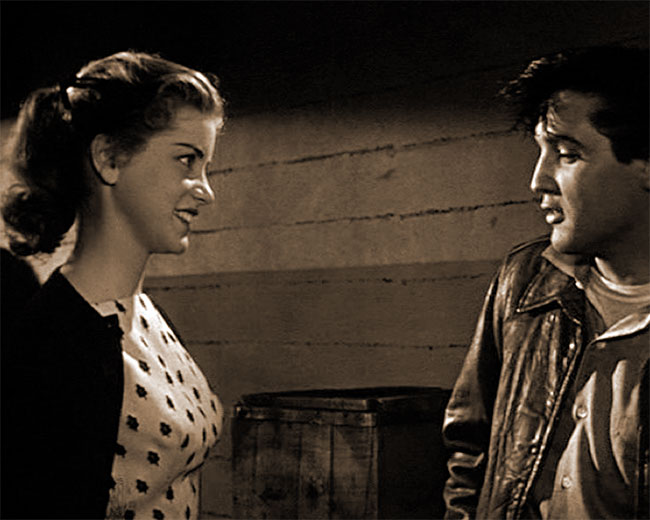
Dolores Hart and Elvis Presley in King Creole

Dolores Hart and Elvis in King Creole

Dolores Hart: “Elvis is a young man with an enormous capacity of love . . . but I don’t think he has found his happiness. I think he is terribly lonely” (12).

According to longtime friend Sonny West, if Elvis had his way, he would have reunited with director Michael Curtiz when Elvis was cast in a remake of Kid Galahad, which filmed in late 1961 (13). This time, Elvis actually played a boxer, albeit a singing one. Despite Elvis’ campaign, Phil Karlson received the directing nod instead. Curtiz passed away in April 1962 at the age of 74.

Elvis later reunited with Jan Shepard in 1966’s Paradise, Hawaiian Style, in which she played Betty Kohana. Shepard had maintained a friendship with Hart after King Creole. By this time, the quality of Elvis’ movies had declined. While King Creole is a contender for Elvis’ best movie, Paradise, Hawaiian Style is a contender for his worst.

Jan Shepard: “One time [Elvis] asked about Dolores Hart, and we had a little bit of a conversation. In the quiet moments, he was still very sweet. When we reminisced about Creole, he said, ‘Honey, that was my favorite picture'” (14).


Bibliography

  • Careless Love: The Unmaking Of Elvis Presley by Peter Guralnick, Little, Brown And Company, Boston, 1999.
  • Down At The End Of Lonely Street: The Life And Death Of Elvis Presley by Peter Harry Brown and Pat H. Broeske, Dutton, New York, 1997.
  • ELVIS: The Biography by Jerry Hopkins, Plexus, London, 2007.
  • Elvis Commemorative Edition, compiled by Bill DeNight, Sharon Fox, and Ger Rijff, Publications International, Lincolnwood, IL, 2002.
  • Elvis Day By Day: The Definitive Record Of His Life And Music by Peter Guralnick and Ernst Jorgensen, Ballantine Books, New York, 1999.
  • The Elvis Encyclopedia by Adam Victor, Overlook Duckworth, New York, 2008.
  • Elvis: The Great Performances, dir. Andrew Solt, perf. Elvis Presley, 1989, DVD, SOFA, 2011.
  • Elvis: His Life From A To Z by Fred L. Worth and Steve D. Tamerius, Wings Books, New York, 1990.
  • Elvis In Private, edited by Peter Haining, St. Martin’s Press, New York, 1987.
  • Elvis: Still Taking Care Of Business by Sonny West with Marshall Terrill, Triumph Books, Chicago, 2007.
  • Good Rockin’ Tonight: Twenty Years On The Road And On The Town With Elvis by Joe Esposito and Elena Oumano, Avon Books, New York, 1994.
  • Internet Movie Database, accessed March 23, 2013.
  • King Creole, dir. Michael Curtiz, perf. Elvis Presley, Carolyn Jones, and Walter Matthau, 1958, DVD, Paramount, 2000.
  • Last Train To Memphis: The Rise Of Elvis Presley by Peter Guralnick, Little, Brown And Company, Boston, 1994.
  • Viva Las Elvis: Celebrating The King, compiled by Peggy Thompson, Arsenal Pulp Press, Vancouver, 1994.

References

(1) Elvis In Private, p. 92
(2) Down At The End Of Lonely Street, p. 137
(3) Last Train To Memphis, p. 446
(4) ELVIS: The Biography, p. 129
(5) Last Train To Memphis, p. 450
(6) Last Train To Memphis, p. 456
(7) Elvis Commemorative Edition, p. 112
(8) Last Train To Memphis, p. 451
(9) ELVIS: The Biography, p. 130
(10) Down At The End Of Lonely Street, p. 139
(11) ELVIS: The Biography, p. 131
(12) Elvis: His Life From A To Z, p. 85
(13) Elvis: Still Taking Care Of Business, p. 120
(14) Careless Love, p. 209


My grandmother worked in the ticket booth of a theater for decades. I dedicate this series of movie posts to her, who would have turned 103 this month. I often remember her when I watch movies.

3,510: An Elvis Obsession

In 2008, I obtained my first iPod. I didn’t think much would come of it because I mostly listened to CDs. Once I had that iPod in my hands, though, an obsession slowly took hold. I found that listening to Elvis in shuffled mode gave me a much broader view of his career than simply relying on whatever CD I happened to spin. Over time, it also allowed me to rediscover songs from CDs that I otherwise did not play very often.

I have been collecting Elvis music since 1987 and have purchased hundreds of his CDs. The iPod has allowed me to truly experience the power of that collection, rather than just having it sit on a shelf.

In iTunes, I created a series of smart playlists to make various shuffle themes for my iPod. I think of these as my own private radio stations. They are not completely random, as I build out the smart playlists with certain rules.

For example, one of the rules in my Elvis Mix avoids 1-star songs. I only want to hear those in the context of their original albums.

In my Best Mix, I have Elvis set to play about 10% of the time. Otherwise, he would dominate that list due to how many Elvis songs I have. I also control the percentages of songs in certain genres that play. I tweaked this through the years until I made a Best Mix shuffle that suits my quirky taste.

Over time, I slowly began backing up more of my Elvis collection to iTunes. By May 2010, I had over 1,200 Elvis songs in iTunes for my iPod. This included the 711 masters released during his lifetime. At that point, rather than continuing to pick and choose from my CDs, I decided to go back and back up every unique track from every Elvis CD I owned.

I began on June 1, 2010, and figured I would be finished by the end of that year.

I finished yesterday, March 15, 2013.

This extended time period was not due to lack of diligence on my part. In fact, if anything, I have been too diligent. With only a few breaks, this has consumed more of my spare time over the last few years than I care to admit. Other things that I could have been doing, such as writing, have suffered.

So, why did it take me so long? For one thing, it turns out that I have many more Elvis songs than I realized.

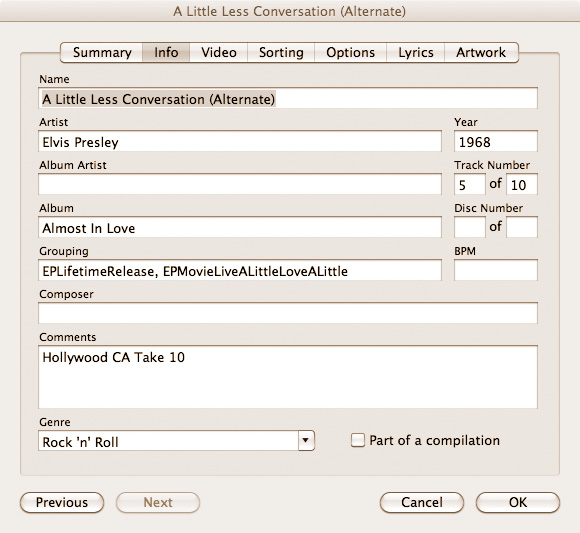
I also did not simply throw in each CD, allow iTunes to look up the track names, and be done with it. If only it had been that easy. The first feature I turned off was the auto-look-up of track names, because I found this often had errors or formatting inconsistencies. Instead, I hand-typed all of that stuff in. If there were going to be errors, at least they would be my errors.

iTunes "Get Info" window

iTunes “Get Info” window

For each song, I researched its first album appearance and other tidbits, such as recording location and take number. For this, I primarily used the comprehensive Elvis Recording Data/Session Notes section of the Elvis In Norway site.

For live songs and other tracks without clean breaks in between, I added fade-ups and fade-downs. I also removed any uninteresting “false starts” and chatter from studio outtake/alternate tracks. When a false start proved to be of interest, I split it out to its own separate track.

Along the way, I also replaced those 711 core masters with new versions in better sound quality.

After all of that, I have 3,510 unique Elvis tracks, representing nearly 160 hours of music.

In an amazing coincidence that I really cannot believe, it turns out that I also have exactly 3,511 non-Elvis tracks backed up to iTunes, representing 208 more hours of music. I have often said Elvis represents about half of the tracks on my iPod, but I had no idea that was so precise. Over time, the non-Elvis tracks will likely grow at a faster rate now than the Elvis ones, though. [However, I am not going to start a similar project for my non-Elvis CDs. Never again.]

To keep my smart playlists working the way I like, I also rated each track. The analytical side of me has all kinds of number-crunching ideas around this, but here is a fun breakdown for starters:

  • 5 Stars: 938 tracks (27%) [example: “Always On My Mind” (1972)]
  • 4 Stars: 909 tracks (26%) [example: “It’s Now Or Never” (1960)]
  • 3 Stars: 853 tracks (24%) [example: “Love Me Tender” (1956)]
  • 2 Stars: 556 tracks (16%) [example: “Wear My Ring Around Your Neck” (1958)]
  • 1 Star: 254 tracks (7%) [example: “A Dog’s Life” (1966)]

It astonishes me that, thanks to my iPod, I can now fit the entirety of my Elvis music collection in the palm of my hand. I can literally take it with me anywhere and listen to any song at any time.

Elvis in iTunes

Elvis in iTunes

With those 3,510 tracks, I could listen to Elvis for six days straight, without sleeping, and never hear a repeated track.

I would never do that, though. I am not that obsessive of a person.

The fact that my next post will be coming out in about six days is a complete coincidence.

Honest.

Spotlight: King Creole

Elvis Presley in King Creole (1958)

Elvis Presley in King Creole (1958)

Filmed and released in 1958, King Creole was Elvis Presley’s fourth film. Elvis’ induction into the US Army was postponed so that he could complete this movie, and by the time it hit theaters, he was already a soldier.

Despite some outward similarities, King Creole is not just any Elvis movie. All discussions of his best performances as an actor have to include this film. Directed by Michael Curtiz (Casablanca), King Creole is probably the most artistic film in Elvis’ body of work.

Elvis stars as Danny Fisher, a high school student in New Orleans on the verge of graduating. After a chance encounter with Ronnie (Carolyn Jones), a woman tied to crime boss Maxie Fields (Walter Matthau), Danny’s life turns upside down as he is lured into a dark world and ensnared by Fields.

Along the way, Danny does indeed become a singer as well as the object of the affections of Nellie (Dolores Hart). He also proves to be great with his fists, for King Creole is perhaps Elvis’ most violent movie. Sure, there are fistfights in many Elvis movies, but the King Creole fights are at a different intensity.

When I went to pull out the DVD of King Creole a couple weeks ago, I found it still in its original shrink wrap. I’ve had the movie long enough to not even remember how I obtained it, yet in all those years, I had not once opened and watched it.

This meant that it had been over ten years since I had watched King Creole, as my previous copy was a VHS tape. Thinking back, it was probably more like 14 years ago. I know, I know, time to turn in my Elvis fan card.

Among his four 1950s movies, Jailhouse Rock and Loving You seem to be the ones I gravitate towards. I enjoy watching most Elvis movies, though, so why had I neglected King Creole – undeniably one of his best – all these years?

When I watched the DVD of King Creole that night, I began to remember my impressions of it as a 23-year-old and understand why I did not revisit it often. There were really two reasons I did not connect with King Creole very well back then.

The first was that I found it really frustrating to watch Fields manipulate good-hearted Danny. I kept wanting Danny to see through the ruse. Of course, that would have made for a much shorter movie.

Dolores Hart as Nellie in King Creole

Dolores Hart as Nellie in King Creole

The second reason was that I just could not understand why Danny found the broken Ronnie so compelling compared to the innocent Nellie – who he treated rather coldly at times.

After watching the movie twice last month, however, I realized that this actually has much more to do with the fact that I find Dolores Hart (Nellie) to be one of his most attractive co-stars (right up there with Ann-Margret and Shelly Fabares) rather than anything the movie actually presents.

Plus, since Hart also appeared in a larger role in Loving You, I was really combining her two characters into one. While I view some aspects of Danny’s conflict differently than I did when I was 23 (more on that in a future post), I still love Dolores Hart. I would not have been torn. (As it turned out, Hart had a higher calling and left Hollywood a few years later to become a nun.)

While I’ve not seen the movie often, I’ve listened to the soundtrack countless times. It was fun to see Elvis perform the songs I’ve been listening to for so long.

I have at least a dozen ideas for posts around King Creole. I’ll try to squeeze in as many as I can over the next few months.


My grandmother worked in the ticket booth of a theater for decades. I dedicate this series of movie posts to her, who would have turned 103 this month. I often remember her when I watch movies.
For Trivia Fans Only: Thomas wins Elvis Trivialities #14

Y’all had plenty of chances, but Thomas proved yet again to be an unstoppable force when it comes to Elvis trivia by winning Elvis Trivialities #14.

Thomas’ trophy shelf of bragging rights must be getting really crowded, for this marks his seventh victory. He also maintains a spot of honor among The Mystery Train’s Night Riders.

And the answer is…

For LP Fans Only was the first Elvis Presley album to receive a Grammy nomination.

For LP Fans Only was nominated for “Best Album Cover” of 1959. The honoree of this art direction nomination was none other than Tom Parker, Elvis’ manager.

Front and back covers of For LP Fans Only

Front and back covers of For LP Fans Only

I have no idea if this contributed to its nomination, but For LP Fans Only is distinctive among Elvis releases in that it was the first of only two RCA albums released during his lifetime that did not include his name on the front or back covers (the second was On Stage).

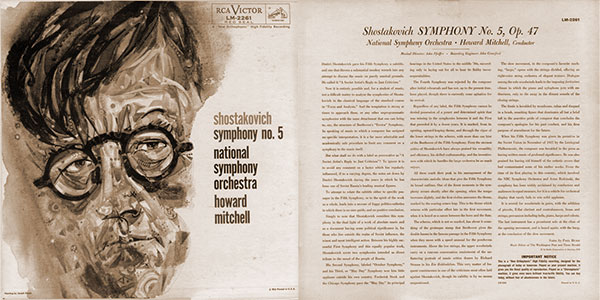
For LP Fans Only lost out on the Grammy to Shostakovich: Symphony No. 5, also an RCA release.

Front and back covers of Shostakovich Symphony No. 5

Front and back covers of Shostakovich Symphony No. 5

* * *

Do you think you have enough Elvis power to beat Thomas next time? Subscribe to The Mystery Train Blog using the feature in the menu bar to the right. Then, you’ll be notified whenever there is a new post – because you never know when the next trivia challenge might come along.


The Mystery Train’s Night Riders

  • February 22, 2013: Thomas (13:36)
  • January 11, 2013: George Millar (4:19)
  • December 23, 2012: Thomas (0:36)
  • October 9, 2012: David (14:38) | Honorable Mention: John (22:06)
  • February 4, 2012: Thomas (13:52)
  • February 3, 2012: Thomas (2:18)
  • December 21, 2011: Wellsy (2:37)
  • October 31, 2011: Thomas (17:32)
  • October 1, 2011: Jimmy Cool (1:01)
  • September 9, 2011: Steve Brogdon (0:17) <— Record time
  • August 6, 2011: Thomas (2:26)
  • July 9, 2011: Thomas (5:26)
  • June 23, 2011: Fred Wolfe (0:18)
  • June 22, 2011: Ty stumps the train (no winner)

Elvis Trivialities #14

Welcome to Elvis Trivialities.

Elvis Trivialities On TheMysteryTrainBlog.com

Your question is…

What was the first Elvis Presley album to receive a Grammy nomination?

The first person to answer this question correctly in the comments below will take home the ultimate trophy – bragging rights.

Good luck!

Elvis Live Wire: Ernst Jorgensen acquires “I Forgot To Remember To Forget”

Silvertone wire recording of Elvis Presley

Silvertone wire recording of Elvis singing “I Forgot To Remember To Forget”

One of the feel-good Elvis stories of 2012 will have an encore after all. Audio collector amberola1b, who discovered a 1955 live recording of Elvis singing “I Forgot To Remember To Forget” on the Louisiana Hayride radio program, recently remarked that he has sold the recording to Ernst Jorgensen. Jorgensen heads up Sony Music’s Elvis team and helms their Follow That Dream collectors label. This means, at some point, there will undoubtedly be an official release of this incredible find.

Last July, amberola1b caused a sensation among Elvis fans when he briefly posted the recording on YouTube, without being aware that it was so unique. Sourced from a Silvertone wire recording, the performance had never been heard by the public since the original broadcast.

Elvis appeared on the Hayride about fifty times from 1954 to 1956. Though similar to Nashville’s Grand Ole Opry, the show was more receptive to new talent – including Elvis’ groundbreaking style. Compared to most of the other Hayride recordings released in the past, the audio quality on “I Forgot To Remember To Forget” was stunning.

The discovery made headlines on the eve of the release of the Elvis masterpiece A Boy From Tupelo: The Complete 1953-1955 Recordings, Ernst Jorgensen’s book and music project covering the SUN years. A Boy From Tupelo included several other recordings from the Louisiana Hayride, but “I Forgot To Remember To Forget” was found too late for consideration. “Wow – it’s unbelievably beautiful. I’m still trying to recover from the shock,” Jorgensen said at the time.

Audio grabs of amberola1b’s YouTube video have appeared on a couple of “gray market” releases, but a professional transfer from the wire, properly mastered, should yield much more impressive sound quality.

On January 12, amberola1b posted the following comments on YouTube about his interaction with Jorgensen:

“I did sell the rights to him but the way it went was that I didn’t even know Ernst and was directed to him thru other utubers that were Elvis fans. I didn’t even know there was a big anniversary album or book being put together about The King, I just merely decided at that moment in time to do the utube video, and just happen to post it during the summer. If luck had been on my side and I had known about what was being planned […] I would have made the video months before, and it would have been included in the album that was included in the book ‘A Boy From Tupelo’. But as it turned out he sent me a copy of the book and it just blew my mind to see all the wonderful pictures that had been compiled of Elvis and the stories written about him.”

[Thank you to Greg1995 on the For Elvis CD Collectors Forum, who first posted about amberola1b’s recent confirmation of the sale.]


I only listened to the live “I Forgot To Remember To Forget” once. It was so incredible, I knew I wanted to wait for an official release. Out of respect for amberola1b, I also never posted links to the multiple copies of this video that showed up after his original post (I made an exception for the copied version in the story linked above, since that is where he chose to post his comments).

I’m thrilled that Jorgensen has acquired this fantastic discovery. So, to amberola1b: Thank you for making a deal that will allow Elvis fans to hear this recording in the best sound quality possible for generations to come.

So, the question is, what should Jorgensen do with this recording now that he has it?

Ideally, this would be a terrific opportunity for Sony to release a mainstream version of A Boy From Tupelo, which was a limited run on the FTD collectors label. Every Elvis and rock ‘n’ roll fan should have the opportunity to own A Boy From Tupelo – one of the most important Elvis releases since his death in 1977. Scooting the two interviews over to the end of Disc 2 would free up enough space for “I Forgot To Remember To Forget” to join the other Hayride performances on Disc 3.

If a full-blown re-release of A Boy From Tupelo is not possible for some reason, I think 2013 or 2014 would be the perfect time for a 2-CD set on the main Sony label covering 1953-1955. After all, 2013 marks the 60th anniversary of Elvis paying to record his first demo (“My Happiness” b/w “That’s When Your Heartaches Begin”), while 2014 marks the 60th anniversary of his first professional release (“That’s All Right” b/w “Blue Moon Of Kentucky”).

For fun, here’s how I would approach such a 2-CD set.

Elvis Begins: The 1953-1955 Recordings

Disc 1

  1. That’s All Right (45 RPM SUN single version)
  2. Blue Moon Of Kentucky (45 RPM SUN single version)
  3. Good Rockin’ Tonight
  4. I Don’t Care If The Sun Don’t Shine
  5. Milkcow Blues Boogie (78 RPM SUN single version)
  6. You’re A Heartbreaker (78 RPM SUN single version)
  7. Baby, Let’s Play House
  8. I’m Left, You’re Right, She’s Gone
  9. I Forgot To Remember To Forget
  10. Mystery Train
  11. Harbor Lights
  12. I Love You Because
  13. Blue Moon
  14. I’ll Never Let You Go
  15. Just Because
  16. Tryin’ To Get To You
  17. My Happiness (Demo)
  18. That’s When Your Heartaches Begin (Demo)
  19. I’ll Never Stand In Your Way (Demo)
  20. It Wouldn’t Be The Same Without You (Demo)
  21. Harbor Lights (Take 7)
  22. I Love You Because (Take 3)
  23. I Love You Because (Take 5)
  24. That’s All Right (Takes 1, 2)
  25. That’s All Right (Take 3)
  26. Blue Moon Of Kentucky (Take 3)
  27. Blue Moon (Take 4)
  28. Blue Moon (Take 5)
  29. Blue Moon (Take 8)
  30. Tomorrow Night (Undubbed/unedited version)
  31. That’s All Right (Live-Shreveport, LA-October 16, 1954)
  32. Blue Moon Of Kentucky (Live-Shreveport, LA-October 16, 1954)

Disc 2

  1. I’m Left, You’re Right, She’s Gone (Slow version, Take 1)
  2. I’m Left, You’re Right, She’s Gone (Slow version, Take 2)
  3. I’m Left, You’re Right, She’s Gone (Slow version, Take 3)
  4. I’m Left, You’re Right, She’s Gone (Slow version, Take 5)
  5. I’m Left, You’re Right, She’s Gone (Slow version, Take 6)
  6. Shake, Rattle & Roll (Demo-Lubbock, TX-January 6, 1955)
  7. Fool, Fool, Fool (Demo-Lubbock, TX-January 6, 1955)
  8. Hearts Of Stone (Live-Shreveport, LA-January 15, 1955)
  9. That’s All Right (Live-Shreveport, LA-January 15, 1955)
  10. Tweedlee Dee (Live-Shreveport, LA-January 15, 1955)
  11. Money Honey (Live-Shreveport, LA-January 22, 1955)
  12. Blue Moon Of Kentucky (Live-Shreveport, LA-January 22, 1955)
  13. I Don’t Care If The Sun Don’t Shine (Live-Shreveport, LA-January 22, 1955)
  14. That’s All Right (Live-Shreveport, LA-January 22, 1955)
  15. Tweedlee Dee (Live-Shreveport, LA-March 5, 1955)
  16. Money Honey (Live-Shreveport, LA-March 5, 1955)
  17. Hearts Of Stone (Live-Shreveport, LA-March 5, 1955)
  18. Shake, Rattle & Roll (Live-Shreveport, LA-March 5, 1955)
  19. Little Mama (Live-Shreveport, LA-March 5, 1955)
  20. You’re A Heartbreaker (Live-Shreveport, LA-March 5, 1955)
  21. Good Rockin’ Tonight (Live-Houston, TX-March 19, 1955)
  22. Baby, Let’s Play House (Live-Houston, TX-March 19, 1955)
  23. Blue Moon Of Kentucky (Live-Houston, TX-March 19, 1955)
  24. I Got A Woman (Live-Houston, TX-March 19, 1955)
  25. That’s All Right (Live-Houston, TX-March 19, 1955)
  26. How Do You Think I Feel (1955 version, Take 1)
  27. Tweedlee Dee (Live-Gladewater, TX-April 30, 1955)
  28. That’s All Right (Live-Meridian, MS-May 26, 1955)
  29. I’m Left, You’re Right, She’s Gone (Live-Shreveport, LA-July 2, 1955)
  30. Baby, Let’s Play House (Live-Shreveport, LA-August 20, 1955)
  31. Maybellene (Live-Shreveport, LA-August 20, 1955)
  32. That’s All Right (Live-Shreveport, LA-August 20, 1955)
  33. I Forgot To Remember To Forget (Live-Shreveport, LA-October 1, 1955)
  34. When It Rains, It Really Pours (1955 version, Take 5)
  35. When It Rains, It Really Pours (1955 version, Take 8)

“He always spoke the truth”

On August 28, 1963, civil rights leader Rev. Dr. Martin Luther King, Jr., stands at the Lincoln Memorial in Washington, DC, and delivers his famous “I Have A Dream” speech during the March on Washington for Jobs and Freedom.

In Elvis Day By Day, Peter Guralnick and Ernst Jorgensen note, “Dr. King’s ‘I Have A Dream’ speech is one of Elvis’ favorite rhetorical pieces, something he recites often over the years” (p. 239).

At the Lorraine Motel in Memphis, Tennessee, on April 4, 1968, King is silenced by an assassin’s bullet at the age of 39.

Longtime Elvis friend Jerry Schilling describes the singer’s reaction to King’s death when they see the news:

“I’d heard him recite [King’s] beautiful, hopeful words many times. I looked over at Elvis now and saw that he was staring hard at the TV. There were tears in his eyes. ‘He always spoke the truth,’ he said quietly” (Me And A Guy Named Elvis, p. 187).

Elvis is in Hollywood finishing up his 28th movie, Live A Little, Love A Little, and is devastated that the murder took place in his hometown. He also believes it will confirm “everyone’s worst feelings about the South” (Careless Love, Guralnick, p. 297).

Actress Celeste Yarnall, who had a small role in Live A Little, Love A Little, states that she watched King’s funeral on TV with Elvis and held him in her arms as he cried (The Elvis Encyclopedia, Victor, p. 289).

Only nine weeks later, Senator Robert F. Kennedy is assassinated at the Ambassador Hotel in Los Angeles while running for President. This time, Elvis is in nearby Burbank – less than ten miles away. Rehearsals have begun for his ELVIS television special.

A few days later, W. Earl Brown writes “If I Can Dream” for Elvis to close the show. The song can be interpreted as a tribute to both fallen leaders, particularly King. “If I can dream of a better land, where all my brothers walk hand-in-hand, tell me why can’t my dream come true?” pleads Elvis in the song, echoing King’s 1963 speech.

It is a huge departure for Elvis, who has thus far avoided public commentary on social issues. His manager even tries to nix the song, but in a rare moment of defiance, Elvis insists on recording it.

NBC airs the ELVIS special on December 3, 1968, and it becomes the highest-rated program of the week and one of the most-watched specials of the year. “If I Can Dream” turns out not only to be the perfect song to close the special, but also an appropriate way to reflect on a tragic chapter in American history.


Martin Luther King, Jr., would have turned 84 on January 15. Today, the United States observes this hero’s birthday with a national holiday. His words, his ideas, his dreams live on.