Elvis At Christmas

The Elvis Odyssey

Interlude: Elvis At Christmas

Listen along on Spotify.

C1. O Come All Ye Faithful (Alternate-1971)
Memories Of Christmas
Nashville, TN Takes 1 & 2 [splice]

C2. Silver Bells (Alternate-1971)
Back In Nashville
Nashville, TN Take 2 [undubbed master, alternate mix]

C3. Holly Leaves And Christmas Trees (1971)
Elvis Sings The Wonderful World Of Christmas
Nashville, TN

C4. Santa Bring My Baby Back (1957)
Elvis’ Christmas Album
Hollywood, CA

C5. On A Snowy Christmas Night (Alternate-1971)
Back In Nashville
Nashville, TN [undubbed master, alternate mix]

C6. It Won’t Seem Like Christmas (1971)
Elvis Sings The Wonderful World Of Christmas
Nashville, TN

C7. I’ll Be Home On Christmas Day (1971)
Elvis Sings The Wonderful World Of Christmas
Nashville, TN

C8. Winter Wonderland (1971)
Elvis Sings The Wonderful World Of Christmas
Nashville, TN

C9. Santa Claus Is Back In Town (1957)
Elvis’ Christmas Album
Hollywood, CA

C10. I’ll Be Home For Christmas (1957)
Elvis’ Christmas Album
Hollywood, CA

C11. O Little Town Of Bethlehem (1957)
Elvis’ Christmas Album
Hollywood, CA

C12. White Christmas (1957)
Elvis’ Christmas Album
Hollywood, CA

C13. If I Get Home On Christmas Day (1971)
Elvis Sings The Wonderful World Of Christmas
Nashville, TN

C14. Here Comes Santa Claus (1957)
Elvis’ Christmas Album
Hollywood, CA

C15. If Every Day Was Like Christmas (1966)
If Every Day Was Like Christmas (Single)
Nashville, TN

C16. The Wonderful World Of Christmas (Alternate-1971)
Back In Nashville
Nashville, TN [undubbed master, alternate mix]

C17. I’ll Be Home On Christmas Day (Remake-1971)
Memories Of Christmas
Nashville, TN

From “I’ll Be Home On Christmas Day”: “If I could only borrow one dream from yesterday, I’d be on that train tomorrow. I’d be home on Christmas Day.”

C18. Santa Claus Is Back In Town/Blue Christmas (Live-1968)
Tiger Man
June 27 8 PM Show, Burbank, CA

C19. Merry Christmas Baby (Informal-1971)
Back In Nashville
Nashville, TN Take 1 [undubbed/unedited master, alternate mix]

C20. Silent Night (1957)
Elvis’ Christmas Album
Hollywood, CA

Yesterday's Dream - Artwork created for The Mystery Train with assistance from ChatGPT

“Yesterday’s Dream” (Artwork created for The Mystery Train with assistance from ChatGPT)


“For unto you is born this day in the city of David a Saviour, which is Christ the Lord.”
Luke 2:11 KJV

We can solve the mystery if we try

Frequent commenter Ray Faithfull recently emailed me the following mystery:

I watched a clip posted on facebook for the song “We Can Make The Morning”….then it dawned on me that it was longer than the Now album release and the FTD release by almost 30 seconds..I figured you would be the person to go to for some insight as to how many takes of this song were actually done and what and where have they been released??

Was take 1 the master take that went for over 4:30 and was simply faded at 3:48 for the final cut ??

I have included the link to the video i am referring to with the version i had not heard or at least not completely?? http://www.youtube.com/watch?v=GGIMKq-qwOM

Though I did not know the answer right off the top of my head, Ray had obviously placed a lot of faith in me (no pun intended . . . I think), so I felt compelled to research this for him.

First, I checked iTunes, where I have meticulously cataloged every unique Elvis track I own. To my surprise, the only version of “We Can Make The Morning” I have is the master recording, as released on Elvis Now.  My iTunes version of the 1971 track, sourced from the circa-2007 Vic Anesini remastering effort as released on Elvis: The Complete Masters Collection, clocks in at 3:59. However, the last five seconds of that are silence.

"We Can Make The Morning" on iTunes

“We Can Make The Morning” on iTunes

I pulled out my vintage 1972 vinyl edition of the Elvis Now album, and it indicated a run time of 3:54 for “We Can Make The Morning.” So, I had approximately six seconds more song than Ray’s 3:48 source, but nowhere near the 4:44 of the YouTube video. Though I am fairly obsessive about obtaining alternate takes of songs that Elvis formally recorded between 1969 and 1976, I certainly do not own every Elvis release. Perhaps this extended version was on an album I did not have.

Checks of the Elvis Now FTD edition liner notes and Ernst Jorgensen’s essential Elvis Presley: A Life In Music – The Complete Recording Sessions book provided no useful information in this case. Next, I went to my favorite source for alternate take information, the incredible Elvis Recording Data/Session Notes section of the Elvis In Norway site. There, I also found only one entry for “We Can Make The Morning,” the master recording (B-side single), with time listed as 3:54.

I only collect official releases, so my next thought was that the 4:44 version might be from a bootleg. Elvis In Norway’s Session Notes section fortunately does not muddy the water by including those, so I went to another reliable source that does incorporate bootleg information, the Recording Sessions section of Keith Flynn’s Elvis Presley Pages site.

There I found three matches for “We Can Make The Morning”:

A note on the May 20 / 21 page indicates, “Tape reel #2 from this session is missing, and this is the reel that would have included […] the outtakes of We Can Make The Morning,” so that effectively ruled out an alternate take of the song.

The undubbed master has apparently never been released, nor has the May 25 string overdubs version. Only the completed June 21 version, with overdubbed brass and strings, has been released (i.e., the one from Elvis Now).

However, the site lists the track as 4:11. That’s 17 seconds closer to 4:44, but still not enough. The 4:11 version of the song was released on the bootleg Unedited Masters: Nashville 1971 by the Venus label. There, “We Can Make The Morning” is listed as the “unedited, overdubbed master.” I do not have the album to verify whether the track fades at the end but, assuming the Venus information is correct, that leaves at least 33 unaccounted seconds that are in the video.

After all of this, I finally decided to take a listen to the YouTube video, which had been created by a fan. The visual imagery, interspersing photos of Elvis in life with photos of fans at candlelight vigils in the years after his death, was not to my liking, so I stopped paying attention to the video and just listened to the audio. Not only did it go to 4:44, but the song had not even fully faded at that point.

What was going on here? Though I did not detect anything the first time through, my guess was that a portion of the song had been re-looped somewhere (i.e., a part of the recording had been replayed to artificially make the song longer). On my second listen to the 4:44 video, I played the Elvis Now version at the same time. Whatever potential monkey business had occurred within the song was definitely happening near the end.

My third and fourth listens revealed that 3:28 in the video is a repeat of 2:48. For example, listen how Elvis draws out “night” at 3:33, which is an exact duplicate of how he sings it at 2:53 in the video.

Essentially, someone has artificially added at least 40 seconds to the audio track on the “We Can Make The Morning” YouTube video by repeating a portion of the song – most likely to suit the purposes of the photo montage. Other than the abrupt ending, the audio editing is actually quite seamless. However, I will stick with the original version.

Thanks for the great question, Ray, and for inspiring today’s post.

Case closed.

Close-up of ELVIS NOW back cover (1972)

Close-up of ELVIS NOW back cover (1972)

A familiar winner takes all the candy in Elvis Trivialities #12

Congratulations to Thomas (elvistoday), who unscrambled his way to victory in Elvis Trivialities #12.

He receives a Christmas gift box full of bragging rights and yet another spot in The Mystery Train’s Night Riders.

And the answer is…

Elvis Sings The Wonderful World Of Christmas (1971)

1.) “The Wonderful World Of Christmas”
2.) “I’ll Be Home On Christmas Day”
3.) “O Come All Ye Faithful”
4.) “It Won’t Seem Like Christmas”
5.) “The First Noel”
6.) “Holly Leaves And Christmas Trees”
7.) “Merry Christmas Baby”
8.) “If I Get Home On Christmas Day”
9.) “Silver Bells”
10.) “On A Snowy Christmas Night”
11.) “Winter Wonderland”

are the Elvis songs represented by the following scrambled letters:

1.) RTSHLOHICMDRADOOFLERTWWUNEFS
2.) SRHTLISCYOEMDIHALOMNBEA
3.) YOLAULTHFEFMAEIOCL
4.) MWIKSSRMATLOTTIESCHNIEE
5.) SINOEETHTRFL
6.) SRAOSESIENVDETHLLHSRLTACEYAM
7.) EMRMIARBSSATRYYBHC
8.) DGIHMOIHSAESMINACYFORTET
9.) LVBLEISSRLE
10.) NROSNASTSMHNAITOCGWIYH
11.) DILDRNRTEONNAEWW

* * *

Have a Merry Christmas!


The Mystery Train’s Night Riders

  • December 23, 2012: Thomas (0:36)
  • October 9, 2012: David (14:38) | Honorable Mention: John (22:06)
  • February 4, 2012: Thomas (13:52)
  • February 3, 2012: Thomas (2:18)
  • December 21, 2011: Wellsy (2:37)
  • October 31, 2011: Thomas (17:32)
  • October 1, 2011: Jimmy Cool (1:01)
  • September 9, 2011: Steve Brogdon (0:17) <— Record time
  • August 6, 2011: Thomas (2:26)
  • July 9, 2011: Thomas (5:26)
  • June 23, 2011: Fred Wolfe (0:18)
  • June 22, 2011: Ty stumps the train (no winner)

Would the world of Christmas be as wonderful in January?

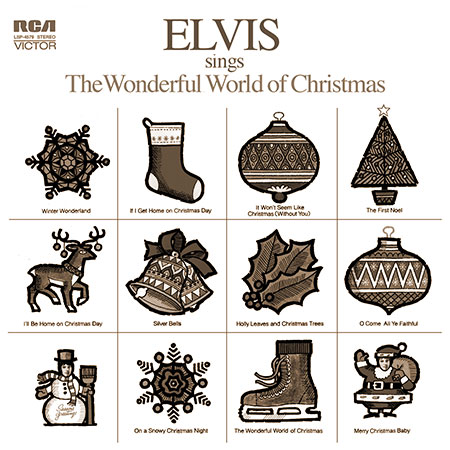
In addition to Promised Land, Follow That Dream is also releasing 1971’s Elvis Sings The Wonderful World Of Christmas as part of its Classic Album series in December. That’s right, two of his best albums are being released as deluxe editions in the same month.

The 2-CD release will contain the original album, which made its debut 40 years ago this month, as well as a ton of merry outtakes, alternates, and studio banter. The only problem for those of us in the United States is that it usually takes two to three weeks after the release date for FTD’s CDs to arrive here, since they ship from Denmark.

If Elvis Sings The Wonderful World Of Christmas is released in early December, Americans should have a decent chance of getting it before Christmas. If not, well . . . I, for one, plan to enjoy the wonderful world of Christmas in January, if necessary.

Elvis Sings The Wonderful World Of Christmas album cover

Elvis Sings The Wonderful World Of Christmas album cover

Also coming in December from FTD is The Elvis Is Back! Sessions on vinyl and a photo book covering 1956.

REVIEW: Boston Garden CD (FTD)

Elvis As Recorded At Boston Garden ‘71 CD (Follow That Dream Records, 2010)

Yesterday’s dream

You have been an Elvis fan for 15 years, through the ups and downs since 1956. When the Beatles came to Boston seven years ago, you stayed home. Now, finally, the one you were really waiting for is here.

You forget about the borrowed camera you are clutching as Elvis appears, as if out of magic.

Fans erupt in screams. You do not even realize that you are yelling, too, as Elvis grabs the microphone.

“Well, that’s all right little mama, that’s all right with you. That’s all right little mama, just any way you do,” he sings. Are you dreaming? Is this really happening?

By the middle of the show, you suddenly remember the camera. You only make it a little closer before the police and security guards push you back. You have never used this camera before, but you snap away, hoping it is close enough to preserve this moment, this feeling, forever.

Then, all too soon, it comes to an end.

Before you know it, Elvis is gone, and 39 years have passed by.

You would have never believed back then that photos you snapped in 1971 would appear in an official release of the Elvis concert you witnessed that day at Boston Garden. You even write the liner notes, filling them with your memories of this unforgettable event.

Like the idle daydream of an Elvis fan, it sounds too good to be true. Yet, this is exactly what happened for Cathi Avenell, who supplied photographs and liner notes for FTD’s latest release, Elvis As Recorded At Boston Garden ’71.

Bridging the gap

While the best concerts of the 1969-1977 Elvis era undoubtedly took place in the hot Vegas summers of 1969 and 1970, this November 1971 show stands out among the others. For this time period, it represents the earliest recording yet released of Elvis on the road in the 1970s—rather than in a Las Vegas showroom. It also serves to bridge the gap between his 1970 and 1972 live recordings.

Though this show only precedes his 1972 Vegas engagement by three months, the difference is sometimes striking. This late 1971 Elvis still has some of the 1969 and 1970 fire in him, as opposed to the subdued performances of the early 1972 engagement.

This late 1971 Elvis interacts with the crowd and still apparently enjoys himself, while the early 1972 Elvis seems to do little of either.

If anything, the Boston show often feels like a bizarre crossbreed of August 1970’s That’s The Way It Is concerts and June 1972’s Madison Square Garden shows.

Quick tour of the tracks

Track 01 “Also Sprach Zarathustra”/Track 02 “That’s All Right”: Elvis experimented with various show openers over the years, but the ultimate was “Also Sprach Zarathustra” (theme from 2001: A Space Odyssey) segueing into “That’s All Right,” his first record. Elvis really rocks “That’s All Right” here, the first sign that this will be a great show.

Track 03 “I Got A Woman/Amen”: What sometimes feels like a throwaway version of “I Got A Woman” early on eventually tightens up. “Amen” here is relatively short, not the endless repeats of later years.

Track 04 “Proud Mary”: Though it sometimes has more energy, this sounds like Elvis’ 1972 versions.

Track 05 “You Don’t Have To Say You Love Me”: I have still yet to hear a worthwhile version after 1970.

Track 06 “You’ve Lost That Lovin’ Feelin’”: Disappointing. Elvis sounds distracted throughout.

Track 07 “Polk Salad Annie”: Here is a perfect example of why As Recorded At Boston Garden ’71 is so cool, a hybrid between the 1970 and 1972 variations of “Polk Salad Annie.” While the overall vibe matches 1972, the talking portion is still present at the beginning. Elvis jokes his way through the “little story” though, perhaps an indicator of boredom that resulted in its eventual removal. After the jokes, this is a strong version of the song.

Track 08 Instrumental: You’ll recognize this one as “Comin’ Home Baby,” the instrumental often played while Elvis introduced his band and other stage performers. No introductions on this track, though, making it a rare stand-alone version of the song.

Track 09 “Love Me”: Already sounding like 1972 and beyond throwaway versions, this “Love Me” lacks the spark of the 1970 versions.

Track 10 “Heartbreak Hotel”: Speaking of throwaways, one of the worst versions of this song I have heard by Elvis. I like the bluesy take on it he first introduced in 1969, but Elvis fools around too much on this one for my taste. Maybe it was a ‘You had to be there’ moment.

Track 11 “Blue Suede Shoes”: Rushed, 1972-style. Better than “Heartbreak Hotel,” at least.

Track 12 “One Night”: Right after he sings, “Just call my name. . .,” someone with an irritating voice yells out “ELVIS!” and spoils an otherwise great version, reminiscent of 1970.

Track 13 “Hound Dog”: The typical bluesy slow start into a fast rocking ending, 1972-style. I never cared for this arrangement.

Track 14 “How Great Thou Art” (incomplete): We get about two-thirds of the song here before an artificial fade. Hard to judge without the big ending, but it probably would have been a contender for best song on the album had the performance been intact.

Track 15 Introductions (incomplete): “Comin’ Home Baby” plays again as Elvis introduces the band (joined in progress).

Track 16 “I’m Leavin’”: A true highlight, the best live version released so far. This was only six months after he recorded the song in RCA’s Nashville studio.

Track 17 “Bridge Over Troubled Water”: A stunning performance, especially considering that it sounds average at the beginning. Do not miss this one, best track on As Recorded At Boston Garden ’71.

Track 18 “I Can’t Stop Loving You”: A tad slower, but otherwise sounds like a 1972 version. Enjoyable.

Track 19 “Love Me Tender”: Annoying that this becomes a throwaway with ad-libbed lyrics, because Elvis sounds in such good voice.

Track 20 “Suspicious Minds”: By far, the biggest disappointment of the album. Perhaps the worst live version I have heard, due to jokes and distractions. Arrangement is 1972-style.

Track 21 Elvis Talks: For the third time, “Comin’ Home Baby” plays. Elvis does his traditional request to turn the house lights up so that he can better see the audience. It is fun hearing Elvis thanking the crowd in a mellow kind of way as the music goes on behind him. It almost sounds like he is about to leave on the spot but instead he launches into. . . .

Track 22 “Funny How Time Slips Away”: Like “Polk Salad Annie,” this version is interesting as a previously missing evolutionary step for the song. The softened lyric “In time, it’s all gonn’ be okay” has already replaced the original “In time, you’re gonna pay,” but the finale is still “Ain’t it surprising how time slips away.” Probably the best post-1970 version.

Track 23 “Can’t Help Falling In Love”/Track 24 Closing Vamp: “Let’s take it home,” Elvis announces, then launches into a decent 1972-style version of “Can’t Help Falling In Love,” and the show is soon over.

Final verdict

Taken as a whole, Elvis As Recorded At Boston Garden ’71 is a strong release. Concerts probably should not be picked apart song-by-song as I have done here, as it is the overall experience that counts. Elvis more than delivers a fantastic show. This is one of many concerts where I find myself wishing that I could have somehow been there.

Sound quality is impressive, considering that it is a soundboard recording. I love how FTD tied in the album art with the Elvis As Recorded At Madison Square Garden album. The liner notes and photos by Avenell give this release a personal feel and warmth.

A must-have for fellow fans of the era.

1971 Boston Concert among Upcoming FTD Releases

Elvis performed exactly one time in Boston, on November 10, 1971. “By the time he finished you knew that underneath the control and the lightness of most of the evening’s music there stood a man with more natural ability, talent, and soul than I expect to see on the stage at any rock concert,” said Jon Landau in Rolling Stone of the show.

According to Elvis Matters, Sony’s Follow That Dream Records, a collectors label for Elvis fans, will release a soundboard recording of the Boston show on CD September 14. This one has apparently appeared in bootleg format before, but as someone who sticks to official releases, I can’t wait to hear this concert.

Also set for release in September is the Classic Album version of 1973’s Elvis (“Fool”), a two-CD set that will contain the original album and alternate takes.

Here is the tentative FTD schedule for the rest of the year. Note that the US releases of these albums tend to be a few weeks behind. Italicized descriptions are quoted from Elvis Matters.

August 8, 2010

King Creole: The Music (book & CD)

KING CREOLE-THE MUSIC is a 200-page book with images exclusively designed to complement the music from the film. It consists of two main sections; the recording sessions on January 16, 1958 and song scenes from the filming of the movie (including behind-the scenes shots). The images are classic and well-known shots with the majority being previous unpublished and taken by the original still photographers on the set (no freeze-frames).

The accompanying CD consists of the masters and the well-known alternative masters (no unreleased session reels have been found). As always, the music has been re-mastered.

Good Times: The Outtakes (2 vinyl LPs)

Following on from the previous strictly Limited Edition series, FTD is pleased to announce the release of a special 2-disc 180-gram vinyl set of GOOD TIMES – THE OUTTAKES. Supplied in a deluxe gatefold sleeve, it features the superb original draft artwork design that was superseded prior to release. UNIQUE!

September 14, 2010

Boston Garden (CD, no official title yet)

FTD will release the soundboard of the November 10, 1971, BOSTON GARDEN Show (previously released on bootleg) as this is the only available show from the early tours of the seventies. We believe that this is of such historical importance, that it should be available to everyone. This will be a 5” digipack with a photo booklet.

Elvis (“Fool”) (2 CDs)

On the same date, a 2-CD set of ELVIS (FOOL) in the CLASSIC ALBUM series. This will feature a 7” digi-pack with an 8-page booklet.

September 2010

  • Soundboard CD – Concert not yet announced

November 2010

  • Classic Album 2-CD – Content not yet announced
  • Vinyl 2-LP – Content not yet announced

FTD releases are available from ShopElvis.com and other online Elvis retailers.

[7/11/2010 Update: ElvisNews.com has a posted a longer version of the comments from the FTD team:

Recently, we’ve had several frustrated e-mails from some customers about information getting out about our releases, prior to circulation of the official FTD announcement. Ideally, it shouldn’t be like that, but at the same time with so many people helping us in advance with our product origination, there is a good chance that word will spread before exact release plans can be chosen due to manufacturing and distribution issues. The nature of being involved in the ‘Elvis‘ industry dictates that the sharing of new information is a thrill to most people, so leaks will occur.

In an effort to improve the situation, we will try to announce our schedule further up front. The downside to this is that there will be times when unforeseen production problems cause releases to slip”

I think this is a huge step in the right direction for FTD. Maybe it’s time for them to finally get a small but informative website up and running?]

Other links

REVIEW: Elvis Now CD Set (2010 FTD Edition)

Elvis Now CD set (Follow That Dream Records, 2010)

Elvis Now: What’s in a name?

Apparently, we Elvis fans are not supposed to like Elvis Now. Even the new liner notes provided by Follow That Dream Records in this Classic Albums version of the release seem on the verge of being apologetic.

“With three older recordings, and precious few songs in the folk genre, neither the title of the album nor the original intent is of any importance anymore it seems,” the notes state in an entry about the album’s release in February 1972.

I think some people, including the unnamed author of FTD’s liner notes, get too hung up on the title. Three of the four Elvis releases in the seven months leading up to Elvis Now contained much older recordings, some dating all the way back to the 1950s.

Due to similar cover art featuring Elvis in concert in the early 1970s, the “Now” in Elvis Now simply distinguishes the album from the likes of C’Mon Everybody and I Got Lucky as containing current, post-Comeback Special material.

Additionally, “Elvis Now” was one of the marketing slogans used during his Vegas engagements. To complain about one song out of ten being three years old, and two others being nearly two years old, is to miss the point.

Compared to some of his other efforts at the time, Elvis Now is certainly a mellow album. The closest thing to a rocker is probably the gospel-infused “Put Your Hand In The Hand,” and that is a stretch.

In 1970, Elvis pointed out that he hated to be labeled a “strictly country” singer. The corollary to this is that he also should not be labeled as “strictly rock ‘n’ roll,” “strictly gospel,” or “strictly rhythm & blues.”

Elvis resisted such labels right from the start. “I don’t sound like nobody,” a much younger Elvis told Marion Keisker at the Memphis Recording Service in 1953.

You see, that is the real secret to the appeal of Elvis’ body of work as an artist. Those who judge his career based solely on various rock ‘n’ roll milestones do Elvis a disservice by overlooking his multi-faceted approach to music.

While rock ‘n’ roll mostly takes a back seat in Elvis Now, the album offers slices of some of the other kinds of music that he enjoyed creating. If you are willing to listen in new ways, the album can even be interpreted to include an emotional and thematic journey.

“I don’t want to be alone”

In “Sylvia,” love has been lost – although the hero-singer is in denial. (Side note: Elvis sings, “…here I am on the phone, wondering when she will call.” Uh, Elvis, maybe Sylvia was trying to call you all along but could not get through because you were on the phone!)

Bruce Springsteen once said that Elvis took away people’s loneliness, yet ended up so alone. You can feel this loneliness in the compelling “Help Me Make It Through The Night,” where the hero-singer begs to a lost love – maybe Sylvia, maybe someone before her – to remain by his side just one more night.

With apologies to Kris Kristofferson, had Elvis been a writer, “Help Me Make It Through The Night” sure sounds like a song he might have written to fight some of his own demons.

Though not as strong of a composition, “Until It’s Time For You To Go” shows the hero-singer later that night still wanting to hold on to this doomed romance for as long as possible. “I’m not a king, I’m just a man,” he intones, pleading for understanding.

In “We Can Make The Morning,” the hero-singer continues to fight the darkness, singing, “It’s a long, long lonely night, we can make the morning if we try.” This stunning performance is an often-overlooked gem.

When the couple finally makes it to a new day, “Early Morning Rain,” the album’s best song, reveals that it is not as bright as the hero-singer expected. It is the same as the day before, and he is still down. “I’m stuck here on the ground,” he sings, for as it always does, night will come again – and with it the loneliness.

“Take a sad song and make it better”

Finding no consolation with his lost love, the hero-singer now seeks another cure to his loneliness in “Put Your Hand In The Hand” and “Miracle Of The Rosary.” He places faith in God, seeking the same comfort in music as he sought in life.

Faith leads to hope in “Hey Jude” and the tides begin to change. Much underrated, Elvis recorded this entertaining jam only months after the original release of the Beatles classic. Yes, Elvis mixes up some of the lyrics, but that is all part of the fun. This is another highlight of the album.

The hero-singer realizes his hope by falling in love yet again in “Fools Rush In,” the weakest song here. The mood is vibrant yet cautionary: “When we met, I felt my life begin, so open up your heart and let this fool rush in.”

He has fallen for someone new, but we are left to wonder if she returns this love. Otherwise, this new interest may go the way of Sylvia and lead to yet another long, lonely night.

Were it not for the strength of the other songs on Elvis Country, “I Was Born About Ten Thousand Years Ago” could very well have ruined that album due to the senseless decision to edit it in between each tune. On Elvis Now, the complete song works much better – tying everything up.

“I Was Born About Ten Thousand Years Ago” is a song about mankind and the human experience. In the end, the human experience is what Elvis Now is about, too: loneliness, despair, faith, hope, and love. An exciting album? No. A worthwhile album? Very much so.

Outtakes

Unfortunately, there are not a lot of revelations this time around with the outtakes. The best of the outtakes are takes 7 and 15 of “Help Me Make It Through The Night” (tracks 9 and 17, respectively, on disc 2). Outtakes of “Fools Rush In” prove as mundane as the master version. The outtakes of “Early Morning Rain” are disappointing in their mediocrity – considering the brilliance of the master take.

Bonus Songs

While it’s always great to hear the top-notch songs “I’m Leavin’,” “It’s Only Love,” and “The First Time Ever I Saw Your Face,” the real stand-out among the bonus songs is the unedited master of the “Don’t Think Twice, It’s All Right” jam, clocking in at over nine minutes.

You are there as Elvis and the band take this Bob Dylan song through its paces. Like “Hey Jude,” he does not know all of the words – and, again, that is not the point here. This is Elvis making music with a joy that is noticeably absent from many of the other tracks on this release.

Though the same words are repeated over and over, the nine minutes goes by before you know it. I love this kind of thing, so I must have listened to it four or five times in a row. The edited version of this song (shortened to under three minutes) first appeared on 1973’s Elvis (“Fool”) album, so my hope is that the full-length version is presented on Elvis Now because the FTD upgrade of the Elvis album will have too many other outtakes to accommodate it.

Also of note are impromptu versions of the Beatles’ “Lady Madonna” and Dylan’s “I Shall Be Released,” both of which were first released on Walk A Mile In My Shoes. “Lady Madonna” is slightly longer here.

Final verdict

Perhaps the best part of FTD’s Elvis Now is that every song sounds better than it ever has before. If you love Elvis in the 1969 – 1971 era represented by this album and care about audio quality, you will be thrilled with these sound upgrades – particularly on the master takes. Kudos to FTD for much improvement in this area over the years.

Elvis Now is a different kind of listening experience than that of From Elvis In Memphis or That’s The Way It Is. While those two albums are monumental, their greatness should not take away from the understated achievement that Elvis Now represents.