Never say goodbye to Aloha From Hawaii

Elvis on NBC, 1973

NBC aired the Elvis: Aloha From Hawaii special on April 4, 1973

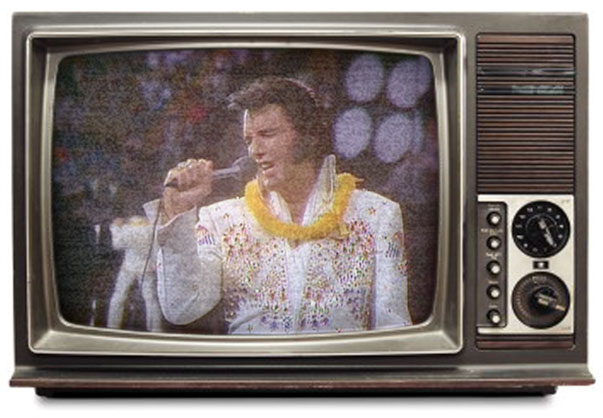
Welcome to a rare “full-color edition” of The Mystery Train Blog. Yesterday marked the 40th anniversary of the United States television broadcast of Elvis: Aloha From Hawaii on NBC. The special had been taped in January 1973 during a “live via satellite” broadcast to certain parts of the world. With all of the hype surrounding the first live satellite broadcast by an entertainer, many Americans to this day wrongly believe they saw 38-year-old Elvis perform the show live. Little did they know that he was watching the TV special, too.

The NBC version of Elvis: Aloha From Hawaii aired from 8:30 PM to 10:00 PM on April 4, 1973. It became the most-watched show of the week. Among the viewers was indeed Elvis himself, who tuned-in from his home in Los Angeles. This edition of the show included the one-hour January 14 concert as well as four post-concert insert songs that Elvis recorded after the audience emptied from the venue.

Among Elvis fans today, the show receives mixed reviews. Some see it as the pinnacle of his career and success, while others see it as one of the first indicators of his decline. My Mom is one of those who adores Aloha From Hawaii. An Elvis fan since 1956, Aloha From Hawaii represents her ideal version of Elvis. I have a hard time getting her to watch anything else Elvis-related with me, unless we look at this one first.

As a second-generation fan, I wasn’t even born when Aloha first aired. In fact, I’m now the same age (almost to the day) Elvis was when he performed this show. While I prefer the ’68 ELVIS special and 1970’s That’s The Way It Is, I definitely enjoy Aloha From Hawaii. Though it was not his best show ever, in many ways it represented his final triumph in the eyes of the world.

Elvis Aloha From Hawaii, 2004 Deluxe Edition

Elvis Aloha From Hawaii, 2004 Deluxe Edition

Though the show had appeared on home media several times before, Elvis Presley Enterprises and BMG released an ultimate version in 2004 as the 2-DVD set Elvis: Aloha From Hawaii – Deluxe Edition. Here are the contents:

DVD 1
1. January 9, 1973: Elvis Arrives and Greets Fans (17:30)
2. January 12, 1973: Rehearsal Concert (56:39)
3. January 14, 1973: Elvis: Aloha From Hawaii Concert (1:04:18)

DVD 2
1. January 14, 1973: Post-Concert Insert Songs Session (27:00)
2. April 4, 1973 (broadcast): Elvis: Aloha From Hawaii NBC TV Special Version (01:16:39)

Contents of Elvis Aloha From Hawaii, 2004 Deluxe Edition

Contents of Elvis Aloha From Hawaii, 2004 Deluxe Edition

2004 was a milestone year for Elvis fans. On the same day as the above, EPE and BMG also released the 3-DVD ELVIS: ’68 Comeback Special – Deluxe Edition set. I could barely contain my excitement when both sets arrived at my house nearly a decade ago now.

Executive Produced by Gary Hovey and the late Todd Morgan, both of these deluxe sets turned out to be among the most important Elvis releases ever. For obsessive Elvis fans like me, these DVDs represent essential viewing. I return to them often.

Though DVD 2 also holds interest, when it comes to Elvis: Aloha From Hawaii – Deluxe Edition, I tend to watch DVD 1 most often. The 2004 re-edits of the rehearsal and satellite shows represent the best releases of this material to date.

Last night, however, I plopped in DVD 2 in order to watch the April 4, 1973, version of Aloha From Hawaii. Before “Burning Love” could even finish, to my horror, the image on my screen began pixelating. It finally froze. An examination of the disc revealed scratches. I skipped ahead to the next song, but the problem kept occurring. I ended up watching about twenty minutes of the show in fits and starts.

I think I am very careful with my discs, so I’m not sure how these phantom scratches sometimes occur. I guess I have to chalk it up to equipment oddities. Either that or my dog plays my CDs and DVDs when I’m not around.

In any event, the reason I was horrified was not due to having to halt my 40th anniversary viewing of Aloha From Hawaii, but because I knew Elvis: Aloha From Hawaii – Deluxe Edition was now hard-to-find.

In fact, only a few months ago I had searched for it as a potential Christmas gift for someone. At that time, it was only available from third-party sellers at three times the original price. I love Elvis, but I refuse to pay exorbitant prices to such speculators. A quick check last night revealed the pricing to be the same.

Naturally, I did what any self-respecting fan would do in such a situation. I took to twitter to whine.

By this time, it was around midnight. I do not always get along with the twitter late at night, so I managed to tweet the following message to myself: My 2004 Aloha From Hawaii Deluxe Edition is giving out. If only @ElvisPresley would re-release this essential 2-DVD set.

Tweeting to myself

Tweeting to myself

I wish I could blame tweeting to myself on having a few too many, but I never drink. I don’t need to imbibe in order to do stupid things, it seems.

Fortunately, my message somehow managed to get through to @ElvisPresley, the official Elvis Presley Enterprises twitter account. Apparently the people over there at EPE actually know how to work twitter, for they sent me a link via direct (private) message to where the Deluxe Edition was still available on ShopElvis.com.

Now, why didn’t I think of that? I spend more money than I will ever admit on ShopElvis.com, but missed checking for the Elvis: Aloha From Hawaii – Deluxe Edition in this most obvious of places last night. Sure enough, it was there, in stock, and at a fair price.

  • Replacement copy of Elvis: Aloha From Hawaii – Deluxe Edition? Ordered.
  • Backup copy of ELVIS: ’68 Comeback Special – Deluxe Edition? Ordered. [This one is also now “hard-to-find” and is at crazy prices from third-party sellers.]

There is an Aloha From Hawaii for everyone. If you are not quite as obsessive as me when it comes to wanting to view all possible footage, 2006’s Elvis: Aloha From Hawaii – Special Edition DVD features only the 2004 edit of the January 14 main show. It is less expensive than the 2-DVD version and will certainly satisfy more casual fans.

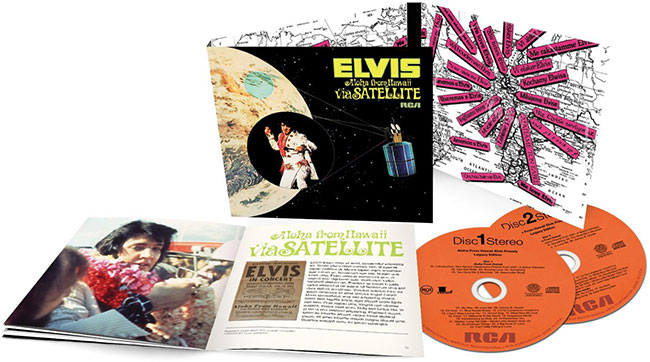
Last month, Sony released the Legacy Edition of the Aloha From Hawaii via Satellite soundtrack album as a 2-CD set. Note that this is only the music, no video.

I’ve not picked this one up as of yet, but be sure to read this fantastic review of the Legacy Edition of Aloha From Hawaii via Satellite over on The Second Disc.

Here are the contents of the Legacy Edition:

CD 1
January 14, 1973: Aloha From Hawaii via Satellite (original album, 1973 vintage mix, remastered by Vic Anesini)

CD 2
1. January 12, 1973: Rehearsal Concert (2013 mix and mastering by Steve Rosenthal and Rob Santos)
2. January 14, 1973: Post-Concert Insert Songs

Elvis Aloha From Hawaii via Satellite, 2013 Legacy Edition

Elvis Aloha From Hawaii via Satellite, 2013 Legacy Edition

King Creole: The Making Of The Movie

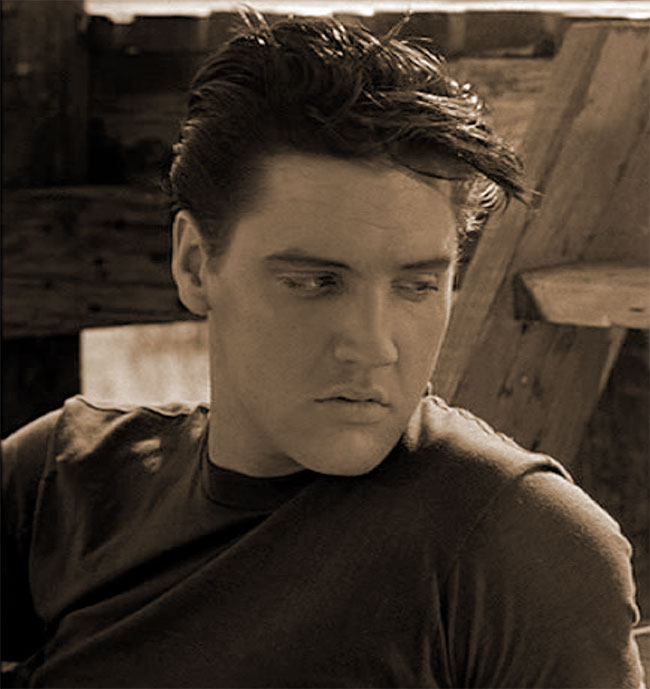
Elvis Presley, 1958

Elvis Presley in King Creole, 1958

King Creole was based on the 1952 novel A Stone For Danny Fisher by Harold Robbins. The novel’s protagonist is a boxer in New York, which the movie adapted into a singer in New Orleans to better suit audience expectations of its star, Elvis Presley. Elvis read the novel as part of his preparations for the role of Danny Fisher.

Producer Hal Wallis had been trying to get the film version of A Stone For Danny Fisher off the ground since 1955, long before Elvis was attached to the project. At that time, A Stone For Danny Fisher was also playing as an off-Broadway production.

James Dean was even rumored to have been in the running for the movie’s lead at one point. This was Wallis’ second Elvis movie. He would go on to produce nine Elvis movies in all.

Hal Wallis: “Michael Curtiz directed the film and he has a very sharp but romantic instinct. Walter Matthau made an excellent heavy and we had marvelous locations in New Orleans” (1).

Controversy swirled around King Creole before shooting even began. In late 1957, Elvis received his draft notice ordering him into the US Army as of January 1958.

With production slated to begin in Hollywood that same month, Paramount requested a deferment from the Memphis draft board, citing $300,000 it had already pumped into the movie during pre-production. Milton Bowers of the draft board replied that a deferment might be possible under the circumstances, but that Elvis would have to be the one to request it.

On Christmas Eve, 1957, Elvis wrote a letter requesting extra time before reporting to the Army in order to make King Creole. He completed the letter by wishing a “Merry Christmas” to the draft board members. Bowers and the draft board indeed granted his extension request, but soon received heat from other organizations – including the national chapter of the American Legion – calling for the immediate induction of Elvis.

Milton Bowers: “You know what made me angry about the entire thing is that he would have automatically gotten the extension if he hadn’t been Elvis Presley the superstar” (2).

Elvis Presley: “I’m glad they were nice enough to let me make this picture because I think it will be the best one I’ve made” (3).

On January 10, 1958, just two days after celebrating his 23rd birthday, Elvis departed Memphis on a train for Los Angeles. He brought along several friends, including Alan Fortas.

Alan Fortas: “Every town we passed through, no matter what time of morning or night, the whole station was jam-packed. These people knew as soon as Elvis finished this movie, he was going in the Army, so most of them considered it the last time to see him. […] People knew and they were lined up along the tracks all the way across America” (4).

Elvis arrived in Hollywood on January 13 and reported for pre-production. During the week, he also began work on the soundtrack at Radio Recorders.

During pre-production, the movie was titled Sing, You Sinners. This title was changed to Danny, and finally King Creole, based on the strength of the rock ‘n’ roll tune Jerry Leiber and Mike Stoller wrote for the soundtrack.

Filming began on January 20. Many of Elvis’ early scenes were with Jan Shepard, who played his sister, Mimi.

Jan Shepard: “[W]e worked together alone for about a week, because we did the opening of the show. He was […] just a lot of fun and buoyant, not guarded at all. There was a five-and-dime store on our set, and in the morning I would find earrings and little bracelets, little five-and-dime stuff on my dressing room table. I used to call him the last of the big-time spenders!” (5)

Because of his character’s name, Elvis often sang “Danny Boy” on set. He would return to the folk song many times over the years, including a 1959 home recording captured while he was stationed in Germany (available on the posthumous release A Golden Celebration). He formally recorded the song in 1976 at Graceland for the album From Elvis Presley Boulevard, Memphis, Tennessee. An organist played the song at the beginning of Elvis’ funeral in 1977.

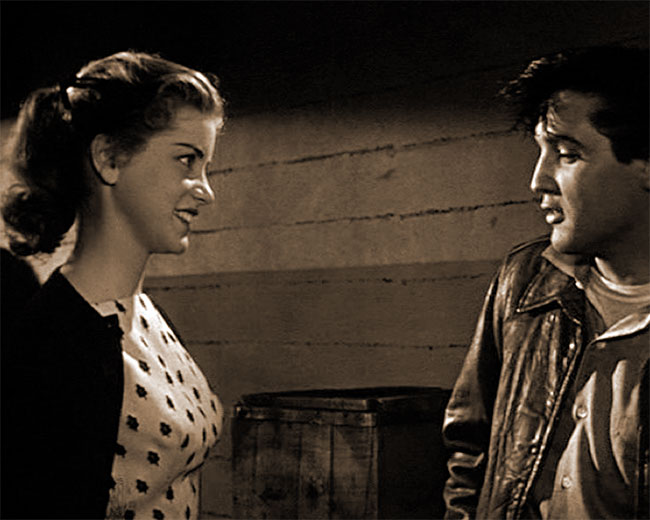
Dolores Hart appeared as Nellie, one of Danny’s love interests. She had previously appeared with Elvis in 1957’s Loving You, also a Hal Wallis production.

Elvis Presley: “[King Creole] was quite a challenge for me because it was written for a more experienced actor” (6).

Dolores Hart: “Elvis, no matter what anyone says, deserves credit as a person of talent. There is no reason he shouldn’t soar to the heights the kings [of the screen] occupy now” (7).

Jan Shepard: “[Elvis] was very concentrated, very focused on playing Danny. For a kid coming in and just beginning his career he had a great sense of timing; there was great honesty in his acting. He was a very good listener, and he just became the young boy […]. Just like in his music, he really got involved in his acting” (5).

Walter Matthau played Fisher’s antagonist, Maxie Fields. It was his sixth film.

Walter Matthau, 1958

Walter Matthau in King Creole

Walter Matthau: “I almost hesitate, I creep up to the sentence, [Elvis] was an instinctive actor. Because that is almost a derogation of his talents. That’s saying, ‘Well, you know, he’s just a dumb animal who does it well by instinct.’ No, he was quite bright, too. He was very intelligent. Also, he was intelligent enough to understand what a character was and how to play the character simply by being himself through the means of the story” (8).

Michael Curtiz’s directing credits extended back to 1912. In addition to 1942’s Casablanca, for which he won an Oscar, his other work, from among nearly 200 films, included the 1937 original version of Kid Galahad, Yankee Doodle Dandy (1942), and White Christmas (1954). Curtiz was attached to King Creole before it was transformed into an Elvis movie.

Jan Shepard: “Curtiz said he thought Elvis was going to be a very conceited boy, but when he started working with him, he said, ‘No, this is a lovely boy, and he’s going to be a wonderful actor'” (5).

Walter Matthau: “Michael Curtiz used to call him Elvy and he’d call me Valty. He’d say, ‘Now Elvy and Valty, come here, now Valty, this is not Academy Award scene. Don’t act so much. You are high-price actor. Make believe you are low-price actor. Let Elvy act.’ But Elvy didn’t overact. He was not a punk. He was very elegant, sedate . . . refined and sophisticated” (8).

Jan Shepard: “You just didn’t have a lot of fooling around with Curtiz […]. But no matter what Curtiz would ask of Elvis, he would say, ‘Okay, you’re the boss'” (5).

Elvis at a party in 1958

Elvis performing at Jan Shepard’s birthday party on February 22, 1958. Also pictured is Dolores Hart on clarinet.

Hart threw a birthday party for Shepard on February 22. Elvis showed up with a stuffed tiger that he named “Danny Boy.” His birthday gift for Shepard was a movie camera, definitely not from the five-and-dime store. He also played guitar and sang at the party.

King Creole was the first Elvis movie to include location shooting. On March 1, the film’s cast and crew headed for New Orleans by train. At this point, Red West, Elvis’ friend since his high school days, and actor Nick Adams, who Elvis had befriended in 1956, joined up with the rest of his entourage for the trip.

Carolyn Jones played Ronnie, Danny’s other love interest. She brought her husband, actor Aaron Spelling, along for the train ride to New Orleans. The couple would divorce in 1964. Spelling later went on to produce dozens of television series, including Charlie’s Angels and Beverly Hills 90210.

Tom Parker, Elvis’ manager, expressed concerns about security on the location shoot to Wallis. Wallis assured Parker that they could handle it. After all, he had worked with Dean Martin and Jerry Lewis at the peak of the duo’s popularity.

Alan Fortas: “There were thousands of people. Hal Wallis couldn’t believe it. […] I never saw so many people in my life. They declared it Elvis Presley Day and let the kids out of school and it took us two hours to get back to the hotel no matter where we were, even from across the street” (9).

In the French Quarter, the car carrying Elvis was almost overturned by the massive crowd.

Carolyn Jones: “[Elvis] had to ride in an old sedan, lying on the floor in the back, so his fans couldn’t mob him” (10).

Elvis took over the tenth floor of the Roosevelt Hotel, one block from where they were filming in the French Quarter. Hotel security was so tight that no one was admitted to the tenth floor. As a joke, Hart, Jones, and Adams armed themselves with toy guns and held up the elevator operator to force their way to Elvis’ floor. The elevator operator was not in on the joke and was apparently still shaken the next day.

Alan Fortas: “[W]e got on the elevator and we said, ‘Tenth floor, please.’ The elevator operator said, ‘No, sir, I can’t stop on the tenth floor. Mr. Presley is up there and we just can’t stop.’ Elvis was on the elevator with us and he said, ‘Yeah, I know. I’m Elvis.’ The elevator operator looked straight at him and said, ‘I’m sorry, sir, I can’t stop on that floor for anybody.’ We had to go to the eleventh floor and walk down” (9).

The film’s climax was shot at a house on stilts at Lake Pontchartrain. Elvis and Jones shared scenes there.

Carolyn Jones: “[Elvis] was always asking a lot of questions. God, he was young! I didn’t think anyone could be that young. He was always talking about his folks and about the house [Graceland] he’d just bought them” (8).

When onlookers at Lake Pontchartrain became unmanageable, Elvis had to escape through the back of the house to a motorboat that whisked him away.

Though Memphis was tantalizingly close, the group had to return by train to Hollywood to be released from King Creole. Elvis attended a wrap party on March 12, and then he and his friends were on yet another train. Destination: Memphis.

Alan Fortas: “We’d just sit and talk [on the train], try to write songs, try to sing. You know, just typical ol’ boys. But it got to us by the time we got to Dallas. We couldn’t take it any longer. So we got off that train and rented some Cadillacs and drove the rest of the way home” (11).

Elvis arrived home on March 14 and was inducted into the Army on March 24.

Paramount released King Creole throughout the United States on July 2. It peaked at #5 on the Variety charts. At this time, Private Presley was still stationed at Fort Hood in Texas.

Hal Wallis: “Now, although I don’t have all the figures, I believe that one of the least successful of Elvis’s films was King Creole. But that was my favorite!” (1)

Dolores Hart and Elvis Presley in King Creole

Dolores Hart and Elvis in King Creole

Dolores Hart: “Elvis is a young man with an enormous capacity of love . . . but I don’t think he has found his happiness. I think he is terribly lonely” (12).

According to longtime friend Sonny West, if Elvis had his way, he would have reunited with director Michael Curtiz when Elvis was cast in a remake of Kid Galahad, which filmed in late 1961 (13). This time, Elvis actually played a boxer, albeit a singing one. Despite Elvis’ campaign, Phil Karlson received the directing nod instead. Curtiz passed away in April 1962 at the age of 74.

Elvis later reunited with Jan Shepard in 1966’s Paradise, Hawaiian Style, in which she played Betty Kohana. Shepard had maintained a friendship with Hart after King Creole. By this time, the quality of Elvis’ movies had declined. While King Creole is a contender for Elvis’ best movie, Paradise, Hawaiian Style is a contender for his worst.

Jan Shepard: “One time [Elvis] asked about Dolores Hart, and we had a little bit of a conversation. In the quiet moments, he was still very sweet. When we reminisced about Creole, he said, ‘Honey, that was my favorite picture'” (14).


Bibliography

  • Careless Love: The Unmaking Of Elvis Presley by Peter Guralnick, Little, Brown And Company, Boston, 1999.
  • Down At The End Of Lonely Street: The Life And Death Of Elvis Presley by Peter Harry Brown and Pat H. Broeske, Dutton, New York, 1997.
  • ELVIS: The Biography by Jerry Hopkins, Plexus, London, 2007.
  • Elvis Commemorative Edition, compiled by Bill DeNight, Sharon Fox, and Ger Rijff, Publications International, Lincolnwood, IL, 2002.
  • Elvis Day By Day: The Definitive Record Of His Life And Music by Peter Guralnick and Ernst Jorgensen, Ballantine Books, New York, 1999.
  • The Elvis Encyclopedia by Adam Victor, Overlook Duckworth, New York, 2008.
  • Elvis: The Great Performances, dir. Andrew Solt, perf. Elvis Presley, 1989, DVD, SOFA, 2011.
  • Elvis: His Life From A To Z by Fred L. Worth and Steve D. Tamerius, Wings Books, New York, 1990.
  • Elvis In Private, edited by Peter Haining, St. Martin’s Press, New York, 1987.
  • Elvis: Still Taking Care Of Business by Sonny West with Marshall Terrill, Triumph Books, Chicago, 2007.
  • Good Rockin’ Tonight: Twenty Years On The Road And On The Town With Elvis by Joe Esposito and Elena Oumano, Avon Books, New York, 1994.
  • Internet Movie Database, accessed March 23, 2013.
  • King Creole, dir. Michael Curtiz, perf. Elvis Presley, Carolyn Jones, and Walter Matthau, 1958, DVD, Paramount, 2000.
  • Last Train To Memphis: The Rise Of Elvis Presley by Peter Guralnick, Little, Brown And Company, Boston, 1994.
  • Viva Las Elvis: Celebrating The King, compiled by Peggy Thompson, Arsenal Pulp Press, Vancouver, 1994.

References

(1) Elvis In Private, p. 92
(2) Down At The End Of Lonely Street, p. 137
(3) Last Train To Memphis, p. 446
(4) ELVIS: The Biography, p. 129
(5) Last Train To Memphis, p. 450
(6) Last Train To Memphis, p. 456
(7) Elvis Commemorative Edition, p. 112
(8) Last Train To Memphis, p. 451
(9) ELVIS: The Biography, p. 130
(10) Down At The End Of Lonely Street, p. 139
(11) ELVIS: The Biography, p. 131
(12) Elvis: His Life From A To Z, p. 85
(13) Elvis: Still Taking Care Of Business, p. 120
(14) Careless Love, p. 209


My grandmother worked in the ticket booth of a theater for decades. I dedicate this series of movie posts to her, who would have turned 103 this month. I often remember her when I watch movies.

Spotlight: King Creole

Elvis Presley in King Creole (1958)

Elvis Presley in King Creole (1958)

Filmed and released in 1958, King Creole was Elvis Presley’s fourth film. Elvis’ induction into the US Army was postponed so that he could complete this movie, and by the time it hit theaters, he was already a soldier.

Despite some outward similarities, King Creole is not just any Elvis movie. All discussions of his best performances as an actor have to include this film. Directed by Michael Curtiz (Casablanca), King Creole is probably the most artistic film in Elvis’ body of work.

Elvis stars as Danny Fisher, a high school student in New Orleans on the verge of graduating. After a chance encounter with Ronnie (Carolyn Jones), a woman tied to crime boss Maxie Fields (Walter Matthau), Danny’s life turns upside down as he is lured into a dark world and ensnared by Fields.

Along the way, Danny does indeed become a singer as well as the object of the affections of Nellie (Dolores Hart). He also proves to be great with his fists, for King Creole is perhaps Elvis’ most violent movie. Sure, there are fistfights in many Elvis movies, but the King Creole fights are at a different intensity.

When I went to pull out the DVD of King Creole a couple weeks ago, I found it still in its original shrink wrap. I’ve had the movie long enough to not even remember how I obtained it, yet in all those years, I had not once opened and watched it.

This meant that it had been over ten years since I had watched King Creole, as my previous copy was a VHS tape. Thinking back, it was probably more like 14 years ago. I know, I know, time to turn in my Elvis fan card.

Among his four 1950s movies, Jailhouse Rock and Loving You seem to be the ones I gravitate towards. I enjoy watching most Elvis movies, though, so why had I neglected King Creole – undeniably one of his best – all these years?

When I watched the DVD of King Creole that night, I began to remember my impressions of it as a 23-year-old and understand why I did not revisit it often. There were really two reasons I did not connect with King Creole very well back then.

The first was that I found it really frustrating to watch Fields manipulate good-hearted Danny. I kept wanting Danny to see through the ruse. Of course, that would have made for a much shorter movie.

Dolores Hart as Nellie in King Creole

Dolores Hart as Nellie in King Creole

The second reason was that I just could not understand why Danny found the broken Ronnie so compelling compared to the innocent Nellie – who he treated rather coldly at times.

After watching the movie twice last month, however, I realized that this actually has much more to do with the fact that I find Dolores Hart (Nellie) to be one of his most attractive co-stars (right up there with Ann-Margret and Shelly Fabares) rather than anything the movie actually presents.

Plus, since Hart also appeared in a larger role in Loving You, I was really combining her two characters into one. While I view some aspects of Danny’s conflict differently than I did when I was 23 (more on that in a future post), I still love Dolores Hart. I would not have been torn. (As it turned out, Hart had a higher calling and left Hollywood a few years later to become a nun.)

While I’ve not seen the movie often, I’ve listened to the soundtrack countless times. It was fun to see Elvis perform the songs I’ve been listening to for so long.

I have at least a dozen ideas for posts around King Creole. I’ll try to squeeze in as many as I can over the next few months.


My grandmother worked in the ticket booth of a theater for decades. I dedicate this series of movie posts to her, who would have turned 103 this month. I often remember her when I watch movies.

FTD elevates Back In Memphis to essential status

Last month, Sony’s Follow That Dream collectors label for Elvis fans released its Classic Album version of Back In Memphis. With the holidays over, I’ve finally had some time to listen to this 2-CD set.

Back In Memphis, 2012 FTD Edition

Back In Memphis, 2012 FTD Edition

Original Album

Elvis loved Memphis, and no matter which of his eras you reference, he made some of his best music there.

The original Back In Memphis album was actually a 1970 re-release of Record 2 of the 1969 2-LP set From Memphis To Vegas/From Vegas To Memphis. Record 1 of that set was also re-released in 1970, as Elvis In Person.

Back In Memphis was a follow-up to the impeccable From Elvis In Memphis, recorded during the same 1969 sessions at American Sound Studio in Memphis. Unfortunately, the results were not nearly as strong.

In fact, Back In Memphis was one of the only disappointments I encountered in my first few years of collecting Elvis music. I was a huge fan of The Memphis Record, a 1987 retrospective album for the American sessions – compiling the entirety of From Elvis In Memphis, most of the singles, and selections from Back In Memphis.

While sound quality has come a long way since then, The Memphis Record was definitely a huge influence on me becoming the borderline obsessive Elvis fan I am today. I couldn’t wait to hear the remaining songs when RCA re-released Back In Memphis in the early 1990s on CD.

It turned out, though, that every “new-to-me” song on the album (i.e., those that weren’t on The Memphis Record) bordered on horrible. A bad Elvis CD, and from 1969 at that… I was shocked. I rarely played it.

Since that time, I’ve come to appreciate at least one of those Back In Memphis recordings that I initially hated: “Do You Know Who I Am,” which is a beautiful song.

If I play Back In Memphis these days, I prefer to kick it off by playing Elvis In Person. To me, Back In Memphis holds up better as Record 2 of a 2-LP set than it does as a stand-alone title. Elvis In Person, on the other hand, is powerful enough on its own.

Back In Memphis begins with “Inherit The Wind,” a great song written by Eddie Rabbitt – who also wrote “Kentucky Rain.” While I enjoy “Inherit The Wind,” I do not believe it was a good choice for first song.

Up next is “This Is The Story,” which sounds like a leftover – leading to an abysmal feeling for the beginning of Back In Memphis.

Fortunately, “Stranger In My Own Home Town” revs things into high gear. This is one of Elvis’ best performances from the American sessions, and it should have been the lead-off song for Back In Memphis. In fact, RCA wisely used it to kick off The Memphis Record. Say what you will about the sound, The Memphis Record had flawless sequencing.

Back In Memphis downshifts into low gear again with “Just A Little Bit Of Green.” Though better than “This Is The Story,” this is still lesser material. Elvis’ performance, as with just about everything he touched in 1969, is commendable, but the song itself is simply not worthwhile.

“Side 1” of the original album closes out with a real stinker, Neil Diamond’s “And The Grass Won’t Pay No Mind.” This is one of the few Elvis songs that I find nearly unlistenable. Keep in mind that this is coming from a guy who is a fan of “Old MacDonald.” To say that I give Elvis songs the benefit of the doubt is an understatement. This one is horrible, by far the worst on the album.

“Side 2” kicks off with “Do You Know Who I Am,” a very moving performance that always gets to me when I take the time to feel the words.

“I remember you said that you had to forget about me and be free. Do you know who I am, or have you forgot about me?”

Then we are back to sub-mediocre material with “From A Jack To A King.” Perhaps better than a typical movie song, but not by much.

Back In Memphis finishes strong, though. “The Fair’s Moving On,” “You’ll Think Of Me,” and, to a lesser extent, “Without Love” are all terrific songs.

All in all, it makes for an uneven album that pales in comparison to From Elvis In Memphis.

Bonus Song

As a bonus, FTD includes the stereo version of “Suspicious Minds,” which was not released until a few years after Elvis’ death. The original single released in 1969 was mono and can be found on the 2009 Legacy Edition of From Elvis In Memphis.

What else can be said about “Suspicious Minds” beyond that it is one of Elvis Presley’s true masterpieces?

Some have argued that RCA should have included it on the original Back In Memphis, but that would have been problematic because a live version of “Suspicious Minds” was included on the Elvis In Person portion of the original release.

Instead, RCA should have considered using “Don’t Cry Daddy,” “Rubberneckin'”, “Kentucky Rain,” and even “My Little Friend” to bolster this lackluster album. The problem with those, however, is that they had not yet been released as singles prior to From Memphis To Vegas/From Vegas To Memphis hitting stores.

Anyway, the “Suspicious Minds” bonus song is welcome here, particularly since it allows the meat of this 2-CD edition to include every take of this classic.

Sound quality on this release is amazing, by the way. I probably don’t mention that enough anymore, because I have gotten used to this level of quality over the last few years of Elvis releases.

First Takes

Inherit The Wind (Take 1; rehearsal; Take 4/master with vocal overdub #1): Take 1 and the rehearsal are instrumental only, both short. Vocal overdub #1 that Elvis performed against Take 4 is a gem. This is one of those where it is so clear that it sounds as if he is standing in your living room while performing the song. I’m thrilled to add this one to my collection. Previously unreleased.

A Little Bit Of Green (Take 1): Elvis sounds great here, of course, but I still don’t care very much for the song. This is a previously unreleased take. I think I like it better than the master, though that may just be the fact that it is “new” compared to that one. It is possible that this take could make the song grow on me. I like the stripped-down nature of it.

And The Grass Won’t Pay No Mind (Takes 1-3; 5): This is a collection of previously unreleased false starts that did not change my opinion of this awful song.

Do You Know Who I Am (Take 1): This is a nice alternate, though I prefer the master. Previously released on Memphis Sessions.

From A Jack To A King (Takes 1-3): Takes 1 and 2 are false starts. Take 3 is worse than the master. Previously released on Memphis Sessions.

You’ll Think Of Me (Takes 1-6): Takes 1 through 5 are false starts. Take 6 is pleasant, but feels somewhat plodding at times compared to the master. Previously unreleased.

Without Love (Take 1): This alternate, which is very similar to the master, was previously released on Suspicious Minds.

Suspicious Minds (Takes 1-4; rehearsal; Take 5; rehearsal): This one track is the reason I had to have this CD upon release, rather than picking it up at some point down the road in 2013. Here are Elvis Presley’s first five attempts at “Suspicious Minds,” all blown takes. Elvis swears on some of his mistakes, and FTD has not edited his language. I commend this decision, since this is a collectors label. Anyway, I love hearing “Suspicious Minds” start to come together. Other than parts of the rehearsal segments, most of this track is previously unreleased.

Suspicious Minds (Take 6): This track begins with two more previously unreleased false starts before Elvis finally nails a complete take – as previously released on ELVIS: From Nashville To Memphis – The Essential 60s Masters I.

Back In Memphis - FTD Booklet Cover

Back In Memphis – FTD Booklet Cover

Rehearsals

For some reason, FTD includes the undubbed “Stranger In My Home Town” master in this rehearsal section. This version was available before on Reconsider Baby and Memphis Sessions. “Stranger In My Own Home Town” is a song where I strongly prefer the dubbed version.

There is also a true rehearsal of “A Little Bit Of Green.” Elvis sings it very slow at first but eventually moves it closer to the familiar speed. I like this previously unreleased informal version better than the master.

January Outtakes

Up next are three takes of “You’ll Think Of Me.” Take 8, though previously released on Made In Memphis, is new to me. Take 14 was previously released on Memphis Sessions. Take 16 was previously released on Suspicious Minds. All three takes are enjoyable.

Then, it’s back to “A Little Bit Of Green” for takes 2 and 3. Take 2 consists of a couple of false starts, while take 3 is actually the undubbed master with Elvis’ original vocals (he re-recorded his vocals to the song at a September session later that year in Nashville). He struggles with it in the January session. Fascinating, and exactly the kind of previously unreleased track that a collectors label should provide.

The previously unreleased vocal overdub #2 for “Inherit The Wind” proves interesting because Elvis spends part of it joking around, including use of his mock country voice.

Two false starts of “Without Love” are followed by Take 4 – previously released on Memphis Sessions. It’s a decent take, but this song wears on me after awhile. Too much style, not enough substance.

Take 7 of “Suspicious Minds” quickly re-energizes me, though. How I love this song. This take was previously released on Platinum: A Life In Music, though there are some extra talking bits before and after the song here.

February Outtakes

Up first is the master Take 6 of “And The Grass Won’t Pay No Mind”, undubbed except for Elvis vocal repairs. While I still detest the underlying song, I do find this version better than the master.

Take 4 of “Do You Know Who I Am” was first released on Made In Memphis, but it is new to me and, thus, a highlight of this release. Elvis seems really into the song. He begins to clown around at the end and states afterwards, “You’re gonna save that last take, aren’t you? Because the first part of the take was pretty good.”

Unfinished Masters

“This Is The Story” kicks off with a false start Take 1, followed by the undubbed Take 2 – previously released in shorter form on Memphis Sessions. This simpler version is far preferable to the master. I also enjoy the live version (Collectors Gold) due to Elvis injecting some humor into this melodramatic piece.

More “You’ll Think Of Me”, this time the undubbed master Take 23. This is a terrific track.

Back to “A Little Bit Of Green.” This time, it is master Take 3 with Elvis’ vocal overdub replacement, but without the other dubs. Accordingly, Elvis sounds much stronger here than in the “January Outtakes” instance of this track. Also, the song is admittedly much improved in its simpler form without the other overdubs. Oh what confusing webs ensnare Elvis fans.

Two false starts from Take 4 kick off “From A Jack To A King,” followed by the undubbed and unedited master Take 5 – previously unreleased. I prefer it over the released master, though this still won’t be a favorite. I may play it a little more often, though.

Next is the undubbed master (Take 5) of “Without Love,” previously unreleased and mostly unremarkable.

Here, at last, is the undubbed/unedited master Take 8 of “Suspicious Minds.” Boy, was it worth the wait. You’ll want to crank this one up and wake up your neighbors, folks. Wow. It is incredible to hear this song in its stripped-down form. While it is not better than the official master, I believe it will stand right alongside it for me. There are plenty of other great tracks on FTD’s Back In Memphis, but this one alone is worth the cost of admission.

From “Suspicious Minds” to “And The Grass Won’t Pay No Mind” (master Take 6 with vocal overdub). Maybe this illustrates as well as any other two examples of the contradictory nature of Elvis’ career. So much incredible talent that is alternatively poured into a treasured work or into utter dreck. Yet, in both cases, the talent is always there.

Further proving my point, after “And The Grass Won’t Pay No Mind” comes another great track, Take 7 (master, with vocal overdub) of “Do You Know Who I Am”. I love this one, too – including more fooling around by Elvis near the end. I can’t wait to go back and listen again to all of these “Do You Know Who I Am” takes.

Finally, “The Fair’s Moving On” (Take 1 master, with vocal overdub) provides an approriate album closer as Elvis sings, “Yes, the fair’s moving on, and I’ll soon be gone…” Another delightful track.

Cover & Booklet

As when FTD released Elvis In Person in the Classic Album series, the front cover art duplicates the reissue version of Back In Memphis, leaving out the From Vegas To Memphis title. At least they were consistent, but I would have preferred both use the From Memphis To Vegas/From Vegas To Memphis cover variants, as the odds of the original 2-LP version getting a re-release on its own are slim to none.

From Memphis To Vegas/From Vegas To Memphis actually would have made a great Legacy Edition release, but both Elvis In Person and Back In Memphis have already been part of separate releases in that series as supporting titles for On Stage and From Elvis In Memphis respectively.

The Back In Memphis FTD booklet cover is fantastic. I like to think of these as the album covers for the FTD editions, and this is one of their best alternate designs – right up there with the booklet cover for That’s The Way It Is FTD Classic Album edition.

The liner notes reveal no new information and often sound awkward. For example:

“One of the new songs Elvis performed at his shows was an extended seven-minutes plus arrangement of a yet to be released song from the Memphis Sessions, a Mark James penned song about the break-up of a relationship titled ‘Suspicious Minds’.”

I also wish the “In And Outtakes” notes had been more informative about the various takes, overdubs, etc. Instead, I had to use the Elvis Presley Recording Sessions section of the excellent Keith Flynn’s Elvis Presley Pages to unravel some of my personal confusion when compiling this review. Compared to initial releases, FTD has come a long way in the amount of information provided – but there is still room to grow.


When I first heard the original Back In Memphis, over twenty years ago, I was surprised by my disappointment. After listening to this expanded FTD release of the album, I am surprised yet again. Not by disappointment this time, but by how much I enjoyed it.

Verdict: 10 (out of 10)
The Elvis Today Blog Volume 2 author talks to The Mystery Train

Last month, Thomas Melin released a new book, The Elvis Today Blog: Volume 2. Available from Blurb, the paperback compiles 230 more Elvis Today Blog posts. It also features a foreword by Michael Jarrett, writer of “I’ll Be Home On Christmas Day” and “I’m Leavin'”, as well as a previously unreleased interview with DJ Fontana, Elvis’ first drummer. Melin recently took the time to chat about Elvis and the 328-page volume.

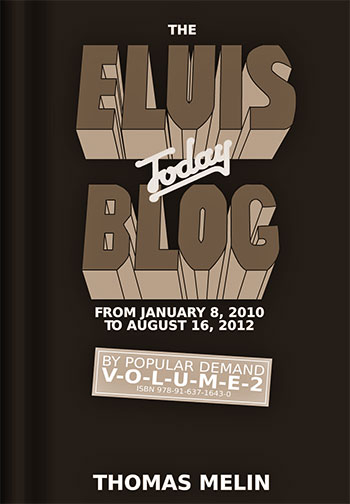
The Elvis Today Blog, Volume 2

Cover of The Elvis Today Blog, Volume 2

“Since the first time I heard Elvis, when I was nine or ten years old, I’ve been a fan,” said Melin. “I became really dedicated a short while later when I borrowed a bunch of Elvis albums from a classmate.” The titles included Elvis In Concert, A Canadian Tribute, and C’mon Everybody.

Melin, who lives in Sweden and is now 45, notes that it has always been Elvis’ music and variety of singing styles that have drawn him in. “Being a fan for me also means trying to learn more about the man that was Elvis Presley by listening to alternate takes, reading books, talking to his musicians, and watching documentaries,” he said.

He began blogging about Elvis on August 16, 2007. Five years worth of posts later, he is not sure if it has changed his perspective on the singer, but feels that it has enriched his life as a fan. “I’ve been able to share my ‘Elvis experiences’ with other fans,” Melin said, pointing out that the blog has helped him get to know other Elvis fans around the world.

The Elvis Today Blog: Volume 2 picks up right where the first volume ended. It collects all of the posts from January 8, 2010, through August 16, 2012. “I think it’s nice to have them all in one place, so to speak, and to be able to leaf through the pages and read a bit more thorough when something catches your eye,” said Melin.

“The kind of posts I’ve always loved to write the most has been […] ‘Special Moments With FTD,’ where I, with the help of an alternate take, some studio banter, information in books, and last, but not least, some imagination, try to describe what was going on in the studio or on stage when the recording equipment caught Elvis in his line of work. In my second book, the one that I’m the most satisfied with is the ‘Special Moments With FTD 11’ post, describing the recording of the song ‘Guitar Man’ on September 10, 1967,” he said. The post was inspired by the 2011 FTD release Elvis Sings Guitar Man.

As mentioned, one of the special bonuses this time around is a foreword by Michael Jarrett. “It all started in December 2008 when I wrote about one of the biggest daily newspapers in Sweden ranking Elvis’ ‘I’ll Be Home On Christmas Day’ as the second best Christmas song ever,” he said. Jarrett subsequently got in touch to thank him for mentioning his song.

“From there on we have stayed in contact, and I’m honored to have Michael Jarrett among my readers, which obviously means a lot. When I asked him if he would write the foreword and he accepted, I was thrilled,” he said.

The other special bonus, of course, is Melin’s interview with drummer DJ Fontana. In April 2006, Fontana was touring Sweden as part of a Swedish group called The Cadillac Band. At that time, Melin was working as a reporter at a radio station, where he also produced a one-hour program about Elvis’ religious music. He says he “begged” his news editor to let him interview the drummer when The Cadillac Band came to town. Melin said, “I found DJ Fontana very friendly, and he seemed to enjoy talking about his time with Elvis.”

Blurb specializes in self-publishing and provided the platform for both books based on Elvis Today Blog. “What you need is a PDF version of the book to upload on Blurb, and I’m lucky to have a brother who is very, very good when it comes to design and page layout,” he said. He explains that Staffan Melin used the Adobe Suite (Illustrator, Photoshop and Indesign) on the first volume, but decided to try open source software (Scribus, Inkscape and GIMP) on the latest volume.

“This book is actually part of [Staffan’s] master’s thesis in media technology, where he examines if free software can be used for book and magazine production. Obviously, it can,” said Melin.

Elvis Today Blog celebrated its 500th post on August 16, 2012, which was also the cutoff date for the new book. Since that time, Melin has been in semi-retirement from blogging. “When I decided to take an indefinite break from blogging, it was because so much was going on in my life, mainly due to my two-year-old daughter. I just didn’t have the time or energy to write about Elvis anymore. I still don’t,” he explained.

“I still listen to Elvis all the time, and my daughter seems to like his music, too, but I would be lying if I said I didn’t miss blogging at times. That’s why I’ve written one or two posts since ‘retiring,’ and I guess it will continue that way,” Melin said.

“For now, I’m satisfied with my 500 posts and two books. Every time I look at them sitting in the shelf I feel a bit proud, thinking in my own small way, I’ve done something to keep Elvis’ memory alive,” he said. “It’s been a fun ride!”

Order The Elvis Today Blog: Volume 2 over at Blurb.

REVIEW: Elvis – The Complete Masters Collection (Part 5)

This is Part 5 of an ongoing series reviewing Elvis: The Complete Masters Collection. Read Part 4.

I’m planning to significantly scale back this review series. I’m actually up to Volume 17 now in listening, as I gave up trying to review them as I go. This is mostly because I was not patient enough to wait. The process was just going too slow and taking away from the enjoyment. However, since I already had a draft of the below review for weeks now, I figured I might as well share it with you.


CD Vol. 7: Complete 1968 Comeback Special

This volume of The Franklin Mint‘s 36-disc Elvis: The Complete Masters Collection (mastered by Vic Anesini) presents songs recorded for the ELVIS television special in June 1968.

Elvis: The Complete Masters Collection - Volume 7

01. Trouble/Guitar Man: This was the perfect way to open both the ELVIS special and the accompanying soundtrack album. Culled from 1958’s King Creole, “Trouble” has never sounded better than it does in this performance a decade later.

In the setting of the special, “Guitar Man” bares little resemblance to Elvis’ 1967 country recording. This version rocks.

Though true to the original album, I would have preferred that the overdubbed applause at the end of this studio track had been omitted for this release. Exceptions were made for other recordings on this set, including on this very CD, and this is another exception I would have welcomed.

02. Lawdy, Miss Clawdy [Live]: In the live, “sit down” segment of the show, Elvis tears into “Lawdy, Miss Clawdy.” This is a terrific rendition that helps set the tone for the entire album. Elvis is back.

Baby, What You Want Me To Do [Live]: Elvis performs a brief snippet of “Baby, What You Want Me To Do” and then launches into a fun bit of reminiscing.

Heartbreak Hotel/Hound Dog/All Shook Up [Live]: The album then transitions to the “stand up” segment with a rocking “Heartbreak Hotel,” combined with strong versions of “Hound Dog” (I love the Native-American-inspired percussion) and “All Shook Up.”

This is the best live version of “Heartbreak Hotel.” Too bad it is part of a medley and incomplete. Years ago, I made an edit of this recording and the one at his first sit down show in order to create a “complete” version for my own personal use (inspired by a similar edit of “Blue Suede Shoes” on This Is Elvis, except mine began with the stand up show and ended with the sit down show).

Sound quality is so excellent on Complete 1968 Comeback Special that it makes a recording flaw in this medley more obvious – a microphone or amplifier feedback sound is present in the background through much of the medley, beginning with “Hound Dog.” When I went back to check, I was surprised to find that this actually existed on previous release sources as well – though not as obvious.

Can’t Help Falling In Love [Live]:  Hands-down, this is the best live version of “Can’t Help Falling In Love.” Absolutely beautiful. Again, here we have excellent sound quality, but that feedback tone is also present at times in the background. I fear it is one of those things where, now that I have heard it, I will not be able to “un-hear” it.

Jailhouse Rock [Live]: For my money, there are really only two killer versions of “Jailhouse Rock.” The 1957 original and this 1968 live recording. Even just a year later, Elvis had lost the raw edge to this song.

Unfortunately, there is noticeable distortion near the end of “Jailhouse Rock,” almost like garbled tape (not the feedback tone discussed earlier). What a disappointment. Not present on previous releases, this issue was first introduced on 2008’s ELVIS: The Complete ’68 Comeback Special boxed set (Disc 3, Track 21). Also on that set, the same version of “Jailhouse Rock” can be heard without the distortion on Disc 1 – which presents the original ELVIS-TV Special album. However, the overall recording is in much lesser sound quality. I understand that tapes can be damaged, but surely a better effort could be made for one of the pivotal moments of Elvis’ career? As this also affected The Complete Elvis Presley Masters, a pricier incarnation of the complete masters [7], Sony should be embarrassed.

Love Me Tender [Live]: I have to admit, though some may not be able to comprehend this, I am not a big fan of Elvis’ original 1956 recording of “Love Me Tender.” It bores me to tears. I definitely prefer his 1968 live versions. As with “Can’t Help Falling In Love” earlier in the show, I love the velvet sound of his voice on this.

03. Where Could I Go But To The Lord/Up Above My Head/Saved: This track begins with Elvis discussing the gospel and rhythm & blues origins of rock ‘n’ roll at one of the sit down shows. It then segues into a medley of studio-recorded inspirational songs. In the actual television special, the medley is a huge production number with Elvis surrounded by dancers while the Blossoms, including Darlene Love, provide backing vocals. Though the recording is great, I find this one much more interesting to watch than only hear.

04. Blue Christmas [Live]: In both the original broadcast version of the ELVIS special and its accompanying soundtrack, creative editing inspired a myth. “I’d like to do my favorite Christmas song, of all the ones I’ve recorded,” Elvis says. He then launches into “Blue Christmas.” For years, people justifiably believed that “Blue Christmas” was Elvis’ favorite Christmas song.

It was not until the 1998 release of Tiger Man, containing the unedited version of the sit down show from which the recording was taken, that the truth became known to a wider audience. It turned out that Elvis did not sing “Blue Christmas” as his favorite but “Santa Claus Is Back In Town.” In fact, though he could not remember some of the words, he sang a bluesy version that was a highlight of that particular show. Not only that, but when he did finally launch into “Blue Christmas,” it was an extended version compared to the original master. So, not only did the TV special and original album create the “Blue Christmas” as Elvis’ favorite Christmas song myth, they even artificially shortened said song.

True to the original master as released in Elvis’ lifetime, the recording here on Complete 1968 Comeback Special matches that of the original album. Elvis performs a terrific version of “Blue Christmas,” far exceeding his 1957 studio recording. I’ll stick to the real story and full-length version on Tiger Man, though.

One Night [Live]: “I think I’ll put a strap around this and stand up,” Elvis says near the end of the first sit down show, but there is no strap to be found for the electric guitar he has borrowed from Scotty Moore. Drummer DJ Fontana announces the next song as “No Strap” and Charlie Hodge, also on stage, sings “No strap today. . .” which Elvis immediately turns into a brief parody of “One Night” by picking up with “. . . is what I’m now looking for, the things I did and I saw, would make the dream . . . where, where, where, where’s the strap?”

He then launches into the song proper, including some of the original “One Night Of Sin” lyrics that had been too risque for 1957. He soon stands up, placing one foot on his chair to prop the guitar on his knee, while Charlie (and later Lance LeGault) holds the microphone for him. While some of the “ad-libs” earlier in the night were indeed scripted, Elvis wanting to stand up with the guitar during the sit down show is not one of them. For the second sit down show, though the guitar still had no strap, it was obvious they had worked out more of the logic – including how to adjust the microphone stand, allowing Elvis to stand up a few times. It is this off-the-cuff moment in the first show that holds the real magic, though. All the fun aside, it is also a great, raw performance of “One Night.”

05. Tiger Man [Live]: Though it originally appeared neither on the ELVIS-TV Special album nor the broadcast, “Tiger Man” was actually the first recording released from those made for the 1968 ELVIS special, on the album Singer Presents Elvis Singing Flaming Star And Others. “Tiger Man” was originally slated for the special, but was replaced by “Blue Christmas” at the insistence of Elvis’ manager due to the December air date. “Tiger Man” is another wonderful performance that Elvis drives with the electric guitar. The compiler made a good choice placing it back in context with other songs from the special rather than saving it for a separate disc.

[Side note: Elvis only performed “Tiger Man” on the second sit down show. Near the end of the first sit down show, Elvis states, “We’d like to do one more song for you because we have another audience waiting to come in” and then proclaims, “Man, I just work here,” when the audience sounds disappointed. He then starts looking for the guitar strap as described with “One Night” above. While he was apparently not referring to the closer “Memories” as the “one more song,” I wonder if it was actually “Tiger Man” that he was planning to sing before being inspired to do the impromptu reprise of “One Night”? Most of the renditions on the first sit down show are superior to those of the second, so a first show “Tiger Man” might have been quite the performance if the proper guitar strap had been available.]

06. Memories [Stereo Version]: Though Elvis performed two live versions of “Memories” during the special tapings, they were not nearly as good as his studio master. Rather than use the live recording featured on the television broadcast, the ELVIS-TV Special soundtrack album featured a mono version of the studio recording with overdubbed applause. RCA sure did love faking live versions with overdubbed applause in the late 1960s and early 1970s.

In this instance, the compiler makes an exception and uses a stereo version of the studio recording, fortunately without the fake audience. Technically, this mix was never released in Elvis’ lifetime, though, for even his 1968 single of the studio version was in mono.

Written by Mac Davis, “Memories” is a beautiful song and this is, by far, my favorite version. 1968’s “Memories” would go on to play over the closing credits of 1972’s Elvis On Tour, as well as posthumous documentaries – including This Is Elvis.

07. Nothingville/Big Boss Man: I have often wondered if “Nothingville” was slamming Nashville or Hollywood (“phony little two-bit town where nothing’s real”). If “Nothingville” is about Hollywood and the movies, that puts an interesting spin on this segment of the special – which is more than a little reminiscent of Elvis’ movies anyway.  In any event, the song fits within the context of one of the show’s production numbers, but it is almost too short to really matter. Next up is a carny barker inviting passers-by to experience an exotic dancer. Elvis launches into an altered version of “Big Boss Man” where the one being worked to death is actually the dancer rather than the singer. The song loses most of its blues roots here, but the arrangement is still effective.

Guitar Man/Little Egypt/Trouble/Guitar Man: To be honest, all of track 7 is really a letdown compared to the quality of the rest of the special.

08. If I Can Dream [Stereo Version]: Always a contender for his greatest performance, “If I Can Dream” caps off the special just right – with Elvis moving forward. As with “Memories,” a stereo mix is used here that was not released during Elvis’ lifetime. The album version was in mono and included overdubbed applause on the studio recording, while the single version of the studio recording was in mono as well.

All-in-all, due to the sound issues on “Jailhouse Rock,” and, to a lesser extent, “Hound Dog,” “All Shook Up,” and “Can’t Help Falling In Love,” Complete 1968 Comeback Special turns out to be the most disappointing volume of this set thus far. A real travesty since this is some of his best material. Does anyone bother to listen to Elvis CDs prior to release?

Though a minor issue, the CD also has a misleading title, for it would take several CDs to truly represent the “complete” 1968 “Comeback Special” recordings. This is but a small sampling. Even a few Comeback recordings released during Elvis’ lifetime, if restricted to that, have been left out.

Sources

(7) “Complete Masters compared/contrasted with Franklin Mint” by elvissessions, For Elvis CD Collectors Forum, 2010.


Read Part 6.

Prince From Another Planet highlights an unreachable star

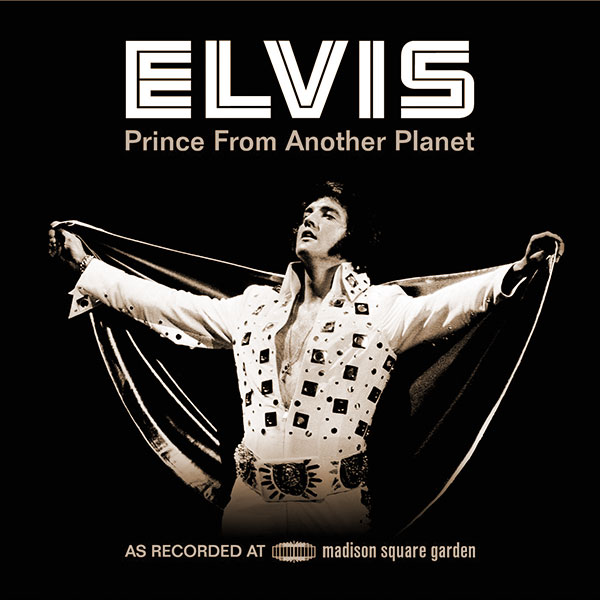
Sony released three new Elvis titles to US stores on Tuesday, all of them related to his 1972 appearances at Madison Square Garden. While I commend Sony for bringing these releases to market, they have also brought along with them much confusion over the similar contents.

I’m no miracle worker, but I’ll try to clear this up for you as best I can.

Prince From Another Planet: As Recorded At Madison Square Garden is a 2-CD/1-DVD boxed set. CD 1 is a 2012 mix by Michael H. Brauer of Elvis’ June 10, 1972, afternoon show at the Garden, mastered by Vic Anesini. CD 2 is a 2012 mix by Brauer of Elvis’ June 10 evening show at the Garden, mastered by Anesini. The DVD contains a new documentary (Like A Prince From Another Planet), footage from Elvis’ June 9 press conference in New York, and fan-shot 8-millimeter footage of the June 10 afternoon show. Also included is a 50-page book, featuring liner notes by Lenny Kaye.

Elvis Presley's 1972 New York press conference

Elvis at his June 9, 1972, press conference

Elvis As Recorded At Madison Square Garden: Legacy Edition is a 2-CD set. CD 1 is a vintage 1972 mix of Elvis’ June 10 evening show at the Garden, mastered by Anesini in 2007. This represents the 1972 album Elvis As Recorded At Madison Square Garden, which hit store shelves only a week after the actual show. Due to Anesini’s mastering, which was first released on 2009’s Elvis: The Complete Masters Collection and 2010’s The Complete Elvis Presley Masters, the sound quality is improved over the 1992 CD release. CD 2 is a vintage 1997 mix of Elvis’ June 10 afternoon show at the Garden, mastered by Anesini for this 2012 edition. This represents the 1997 album An Afternoon In The Garden.

Sony has also released a new vinyl version of Elvis As Recorded At Madison Square Garden. This 2-LP release of the June 10 evening show is a newly mastered version of the vintage 1972 mix. Despite the fact that it is now two records, this does not contain the afternoon show. The original 1972 vinyl issue of this album was only one record, but the two record format is for better sound quality.

As you can see, fans of Elvis in 1972 have a nice selection from which to choose. As for me, I went with the deluxe Prince From Another Planet set because I wanted to hear the 2012 mixes. The Legacy Edition was not appealing to me because I already have the vintage As Recorded At Madison Square Garden mix as mastered by Anesini on The Complete Masters Collection, and I was not interested in a new mastering of the 1997 mix of An Afternoon In The Garden. I may eventually pick up the vinyl, though I tend to gravitate more towards records produced while Elvis was alive.

Prince From Another Planet (2012)

I’m not going to do a formal review, but I can’t close out without saying that Prince From Another Planet is incredible. Brauer has done a fantastic job mixing these shows. Crank up your sound system and maybe, just maybe, you can be transported back to June 10, 1972, and experience Elvis at the Garden.

As you might expect, the difference is most striking on the evening show. To say that the 1972 mix was rushed would be an understatement. This new 2012 mix finally illuminates this show in the fashion it deserves.

The Like A Prince From Another Planet documentary is worthwhile. I would like to see more documentaries of this nature, highlighting specific points in Elvis’ career. It does “spoil” a lot of the fan-shot footage, though, so you may want to watch that first.

The amateur video of the June 10 afternoon show looks about as good as 8 millimeter footage can possibly appear. Do not go in expecting professional Elvis On Tour or Aloha From Hawaii quality, though. This understandably looks grainy on large television sets. Though the original footage was silent, Sony has meticulously synched the 2012 mix of the show’s audio with the footage. To put it mildly, the footage is stunning and makes for a terrific experience . . . almost.

Elvis on stage at the Garden

Elvis on stage at the Garden

Only about twenty minutes of footage from this sixty minute show actually exists. During parts of the show for which there is no footage, the screen goes black while the audio continues. There are several long stretches of songs with no footage at all. To be honest, I cannot imagine a member of the “general public” (i.e., someone who is not an obsessed Elvis fan) sitting through this. Even I became restless at times, afraid to take my eyes off the big blank screen for fear I would miss the video. Sony should have provided an option to “View All Footage” and skip over the blank portions. This is but a minor quibble, though. Keep in mind while watching this that Warner Home Video is sitting on hours of professionally-filmed 1972 tour footage of Elvis. Unfortunately, Sony has no control of that footage, so kudos to them for at least bringing us this grainy alternative.

My larger complaint with the set has to do with the packaging. It is beautiful, but fails miserably at its primary job – protecting the CDs and DVD. Good luck getting them out without scratching the discs and/or creasing the packaging. As it is, my DVD has a fault during the press conference, and I have no doubt that the packaging and my admittedly anxious hands are to blame.

Elvis and the music more than make up for these shortcomings, though. If you are a fan of Elvis in 1972, Prince From Another Planet is a must-have. If you are not a fan of Elvis in 1972, I do not think this release will change your opinion. That’s okay, though. Everyone is entitled to be wrong!

* * *

Coming so soon on the heels of the recent storm, this New York themed release also reminded me to think of those in New York and neighboring areas that are affected. I think it would be a great gesture, and certainly within the spirit of Elvis’ generosity, if Sony were to release a single from this set with proceeds to benefit disaster relief efforts. In any event, we fans can also help on our own by donating funds to the American Red Cross.