Elvis 1967: The Once And Future Album (The Edge Of Reality #3)

There are infinite universes, beyond that which is known to man. Imagine, if you will, one such alternate dimension in which an entertainer named Elvis Aaron Presley set a slightly different course for his life. In that universe, one of the entertainer’s fans was also born thirty years sooner. This allowed him to document what happened when the entertainer took a stand in 1967. Submitted for your approval is this brief glance into… the edge of reality.

The Mystery Train Elvis Newsletter (November 1967)

The Mystery Train Elvis Newsletter (November 1967)

THE MYSTERY TRAIN ELVIS NEWSLETTER
Volume XII, Issue 4, Number 48
November 1967
– Page 2 –

Hitchhike all the way down to Memphis with Big El
A review of Elvis Sings Guitar Man by Ty.

Word has it that Elvis had a major blow-up with RCA Records over Elvis Sings Guitar Man, which hit record stores last week. RCA originally planned to issue some of these songs on a soundtrack record for the new Clambake movie, which will be playing at a theater near you later this month.

Elvis insisted on an album with no movie songs, though. If the rumors are true, he apparently even threatened to fire his long-time manager over the debacle until the Colonel worked it out with RCA. Meanwhile, Elvis’ newly hired personal attorney is still reviewing management and recording contracts he signed earlier this year. With two cancelled movie soundtrack albums in as many years, could major shakeups be on the way? Stay tuned.

Ironically, the similarly-titled Elvis Sings Memphis, Tennessee came about due to similar circumstances back in 1963. As you probably recall, the legend goes that Elvis nearly fired the Colonel back then, too. Seems the Colonel wanted to replace that album’s release with a new installment of the Golden Records series. Elvis’ instincts proved right back then, for the platinum-selling Memphis, Tennessee album made it to number three on the charts.

In any event, with the Clambake songs shelved for now, we Elvis fans get this album instead. Was he right to take the same stand for Guitar Man as he did for Memphis, Tennessee? Let’s find out.

SIDE 1

Guitar Man: Elvis has gone Country & Western? That’s what this first song tells us. Musically, this is much better than anything on the Double Trouble LP and the Easy Come, Easy Go EP from earlier this year. In terms of Elvis’ commitment, this is more on par with the How Great Thou Art LP Gospel album that kicked off this year. Can the whole album live up to this first song, though?

Tomorrow Is A Long Time: While writer Bob Dylan has not released this song himself, Folk music fans may have heard it on the Odetta Sings Dylan album that she put out a couple years ago. I must admit, I never expected Elvis to sing Dylan, though! Even more so than “Guitar Man,” this is a very unusual song compared to what we are used to from him. I like it as something different, but hope the entire album isn’t like this.

Big Boss Man: Some people think that Country & Western is about as far apart from the Blues as you can get. Apparently not Elvis, who delivers yet another fine performance. This time, it is a Blues song done in what is almost a Country & Western style. It was combining different styles of music that helped Elvis to create Rock ‘n’ Roll back in the old days anyway. Be sure to listen out for a slight change to the words. Instead of “I want a little drink of water, but you won’t let Jimmy stop,” he sings, “I want a little drink of water, but you won’t let Big El stop.” I like the sound of that. I think I’ll call him that from now on. Of note, RCA originally planned this for release on 45 in the fall. They even put out ads for it, but the single was held back – probably while waiting for the various parties to resolve the whole Clambake album controversy.

Love Letters: After such a start, this is a ballad for the ladies. Not as strong as “Can’t Help Falling In Love,” but more along the lines of “Ask Me.” You might remember that Big El had a bit of a hit last year with this on 45 RPM.

Indescribably Blue: We know this one already, too. It was a 45 earlier this year. Though it didn’t do very well, I still say it is one of his best records. Sounds a lot like a modern take on his early days. I don’t mind hearing it again in the context of what is starting to sound like, dare I think it, his finest album in years.

Fools Fall In Love: Now the B-side of the above single. I didn’t like this one as much. Stick with the Drifters for this one. From the sound of things, Big El might have thought this one was for a movie. Most albums have a little filler, though.

High Heel Sneakers: Finally, back to new songs. Big El takes the Blues head on here and triumphs. A real treat!

SIDE 2

Down In The Alley: Big El starts Side 2 in much the same way that he ended Side 1, with a Blues number. Not as effective as “High Heel Sneakers” and a little whiney for my tastes, but still an enjoyable performance. At least he sounds like he cares about these songs.

Come What May: This was the flip side to the “Love Letters” 45. Big El’s version is a little faster than Clyde McPhatter’s from ten years ago. Much like “Fools Fall In Love,” the arrangement here sounds like a movie song. He has to be more careful not to let that sound carry over into his “real” music. After taking his stand against RCA, would he have been better served to demand another recording session to properly finish this album? Maybe that’s expecting too much at once.

Mine: Here we are on the very next song and Big El makes up for “Come What May” and then some. “Mine” is a beautiful song, one of his very best love songs – right up there with “Can’t Help Falling In Love.” Way better than “Love Me Tender.”

Just Call Me Lonesome: And now the album turns Country & Western again! You can’t say you’re not getting variety here. Only Big El could pull off making all of these styles work as one album.

You Don’t Know Me: Ever since I first heard the Ray Charles version of this Eddy Arnold Country & Western song a few years ago, I always wondered what an Elvis version would sound like. Now, I no longer have to wonder. Big El turns in a somber performance that truly conveys the heartache of the lyrics. This is Elvis at his best. Look for a version of this when you go see Clambake. Is it possible that the rest of the Clambake songs were this good? I have a hard time believing that, but I guess we’ll know when the movie comes out.

Singing Tree: Big El stays in the Country & Western neighborhood for this one. While it does not compare to “Mine” or “You Don’t Know Me,” this song about lost love is still interesting and a fine performance.

I’ll Remember You: This one is another surprise, sounding like a cross between “Tomorrow Is A Long Time” from Side 1 and the Blue Hawaii soundtrack. With a little Country & Western thrown in. I’m not kidding! Again, only Big El could pull this off. Another beautiful song.

* * *

I don’t know in what insane universe RCA would waste these songs as filler on movie soundtracks, but I’m sure glad it’s not ours. 1967 has certainly been a year of change for Elvis. As covered in our previous newsletter, he married his longtime sweetheart just a few months ago. Early next year, he and Ann-Margret are expecting their first child (see article on page 1 of this issue). Let’s hope that How Great Thou Art and Elvis Sings Guitar Man mean more good things are on the way in 1968.

So, I know the completists among you are wondering about the songs recorded for the Clambake movie. Will we ever get to hear them on record? Word around the rumor mill (which sure has been busy this year) is that they might be combined with songs from last year’s cancelled Spinout soundtrack album to make an Elvis Double Feature album. Stranger things have happened.

Thanks for reading, everyone. Have a Happy Thanksgiving, a Merry Christmas, and a Happy New Year! See you in 1968!

A fairytale? A fantasy? A careless product of wild imagination? You can believe or disbelieve, accept or reject; but if this isn’t real, then we’re all condemned to… the edge of reality.

[With apologies to Serling.]


Throughout 2011, The Mystery Train is commemorating the 44th anniversary of 1967. Find out why here.

Elvis 1967: Album Release #1 (How Great Thou Art)

How Great Thou Art became Elvis’ first album release of 1967 when it hit record stores that February. The LP, recorded May 1966 in Nashville, featured the following songs:

SIDE 1

  • How Great Thou Art
  • In The Garden
  • Somebody Bigger Than You And I
  • Farther Along
  • Stand By Me
  • Without Him

SIDE 2

  • So High
  • Where Could I Go But To The Lord
  • By And By
  • If The Lord Wasn’t Walking By My Side
  • Run On
  • Where No One Stands Alone
  • Crying In The Chapel (October 1960)

Though he had been nominated ten times in the past, Elvis went on to earn his first Grammy award for the How Great Thou Art album, which won for Best Sacred Performance of 1967. By March 1968, How Great Thou Art had also sold enough copies to earn a gold record.

Billboard article, March 30, 1968

Billboard article, March 30, 1968

After the lean years of 1964 and 1965, arguably the low points of his entire recording career, Elvis fired the opening salvos of what eventually became his comeback during that May 1966 session. How Great Thou Art features many moving performances, perhaps none more so than the title song. It also showcases the raucous energy of “Run On,” a song that rocked more than any of his recent secular efforts.

* * *
Research Sources

  • Elvis Presley: A Life In Music – The Complete Recording Sessions by Ernst Jorgensen, St. Martin’s Press, New York, 1998.
  • Billboard, Vol. 80, No. 13, Billboard Publications, Inc., March 30, 1968.
  • ELVIS: His Life From A To Z by Fred Worth and Steve Tamerius, Wings Books, New York, 1992.

Throughout 2011, The Mystery Train is commemorating the 44th anniversary of 1967. Why? Riders of this train love exploring Elvis’ entire career, not just the 1950s. Find out more here.

And all four speakers were blaring Elvis

The latest FTD release, Live In Vegas: August 26, 1969 Dinner Show, arrived at my house yesterday. I resisted the urge to give it a quick listen last night so that I can give it proper attention this weekend. I’ll be reviewing this one soon, and I can’t wait to hear it. I wonder if my neighbors would mind if I blared an Elvis concert at 6:30 in the morning? Of course, it wouldn’t be the first time.

* * *

Came across a nice little Elvis mention courtesy of Google News while web surfing last night. I started to post a link here, but was too sleepy to type coherently. I’m definitely a morning person, you see. Anyway, over on JSOnline, the web site of the Milwaukee Journal Sentinel, someone wrote the following comment and question to “Mr. Music:”

I know the peak time for quadraphonic albums is around 1975. But the first quad LP I bought was ‘Aloha From Hawaii via Satellite,’ the soundtrack of Elvis Presley’s 1973 Honolulu concert. Since this came out before quad’s heyday, is it the first quad album? I’ll bet it is the top-selling quad release. Also, did anyone ever make quad singles?”- Jeremy Norbert, Milwaukee

Quadraphonic sound was an early consumer version of what we now call surround sound. In stereo sound, the audio is separated into two distinct channels. In quadraphonic sound, the audio was separated into four distinct channels – meaning you would listen with four speakers. Though it was indeed used for Aloha From Hawaii via Satellite, the format did not catch on.

I didn’t even notice this last night, but another perusal of the article just now reveals that “Mr. Music” is none other than renowned record collecting and Elvis expert/author Jerry Osborne. No wonder I was so impressed with his response. I was surprised last night that a “mainstream media” member could give such a knowledgable reply without tossing in snide comments or jokes about Elvis in the 70s. Now it all makes sense.

Check out Osborne’s reply: “Elvis in Hawaii helped take sound to a new level” — JSOnline. I’ll definitely be keeping an eye on Osborne’s Mr. Music column in the future.

An updated version of Osborne’s Elvis: Like Any Other Soldier book is available now. You can find out more information about his publications over at Jerry Osborne’s site.

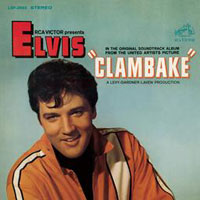
Guest Blog #1: Elvis 1967 – Clambake!

When Ty announced that The Mystery Train Elvis Blog would honor the 44th anniversary of 1967 with special features on that Elvis year all throughout 2011, I couldn’t keep my fingers away from the keyboard. Not only does 1967 mark the year I was born, it also saw the release of the soundtrack album Clambake, and I’d like to talk a little bit about the latter.

Clambake (1967)

Clambake (1967)

Actually, Clambake isn’t strictly a soundtrack album as it includes no less than five bonus songs, four of them recorded in Nashville on September 10-11, 1967. No doubt this is a big part of the explanation why I like it. And although one of the worst soundtrack songs Elvis ever recorded is featured on it as well, a lot of the movie material works surprisingly well.

Clambake is the only soundtrack album to kick off with a bonus song, and what a start it is. For starving fans back in 1967 it must have been a joy to listen to Elvis belting out “Guitar Man.” This is one of the songs that revealed that Elvis was again showing signs of musical creativity and a newly found interest in his career.

Although the same thing can’t be said about the next song, I actually enjoy the title track “Clambake.” It’s a fun number and I love it when Elvis sings “Aaaaaaaallrigh” at the beginning of the instrumental break.

The duet “Who Needs Money?” is a dreary song, but what follows is the pretty little ballad “A House That Has Everything.” Unfortunately, it’s then time for “Confidence,” a song I would list among the five worst numbers Elvis ever recorded. A children’s song that is unlikely to appeal to any child, or grownup too, for that matter.

The last song on side 1 of the original LP is “Hey, Hey, Hey,” a number many fans think is crap. I agree that the lyrics are silly and that the scene in the movie where it’s sung is an awful one. But I think it works well on record, it’s a funky, enjoyable number.

Side two is actually better than the first one, no doubt because the rest of the bonus songs can be found on it, together with the beautiful “You Don’t Know Me,” certainly one of Elvis’ best soundtrack ballads. When I bought the LP I never understood why it was labeled “Specially recorded for records.” It was years later that I learned that Elvis wasn’t satisfied with the version recorded during the Clambake session, on February 21, 1967.

“The Girl I Never Loved” is another beauty, I love it when Elvis sighs while singing “The kiss I never got, somebody else will make…” A sensitive ballad.

Why is is that some of the best songs are always cut from the movies? “Animal Instinct” from Harum Scarum and “Sand Castles” from Paradise, Hawaiian Style are two such examples, the bonus song “How Can You Lose What You Never Had” from Clambake another.

The three excellent bonus songs “Big Boss Man,” “Singing Tree,” and “Just Call Me Lonesome” round off the original Clambake album, released in October 1967, four months after I was born. I first listened to it maybe fifteen years later, and still do now and then. Clambake, gonna have a clambake!

/Thomas, Elvis Today


Throughout 2011, The Mystery Train Elvis Blog is commemorating the 44th anniversary of 1967. Why? Riders of this train love exploring Elvis’ entire career, not just the 1950s. Find out more here.

“It’s the music and not the value of the collection that counts”

Thomas over at the Elvis Today blog has a real talent for summing up the experience of being an Elvis fan. In today’s post, “The Truth About Me,” he reflects on when he first became a fan, including a reprint of an article he wrote 21 years ago for a Swedish Elvis fan club.

“During the years me and my other brother have built a record collection that we’re proud [of],” he wrote in 1990. “Not because it includes a lot of valuable editions, but because we think we own most of the stuff released officially by Elvis, and to us it’s the music and not the value of the collection that counts.”

In the end, the music is all that really matters. Whether you are listening on vinyl records, MP3s, cassette tapes, CDs, or even 8-tracks, Elvis is still there. His music is what brings us all together. His music is our shared experience. And no matter what classless jokes or baseless claims people want to lob at him, Elvis always wins in the end because his music pounds through all of that noise and demands to be heard.

“The image is one thing, and a human being is another,” Elvis said in 1972. “It’s very hard to live up to an image.” While the image of Elvis has morphed over the years, the underlying truth of his statement remains. Like Thomas says, you don’t need an expensive collection to explore the music and go beyond the image.

After all, a scratched-up record of seemingly no value can in fact be priceless.

Elvis 1967: Single Release #1 (Indescribably Blue/Fools Fall In Love)

Elvis’ first record release of 1967 was the 45 RPM single “Indescribably Blue” backed with “Fools Fall In Love.” Recorded in Nashville the previous year, the single shipped on January 10. “Indescribably Blue” eventually made it to #33 on the Billboard Hot 100 chart (February 25, 1967).

While it may not have been reflected in the chart position, “Indescribably Blue” was one of Elvis’ greatest records – showcasing a more powerful voice, yet harkening back to some of his earliest recordings. Elvis’ friend Lamar Fike, who passed away yesterday, apparently suggested that he record the song, which was written by Darrell Glenn.

The flip side was a cover of “Fools Fall In Love,” a Jerry Leiber and Mike Stoller song first recorded by the Drifters in 1957. While Elvis’ version is good and manages to overcome a weak, almost movie-tune-style arrangement, I definitely have to give the Drifters the edge on this one.

* * *
Research Sources

  • Elvis Presley: A Life In Music – The Complete Recording Sessions by Ernst Jorgensen, St. Martin’s Press, New York, 1998.
  • The Elvis Encyclopedia by Adam Victor, Overlook Duckworth, New York, 2008.
  • ELVIS: His Life From A To Z by Fred Worth and Steve Tamerius, Wings Books, New York, 1992.
  • Billboard, Vol. 79, No. 8, Nielsen Business Media, Inc., February 25, 1967.

Throughout 2011, The Mystery Train Elvis Blog is commemorating the 44th anniversary of 1967. Why? Riders of this train love exploring Elvis’ entire career, not just the 1950s. Find out more here.

Some thoughts on “It’s Still Here” and Elvis In Nashville

Thomas over at the Elvis Today blog has written a great review of the latest FTD classic album release, 1973’s Elvis (Fool). “Of the three ‘Elvis at the piano’ songs, my favorite has always been ‘It’s Still Here,'” he says.

“It’s Still Here” is definitely my favorite as well, by a long shot over “I’ll Take You Home Again, Kathleen” and “I Will Be True.” I first heard “It’s Still Here” on a 1988 compilation album called Elvis In Nashville. I remember listening to that record over and over, and particularly loving that song because it featured Elvis on piano. It’s one of those sad “Always On My Mind” style songs that I gravitate towards, anyway. Wonderful performance.

I just pulled out Elvis In Nashville from my record collection and decided to give it a spin. I haven’t played it in years. Wow, what a track listing! While it may just have been a compilation of previously released songs, it was my first exposure to many of them.

Side A
I Got A Woman
A Big Hunk O’ Love
Working On The Building
Judy
Anything That’s Part Of You
Night Rider
Where No One Stands Alone

Side B
Just Call Me Lonesome
Guitar Man
Little Cabin Home On The Hill
It’s Your Baby, You Rock It
Early Mornin’ Rain
It’s Still Here
I, John

This album made for a fascinating listening experience, showing how Elvis music from various time periods really blended much better together than some people would have you believe.

I also remember that “Night Rider” always skipped at a certain point of the song, even the first time I played the record. It wasn’t until I obtained ELVIS: From Nashville To Memphis-The Essential 60s Masters I several years later on CD that I was finally able to hear the song without the skip. As much as I love my old records, I can still pull out From Nashville To Memphis on CD and the sound quality is as perfect as the day I bought it. I do miss the pops and crackles of the record sound sometimes, though. Elvis In Nashville has a lot of that. I must’ve really played the heck out of this one back then.

Anyway, be sure to check out Thomas’ review of Elvis (Fool), which also features “It’s Still Here,” over on Elvis Today.