A Squirrel Loose at the Big, Freaky International Hotel (Part 4: The Epic Conclusion) [Playlist Recipes #7]

This is the finale of a 4-part look at Sony’s 2019 Elvis Live 1969 boxed set, which contains all 11 concerts RCA recorded during Elvis Presley’s August 1969 engagement at the International Hotel in Las Vegas.

[Read Part 1 | Read Part 2 | Read Part 3]

To paraphrase Elvis, there ain’t no end to this post, baby! I have committed not to push this review to five parts, however, as to move on to other topics next week.

That said, I still want to delve into some song and show specifics for the 1969 engagement, so today’s post is going to run long, amounting to a double ride. No extra charge. To help with this portion of the discussion, my analytical side provided the following infochart.

Elvis Presley Summer 1969 Setlists Infochart | Click image for larger version | Compiled by Tygrrius

Though not part of the 11-CD Elvis Live 1969 boxed set, which focuses on RCA’s multitrack recordings, I included the informal soundboard recording from the early days of the engagement for reference as well. To date, its only official CD release as a more-or-less “full” show remains FTD’s The Return To Vegas. It would have made a great bonus disc on the Elvis Live 1969 set, as the overall feel of this show is slightly different than a few weeks later, and it even features an extended version of “Mystery Train” and a couple of alternate arrangements. Perhaps it was a cost-saving measure.

Anyway, focusing on the 11 shows that RCA recorded, Elvis performed 13 of the songs every single night – most of which formed the beginning and end of the shows. Of these, the strongest are “Suspicious Minds,” “Can’t Help Falling In Love,” “Runaway,” “In The Ghetto,” “Blue Suede Shoes,” and “All Shook Up.” With the studio version released as a single during this engagement and destined to become Elvis’ last number one hit, “Suspicious Minds” is particularly stunning. The 1969 live version stands as an incredible example of how Elvis reinvented his sound for these shows.

Most disappointing among the core songs are “Jailhouse Rock/Don’t Be Cruel” and “Baby, What You Want Me To Do.” “Jailhouse Rock” pales in comparison to the 1957 studio master as well as the 1968 live master. Both it and “Baby, What You Want Me To Do” notably lack the raw power and punch of the ELVIS television special performances from the previous summer. Understandably, there is a difference between performing 4 shows in 2 nights for a television special versus 57 shows in 29 nights for this Vegas engagement. Elvis no doubt needed to save his voice, but these performances in particular come up short.

Though many others are nearly as good, the one song Elvis improves in 1969 over his 1968 rendition is the “Tiger Man” portion of “Mystery Train/Tiger Man,” fueled by James Burton on lead guitar and Ronnie Tutt on drums. Like “Suspicious Minds,” the powerhouse “Mystery Train/Tiger Man” is a true highlight of this engagement. Unfortunately, Elvis drops it in favor of “Johnny B. Goode” for a couple of the shows. Now, one of those “Johnny B. Goode” performances was quite incredible and made it onto Elvis In Person, but I wish Elvis had dropped something else on those two occasions to make room for it, such as “Runaway.” That is no slam on “Runaway,” which I absolutely love and is among the highlights of the engagement for me.

A better substitution that Elvis provides on four nights is replacing the weak “Memories” with “I Can’t Stop Loving You.” I enjoy the studio versions of “Memories,” as recorded for the 1968 ELVIS special, but it just never worked live.

Additional highlights of the overall 11-concert span include three performances of “My Babe” and several of “Are You Lonesome Tonight.”

Of the one-off songs, the only one that really stands out from a performance perspective is “Reconsider Baby,” the blues song that Elvis returned to time and again over the years. “Rubberneckin’,” “Inherit The Wind,” and the abysmal “This Is The Story” are notable solely because these are the only live versions available. “Rubberneckin'” would have worked better with an arrangement closer to the funky studio master.

Though released as a limited edition 2-record set earlier in 2019, the August 23 Dinner Show makes its CD debut here. Not a single performance had previously been released on CD from this show – the only such concert on the set. The show is also unusual in that the Imperials backing group is not present, leaving full duties to the Sweet Inspirations – my preference, anyway. The show features exceptional versions of “Mystery Train/Tiger Man,” “Are You Lonesome Tonight,” “I Got A Woman,” and “What’d I Say” – the last of which benefits from a shorter rendition than the other shows.


“I had sideburns. Long hair. Fourteen years ago, it was weird. You think it’s weird now? Fourteen years ago, I couldn’t walk around the street: ‘Get him! Get him! […] He’s a squirrel.’ So I was […] shaking. In fact, that’s how I got in this business was shaking. It may be how I get out of it, too.”
–Elvis Presley, 1969

Four weeks ago now, I decided to write a post where I would share what I consider the best version of every song that RCA recorded during the Summer 1969 engagement. “I will kick it off by mentioning the Elvis Live 1969 boxed set from last year,” I thought – not intending to write a review. It would be a couple paragraphs and then the song list. Done. An easy post to warm up the engine of The Mystery Train Blog again.

Well, here we are, 4 weeks, 4 posts, and over 4,500 words later, and I am finally coming to the original intent of that very first post (after, of course, having written a rather haphazard review after all).

Before I backed up these shows to iTunes, I separated out the majority of the talking portions as their own tracks (oh, if only Sony would do this, it would save me so much time). This allows me to create playlists more focused on the music – which improves the 1969 experience to a huge degree. To an extent, you can replicate this by pressing skip at the end of most tracks, as Sony normally places all of the talking at the end of a track (even if that talking introduces the next song, another pet peeve of mine — but that’s why I just save them the way I want them).

Here is my “August 1969 Ultimate Show” playlist recipe for this concert engagement. As we just discussed, Elvis’ setlist varied to some extent each night, so no single show actually contained all of these songs.

Disc references are to the Elvis Live 1969 set, but of course, you could use any available previous release as well. This playlist clocks in at about 71 minutes, keeping in mind my iTunes versions of the tracks have most of the talking trimmed out to separate tracks.

  1. Opening Riff/Blue Suede Shoes (8/25/1969 Dinner Show [DS]) 2:36 (Disc 8)
  2. I Got A Woman (8/23/1969 DS) 3:05 (Disc 4)
  3. All Shook Up (8/26/1969 Midnight Show [MS]) 1:32 (Disc 11)
  4. Love Me Tender (8/26/1969 MS) 2:21 (Disc 11)
  5. Jailhouse Rock/Don’t Be Cruel (8/24/1969 DS) 2:12 (Disc 6)
  6. Heartbreak Hotel (8/24/1969 DS) 1:56 (Disc 6)
  7. Hound Dog (8/22/1969 DS) 1:48 (Disc 2)
  8. Memories (8/25/1969 DS) 2:50 (Disc 8)
  9. I Can’t Stop Loving You (8/25/1969 MS) 2:36 (Disc 9)
  10. My Babe (8/22/1969 MS) 2:00 (Disc 3)
  11. Mystery Train/Tiger Man (8/22/1969 MS) 3:21 (Disc 3)
  12. Johnny B. Goode (8/24/1969 MS) 2:10 (Disc 7)
  13. Baby, What You Want Me To Do (8/25/1969 MS) 1:52 (Disc 9)
  14. Funny How Time Slips Away (8/22/1969 MS) 2:21 (Disc 3)
  15. Surrender (8/21/1969 MS) 0:29 (Disc 1)
  16. Runaway (8/23/1969 MS) 2:16 (Disc 5)
  17. Loving You (8/23/1969 DS) 0:21 (Disc 4)
  18. Are You Laughing Tonight (8/26/1969 MS) 2:53 (Disc 11)
  19. Reconsider Baby (8/23/1969 MS) 3:28 (Disc 5)
  20. Words (8/24/1969 MS) 2:31 (Disc 7)
  21. Yesterday/Hey Jude (8/25/1969 DS) 4:15 (Disc 8)
  22. Inherit The Wind (8/26/1969 DS) 2:52 (Disc 10)
  23. Rubberneckin’ (8/26/1969 MS) 2:21 (Disc 11)
  24. This Is The Story (8/26/1969 MS) 2:46 (Disc 11)
  25. In The Ghetto (8/25/1969 DS) 2:47 (Disc 8)
  26. Suspicious Minds (8/25/1969 MS) 7:14 (Disc 9)
  27. What’d I Say (8/23/1969 DS) 1:57 (Disc 4)
  28. Can’t Help Falling In Love (8/26/1969 DS) 2:10 (Disc 10)

While it was not my intent, nor even a consideration in crafting this list, it turns out that all 11 shows are represented – an indication of Elvis’ strength and consistency during this Vegas engagement (though the August 21 Midnight Show barely squeaks in with a short version of “Surrender”).

For those of you who want to include them (you know who you are), you could slot in the “Monologue” career retrospective from the August 24 Dinner Show before “Baby, What You Want Me To Do” and add “Introductions By Elvis” from the August 21 Midnight Show prior to “In The Ghetto.” This adds less than nine minutes, resulting in a total length of just under 80 minutes for the August 1969 Ultimate Show. That’s right in line with the length of the August 23 Midnight Show, but with nine more songs due to less talking throughout.

After careful analysis, my favorite show of the 1969 engagement is the August 25 Midnight Show, disc 9 of Elvis Live 1969 and previously released on FTD’s excellent Hot August Night. It features top-notch versions of “Mystery Train/Tiger Man,” “Suspicious Minds,” “Runaway,” “My Babe,” “Are You Lonesome Tonight,” “Hound Dog,” “Blue Suede Shoes,” “All Shook Up,” “I Can’t Stop Loving You,” among others. In fact, 7 of the 12 masters that RCA chose for Elvis In Person came from this show. That is probably the only reason it is not better represented in my August 1969 Ultimate Show playlist above, as I was tending to avoid master versions in the event of a tie with another version. Elvis may have put a little extra into this particular show due to the celebrities in attendance, including Tom Jones, Nancy Sinatra, Lightnin’ Hopkins, Buddy Hackett, and Shelley Fabares.


ELVIS LIVE 1969 (Sony, 2019) | Click image for larger, full-color version | Original image credit: Sony

“If I take time out to drink water, just look at me and say, ‘Is that him? I thought he was bigger than that. Squirrelly-looking guy.'”
–Elvis Presley, 1969

If you’re not in for the whole Elvis Live 1969 boxed set, 2010’s On Stage: Legacy Edition (Sony) is probably sufficient for casual or budget-minded fans, as it neatly highlights Elvis’ Summer 1969 and Winter 1970 Vegas engagements on 2 CDs and can still be found for about $12 US. CD 2 features Elvis In Person as well as additional songs recorded live in 1969. Keep in mind that both “Runaway” and “Yesterday” on the On Stage album, featured on CD 1, are from August 1969 as well.

If you are more on the obsessive side like me, but don’t already have most of these shows, I can definitely recommend Elvis Live 1969. Just be sure to shop around, as Elvis Live 1969 can often be found quite reasonably priced – considering the number of included shows. For example, Graceland is charging full list price as of this writing, but you can find it elsewhere for less than 60% of that price.

Among Elvis’ Las Vegas engagements at the International/Hilton Hotel, Summer 1969 ranks second only to Summer 1970 for me. I place Winter 1970 third. While the number of available shows in official releases is significantly less and disallows detailed comparisons, subsequent Vegas seasons in 1971-1976 are nowhere close to the 3 of 1969 & 1970.

To see one of these 1969 shows must have been something really special.

Blessings,
TY


“You can make many plans, but the LORD’s purpose will prevail.”
Proverb 19:21
A Squirrel Loose at the Big, Freaky International Hotel (Part 3)

This is Part 3 of a look at Sony’s 2019 Elvis Live 1969 boxed set, which contains all 11 concerts RCA recorded in Elvis Presley’s August 1969 concert engagement at the International Hotel in Las Vegas.

[Read Part 1 | Read Part 2]

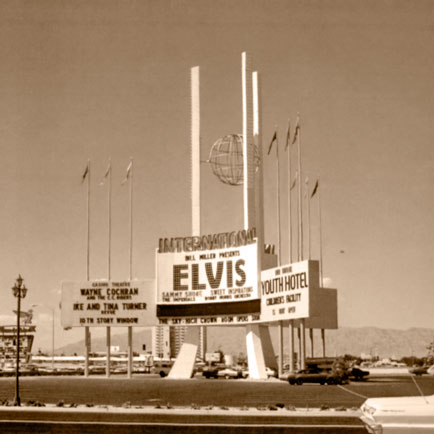
International Hotel marquee as displayed on back of a CD holder from Sony Legacy’s ELVIS LIVE 1969 boxed set (2019, from Tygrrius’ collection)

“When I was in the Army, the guys would say […], ‘Watch him, boy, he’s a squirrel, he’s just out of the trees.'”
–Elvis Presley, 1969

I mentioned last week that I prefer Elvis Presley’s overall Summer 1970 Las Vegas shows over the Summer 1969 Vegas shows – even though the 1969 versions of songs performed in both seasons win out in most cases.

One of the reasons I prefer the Summer 1970 engagement is the expanded setlist. Newly added songs like “You’ve Lost That Lovin’ Feelin'”, “Just Pretend”, and “I’ve Lost You” expanded the dimensions of the show for his third concert engagement at the International Hotel. Not to mention songs that Elvis retained after first introducing them in his second concert engagement earlier that year, like “Walk A Mile In My Shoes” and the show-stopping “Polk Salad Annie.”

Another reason I prefer the Summer 1970 engagement over the previous year is the amount of talking by Elvis in 1969. Though I prefer a “talkative Elvis” over the “all business Elvis” of, say, June 1972’s Madison Square Garden concerts, where he barely says a word between songs beyond the customary “thank you,” in the 1969 shows Elvis simply talks too much. Way too much.

Don’t believe me? Here are a couple of examples, using the shortest and the longest shows on the 1969 set:

  • The August 23 Midnight Show clocks in at just under 80 minutes (in fact, I wonder if Sony edited any bits out to get it to fit the 80-minute capacity of a CD). The actual musical content on this show is just over 56 minutes. Elvis talks for a whopping 24 minutes during this show – about 30% of the time!
  • The shortest show on the set is actually the very next night, the August 24 Midnight Show. I suspect management complained to Elvis about keeping the audience away from the casino too long the previous night, as he alludes to such conversations a couple days later in the engagement. This show is nearly 63 minutes long and features about 45 minutes of music. Elvis talks for about 18 minutes during this show – about 29% of the time.

The worst offender in driving up the talking times in 1969 is the “monologue” in the middle of each show where Elvis provides a joke-infused retrospective of his career for about ten minutes. While I’m sure it was entertaining to audiences in the showroom, it becomes a tough listen show after show on CD.

I understand he probably needed a cool down after “Tiger Man” or “Johnny B. Goode,” but the energy of the show is completely sapped each time before Elvis finally resumes singing – with an often uninspired version of “Baby, What You Want Me To Do,” completely lacking the raw magic of his versions from the previous year’s ELVIS special. For these Vegas shows, if only Elvis had bought himself a Gibson Super 400 CES like he borrowed from Scotty Moore in the special’s “sit down” shows, as Elvis accompanied himself so well on that electric guitar compared to anything else I have ever heard him play.

Overly long and bizarre introductions to “Hound Dog” and similar bits also detract from the listening experience when heard show after show. Repetitive jokes with the lyrics of “Jailhouse Rock,” “Yesterday,” and others become tiring, too. I imagine poor Felton Jarvis (producer), trying to capture material for the Elvis In Person album, getting his hopes up, thinking, “He’s going to sing it straight this time” and then, “Nope, not this time. Maybe tomorrow night.” Elvis did eventually perform straight versions of each song, probably after being asked to “clean up the act” as he mentions in some of the later shows as well.

Occasional lyrics twists are fun, don’t get me wrong. It is just hearing the same ones over and over that gets old. Of course, Elvis never intended or envisioned that someone like me would be listening to a complete collection of these shows over 50 years after the fact. From Elvis’ perspective, these shows served their purpose at the time in entertaining those audiences (of course) and supplying the 12 songs featured as masters on Elvis In Person. Yet, here I am, blessed to hear them all, so I might as well comment on them.

Anyway, it is actually a lyric twist on “Are You Lonesome Tonight” during the August 26 Midnight Show that results in one of my all-time favorite Elvis recordings – the “laughing version” of the song or, as I like to call it, “Are You Laughing Tonight.” If only movie cameras had been rolling like they were the next summer. Incidentally, the other eight versions of “Are You Lonesome Tonight” on this set are serious. I suspect if he performed a laughing version night after night, it would have lost much of its appeal.

I first heard “Are You Laughing Tonight” on the radio for what would have been Elvis’ 50th birthday in 1985. I recorded a radio special with a little cassette tape player my older sister gave me a Christmas or two before that, so Mom and I must have listened to that tape 500 times in the car before I finally found and bought a proper version of the song in 1991 (Collectors Gold).

I don’t have a tape player anymore, but I still have that cassette (below). It was one of the cheapest tape brands you could buy, yet it has survived all these years. I even played it several years ago so I could write down the song titles (of course, I have lost that list).

1985 cassette tape of “Elvis On The Air” radio special, including “Are You Laughing Tonight”

Mom went to see Jesus over a year ago now, but every time I hear “Are You Laughing Tonight,” I remember her laughing right along with Elvis. I still feel her with me sometimes, and I turn this one up for her.

Next week, (I promise) I’ll wrap up my unintended review of Elvis Live 1969, and we’ll even get to my original idea for this post!

Blessings,
TY

[Read Part 4]


“You have turned my mourning into joyful dancing. You have taken away my clothes of mourning and clothed me with joy, that I might sing praises to you and not be silent. O LORD my God, I will give you thanks forever!”
Psalm 30:11-12

A Squirrel Loose at the Big, Freaky International Hotel (Part 1)

“Welcome to the big, freaky International Hotel, with these little, weirdo dolls on the walls and these little funky angels on the ceiling. You ain’t seen nothing until you’ve seen a funky angel, boy. I tell you for sure.”
–Elvis Presley, 1969, on the ornate design of the hotel’s concert showroom

Sony Legacy last year released Elvis Live 1969, a boxed set containing all 11 concerts RCA recorded during Elvis Presley’s August 1969 engagement at the International Hotel in Las Vegas, Nevada.

The concert series, which spanned 57 shows from July 31 to August 28, represented the singer’s first appearance on a public stage in nearly 9 years – though he had performed 4 shows in front of small audiences at NBC’s studio in Burbank, California, as part of taping his ELVIS television special the previous summer.

RCA cherry-picked 12 of the strongest performances from 3 of the 1969 shows to form the Elvis In Person portion of the From Memphis To Vegas/From Vegas To Memphis double album, released in November 1969. A year later, RCA re-released Elvis In Person as a stand-alone album with the same content.

As for the rest of the performances, they amazingly remained in the vault until after Elvis’ death. While RCA released several individual songs over the years, including a compilation disc on 1991’s Collectors Gold boxed set, a complete 1969 show did not officially surface until 2001’s Live In Las Vegas boxed set.

By the time of Elvis Live 1969 last year, however, 7 of the 11 shows had already been released in their entireties on CD, with a good portion of songs from 3 of the 4 remaining shows having been released as well – many of them on Sony’s Follow That Dream (FTD) collectors label for Elvis fans.

Elvis Live 1969 stands out among the previous releases because it gathers all of the recordings in one place for the first time, with homogeneous sound quality. The recordings capture the August 21-26 portion of the engagement.

Sony Legacy’s ELVIS LIVE 1969 boxed set (2019, from Tygrrius’ collection)

Mixed by Matt Ross-Spang in what was apparently a marathon session, Elvis Live 1969 features a “slapback” echo effect mimicking the sound of Elvis’ first recordings in 1954 & 1955 at Sun Studio in Memphis. Ross-Spang had applied the same effect to alternate takes on 2016’s Way Down in the Jungle Room, an overview of Elvis’ last formal recordings in 1976 at Graceland.

As it was not representative of the original intent in 1976 or 1969, some fans have been quite critical of Ross-Spang’s slapback effect. As for me, I don’t mind it at all. It breathed some life into the 1976 studio recordings and brought Elvis’ music full-circle, in a sense, with an homage to the Sun sound. Though less effective on the 1969 live recordings, it’s not too distracting. On a few songs, such as “Mystery Train,” which of course originated in the Sun era anyway, the effect can actually be phenomenal.

Where I differ from Ross-Spang on Elvis Live 1969 is on some of his mixing choices, especially as far as which instruments are prominent. For instance, horns overwhelm a portion of James Burton’s lead guitar solo in the middle of the “Blue Suede Shoes” opener on all 11 shows. The horns weren’t even audible at all during Burton’s solo on the original Elvis In Person album and most of the subsequent revisits of this material.

The horns distracting from the lead guitar vaguely reminds me of Elvis’ February 11, 1956, appearance on Stage Show (CBS), the Jackie Gleason-produced television series hosted by Tommy and Jimmy Dorsey. In his third of six appearances on the program, Elvis debuts “Heartbreak Hotel” for the national TV audience. At the point where Scotty Moore would normally rip into his now classic electric guitar solo, a trumpeter improvises a jazz-inspired solo instead. While I enjoy jazz, it did not work in the context of this rock ‘n’ roll song. Fortunately, Moore is able to let loose in performances of “Heartbreak Hotel” on two subsequent shows. The 1969 “Blue Suede Shoes” is thankfully not affected to nearly this extent, though, for Burton is at least playing his solo!

Another example is that Larry Muhoberac’s piano is mixed far too loudly on certain shows, especially the August 26 Midnight Show, the last 1969 concert captured. Was Ross-Spang running out of time or is this truly how he felt the show should sound? “Mystery Train/Tiger Man,” which should be a showcase for the guitar and drums, suffers greatly from the distracting and overbearing piano in this particular show.

The August 25 Dinner Show and August 26 Dinner Show versions of “Mystery Train/Tiger Man” are similarly impacted by too much piano in the mix. Five of the remaining shows that include this medley fortunately keep the piano at low or moderate volumes, while the August 25 Midnight Show version, which was the performance used as the master on Elvis In Person, actually strikes a great balance – having the piano quite present but at an appropriate level.

Of course, it is all a matter of taste. For an Elvis live show, I want the lead guitar (Burton), Elvis guitar (when applicable), drums (Ronnie Tutt), and bass (Jerry Scheff) prominent in the mix among the instruments, generally in that order of priority, but certainly varying to some extent per song.

The rock ‘n’ roll numbers, at least, should heavily feature guitar, drums, and bass. That is the core of rock ‘n’ roll, Elvis style. The piano, other guitars, and orchestra should be present as needed, but not so much as to overwhelm that core. The piano is far less annoying on a slow song like “Love Me Tender,” for instance, where it better suits being prominent in the mix.

To be clear, the mixing on the majority of these shows is great. For example, “Mystery Train/Tiger Man” is mixed to perfection on the August 22 Midnight Show and is of course buoyed by a committed and powerful vocal performance by Elvis, as with many of the songs in this boxed set. This version of “Mystery Train” I can’t help but crank up every single time it comes on, much as I do with the 1955 Sun studio master.

Ross-Spang also tends to favor the Sweet Inspirations over the Imperials, as far as the background vocalists – an approach I heartily support. Millie Kirkham notwithstanding, Elvis sounds better with female voices behind him instead of males, and I love the Gospel-infused quality of the Sweet Inspirations. I should note that I intend no disrespect to any of the musicians and singers involved, all of whom are very talented. I am just talking about how I best feel the music when it comes to Elvis.

Before I get too far off track here, I think that covers it for the technical aspects of the set. I actually wasn’t even intending for this to become a review per se, but I just go where the writing leads me.

Next week, we’ll continue our look at Elvis Live 1969 and, possibly, get to the actual reason I started this post.

Blessings,
TY

[Read Part 2]


“Speak up for those who cannot speak for themselves; ensure justice for those being crushed. Yes, speak up for the poor and helpless, and see that they get justice.”
Proverb 31:8-9

Elvis embarks on THE RETURN TO VEGAS

Forty-five years ago tonight, only eleven days after astronaut Neil Armstrong took his famous “one small step” on the moon, Elvis Presley took his own giant leap.

On that July 31st night in 1969, the singer stepped onto the stage of the International Hotel in Las Vegas and firmly reestablished himself as one of the world’s most dynamic performers.

His comeback after years of making movies had already revved into high gear back in December, with NBC’s broadcast of the highly-rated and critically-acclaimed ELVIS TV special.

He rode the tide of that success into his first Memphis recording sessions in nearly 15 years, resulting in smash hits “Suspicious Minds,” “In The Ghetto,” and “Don’t Cry, Daddy.”

Elvis was on fire again, and his Vegas engagement was another crown jewel in his comeback. With two shows a night, seven days a week, for four weeks, the concerts represented his first live appearances in nearly nine years – outside of four studio audience shows for his TV special.

RCA started recording the Vegas shows on August 21, capturing eleven complete concerts in all that summer. At that time, some of the best tracks were selected for an album, From Memphis To Vegas/From Vegas To Memphis (Elvis In Person). More recently, several of the shows have been released in full:

  • August 21 Midnight Show (MS) on Elvis: Viva Las Vegas (2007 Limited Edition)
  • August 22 Dinner Show (DS) on Elvis In Person (2008 FTD Edition)
  • August 23 MS on Elvis At The International
  • August 24 DS on Live In Las Vegas
  • August 25 MS on Hot August Night
  • August 26 DS on Live In Vegas
  • August 26 MS on All Shook Up

To commemorate the forty-fifth anniversary of this engagement, Sony’s collectors label for Elvis fans recently released on CD The Return To Vegas, the earliest known recording from this concert series.

The shows listed above are all multitrack recordings, meaning they were professionally captured for potential commercial release and can be properly mixed after the fact for optimum sound quality.

By contrast, Follow That Dream’s The Return To Vegas is a soundboard recording – an informal reference tape made in-line from the showroom’s soundboard console – never intended for release.

While the sound quality can be improved in certain ways, soundboard mixes are pretty much stuck as to how they were originally recorded. Some bootlegs are copies of copies, though, so sometimes there can be improved sound quality versus previous releases if an earlier generation source is used.

The Return To Vegas is actually one of the better-sounding soundboard CDs I have purchased.

THE RETURN TO VEGAS booklet cover

THE RETURN TO VEGAS booklet cover

I must admit, however, that I am surprised. I was expecting to be blown away by The Return To Vegas. After all, this recording from an unconfirmed date in August is probably the closest we will ever come to hearing the legendary July 31 show that opened the engagement.

To be clear, like all 1969 Elvis shows released thus far, The Return To Vegas represents one of his best concerts. Yet, I found it slightly disappointing.

With that being said, The Return To Vegas does have many strong points. “Mystery Train/Tiger Man” is inspired, for instance, with the guitar portion of the lead-off song sounding closer to the 1955 SUN version than it ever would again on later recordings. I wish James Burton had kept playing it this way. An overbearing train whistle effect ruins some of that for me, though, and the performances on Hot August Night and Live In Vegas will remain my go-to versions.

The versions of “Love Me Tender” and “Can’t Help Falling In Love” are strong enough to contend for best of the season, at least out of what has been released thus far. “Don’t Be Cruel” is also strong.

During this engagement, Elvis took several minutes out of each show to talk about his career. This is, by far, my favorite of these “monologues.” It is actually the only previously released track on this CD, though, having been released in an edited form way back in 1974 for the infamous Having Fun With Elvis On Stage “talking” album. While the concept behind that particular album may have been poor, this monologue was actually pretty funny and gave some credibility to the Having Fun title.

“Are You Lonesome Tonight” features a slightly different arrangement than later versions, with strings instead of Sweet Inspiration Cissy Houston’s soaring vocals. It makes for a nice alternative, but I much prefer the versions with Houston. In addition, Elvis sounds uncomfortable during the spoken portions.

On “Blue Suedes Shoes,” Elvis also seems unsure of himself, plodding through it with slow and deliberate vocals. “All Shook Up” starts in fine form but degrades near the end due to Elvis going into a, dare I say, imitator-style quality on his vocals.

While I normally enjoy the bluesy arrangement of “Heartbreak Hotel” that made its debut at this engagement, the version here is lacking. It sounds off from the start and never really gains momentum. He sounds nearly manic on “Hound Dog,” and this version becomes tiresome on repeat listens. “Suspicious Minds” is decent, but not particularly memorable.

All-in-all, The Return To Vegas is a mixed bag. Audio quality aside, it certainly cannot compete as the strongest overall 1969 show released thus far.

So, when exactly did the show (or shows) presented on this CD take place? The accompanying booklet is sparse on information, focusing instead on photos of Elvis from the time.

Though FTD’s press release indicated this was originally prepared for release as a double album by RCA in the late 1970s before being cancelled, no associated paperwork is included in the booklet.

A brief essay by Ken Sharp (author of Elvis: Vegas ’69) fails to even mention this particular performance, speaking only in generalities about the overall engagement.

We do know that it is not the July 31 Opening Show as previously thought both by RCA and a subsequent bootlegger. They apparently keyed in on the line, “This is my first live appearance in nine years,” which Elvis actually stated at every full show thus far released at this engagement, while skipping his “It’s hard to get going on these dinner shows” comment that makes it clear some fatigue is already setting in for Elvis in Vegas.

Certainly he would not have said this at his first-ever Dinner Show on August 1, nor was he likely even to say it at the August 2 Dinner Show. Assuming this is not a splice of two shows, the August 3 Dinner Show seems to be the prevailing hypothesis among many fans. That still seems too early to me.

Since I refrain from bootlegs, I am no expert on the unofficial recordings available from this era. Certainly the arrangement of “Are You Lonesome Tonight” is a clue here, since it differs from the later versions. That may indicate an upper end to the range of possible dates, but I do not know exactly when that arrangement changed.

There is another clue. When introducing “Suspicious Minds,” Elvis states that it “should be out in a week or 10 days or so.” RCA released “Suspicious Minds” on August 26. Though Elvis was probably not speaking literally, a week to 10 days before the release would put us in the range of August 16 to 19. If it turned out that this concert took place closer to those dates and farther from August 3, it would not surprise me at all.

No matter the date, this is an enjoyable release, and it is definitely of historic value to Elvis fans. If you already have the multitrack shows, then you should purchase this CD. If not, I recommend you buy the professional multitrack shows from this engagement first. Each of these concerts has provided me hours of enjoyment, and I have no doubt that The Return To Vegas will ultimately do the same.

While the 1969 concerts are incredible, my favorite Vegas engagement took place a year later. With a more varied set list, Elvis seemed more relaxed in August 1970. For me, the shows captured for That’s The Way It Is are somehow even better than 1969. The Dinner Show presented on The Return To Vegas is actually but an appetizer for what is to come next week. I am ready for the main course!

Tracks

01. Blue Suede Shoes
02. I Got A Woman
03. All Shook Up
04. Love Me Tender
05. Jailhouse Rock/Don’t Be Cruel
06. Heartbreak Hotel
07. Hound Dog
08. Memories
09. Mystery Train/Tiger Man
10. Monologue *
11. Baby, What You Want Me To Do
12. Are You Lonesome Tonight
13. Yesterday/Hey Jude
14. Introductions
15. In The Ghetto
16. Suspicious Minds
17. What’d I Say
18. Can’t Help Falling In Love

* Previously released

Scoring the win by a knockout, the new Elvis Song Champion of the World. . . .

It has been a grueling contest, but sixty-four songs have finally been narrowed to one. Thank you to everyone who participated. Votes came in from all over the world, making this a truly international event.

I also want to thank everyone who took the time in this final round to submit suggestions about the site. Since the replies are anonymous, I am unable to thank you individually, but please know your comments are appreciated. Some of them validated plans I already had in the works, while others were new concepts that I will take under consideration. One of them, I have already implemented, but more on that later.

Back to the Elvis Mania 2014 tournament, it came down to “Mystery Train” versus “Suspicious Minds.” As Colin commented when the championship round began, “This is the hardest choice yet!”

However, the readers of The Mystery Train Blog have spoken, in overwhelming fashion.

In an 84% to 16% victory, scoring the win by a knockout, the new Elvis Song Champion of the World . . . “Suspicious Minds”!

In his lifetime, Elvis released five main versions of “Suspicious Minds.” His original, January 1969 studio recording of the song was backed with “You’ll Think Of Me” and released as a single that August. “Suspicious Minds” became his first number one hit since “Good Luck Charm” in 1962.

Barbara McNair and Elvis Presley in CHANGE OF HABIT (1969)

Barbara McNair and Elvis Presley in CHANGE OF HABIT (1969)

Just as “Suspicious Minds” hit the airwaves and record shops, Elvis was appearing throughout August in Las Vegas at the International Hotel. RCA recorded several of his concerts, including his August 26, 1969, Dinner Show. At this concert, Elvis performed a nearly eight-minute version of the song, which he dedicated to Barbara McNair, his Change of Habit co-star who was in the audience. Though his dedication was edited out, the performance was featured on the Elvis In Person portion of the double LP From Memphis To Vegas/From Vegas To Memphis.

Captured live at the August 12, 1970, Midnight Show, a six-minute version of “Suspicious Minds” in Vegas became a setpiece of the documentary film Elvis-That’s The Way It Is. Elvis fans had to watch the movie to enjoy it, though, for the performance remained otherwise unreleased until 2000 – 23 years after the singer’s death.

Live versions of “Suspicious Minds” also featured prominently on the albums As Recorded At Madison Square Garden (1972) and Aloha From Hawaii via Satellite (1973) as well as the Aloha From Hawaii TV broadcast. The song even appeared briefly in the 1972 documentary Elvis On Tour.

In Ken Sharp’s Writing For The King (2006), songwriter Mark James described how he came up with the song: “I had the idea for ‘Suspicious Minds’ and it started coming to me one night. First the title came and I thought about it and lived with it for a while. Then the lyric came to me, ‘caught in a trap, I can’t walk out because I love you too much, baby.’ What I was trying to say is we can’t live together or attain our dreams or build on anything if we don’t trust one another” (p. 213). James released his version as a single in 1968, but it failed to find an audience.

Many other artists have recorded “Suspicious Minds” since Elvis, including Waylon Jennings (1970), Dee Dee Warwick (1971), Fine Young Cannibals (1985), Dwight Yoakam (1992), and Daughtry (2007). With an arrangement inspired by Warwick’s recording, Martina McBride has a version of “Suspicious Minds” coming out tomorrow on her new album, Everlasting.

To view the full results of Elvis Mania 2014, check out the tournament’s page on Challonge.com. Among those eligible (i.e., not including me), “JakeMarston” earned the highest score for his predictions. He will receive a Legacy Edition CD of an Elvis title of his choice, courtesy of The Mystery Train Blog.

Only it is no longer The Mystery Train Blog. One of the suggestions that came in during the last round was, “After crowning Suspicious Minds as the best Elvis song, rename blog to The Suspicious Minds Blog.” The person went on to explain that he or she was only joking, but I have decided to move forward with the suggestion anyway.

For the next month, The Mystery Train Blog will now be known as The Suspicious Minds Blog. Until then, we’re caught in a trap.

Elvis Presley in 1969

Elvis Presley in 1969

New and upcoming Elvis releases focus on slices of a diverse career

Get those sound systems (and wallets) ready, folks, new Elvis releases are on the way.

Stay Away, Joe

Stay Away, Joe (concept cover art)

May 2013

Follow That Dream Records, Sony’s collectors label for Elvis fans, is releasing this month:

  • From Elvis In Memphis (2-CD): One of Elvis’ best albums finally receives the FTD Classic Album treatment. This should make an excellent companion to the recent Back In Memphis release. Surely an “imaginary album” will be in the works at some point to feature the rest of the recordings from the 1969 American Sound Studio sessions.
  • Stay Away, Joe (CD): Speaking of imaginary albums, here is one that compiles October 1967 and January 1968 sessions. In addition to the Stay Away, Joe soundtrack, it includes “Too Much Monkey Business” and “US Male.” The January session features Jerry Reed on guitar, which is why I consider this a follow-up of sorts to the fantastic Elvis Sings Guitar Man.
  • On Stage-February 1970 (2-LP): This vinyl release includes the original On Stage-February 1970 album, recorded live in 1969 and 1970, as well as additional material Elvis recorded during his early 1970 Las Vegas engagement.
  • Summer of ’61 (Book & CD): In conjunction with Flaming Star publications, this book primarily focuses on the making of the movie Follow That Dream. A brief CD containing previously released Elvis tracks and two demos for “What A Wonderful Life” is also included.

June 2013

FTD has scheduled the following for release in June:

  • Sold Out! (2-CD): The ambiguous title of this one could refer to almost any Elvis concert from 1956 and beyond. [May 19, 2013, Update: The concerts on this release will be March 1, 1974, Tulsa, Oklahoma and June 21, 1974, Cleveland, Ohio.] This one is from the creative team behind Forty-Eight Hours To Memphis: Recorded Live On Stage In Richmond, Virginia – March 18, 1974 and 3000 South Paradise Road, so a quality presentation is expected.
  • Hot August Night (CD): This one features the August 25, 1969, Midnight Show in Las Vegas. The 1969 shows are all must-haves. Portions of this one contributed to the From Memphis To Vegas/From Vegas To Memphis (Elvis In Person) release in 1969. Many tracks are previously unreleased, however.
  • Elvis Recorded Live On Stage In Memphis (2-LP): This vinyl release features the complete March 20, 1974, Memphis concert, from which selections made up the original 1974 version of this album. I have to admit, I enjoy the truncated version of this show more than the full version. Other than “Steamroller Blues,” the songs edited out of the 1974 1-LP release featured some disappointing performances by Elvis.
  • Best of British: The HMV Years (Book): This is a reprint of the popular book exploring Elvis’ 1956-1958 releases on the HMV label in Great Britain, which sold out upon release in February. Though not noted in the press release, presumably the two CDs of previously released Elvis material from the original printing are also included.

The only physical store in the US authorized to sell FTD releases is Good Rockin’ Tonight, a Graceland gift shop in Memphis. However, FTD products may be obtained online from a variety of other Elvis stores, including Graceland’s ShopElvis.com.

August 2013

Sony has scheduled Elvis At Stax: Deluxe Edition, a 3-CD boxed set, as a main label, wide release in August. The set will include all of the masters Elvis recorded in Memphis at Stax Recording Studio in July and December of 1973. It will also include alternate takes of many of the songs. Here is the track listing:

DISC 1: The R&B and Country Sessions – The Outtakes

1. I Got A Feelin’ In My Body – take 1
2. Find Out What’s Happening – take 8/7
3. Promised Land – take 4
4. For Ol’ Times Sake – take 4
5. I’ve Got A Thing About You, Baby – take 14
6. It’s Midnight – take 7
7. If You Talk In Your Sleep – take 5
8. Loving Arms – take 2
9. You Asked Me To – take 3A
10. Good Time Charlie’s Got The Blues – take 8
11. Talk About The Good Times – take 3
12. There’s A Honky Tonk Angel – take 1
13. She Wears My Ring – take 8
14. Three Corn Patches – take 14
15. I Got A Feelin’ In My Body – take 4
16. If You Don’t Come Back – take 3
17. Promised Land – take 5

DISC 2

Part 1 – The Pop Sessions – The Outtakes

1. Mr. Songman – take 2
2. Your Love’s Been A Long Time Coming – take 4
3. Spanish Eyes – take 2
4. Take Good Care Of Her – takes 1,2,3
5. It’s Diff’rent Now (unfinished recording)
6. Thinking About You – take 4
7. My Boy – take 1
8. Girl Of Mine – take 9
9. Love Song Of The Year – take 1
10. If That Isn’t Love – take 1

Part 2 – The July 1973 Masters

11. Raised On Rock
12. For Ol’ Time Sake
13. I’ve Got A Thing About You, Baby
14. Take Good Care Of Her
15. If You Don’t Come Back
16. Three Corn Patches
17. Girl Of Mine
18. Just A Little Bit
19. Find Out What’s Happening
20. Sweet Angeline

DISC 3: The December 1973 Masters

1. Promised Land
2. It’s Midnight
3. If You Talk In Your Sleep
4. Help Me
5. My Boy
6. Thinking About You
7. Mr. Songman
8. I Got A Feelin’ In My Body
9. Loving Arms
10. Good Time Charlie’s Got The Blues
11. You Asked Me To
12. There’s A Honky Tonk Angel
13. Talk About The Good Times
14. She Wears My Ring
15. Your Love’s Been A Long Time Coming
16. Love Song Of The Year
17. Spanish Eyes
18. If That Isn’t Love

I have mixed feelings on this release. I think it is wonderful for the main label to focus on an overlooked period in the recording career of Elvis Presley. For those fans who do not already have the corresponding FTD Classic Album 2-CD sets (Raised On Rock, Good Times, and Promised Land), this is an excellent, budget-conscious alternative to hear highlights of this material.

However, the first thing I noticed is that Sony really blew the sequencing of these tracks. Why, oh, why would the compiler of this collection choose to kick things off with the dreadful “I Got A Feelin’ In My Body”? Especially when “Promised Land” is sitting there, practically begging to begin this set in the right manner?

Short of starting from scratch, one simple alternative that I can suggest would be the following:

  • Swap Disc 1 with Disc 3
  • Swap Disc 2 – Part 1 with Disc 2 – Part 2

Just making the simple changes above would result in a much better listening experience from start to finish. Again, it is great to see a release focusing on 1973, but it should not just be grudgingly thrown together. While Sony’s Elvis team may disagree, some of us love this material. Treat it right.

Sony is also releasing in August a 1-CD version and a 2-LP version collecting some of the above Stax material.

“The rhythm guitar is John Wilkinson…” (1945-2013)

John Wilkinson and Elvis on stage, January 12, 1973

John Wilkinson and Elvis on stage, January 12, 1973

Sad news in the Elvis world. John Wilkinson, who played rhythm guitar for Elvis on stage from 1969 through 1977, passed away today, January 11, 2013. He was 67.

Wilkinson first joined Elvis Presley’s core rhythm group in July 1969 for the singer’s spectacular Las Vegas return to live performances. He went on to appear with Elvis in the concert documentary films That’s The Way It Is (1970) and Elvis On Tour (1972).

He also appeared in the Aloha From Hawaii (1973) television event – which celebrates its 40th anniversary on Monday. Wilkinson is prominently featured in the television special Elvis In Concert (1977) while playing “Early Morning Rain.”

Wilkinson performed on the Elvis In Person portion of the 1969 double album From Memphis To Vegas/From Vegas To Memphis and has been on scores of Elvis concert albums since that time.

In addition to his live work, Wilkinson played for Elvis in his 1972 and 1975 sessions at RCA’s Studio C in Hollywood as well as in his 1976 sessions at Graceland. Results of those sessions included singles “Burning Love” b/w “It’s A Matter Of Time” and “Separate Ways” b/w “Always On My Mind” and albums Elvis Today, From Elvis Presley Boulevard, and Moody Blue – the last LP released before Elvis’ death.

He remained with the stage band right until the end, through Elvis’ final concert on June 26, 1977, in Indianapolis, Indiana.

John Wilkinson in 1970

John Wilkinson in 1970

John Wilkinson is survived by his wife, Terry. My thoughts and prayers are with his family and friends.

Further Reading