Electric Dawn

Anticipation - Artwork created for The Mystery Train with assistance from ChatGPT

“Anticipation” (Artwork created for The Mystery Train with assistance from ChatGPT)

The Elvis Odyssey

Part V: Electric Dawn

With his movie career beginning to flounder and his recent singles receiving little notice, Elvis Presley is at a crossroads. As part of a package deal with yet another movie, he signs on to his first television appearance since a brief guest spot in 1960.

Slated to air on the NBC television network in December 1968, the pre-recorded special is supposed to feature Elvis singing Christmas songs for an hour.

Executive Producer Bob Finkel, however, convinces principal sponsor The Singer Company, NBC, and Elvis’ manager, Tom Parker, to widen the scope of the program beyond Christmas music. Finkel also meets with Elvis, who tells Finkel he wants the special to be completely different than anything in his past, especially his movies.

Elvis: “I want everyone to know what I can really do.”AM

Finkel then hires Steve Binder as Producer/Director of the Singer Presents ELVIS special.

Pre-production begins on June 3 with two weeks of informal rehearsals at NBC Studios in Burbank. Elvis and the crew are working 12-16 hour days, followed by jam sessions in the star’s dressing room.

On June 5, Senator Robert F. Kennedy is assassinated about thirty minutes away in Los Angeles while campaigning for President. Binder is taken with Elvis’ reaction to the news as well as his commentary on the assassination of Reverend Doctor Martin Luther King, Jr., in Memphis only two months earlier.

As a nation mourns, the rest of June is consumed with production of the ELVIS special. Elvis practically lives at NBC while making the program, even moving into his dressing room for a period of time. . . .

Listen along on Spotify.

#183 Trouble/Guitar Man (Alternate-1968)
Memories
June 22, Burbank, CA Master [alternate mix]

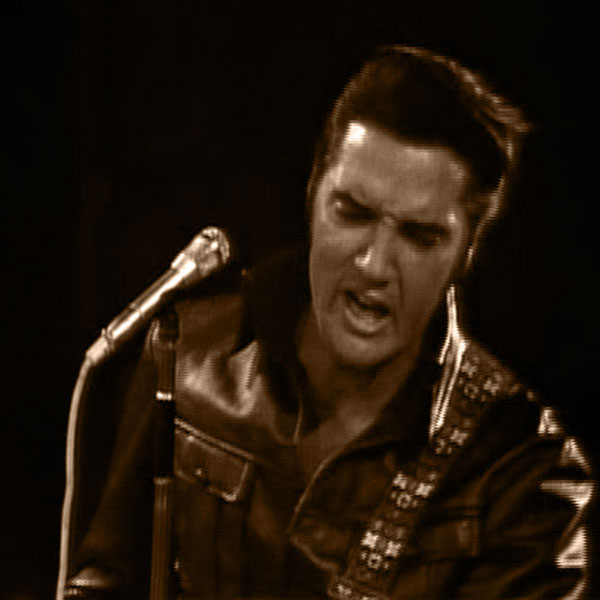
The ELVIS special begins with a tight close-up on Elvis’ face as he announces, “If you’re lookin’ for trouble, you came to the right place.” The opener is one of multiple production numbers in the show and begins a light storyline through the motif of “Guitar Man.”

I can only imagine what it must’ve been like to be an Elvis fan in 1968. To tune into this special after all of those years of mostly silly movies and see Elvis practically assault the television screen. Within seconds, it was obvious that he had something to prove.

#184 That’s All Right (Live-1968)
Tiger Man
June 27 8 PM, Burbank, CA

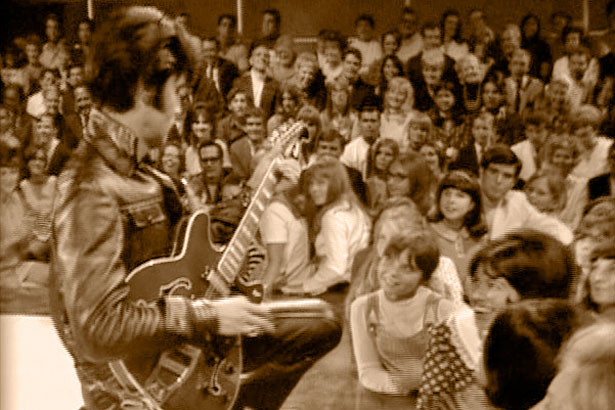
Elvis’ dressing room jam sessions inspire Binder to incorporate something similar into the special. When taping in the dressing room proves unfeasible, Binder instead plans to seat Elvis and his friends on a small stage completely surrounded by a studio audience. Elvis agrees to the concept on the condition that the surviving members of his original band, Scotty Moore (guitar) and DJ Fontana (drums), join him as well.

However, shortly before the first show, Elvis changes his mind and decides he cannot go on for what would be his first appearance since the Pearl Harbor concert in 1961. Binder convinces him to go out there, telling him he can come right back if he wants. Clad entirely in black leather, Elvis even jokes, “Well, goodnight!” shortly after the audience applauds his entry.

In addition to Moore and Fontana, on stage are Elvis’ friends Charlie Hodge and Alan Fortas. Lance LeGault, another friend, plays tambourine at the edge of the audience near Elvis.

Elvis: “It’s more important to try to surround yourself with people who can give you a little happiness because you only pass through this life once, jack. You don’t come back for an encore.”AN

Though dozens are recorded, only five or six of the informal songs make it in the actual special and album.

Among those left out is a rousing performance of “That’s All Right,” the song that started it all for Elvis.

The night, which includes tapings of two “sit-down” shows with similar setlists, is unlike any other in Elvis’ entire body of work.

#185 Baby, What You Want Me To Do (Live-1968)
Tiger Man
June 27 8 PM, 2nd version, Burbank, CA

Early on in both shows, Elvis trades his acoustic guitar for Moore’s burnt-orange electric guitar.19 Producing a raw, raucous sound, Elvis then drives the shows hard, including multiple versions of the Jimmy Reed blues number “Baby, What You Want Me To Do.” This particular rendition also goes unused.

#186 Blue Suede Shoes (Live-1968)
Memories
June 27 6 PM,20 Burbank, CA

“Blue Suede Shoes” is not used in the special or album.

#187 Lawdy, Miss Clawdy (Live-1968)
Memories
June 27 6 PM, Burbank, CA

For the special and album, the 8 PM version of “Lawdy, Miss Clawdy” is used.

From the 6 PM show, this live version manages to be even better than Elvis’ 1956 studio master of “Lawdy, Miss Clawdy.”

#188 Tryin’ To Get To You (Live-1968)
Memories
June 27 6 PM, Burbank, CA

“Tryin’ To Get To You” is not used in the special or album.

Again, Elvis improves upon his original 1955 studio master of “Tryin’ To Get To You” with this rock-infused live version.

#189 One Night (Live-1968)
Memories
June 27 6 PM, 1st version, Burbank, CA

This particular rendition of “One Night” is not used in the special or album.

#190 Baby, What You Want Me To Do (Live-1968)
Memories
June 27 6 PM, 3rd version, Burbank, CA

A portion of this rendition of “Baby, What You Want Me To Do” is used in the special, though it does not appear on the album.

It is difficult to choose between this one and the version already covered from the 8 PM show (track 185 above), but this is probably Elvis’ best-ever version of “Baby, What You Want Me To Do.” While he would return to the song in his first engagement at the International Hotel in Las Vegas the next year, it just was not the same.

#191 No Strap/One Night (Live-1968)
Memories
June 27 6 PM, 2nd version, Burbank, CA

As the sit-down show nears its end, Elvis declares that he wants to stand up–an idea he had been flirting with throughout the performance. He asks Moore if he has a strap for the borrowed electric guitar that Elvis has been using for most of the show. Moore says there is no strap, leading Elvis and the gang to begin singing joking lyrics to the tune of “One Night”:

“No strap today is what I’m now looking for. The things I did and I saw would make the dream–where, where, where, where’s the strap?”

Finally, Elvis stands up, props his foot on his chair and the guitar on his knee and completes another rendition of “One Night” which appears in both the special and on the album.

A truly incredible performance.

#192 Memories (Alternate-1968)
ELVIS: ’68 Comeback Special – 50th Anniversary Edition
June 24, Burbank, CA Take 2 Master [stereo mix]

#193 Saved (Alternate-1968)
Let Yourself Go!
June 22, Burbank, CA Take B7

Among its production numbers, the ELVIS special includes a nine-minute gospel medley.21 For the first minute of the medley, Elvis steps aside such that the spotlight can shine on dancer and choreographer Claude Thompson and the voice of Darlene Love. In addition to Elvis, the segment then features the Blossoms vocal group (Love, Jean King, Fanita James) and a host of other spirited dancers.

Elvis: “Rock ‘n’ roll music is basically gospel or rhythm & blues, or it sprang from that. And people have been adding to it, adding instruments to it, experimenting with it.”AO

It’s an exciting sequence, and I get breathless on behalf of all of the dancers just watching it. The medley was recorded in segments prior to the taping. This particular version of “Saved” is actually an outtake, but it’s my favorite.

#194 Heartbreak Hotel/Hound Dog/All Shook Up (Live-1968)
Memories
June 29 6 PM, Burbank, CA

Two days after the sit-down shows, Elvis appears alone on the same stage in his black leather suit to perform two formal stand-up shows featuring updated arrangements of many of his biggest hits. Elvis is again surrounded by a small studio audience, but this time a full band and orchestra are set just beyond one side of the stage.

This medley of “Heartbreak Hotel,” “Hound Dog,” and “All Shook Up” is featured in both the special and on the album.

This is a powerhouse moment in the ELVIS special, particularly the reinvention of “Heartbreak Hotel” as a rock anthem. Elvis never sang it like this again, preferring a bluesy approach in 1969 and onwards.

#195 Can’t Help Falling In Love (Live-1968)
Memories
June 29 6 PM, Burbank, CA

This version of “Can’t Help Falling In Love” is used in both the special and the album.

This is a beautiful rendition of the song that is on par with his original studio master (1961).

#196 Jailhouse Rock (Live-1968)
ELVIS: ’68 Comeback Special – 50th Anniversary Edition
June 29 8 PM, Burbank, CA

This version of “Jailhouse Rock” is used in both the special and the album.

Though not quite as stellar as his original studio version (1957), this is, by far, Elvis’ best live recording of “Jailhouse Rock.”22

#197 Love Me Tender (Live-1968)
ELVIS: ’68 Comeback Special – 50th Anniversary Edition
June 29 8 PM, Burbank, CA

This version of “Love Me Tender” is used in both the special and the album.

This is another example of a 1968 live version exceeding the original studio master (in this case, 1956).

#198 Baby, What You Want Me To Do (Live-1968)
Memories
June 29 6 PM, Burbank, CA

Once the main portion of each stand-up show concludes, Elvis works on a couple of segments intended for larger production numbers in front of the same audience. During the 6 PM show, there is a brief pause while pre-recorded music is being cued. Left standing with nothing to do, Elvis begins to appear uneasy. “Give me my guitar, man. I’ll play something,” he says. He picks up yet another borrowed electric guitar, this time a cherry red one from session musician Al Casey, and riffs into his go-to comfort song, “Baby, What You Want Me To Do,” eventually dropping to his knees as he plays to an audience member. This rendition is not used in the special or album.

#199 Trouble/Guitar Man (Live-1968)
ELVIS: ’68 Comeback Special – 50th Anniversary Edition
June 29 8 PM, Burbank, CA

To serve as a conclusion to the storyline that began at the opening, a new verse is written for Jerry Reed’s “Guitar Man”:

“Well, I come a long way from the carwash, got to where I said I’d get. Now that I’m here, I know for sure I really ain’t got there yet. So, I think I’ll start all over, sling my guitar over my back. I’m gonna get myself back on the track, I ain’t never, ever gonna look back. I’ll never be more than what I am, oh, wouldn’t you know, I’m a swingin’ little guitar man? Take it home, son, take it home.”23

A portion of this live reprise of “Trouble/Guitar Man” is used in the special.

#200 If I Can Dream (Alternate-1968)
Memories
June 30, Burbank, CA TV-Take 4 Master

After ELVIS was restructured into something more than a Christmas special, “I’ll Be Home For Christmas” was at first still intended as the closing song. Based on Elvis’ reactions to the murders of King and Kennedy, Binder is convinced that Elvis should make a statement of some sort after singing the song. Earl Brown, who is creating vocal arrangements for the show, suggests using “You’ll Never Walk Alone” instead of “I’ll Be Home For Christmas.” When this idea is rejected, Brown writes the music and lyrics of an original song, “If I Can Dream,” which allows Elvis to make his statement in the medium he is most comfortable, music.

From “If I Can Dream”: “If I can dream of a better land where all my brothers walk hand in hand, tell me why, oh why, oh why can’t my dream come true?”

Taped on the last day of the special’s production, with Elvis dressed in a white double-breasted suit, “If I Can Dream” represents for me the greatest musical achievement of Elvis’ life.24

The ELVIS special airs on Tuesday, December 3, at 9:00 PM Eastern and becomes the most-watched program of the week and the highest-rated television special of the year.

“If I Can Dream” climbs to #12 on the charts, while the ELVIS-TV Special album makes it to #8.

Elvis: “I’m never going to sing another song I don’t believe in. I’m never going to make another picture I don’t believe in.”AP


It has been a long night, but the sun is starting to rise. You are back in your seat in one of the Mystery Train’s passenger cars. “So, this is it?” you ask. “The end of the line?”

I smile and shake my head. “Not at all. That’s the beauty of Elvis. There’s no end to his odyssey. Just when you think he’s done, you start all over.”

Somewhere, you hear a familiar song. Faint. Something from your childhood.

As the train rumbles along, you make your way into the dining car and enter a new world.

Elvis Presley returns in The Elvis Odyssey: A New Summit.

Dialogue from a teleplay, father to son: “Maybe there’s only one summer to every customer.” Only one summer? Only one ride? Only one Elvis? Experience them while you can between Heaven, the Earth, and . . . the edge of reality.

[With apologies to Serling.]


Assorted Rambles

19While some out there have tried to insinuate this was some kind of power play by Elvis, the trading of guitars is a scripted moment, as evidenced by a recording of Binder discussing it with Elvis and Moore during a rehearsal.↩︎

20I really could have added the entire June 27 6 PM Show to The Elvis Odyssey, but I had to at least attempt to control myself. The video of the complete 6 PM show made its debut on the fantastic HBO special Elvis: One Night With You (1985). Missing the boat at that time, RCA/BMG finally released the full audio of the show on Memories: The ’68 Comeback Special (1998) CD. Don’t get me wrong, the 8 PM show is great, too, but there’s something special about that first show. The full audio of the 8 PM show was first released on the Tiger Man CD (1998) and the full video on ELVIS: ’68 Comeback Special – Deluxe Edition DVD set (2004).↩︎

21The full medley consisted of “Sometimes I Feel Like A Motherless Child,” “Where Could I Go But To The Lord,” “Up Above My Head,” “I Found That Light,” and “Saved.”↩︎

22I hope that a 1957 live version of “Jailhouse Rock” will see the light of day at some point in my lifetime, for I suspect it would top even the 1968 one.↩︎

23For me, this new verse sums up the entire ELVIS special. In fact, I’d rather they call it ELVIS: Back On The Track today than ELVIS: ’68 Comeback Special.↩︎

24The version of “If I Can Dream” for the album and single was recorded at Western Recorders studio a week earlier and is just as good as the television version. According to Brown in Elvis Presley: Writing For The King – The Stories Of The Songwriters by Ken Sharp, all three of the Blossoms were in tears at the conclusion of Elvis’ performance of “If I Can Dream” with Love stating, “He really believes in the song and means every word of it.”

Once Parker saw the rough cut of ELVIS in August 1968, he was reportedly outraged that no Christmas songs remained in the special. To appease him, a live performance of “Tiger Man” from the 8 PM sit-down show was dropped from the special in favor of an edited version of “Blue Christmas” from that same show.↩︎

I’ve also created a Spotify version of the complete playlist for The Elvis Odyssey, incorporating all five parts of the series.

I originally planned for this series to be a single post, but my bride wisely convinced me that I needed to split it. Thank you to her for ongoing prayers and encouragement and for reading every word I ever write.


Sources for Elvis Quotes

AMMay 14, 1968 Private Conversation (as reported in Elvis Presley: A Life In Music – The Complete Recording Sessions by Ernst Jorgensen)↩︎

ANca. September 1962, Interview, Hollywood, CA↩︎

AOJune 27, 1968, 6 PM Show, Burbank, CA↩︎

APca. June 23, 1968 Private Conversation, Burbank, CA (as reported in Elvis Presley: A Life In Music – The Complete Recording Sessions by Ernst Jorgensen)↩︎


Additional Sources For The Entire Series/Further Reading

Any mistakes you might find in this series are purely my own. As for the stuff I got right, I primarily consulted the following sources for this series of posts. I also consider them as recommended reading if you want a deeper dive into the career and life of Elvis Presley than I could provide here.

  • Keith Flynn’s Elvis Presley Pages.
  • Elvis Presley: A Life In Music – The Complete Recording Sessions by Ernst Jorgensen, St. Martin’s Press, New York, 1998.
  • Elvis Day By Day: The Definitive Record Of His Life And Music by Peter Guralnick and Ernst Jorgensen, Ballantine Books, New York, 1999.
  • Last Train To Memphis: The Rise Of Elvis Presley by Peter Guralnick, Little, Brown And Company, Boston, 1994.
  • Careless Love: The Unmaking Of Elvis Presley by Peter Guralnick, Little, Brown And Company, Boston, 1999.
  • Elvis Presley: Writing For The King – The Stories Of The Songwriters by Ken Sharp, Follow That Dream Records, Denmark, 2006.
  • Elvis Presley In Concert.

Thank you for reading. May your 2026 be full of peace, love, and health.

Blessings,
TY


“The Light shines in the darkness, and the darkness has not overcome it.”
John 1:5
Elvis Movies: ROUSTABOUT

Earlier this year, I began a rewatch of Elvis Presley’s movies. Today’s focus is one that I have not seen as often as some of the others – Elvis’ 16th movie, Roustabout.


“Elvis Presley as a Roving, Restless, Reckless, Roustabout”

Roustabout (Paramount)
Wide Release: November 11, 1964 (United States)
Starring: Elvis Presley, Barbara Stanwyck, Joan Freeman
Screenplay By: Anthony Lawrence and Allan Weiss
Story By: Allan Weiss
Music Score By: Joseph J. Lilley
Produced By: Hal B. Wallis
Directed By: John Rich
Running Time: 101 Minutes


Elvis Presley is Charlie Rogers in 1964’s ROUSTABOUT (Paramount)

Elvis Presley is Charlie Rogers in 1964’s ROUSTABOUT (Paramount)

In Roustabout, Elvis Presley stars as Charlie Rogers, a singer who ends up working at a carnival when Joe (Leif Erickson), a grouchy old carny, runs him off the road, damaging his motorcycle and destroying his guitar. Ah, Elvis Movies, you gotta love ’em.

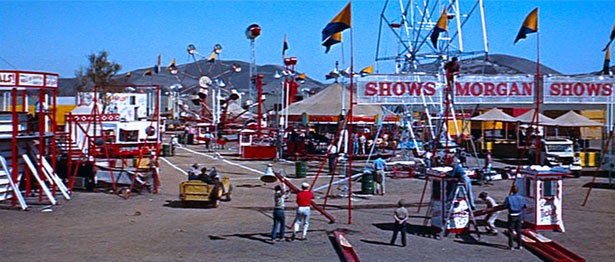
The Morgan Shows carnival in 1964's ROUSTABOUT (Paramount)

The Morgan Shows carnival in 1964’s ROUSTABOUT (Paramount)

Despite the inane setup, Roustabout is pretty good! When Maggie (Barbara Stanwyck), the owner of the carnival, pays for a new guitar and repairs to his motorcycle, Charlie stays on as a roustabout until his bike is ready in order to spend more time with Cathy (Joan Freeman), Joe’s daughter. Joe, of course, is not amused by this turn of events.

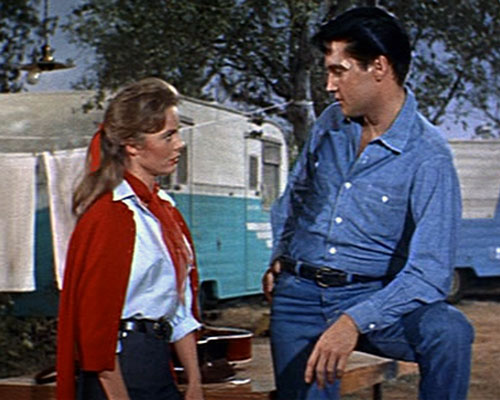
Joan Freeman is Cathy and Elvis Presley is Charlie in 1964's ROUSTABOUT (Paramount)

Joan Freeman is Cathy and Elvis Presley is Charlie in 1964’s ROUSTABOUT (Paramount)

Outside of this movie, “roustabout” is not a term I have encountered. It essentially means an unskilled laborer. It seems to be used most often today in the oil rigging industry. In this case, Charlie does odd jobs at the carnival, such as helping to set up rides or even filling in at a candy apple stand.

When attempting to attract players for a game that Cathy is promoting, Charlie winds up singing and drawing a crowd. His roustabout days are soon behind him, for Maggie signs him on as a singer instead.

Charlie Rogers (Elvis Presley) begins to draw a crowd for Morgan Shows when the carnival signs him on as a singer in 1964's ROUSTABOUT (Paramount)

Charlie Rogers (Elvis Presley) begins to draw a crowd for Morgan Shows when the carnival signs him on as a singer in 1964’s ROUSTABOUT (Paramount)

It turns out that Maggie has a habit of bailing Joe out of trouble, and her carnival is facing financial ruin because of it. Charlie brings in the teen money, and the situation begins to improve until things come to a head between him and Joe, causing Charlie to switch to a rival carnival.

Barbara Stanwyck is Maggie Morgan in 1964's ROUSTABOUT (Paramount)

Barbara Stanwyck is Maggie Morgan in 1964’s ROUSTABOUT (Paramount)

Elvis does a fine job acting in certain parts of Roustabout. A scene between him and Barbara Stanwyck is my favorite of the film:

Charlie: “You collect strays, Maggie. And you got one in Joe. Why don’t you stop recruiting? They don’t make a family.”
Maggie: “What would you know about a family?”
Charlie: “Nothing!”

After Maggie walks away and can no longer hear him, Charlie repeats the line again, softly, sadly: “Nothing…” It is a quick moment, but certainly one of Elvis’ best in his 1960s movies.

Elvis Presley is Charlie Rogers in 1964's ROUSTABOUT (Paramount)

Elvis Presley is Charlie Rogers in 1964’s ROUSTABOUT (Paramount)

The rebellious Charlie is reminiscent of some of Elvis’ earliest film roles. For instance, Charlie remarks early on, “Look, if you’re not tough in this world, you get squashed, honey.” These words could have been taken right out of Vince Everett’s mouth in Jailhouse Rock (1957). Charlie also has traces of Deke Rivers from Loving You (1957) and even a little bit of Danny Fisher from King Creole (1958). At 29 during production of Roustabout, however, Elvis does seem a little old at times to be playing a rebel.

Even some of Elvis’ mannerisms in Roustabout remind me of his 1950s presence, otherwise left out of many of his 1960s movies. Elvis’ performance of “One Track Heart” in Roustabout, for instance, is quite reminiscent of his 1956 “Blue Suede Shoes” screen test, except with a less exciting song. Later on, during “Hard Knocks,” he does his more typical 1960s movie hand-clapping thing, though.

Elvis’ natural flair for comedy comes into play a few times in Roustabout. One example:

Cathy: “You must get your face slapped a lot.”
Charlie: “About 50–50.”

Pat Buttram does a terrific job playing the villainous Harry, the owner of the big-time carnival that is looking to put Maggie out of business. Another great couple of lines:

Charlie: “Not everybody is as big a crook as you are, Harry.”
Harry: “Well, everybody tries.”

Pat Buttram is Harry and Elvis Presley is Charlie in 1964's ROUSTABOUT (Paramount)

Pat Buttram is Harry and Elvis Presley is Charlie in 1964’s ROUSTABOUT (Paramount)

Charlie’s show goes over well, and Harry asks him to do an encore. “Nah,” says Charlie. “Always leave ’em wanting more.” This phrase, of course, was the philosophy of a real-life carny huckster, “Colonel” Tom Parker, when it came to managing Elvis. Parker also served as technical advisor on Roustabout and most of Elvis’ other films.

I try not to review soundtrack albums in this series, focusing any discussion of songs instead on how they appear in the movies themselves. However, I do want to point out in this case that Roustabout has one of the worst soundtrack albums – with nary a hit or highlight in sight. I was surprised, then, that just about all of the songs work perfectly in the context of the actual film. Perhaps based on the fun of seeing the movie, fans propelled the otherwise lackluster Roustabout soundtrack to Billboard‘s number one album position in January 1965. It would be over eight years before Elvis scored another number one album (1973’s Aloha From Hawaii via Satellite).

Joan Freeman is Cathy and Elvis Presley is Charlie in 1964’s ROUSTABOUT (Paramount)

Elvis Presley in a production number taped for 1968's ELVIS television special (NBC)

Elvis Presley in a production number taped for 1968’s ELVIS television special (NBC)

Roustabout obviously had an influence on some of the production numbers created for the 1968 ELVIS television special, even down to costuming. The denim outfit that Elvis wears at times in the movie is almost identical to one he wears during portions of the special, for instance. Roustabout is also one of the few times we see Elvis in leather prior to the special. The barker lines on the ELVIS-TV Special soundtrack album might even have been directly lifted from recordings made for this movie. The performance of “Little Egypt” in the ’68 special is better than the cringey one in Roustabout, incidentally, though the outdated song is a detriment to both productions anyway.

Charlie Rogers (Elvis Presley) at Harry’s carnival in 1964’s ROUSTABOUT (Paramount)


Boldly Go

Multiple uncredited cast members from Roustabout went on to play roles in Star Trek.

K.L. Smith plays the Sheriff in Roustabout and appears as a Klingon in the Star Trek episode “Elaan Of Troyius” in 1968.

Elvis Presley is Charlie and K.L. Smith is the Sheriff in 1964's ROUSTABOUT (Paramount)

Elvis Presley is Charlie and K.L. Smith is the Sheriff in 1964’s ROUSTABOUT (Paramount)

K.L. Smith is a Klingon captain in the 1968 STAR TREK episode "Elaan Of Troyius" (Paramount)

K.L. Smith is a Klingon captain in the 1968 STAR TREK episode “Elaan Of Troyius” (Paramount)

Other cross-overs include:

  • Dick Cherney [Roustabout: Carnival patron | Star Trek: A council member in “A Taste Of Armageddon” (1967) and a passerby in “The City On The Edge Of Forever” (1967)]
  • Carey Foster [Roustabout: College girl | Star Trek: An Enterprise crewmember in “The Squire Of Gothos” (1967), “This Side Of Paradise” (1967), and “The Alternative Factor” (1967)]
  • Teri Garr [Roustabout: Carnival dancer | Star Trek: Roberta Lincoln in “Assignment: Earth” (1968)]
  • Marianna Hill [Roustabout: Viola | Star Trek: Helen Noel in “Dagger Of The Mind” (1966)]
  • Jesse Wayne [Roustabout: Carnival worker | Star Trek: Chekov stunt double in “The Tholian Web” (1968)]

Some of these players will show up again in other Elvis movies not yet covered, giving them another chance to be featured here on The Mystery Train Elvis Blog.

An honorable mention goes to Elvis’ pal Lance LeGault, who appears as a barker in Roustabout and plays Captain K’Temoc in the Star Trek: The Next Generation episode “The Emissary” in 1989.


Elvis Presley takes a pummeling as Charlie Rogers in 1964's ROUSTABOUT (Paramount)

Elvis Presley takes a pummeling as Charlie Rogers in 1964’s ROUSTABOUT (Paramount)

Roustabout Tote Board

    • Songs: 12
    • Punches: 11
    • Kisses: 8
    • Karate Chops: 4
    • Slaps: 2
    • Motorcycle Crashes: 2

Songs In Roustabout

  1. “Roustabout” (1964), written by Bill Giant, Bernie Baum, & Florence Kay
  2. “Poison Ivy League” (1964), written by Bill Giant, Bernie Baum, & Florence Kay
  3. “Wheels On My Heels” (1964), written by Sid Tepper & Roy C. Bennett
  4. “It’s A Wonderful World” (1964), written by Sid Tepper & Roy C. Bennett
  5. “It’s Carnival Time” (1964) [performed twice], written by Ben Weisman & Sid Wayne
  6. “Carny Town” (1964), written by Fred Wise & Randy Starr
  7. “One Track Heart” (1964), written by Bill Giant, Bernie Baum, & Florence Kay
  8. “Hard Knocks” (1964), written by Joy Byers
  9. “Little Egypt” (1964), written by Jerry Leiber & Mike Stoller
  10. “Big Love, Big Heartache” (1964), written by Dolores Fuller, Lee Morris, & Sonny Hendrix
  11. “There’s A Brand New Day On The Horizon” (1964), written by Joy Byers

The Mystery Train’s Roustabout Scorecard

  • Story: 6 (out of 10)
  • Acting: 8
  • Fun: 8
  • Songs: 6
  • Overall: 7 (Worth Watching)

Roustabout Around The Web


Click image for larger, full-color version


“Since Jacob was in love with Rachel, he told her father, ‘I’ll work for you for seven years if you’ll give me Rachel, your younger daughter, as my wife.’ ‘Agreed!’ Laban replied. ‘I’d rather give her to you than to anyone else. Stay and work with me.’ So Jacob worked seven years to pay for Rachel. But his love for her was so strong that it seemed to him but a few days.”
Genesis 29:18-20

Elvis: The Ultimate Live Top Ten Hits (Part 2)

This is Part 2 of a series of 4 posts covering Elvis Presley’s best live recording, of those officially released, for each of his US top ten hits.

[Read Part 1]

Today’s post features hits included on Side B of The Top Ten Hits (1987), all of which were studio recordings on the original album.

01. Don’t (hit version recorded 1957)
Ultimate Live Version: None available
Though a live version of “Don’t” has never been released, there is a rehearsal version from July 29, 1970, that can be used to imagine what it might have been like. The rehearsal was first released on 1992’s Elvis: The Lost Performances VHS and Laserdisc. It appeared in last year’s That’s The Way It Is: Collector’s Edition book & CD set. A truncated version of the “Don’t” rehearsal also appeared on the A Life In Music CD set (1997) and the That’s The Way It Is: Deluxe Edition CD & DVD set (2014).

02. I Beg Of You (hit version recorded 1957)
Ultimate Live Version: None available
This is shaping up to be a great post, isn’t it?

03. Wear My Ring Around Your Neck (hit version recorded 1958)
Ultimate Live Version: None available
Okay, maybe this wasn’t such a wonderful idea.

04. Hard Headed Woman (hit version recorded 1958)
Ultimate Live Version: None available
Come on, Elvis! Well, for “Hard Headed Woman,” we do at least have a rehearsal version from July 29, 1970. Sure, it is only about 10 seconds long and not very good, but at this point, I’ll take it. This was also on last year’s That’s The Way It Is: Collector’s Edition.

05. One Night (hit version recorded 1957)
Ultimate Live Version: June 27, 1968, 6 PM Show, Rendition #1, Burbank, CA, Memories: The ’68 Comeback Special
Finally! Now, this is more like it. Over a dozen official live versions of “One Night” have been released over the years. His 1968 live versions for the ELVIS special are nearly as good as his 1957 studio master. As with “Jailhouse Rock,” covered last week, Elvis’ raw 1968 voice serves “One Night” well. Though understandable, the smoother vocal approach he used in 1969 and beyond due to the demands of performing up to two shows a night did not serve songs like “Jailhouse Rock” and “One Night” well.

Elvis actually recorded two versions of “One Night” back in 1957. The first used the song’s original lyrics (e.g., “One night of sin is what I’m now paying for”) whereas the released version used modified lyrics to make them slightly less controversial (e.g., “One night with you is what I’m now praying for”). In his 1968 live versions, Elvis intermingles lyrics from both versions of the song.

06. I Got Stung (hit version recorded 1958)
Ultimate Live Version: None available
Sigh.

07. A Fool Such As I (hit version recorded 1958)
Ultimate Live Version: March 25, 1961, Pearl Harbor, HI, Elvis Aron Presley
Here we go! There is only one live version available of “A Fool Such As I,” so it wins by default. It is a strong version, though. Benefiting the USS Arizona Memorial, which was having funding problems despite the approaching 20th anniversary of the Pearl Harbor attack that drew the United States into World War II, this 1961 concert is a must-listen. Elvis’ show raised over $50,000 and turned a spotlight on the issue to encourage contributions from others, including the US Congress. The memorial was dedicated on Memorial Day 1962, 13 years after fundraising efforts began.

08. I Need Your Love Tonight (hit version recorded 1958)
Ultimate Live Version: March 25, 1961, Pearl Harbor, HI, Elvis Aron Presley
This is another winner by default due to being the only live version available. After this Hawaii concert, Elvis did not appear before an audience again until the first “sit-down” show on June 27, 1968, captured for the ELVIS special.

09. A Big Hunk O’ Love (hit version recorded 1958)
Ultimate Live Version: February 16, 1972, Midnight Show, Las Vegas, NV, Walk A Mile In My Shoes
“A Big Hunk O’ Love” is rare among 1950s hits in Elvis’ 1970s concert repertoire in that the arrangement is respectful of the original version and Elvis performs it with care.

Thanks for reading. Next time, we begin taking a look at Elvis’ best live recordings of hit songs first released in the 1960s.

Blessings,
TY

[Read Part 3]

Elvis Presley performs a solid version of “A Big Hunk O’ Love” on January 14, 1973, captured for the ELVIS: ALOHA FROM HAWAII VIA SATELLITE special (NBC)


“We can make our plans, but the Lord determines our steps.”
Proverb 16:9

Elvis: The Ultimate Live Top Ten Hits (Part 1)

Elvis Presley rocks “Heartbreak Hotel” during taping of 1968’s ELVIS special (NBC)

I was 13 years old during Spring Break of 1988. At that point, I had about a half dozen Elvis Presley albums to my name. At the record store that week, I bought my first 2-record set. The Top Ten Hits was part of an “Elvis Presley Commemorative Issue” series that marked a decade since his 1977 death. I eventually obtained all four of the albums in the series, though I never did mail away for the special bonus album (a future eBay purchase, no doubt).

I had been collecting Elvis records for about a year at that point, and The Top Ten Hits certainly firmed up the foundation of my new obsession by containing all 38 of Elvis’ top 10 hits on Billboard‘s key US charts. These are what I now call mainstream or “general public” Elvis songs in that they are his most famous songs. Back then, these were the ones that various radio stations would still play.

The only two general public Elvis songs that failed to make the US top ten and, thus, this album were “Blue Suede Shoes” (peaked at #20) and “Viva Las Vegas” (peaked at #29). If we include posthumous releases, 1977’s “My Way” (peaked at #22) and 2002’s JXL Radio Edit Remix of “A Little Less Conversation” (peaked at #50) are also general public Elvis songs that are not present on this 1987 release. Except for those few titles and maybe “Blue Christmas,” everything else is here from a mainstream audience perspective. Outside of boxed sets, which really belong in their own category, The Top Ten Hits remains one of the most comprehensive Elvis releases to date when it comes to the general public.

I wore this record out in my 7th and 8th grade years, to the point where many of these songs became boring to me for a time. I will at some point cover this and the other Elvis Presley Commemorative Issue albums as part of my ongoing Vinyl Elvis series. Today, however, I want to use The Top Ten Hits as a jumping off point for a series of four posts covering Elvis’ best live performance of each of his hits. As is the norm here on The Mystery Train Blog, the focus will be on officially released recordings. No bootlegs.

Today’s post will feature hits included on Side A of The Top Ten Hits, all of which were studio recordings on the original album.

01. Heartbreak Hotel (hit version recorded 1956)
Ultimate Live Version: June 29, 1968, 6 PM Show, Burbank, CA, ELVIS-TV Special
Recorded in front of small studio audience for Elvis’ 1968 NBC television special, ELVIS, this version of “Heartbreak Hotel” rocks more than any of his other takes on the song. It is unfortunately a shortened version, though, due to being part of a medley with “Hound Dog” and “All Shook Up.” I once created a splice with the June 27, 1968, 6 PM Show version of “Heartbreak Hotel” to partially rectify this (inspired by and in the same vein as the “Blue Suede Shoes” splice on the This Is Elvis album, except starting with the June 29 “stand up” show version and ending with the June 27 “sit down” show version).

02. I Want You, I Need You, I Love You (hit version recorded 1956)
Ultimate Live Version: June 5, 1956, Los Angeles, CA, A Golden Celebration
As performed on the Milton Berle Show, following a skit with the host.

03. Hound Dog (hit version recorded 1956)
Ultimate Live Version: December 15, 1956, Shreveport, LA, Young Man With The Big Beat: The Complete ’56 Elvis Presley Masters
The finale of one of Elvis’ greatest recorded concerts, this version of “Hound Dog” is not to be missed.

04. Don’t Be Cruel (hit version recorded 1956)
Ultimate Live Version: January 6, 1957, New York, NY, A Golden Celebration

Credit: The Ed Sullivan Show channel (YouTube)

After Elvis released “Don’t Be Cruel,” he caught an act in Las Vegas that was doing a number of his songs. The lead singer was Jackie Wilson, and Elvis liked his version of “Don’t Be Cruel” better than his own. When Elvis performed the song on his third Ed Sullivan Show appearance in 1957, he incorporated some of Wilson’s upgrades to the song. What I love about this story is that Elvis inspired Wilson, who, in turn, inspired Elvis. Incidentally, this is the infamous “from the waist up” Sullivan performance where TV cameras were ordered not to show Elvis’ hips and legs – which, of course, only added to his legend. Watch it above or over on YouTube.

05. Love Me Tender (hit version recorded 1956)
Ultimate Live Version: June 29, 1968, 8 PM Show, Burbank, CA, ELVIS-TV Special
This live version, recorded for the 1968 ELVIS special, far exceeds Elvis’ original studio recording of the song from 1956. His voice is like velvet.

06. Love Me (hit version recorded 1956)
Ultimate Live Version: June 27, 1968, 6 PM Show, Burbank, CA, Memories: The ’68 Comeback Special
This was a close call with the August 12, 1970, Midnight Show, version of “Love Me,” but I slightly prefer the raw sound of the 1968 version.

07. Too Much (hit version recorded 1956)
Ultimate Live Version: January 6, 1957, New York, NY, A Golden Celebration
This is the only live version officially released of “Too Much,” to my knowledge, so it wins by default. A decent if sloppy version, performed on the Ed Sullivan Show and broadcast from the waist up.

08. All Shook Up (hit version recorded 1957)
Ultimate Live Version: August 26, 1969, Midnight Show, Las Vegas, NV, All Shook Up
The earliest available live version of “All Shook Up,” which is closer to the arrangement of the studio recording, is March 25, 1961, but the performance is tepid compared to his 1968 and 1969 versions.

09. Teddy Bear (hit version recorded 1957)
Ultimate Live Version: January 26, 1970, Opening Show, Las Vegas, NV, The On Stage Season: The Opening And Closing Shows 1970
This live version of “Teddy Bear” was a pleasant surprise on one of my favorite FTD releases.

10. Jailhouse Rock (hit version recorded 1957)
Ultimate Live Version: June 29, 1968, 8 PM Show, Burbank, CA, ELVIS-TV Special

Credit: Vevo’s Elvis Presley channel (YouTube)

As with a few of the others on today’s list, this incredible live version of “Jailhouse Rock” was captured for the 1968 ELVIS special. It almost equals the flawless studio recording. Watch it above or over on YouTube.

If only some of Elvis’ 1957 concerts had been recorded. Perhaps ultimate live versions of “Too Much,” “All Shook Up,” and possibly even “Jailhouse Rock” would have been among them. Every now and then, new recordings are unearthed. I maintain hope that a 1957 concert will eventually see the light of day.

I pray all of you are doing well and staying healthy. Drop a note in the comments below about some of your favorite live versions of these Elvis classics.

Blessings,
TY

[Read Part 2]


“Dear brothers and sisters, when troubles of any kind come your way, consider it an opportunity for great joy. For you know that when your faith is tested, your endurance has a chance to grow. So let it grow, for when your endurance is fully developed, you will be perfect and complete, needing nothing.”
James 1:2-4

A Squirrel Loose at the Big, Freaky International Hotel (Part 1)

“Welcome to the big, freaky International Hotel, with these little, weirdo dolls on the walls and these little funky angels on the ceiling. You ain’t seen nothing until you’ve seen a funky angel, boy. I tell you for sure.”
–Elvis Presley, 1969, on the ornate design of the hotel’s concert showroom

Sony Legacy last year released Elvis Live 1969, a boxed set containing all 11 concerts RCA recorded during Elvis Presley’s August 1969 engagement at the International Hotel in Las Vegas, Nevada.

The concert series, which spanned 57 shows from July 31 to August 28, represented the singer’s first appearance on a public stage in nearly 9 years – though he had performed 4 shows in front of small audiences at NBC’s studio in Burbank, California, as part of taping his ELVIS television special the previous summer.

RCA cherry-picked 12 of the strongest performances from 3 of the 1969 shows to form the Elvis In Person portion of the From Memphis To Vegas/From Vegas To Memphis double album, released in November 1969. A year later, RCA re-released Elvis In Person as a stand-alone album with the same content.

As for the rest of the performances, they amazingly remained in the vault until after Elvis’ death. While RCA released several individual songs over the years, including a compilation disc on 1991’s Collectors Gold boxed set, a complete 1969 show did not officially surface until 2001’s Live In Las Vegas boxed set.

By the time of Elvis Live 1969 last year, however, 7 of the 11 shows had already been released in their entireties on CD, with a good portion of songs from 3 of the 4 remaining shows having been released as well – many of them on Sony’s Follow That Dream (FTD) collectors label for Elvis fans.

Elvis Live 1969 stands out among the previous releases because it gathers all of the recordings in one place for the first time, with homogeneous sound quality. The recordings capture the August 21-26 portion of the engagement.

Sony Legacy’s ELVIS LIVE 1969 boxed set (2019, from Tygrrius’ collection)

Mixed by Matt Ross-Spang in what was apparently a marathon session, Elvis Live 1969 features a “slapback” echo effect mimicking the sound of Elvis’ first recordings in 1954 & 1955 at Sun Studio in Memphis. Ross-Spang had applied the same effect to alternate takes on 2016’s Way Down in the Jungle Room, an overview of Elvis’ last formal recordings in 1976 at Graceland.

As it was not representative of the original intent in 1976 or 1969, some fans have been quite critical of Ross-Spang’s slapback effect. As for me, I don’t mind it at all. It breathed some life into the 1976 studio recordings and brought Elvis’ music full-circle, in a sense, with an homage to the Sun sound. Though less effective on the 1969 live recordings, it’s not too distracting. On a few songs, such as “Mystery Train,” which of course originated in the Sun era anyway, the effect can actually be phenomenal.

Where I differ from Ross-Spang on Elvis Live 1969 is on some of his mixing choices, especially as far as which instruments are prominent. For instance, horns overwhelm a portion of James Burton’s lead guitar solo in the middle of the “Blue Suede Shoes” opener on all 11 shows. The horns weren’t even audible at all during Burton’s solo on the original Elvis In Person album and most of the subsequent revisits of this material.

The horns distracting from the lead guitar vaguely reminds me of Elvis’ February 11, 1956, appearance on Stage Show (CBS), the Jackie Gleason-produced television series hosted by Tommy and Jimmy Dorsey. In his third of six appearances on the program, Elvis debuts “Heartbreak Hotel” for the national TV audience. At the point where Scotty Moore would normally rip into his now classic electric guitar solo, a trumpeter improvises a jazz-inspired solo instead. While I enjoy jazz, it did not work in the context of this rock ‘n’ roll song. Fortunately, Moore is able to let loose in performances of “Heartbreak Hotel” on two subsequent shows. The 1969 “Blue Suede Shoes” is thankfully not affected to nearly this extent, though, for Burton is at least playing his solo!

Another example is that Larry Muhoberac’s piano is mixed far too loudly on certain shows, especially the August 26 Midnight Show, the last 1969 concert captured. Was Ross-Spang running out of time or is this truly how he felt the show should sound? “Mystery Train/Tiger Man,” which should be a showcase for the guitar and drums, suffers greatly from the distracting and overbearing piano in this particular show.

The August 25 Dinner Show and August 26 Dinner Show versions of “Mystery Train/Tiger Man” are similarly impacted by too much piano in the mix. Five of the remaining shows that include this medley fortunately keep the piano at low or moderate volumes, while the August 25 Midnight Show version, which was the performance used as the master on Elvis In Person, actually strikes a great balance – having the piano quite present but at an appropriate level.

Of course, it is all a matter of taste. For an Elvis live show, I want the lead guitar (Burton), Elvis guitar (when applicable), drums (Ronnie Tutt), and bass (Jerry Scheff) prominent in the mix among the instruments, generally in that order of priority, but certainly varying to some extent per song.

The rock ‘n’ roll numbers, at least, should heavily feature guitar, drums, and bass. That is the core of rock ‘n’ roll, Elvis style. The piano, other guitars, and orchestra should be present as needed, but not so much as to overwhelm that core. The piano is far less annoying on a slow song like “Love Me Tender,” for instance, where it better suits being prominent in the mix.

To be clear, the mixing on the majority of these shows is great. For example, “Mystery Train/Tiger Man” is mixed to perfection on the August 22 Midnight Show and is of course buoyed by a committed and powerful vocal performance by Elvis, as with many of the songs in this boxed set. This version of “Mystery Train” I can’t help but crank up every single time it comes on, much as I do with the 1955 Sun studio master.

Ross-Spang also tends to favor the Sweet Inspirations over the Imperials, as far as the background vocalists – an approach I heartily support. Millie Kirkham notwithstanding, Elvis sounds better with female voices behind him instead of males, and I love the Gospel-infused quality of the Sweet Inspirations. I should note that I intend no disrespect to any of the musicians and singers involved, all of whom are very talented. I am just talking about how I best feel the music when it comes to Elvis.

Before I get too far off track here, I think that covers it for the technical aspects of the set. I actually wasn’t even intending for this to become a review per se, but I just go where the writing leads me.

Next week, we’ll continue our look at Elvis Live 1969 and, possibly, get to the actual reason I started this post.

Blessings,
TY

[Read Part 2]


“Speak up for those who cannot speak for themselves; ensure justice for those being crushed. Yes, speak up for the poor and helpless, and see that they get justice.”
Proverb 31:8-9

Back on the Track: The Mystery Train Runs Again

Elvis Presley plays electric guitar for fans during taping of 1968’s ELVIS special (NBC)

Greetings Elvis fans & other travelers,

Welcome to The Mystery Train Blog. Please find your seats quickly and secure all loose articles.

When I parked The Mystery Train Blog six years ago and walked away, I wasn’t sure if I’d ever return. While I remained a fan of Elvis Presley, I was burned out on writing about him. Other things affected me as well.

Since then, just about every facet of my life has changed. Most notably I accepted Jesus Christ, and life began again for me. In many ways, I became a new creation. I had heard such stories, but never really believed them.

One of the few constants through the ongoing changes has been Elvis headlining the soundtrack of my life. I have discovered a lot of new (to me) music to love by other artists, but Elvis remains in that grand mix, continuing to lead the pack with his incredible gift.

After much prayer, I was recently led to write more and fire up The Mystery Train Blog again. The primary focus will be on Elvis as an entertainer, meaning his music (including television appearances) and his movies. I will offer my thoughts and opinions on related topics, old and new, often with a personal perspective. It will be interesting to see how my new outlook on life affects my views. As before, I’ll definitely be looking for you to chime in as well. While there’ll be an occasional bonus post, my goal is to maintain a weekly cadence this time around.

I have been an Elvis fan for as long as I can remember. I am a second generation fan, and Elvis passed away before I could experience him live in concert. His death when I was 2-years-old is actually one of my earliest memories.

I can find something to enjoy in most aspects of his career, though my favorite span is 1966-1970 if pinned down. There is no doubt that his influential peak was 1954-1958, and those years represent some of his finest work as well. I play almost all of it, though, and I love much of it. There is a stretch from 1964 to 1965 that I find tough to slog through. I also tend to avoid his 1976 concerts. Though I will call things as I see them, I generally prefer to bring a positive approach, as there is certainly enough negativity already in this world.

Speaking of the world, it has almost completely changed as well since The Mystery Train Blog last came ’round the bend. The most stunning of those changes have occurred this year, with the COVID-19 crisis that continues to disrupt everything and everyone. When will we return to normal, and what will “normal” look like once we get there?

Dramatic social movements are also underway here in the United States. Will the current generation finally be the ones to solve the systemic problems that have plagued this nation since its very inception?

Friends, I pray for your health and well-being during this time and going forward. May we all be the change that is needed.

All aboard! This train is leaving the railway station once more. Please keep your arms and legs inside the vehicle at all times. Hold on tight, and enjoy your ride.

Your conductor,
TY


“Anyone who belongs to Christ has become a new person. The old life is gone; a new life has begun!”
from 2 Corinthians 5:17

“He always spoke the truth”

On August 28, 1963, civil rights leader Rev. Dr. Martin Luther King, Jr., stands at the Lincoln Memorial in Washington, DC, and delivers his famous “I Have A Dream” speech during the March on Washington for Jobs and Freedom.

In Elvis Day By Day, Peter Guralnick and Ernst Jorgensen note, “Dr. King’s ‘I Have A Dream’ speech is one of Elvis’ favorite rhetorical pieces, something he recites often over the years” (p. 239).

At the Lorraine Motel in Memphis, Tennessee, on April 4, 1968, King is silenced by an assassin’s bullet at the age of 39.

Longtime Elvis friend Jerry Schilling describes the singer’s reaction to King’s death when they see the news:

“I’d heard him recite [King’s] beautiful, hopeful words many times. I looked over at Elvis now and saw that he was staring hard at the TV. There were tears in his eyes. ‘He always spoke the truth,’ he said quietly” (Me And A Guy Named Elvis, p. 187).

Elvis is in Hollywood finishing up his 28th movie, Live A Little, Love A Little, and is devastated that the murder took place in his hometown. He also believes it will confirm “everyone’s worst feelings about the South” (Careless Love, Guralnick, p. 297).

Actress Celeste Yarnall, who had a small role in Live A Little, Love A Little, states that she watched King’s funeral on TV with Elvis and held him in her arms as he cried (The Elvis Encyclopedia, Victor, p. 289).

Only nine weeks later, Senator Robert F. Kennedy is assassinated at the Ambassador Hotel in Los Angeles while running for President. This time, Elvis is in nearby Burbank – less than ten miles away. Rehearsals have begun for his ELVIS television special.

A few days later, W. Earl Brown writes “If I Can Dream” for Elvis to close the show. The song can be interpreted as a tribute to both fallen leaders, particularly King. “If I can dream of a better land, where all my brothers walk hand-in-hand, tell me why can’t my dream come true?” pleads Elvis in the song, echoing King’s 1963 speech.

It is a huge departure for Elvis, who has thus far avoided public commentary on social issues. His manager even tries to nix the song, but in a rare moment of defiance, Elvis insists on recording it.

NBC airs the ELVIS special on December 3, 1968, and it becomes the highest-rated program of the week and one of the most-watched specials of the year. “If I Can Dream” turns out not only to be the perfect song to close the special, but also an appropriate way to reflect on a tragic chapter in American history.


Martin Luther King, Jr., would have turned 84 on January 15. Today, the United States observes this hero’s birthday with a national holiday. His words, his ideas, his dreams live on.