Alan Leatherwood rocks on with TEX MEX BREAKAWAY

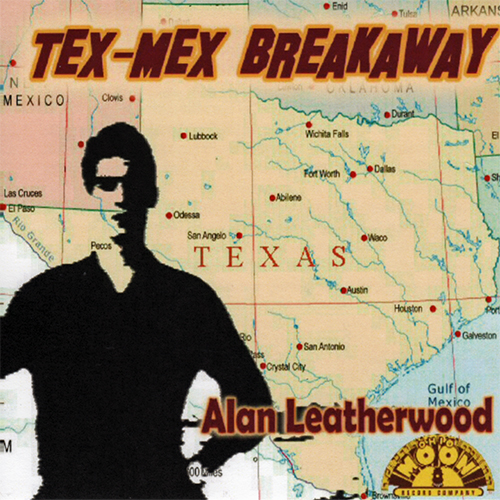
Cover of TEX MEX BREAKAWAY - Alan Leatherwood

Cover of TEX MEX BREAKAWAY – Alan Leatherwood (2013)

Tex Mex Breakaway, Alan Leatherwood’s new album, is available now in CD and digital from the independent Ohio Moon Record Company label.

Leatherwood specializes in rockabilly, folk, Tex Mex, and country music. He is also a virtual encyclopedia of musical knowledge for 1950s & 1960s recordings and artists.

Tex Mex Breakaway is a strong release that celebrates Leatherwood’s 50th year in the music business. He recently hit number one on the Cleveland Reverbnation Folk Charts.

As regular readers of this blog will know, I am a sucker for sad songs, so one of my favorites on this album is “How I Loved You And I,” which mourns the loss of a friend by celebrating time spent together.

“Voice Of An Angel” is another highlight, one of those songs that perfectly fit the mood of the after midnight to predawn hours. It features a haunting vocal by Leatherwood along with adept guitar work by the late Frank Parisi.

“Anita’s On My Mind” is a fun song led by the guitar of Paul Penfield. “We’re gonna rock it all night, we’ll make everything right,” sings Leatherwood, which sums up rock ‘n’ roll as well as any two lines can.

Other favorites include “Chance,” “Tell Me How,” and “Love You Till I Die.” The mark of a stellar album is that it just seems to get better with every play. Alan Leatherwood’s Tex Mex Breakaway is such an album. Be sure to check it out.

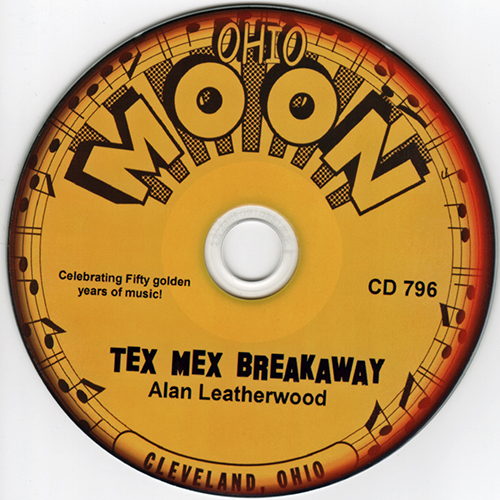
TEX MEX BREAKAWAY CD - Alan Leatherwood

TEX MEX BREAKAWAY CD – Alan Leatherwood (2013)

Tracks

01. Anita’s On My Mind (Leatherwood)
02. I’ve Had My Moments (Orbison/Melson/Rush)
03. My Baby’s Gone (Bowen)
04. Hickory Dickory Dock (Leatherwood)
05. No Teeth And All (Leatherwood)
06. Gotta Lotta That (Bedwell)
07. Loves Made A Fool Of You (Holly/Montgomery)
08. Breakaway (Leatherwood)
09. Paper Boy (Orbison)
10. Chance (Leatherwood)
11. White Bobby Socks (Owens)
12. Sentence Of Love (Leatherwood)
13. How I Loved You And I (Leatherwood)
14. Tell Me How (Allison/Holly/Petty)
15. What To Do (Holly)
16. I Gambled My Life On Rock And Roll (Leatherwood)
17. Love You Till I Die (Leatherwood)
18. Pearly Little Baby (Leatherwood)
19. Voice Of An Angel (Etherial)
20. I Wonder Why (Tharp/Tomsco)

Musicians

Vocals/Guitar: Alan Leatherwood
Drums: Max Bangwell (1-6, 8-10, 12, 15, 17-20), Bill “Smitty” Web (5, 7, 11, 16), Rick Harper (13, 14)
Bass (Acoustic): Randy Chestnutt (5, 11, 16, 19), Slaps Metzger (6, 9)
Bass (Electric): Rick Harper (1-4, 7, 8, 12, 13, 15, 16, 18), Frank Thedford (10, 14)
Lead Guitars (Electric): David Loy (3, 5, 7, 10, 18), Memphis Mike Metzger (4, 6, 11), Paul Penfield (1), Frank Parisi (16, 19), Ricky Santon (7, 10), Tom Fallon (8), Jeff Green (20), Alan Leatherwood (2, 15, 8, 17), Jimmy Murray (13, 14)
Piano/Keyboards: Bobbie Antes (1, 5), Don Heddesheimer (6, 10, 11, 20), Erich Overhultz (12, 13)
Harmonica: Rick Harper
Vocal Harmony: Jimmy Murray (14)

ELVIS RECORDED LIVE ON STAGE IN MEMPHIS Legacy Edition to include Richmond, Virginia concert

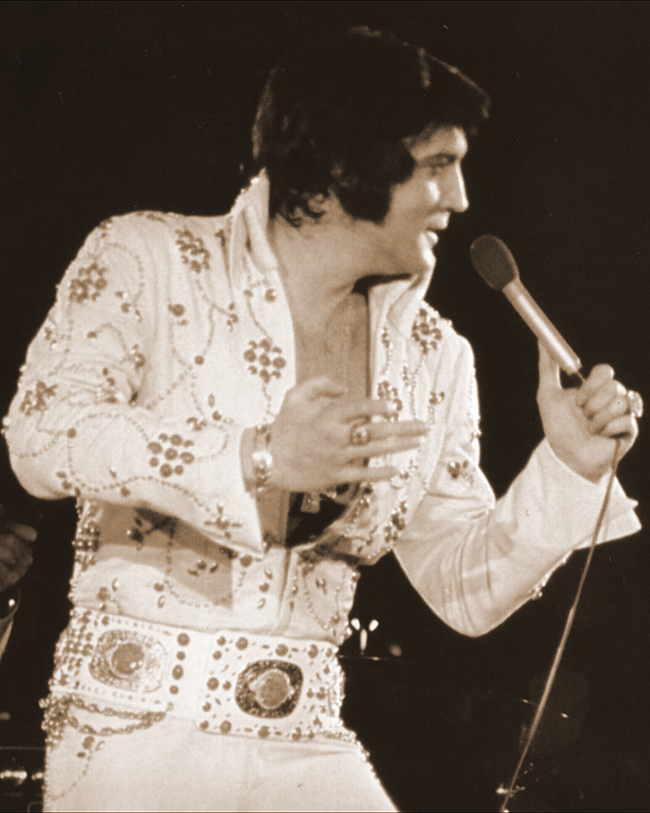
ELVIS RECORDED LIVE ON STAGE IN MEMPHIS (2014 Legacy Edition)

ELVIS RECORDED LIVE ON STAGE IN MEMPHIS (2014 Legacy Edition)

One of my favorite CD releases on the Follow That Dream collectors label for Elvis Presley fans is 2011’s Forty-Eight Hours To Memphis, which captures a March 18, 1974, concert that Elvis performed at the Richmond Coliseum in Virginia.

The confusing album title reflects that Elvis closed out his tour two days after the Richmond concert with a show in Memphis at the Mid-South Coliseum, portions of which became the 1974 album Elvis Recorded Live On Stage In Memphis. Elvis earned his third and final Grammy Award for his stellar performance of “How Great Thou Art” in Memphis on the original 1974 album.

The link between the two shows continues, for Sony announced last week that it will reissue the Richmond concert on the second disc of a Legacy Edition of Elvis Recorded Live On Stage In Memphis. While the FTD collectors label has very limited distribution, this new 2-CD release on the main Sony label hits mainstream retail stores on March 18, the 40th anniversary of the Richmond concert. Amazon and other outlets are accepting pre-orders now.

The Elvis Presley Show crisscrossed back and forth from Virginia to Tennessee on that leg of his tour. Tickets for his March 12 appearance at the Richmond Coliseum sold out so quickly that the tour was re-routed to accommodate a second show there on March 18. Elvis performed four shows in Memphis on March 16 and 17, hit Richmond, Virginia, again on March 18, and then returned to Tennessee for concerts in Murfreesboro and Memphis on March 19 and 20, respectively.

Elvis Presley's March 1974 tour schedule (partial)

Elvis Presley’s March 1974 tour schedule (partial)

For space considerations on the original LP, RCA edited several songs out of the March 20 Memphis concert for the 1-record release in July 1974. The album also featured overdubbed audience reactions that detracted from the sound quality. FTD restored the missing tracks and removed the unnecessary overdubs in a 2004 Classic Albums CD release of the concert, including a new mix. The same label also issued the expanded show in vinyl format as a 2-record set last year.

It turned out that RCA chose well in 1974 which performances to use on the original record, though. The performance quality of many of the excised songs was underwhelming, with the exception of a fine rendition of “Steamroller Blues,” first released on Platinum: A Life In Music over two decades later. The energetic Memphis version was superior to his live recording of the song in Hawaii that served as a single in 1973.

This new Elvis Recorded Live On Stage In Memphis Legacy Edition will also include the previously omitted songs, but whether a new or an existing mix will be featured is unclear.

In fact, Sony’s press release for this album is riddled with errors, an issue far too common these days in the marketing of Elvis music releases, so it is difficult to trust any of its statements. For that reason, I am not even including Sony’s alleged track listing at this point. Suffice it for now to say that Disc 1 will contain the Memphis show, while Disc 2 will contain the Richmond show and some low-fidelity bonus tracks recorded on a personal cassette player of Elvis rehearsing a few months later for yet another Las Vegas stint.

RCA professionally recorded the March 20 Memphis concert for the album project. It is a 16-track recording (audio elements recorded on separate channels) that can be tweaked for optimum sound quality. Though I enjoyed the 2004 FTD mix over the original 1974 version, another new mix could be revealing. The Memphis show is presented in stereo.

Though the background story remains mysterious, the March 18 Richmond concert was supposedly captured as a 16-track recording, too. If so, it remains missing from the Sony vaults – lost, stolen, or erased.

The Richmond concert audio source on both the 2011 and 2014 releases is a tape copy of a mono mix-down of the 16-track recording, with artificial reverb applied. In other words, no further changes can be made to the Richmond mix or reverb since the 16-track original is unavailable. The Richmond concert is not likely to sound very different from Forty-Eight Hours To Memphis on this reissue, if at all.

While Elvis’s sound engineers often made informal reference tapes of his shows from the soundboard mixing console, the Forty-Eight Hours To Memphis liner notes in 2011 only speculated about why RCA apparently recorded the Richmond concert in multitrack.

However, the 2014 Sony press release refers to the Richmond show as a “test run concert” for the subsequent Memphis recording. Some have theorized that the test copy is in mono due to Elvis’s preference for that format over stereo, though his previous live albums had been stereo releases. Perhaps the accompanying Legacy Edition booklet will reveal new information.

Elvis at the Richmond Coliseum, March 18, 1974 (FTD)

Elvis at the Richmond Coliseum, March 18, 1974 (FTD)

In the years leading up to 1974, many of Elvis’s concerts were superior to this particular show in Richmond. However, as with the Memphis show, the fun concert features Elvis in a fantastic mood interacting with fans. Music highlights in Richmond include “Steamroller Blues,” “Polk Salad Annie,” and “Suspicious Minds.”

Over the course of 21 years, Elvis performed 15 concerts in Richmond. The 14th of these shows was captured on Forty-Eight Hours To Memphis and, from what I have read, this was Elvis’s last great concert in Richmond. He performed in Richmond one final time in 1976, but, by that point, his rising prescription drug addiction and abuse had diminished the power of his shows. Therefore, I consider the March 18, 1974, appearance to be Elvis’s true “last hurrah” in Richmond.

Legacy Questions

I am looking forward to the reissues of both the Richmond and Memphis concerts. Despite my personal enthusiasm as an Elvis fan, I find myself wondering whether these two concerts are appropriate choices for mainstream release in 2014.

I fear that the repetitive nature of these shows compared to other recent Sony releases will use up some of the goodwill shown by music critics in reviews of Elvis At Stax, Prince From Another Planet, and certain other titles released in the last few years.

Will mainstream critics and listeners understand Elvis’s sense of humor? For instance, will some misinterpret his joke in Richmond about it being a pleasure to be back in Hampton Roads as an out-of-it singer not knowing which town he was playing?

By following up 2012’s As Recorded At Madison Square Garden reissue with 2013’s Aloha From Hawaii via Satellite reissue and now 2014’s Elvis Recorded Live On Stage In Memphis reissue, is Sony simply committing the same release blunders in the 2010s that RCA made in the 1970s? Has locking into an “anniversary” theme for release choices doomed them to repeat history’s mistakes going forward?

Keep in mind that the 40th anniversary of Having Fun With Elvis On Stage is later this year as well.

All Those Lonely Times: Elvis Presley’s 20 Best Country Songs

“You see, country music was always a part of the influence on my type of music, anyway. It’s a combination of country music and gospel and rhythm & blues. All combined, that’s what it really was. As a child, I was influenced by all of that. […] Of course, the Grand Ole Opry was the first thing I ever heard, probably, but I liked the blues, and I liked the gospel music – gospel quartets and all that.” –Elvis Presley, 1970

Elvis at the Houston Astrodome, 1970

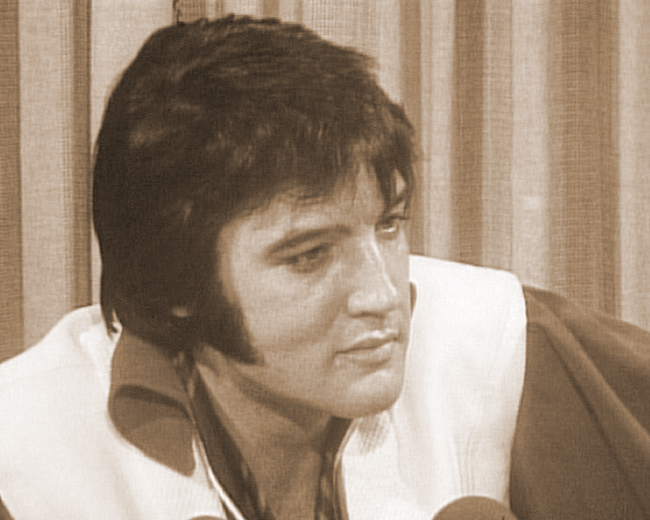
Elvis discussing country music at the Houston Astrodome, 1970

Elvis would have turned 79 today. In honor of the anniversary of his birth, here is a ranking of what I consider his 20 best country music recordings.

#1 Always On My Mind [Rehearsal] (1972)
This Is Elvis
Other notable version: 1972 Master (Separate Ways)

#2 Tryin’ To Get To You (1955)
Elvis Presley
Other notable performance: 1968 Live [rock ‘n’ roll version] (A Life In Music)

#3 I Really Don’t Want To Know (1970)
I’m 10,000 Years Old: Elvis Country
Other notable versions: 1970 Undubbed Master (I’m 10,000 Years Old: Elvis Country [2008 FTD Edition]), 1977 Live (Elvis In Concert)

#4 Kentucky Rain (1969)
Worldwide 50 Gold Award Hits, Volume 1
Other notable version: 1970 Live (Elvis Aron Presley)

#5 Tomorrow Never Comes (1970)
I’m 10,000 Years Old: Elvis Country
Other notable version: 1970 Take 2 (The Nashville Marathon)

#6 Funny How Time Slips Away (1970)
I’m 10,000 Years Old: Elvis Country
Other notable versions: 1969 Live (Today, Tomorrow & Forever), 1972 Rehearsal (Elvis On Tour: The Rehearsals)

#7 Don’t Cry Daddy (1969)
Worldwide 50 Gold Award Hits, Volume 1
Other notable versions: 1970 Live (Greatest Hits, Volume One), 1970 Live (Polk Salad Annie)

#8 Guitar Man (1967)
Clambake
Other notable performances: 1967 Undubbed/Unedited Master (Elvis Sings Guitar Man), 1968 Re-recording [rock ‘n’ roll version] (ELVIS-TV Special [Track 1]), 1968 Live [rock ‘n’ roll version] (Burbank 68), 1967 Take 5 (Elvis Sings Guitar Man)

#9 Early Morning Rain (1971)
Elvis Now
Other notable version: 1973 Re-recording (Mahalo From Elvis)

#10 Bringing It Back (1975)
Today

#11 Separate Ways (1972)
Separate Ways
Other notable version: 1972 Rehearsal (Elvis On Tour: The Rehearsals)

#12 It’s Midnight (1973)
Promised Land

#13 Good Time Charlie’s Got The Blues (1973)
Good Times
Other notable versions: 1973 Undubbed/Unedited Master (Good Times [2009 FTD Edition]), 1973 Take 7 (Good Times [2009 FTD Edition])

#14 You Don’t Know Me (1967)
Clambake

#15 Long Black Limousine (1969)
From Elvis In Memphis

#16 Pieces Of My Life (1975)
Today
Other notable version: 1975 Rough Session Mix (Today [2005 FTD Edition])

#17 Make The World Go Away (1970)
I’m 10,000 Years Old: Elvis Country
Other notable versions: 1970 Take 3 (Welcome To My World), 1970 Live (That’s The Way It Is [2000 Special Edition])

#18 For Ol’ Times Sake (1973)
Raised On Rock

#19 Clean Up Your Own Backyard [Undubbed Master] (1968)
Double Features: Live A Little, Love A Little/Charro/The Trouble With Girls/Change Of Habit
Other notable versions: 1980 Remix (Guitar Man), 1968 Master (Almost In Love)

#20 You Asked Me To [Take 2B] (1973)
Rhythm & Country
Other notable version: 1973 Master (Promised Land)

* * *

While it is fun to make themed lists, a performance does not always fit within a definitive genre, particularly when it comes to Elvis music. Some of these selections, therefore, may not be considered “strictly country.” When in doubt, refer to the Elvis quote at the top of this post.

Happy Elvis Day 2014, everyone! May the Music be with you, always.

“Elvis Song Of The Year” for 2013

According to iTunes, out of 3,572 unique Elvis tracks in my collection, the one I played most often in 2013 was “Stay Away,” the flip side of “U.S. Male” in 1968. I played the track 22 times.

Based on the traditional melody of “Greensleeves,” which also inspired the 19th century Christmas classic “What Child Is This,” “Stay Away” played over the opening titles of Stay Away, Joe, Elvis’ 26th movie.

Considering how little time I have had for this blog lately, “Stay Away” indeed seems like the perfect Elvis song to represent 2013 for me.

Stay Away (1968)

Stay Away (1968)

I listened to 8,499 Elvis songs using iTunes or my iPods in 2013 (including duplicates). That is an average of 23 Elvis songs a day. I listened to 2,353 different Elvis tracks during the year.

Out of 3,700 non-Elvis tracks in my collection, my most played piece in 2013 was Michael Giacchino’s “Spock Drops, Kirk Jumps,” from his 2013 Star Trek Into Darkness film score. I played that one 26 times.

Among vocal performances, the non-Elvis track I played most was 2008’s “All I Want” by Darius Rucker (20 plays), from his Learn To Live album.

Overall, I listened to 12,629 songs using iTunes or my iPods this year. That works out to 35 songs a day.

* * *

Thank you for reading. May 2014 be your best year yet!

In The Station/The Season Of Light

“It was the best of times, it was the worst of times….”

The Mystery Train is currently on hiatus while I am busy in the offline world. I hope to return in 2014 with some occasional posts.

Until that time, here’s hoping you have a Wonderful Christmas and a Merry New Year!

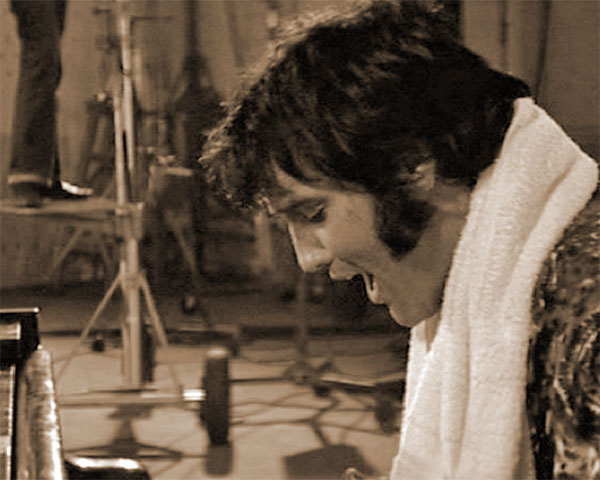
Elvis rehearsing in 1970

Elvis rehearsing in 1970

iTunes Speedway: Race for the Elvis Cup

Elvis Presley is Steve Grayson in SPEEDWAY (1968)

Elvis Presley is Steve Grayson in SPEEDWAY (1968, MGM)

On the iTunes Speedway

Ever since I finished backing up all of my Elvis music to iTunes, I have been wanting to do some number-crunching. I usually rate a song when I first place it on iTunes, using the built-in star ratings of 1-5 (I reserve 0 stars to mean “not yet rated”). I then update the rating, if necessary, whenever the track plays.

For updates, I only allow myself to move the song one star rating in either direction per play. That way, if I am in an extremely bad or good mood, it will not overly influence the rating of a given song.

I now have nearly five years worth of data about how I really feel about the songs within my Elvis collection. This will allow me to determine which individual years and multi-year spans are truly my favorites, at least according to the numbers.

My Picks

Before crunching those numbers, though, I used my heart to answer some basic questions. I thought this would make for an interesting comparison against the iTunes race results.

Favorite Elvis Year: 1970
Top Five Elvis Years: 1970, 1968, 1969, 1957, 1955
Favorite 5-year Elvis Span: 1968-1972
Elvis Decade Ranking: 1970s, 1950s, 1960s

Race for the Elvis Cup: The Rules

For this analysis, I eliminated any years for which I had less than 40 Elvis tracks. This resulted in the removal of 1953 (2 tracks) and 1959 (19 tracks). I also eliminated all non-musical tracks (e.g., “Introductions By Elvis,” “Elvis Talks”).

For each of the remaining 23 years, I determined the average star rating for all applicable tracks. I also determined the percentage of tracks from that year that earned a perfect 5-star rating. For instance, the results for 1956 were:

1956
Total Tracks: 164
Average Rating: 3.91 (out of 5)
Perfect 5-star Tracks: 40.24%

The year with the highest average rating received 23 points on down to the year with the lowest average rating, which received 1 point. I then applied this same logic down the line by year for the percentage rankings for perfect 5-star tracks.

This gave each year a score ranging from a low of 2 to a high of 46. However, there were several ties down the line. The tie-breakers were:

1.) Average Rating (i.e., the tied year with the highest average rating wins the position)
2.) (If necessary) Perfect 5-Star Tracks (i.e., the year with the highest 5-star tracks percentage wins the position)

Victory Lane

The results were interesting. Leading the pack was the year 1968, with a perfect score of 46 points.

Nearly 85% of the Elvis tracks I had from 1968 were connected to the ELVIS television special project in some way, so that definitely helped stack the deck. Among them were “If I Can Dream,” one of my all-time favorite songs, and other tracks from Memories: The ’68 Comeback Special, a stellar album that includes the full June 27, 6 PM “Sit Down” show.

Top Five Elvis Years
#1 1968 (46 points)
#2 1970 (43 points, wins 2nd position over 1969 on Average Rating tie-breaker)
#3 1969 (43 points)
#4 1967 (38 points)
#5 1955 (37 points, wins 5th position over 1957 on Average Rating tie-breaker)

The real surprise for me was 1967 making the Top Five. Highlights for 1967 included the September sessions in Nashville that produced standouts like “Guitar Man,” “You’ll Never Walk Alone,” and “You Don’t Know Me.” In fact, alternate takes from that session, many of which are collected on FTD’s Elvis Sings Guitar Man, helped propel 1967 ahead due to the number of five-star ratings.

1965 came in last place, with a minimal score of 2 points (no surprise there). I was surprised that 1977 (5 points) was not able to overtake 1964 (8 points) and wound up as Elvis’ second-worst year.

5-Year Mission

I was also interested in determining my favorite 5-year span. As noted above, I usually say my favorite Elvis time period is 1968-1972, with 1954-1958 running a close second. How did the numbers match against my picks?

To my surprise, it turned out that my favorite 5-year Elvis span was actually 1966-1970, which came in at a whopping 198 points. 1968-1972 earned a collective 183 points, while 1954-1958 came in at 146 points. In other words, this race was not even close.

I often state that the opening salvos of Elvis’ comeback were actually fired in 1966 during the How Great Thou Art sessions, so perhaps I should have seen this coming. 1969 included the Memphis sessions that produced “Suspicious Minds,” “Kentucky Rain,” and “In The Ghetto,” his return to live performances, and even a strong soundtrack on the Change of Habit film. 1970 featured the That’s The Way It Is project, including the Nashville sessions, the summer rehearsals, and the August live performances.

The five-year span that earned the least points was 1961-1965, with a combined total of only 50, barely more than the single year of 1968.

Elvis Decades

Now, to answer that age-old question, what is your favorite Elvis decade? Though 1964 and 1965 are hard to love, I otherwise enjoy Elvis’ entire career. When pressed, however, I state that my favorite decade is the 1970s. What did the numbers say?

Again, they proved me wrong. The 1950s won out, with an average of 29.2 points. Second place was the 1970s, well behind at an average of 22.88 points. This barely edged out the 1960s, which had an average of 22.3 points.

Elvis professionally recorded during only five years in the 1950s, and the quality of his output was much more consistent in that time than in the 1960s and 1970s. The 1970s were brought way down by outliers like 1977 (5 points) and 1974 (10 points), while the same occurred for the 1960s with 1965 (2 points), 1962 (8 points), and 1964 (8 points). However, even the 1950s had its own outlier of 1958 (10 points).

Awarding the Elvis Cup

The analytical side of my personality loved reviewing these numbers. The emotional side of me, though, still believes that 1970 is my favorite Elvis year, no matter what iTunes says.

For me, feelings always rule out in the end, so the Elvis Cup is hereby awarded to 1970, the reigning champion.

Triple Elvis powers a fresh vision of ALOHA FROM HAWAII

WARNING: This review contains major spoilers for Aloha From Hawaii: 40th Anniversary Edition.

Elvis Presley’s 1973 Aloha From Hawaii television special still stands as a significant milestone in his legendary career. The January 14 concert aired live via satellite to certain parts of the world.  Over the next several months, it aired in other locations, including the United States on April 4.

NBC’s US version of the broadcast featured a slightly edited concert, but also included several additional “insert” songs taped after the main show when the audience left the building. With only slight modifications, this was essentially the “standard” version used for rebroadcasts and home video releases through the 1990s.

2004’s Aloha From Hawaii: Deluxe Edition DVD from Elvis Presley Enterprises and BMG featured a new edit of the full concert. In addition to showcasing some new camera angles, it removed many of 1973’s split screen techniques – which had become dated over the years. The set also contained a January 12 rehearsal show taped as a backup, the January 14 insert song session, and the April 4 NBC broadcast. This 2-DVD set is the definitive release of Aloha From Hawaii.

“Definitive” does not always mean “final,” though. On Monday, EPE released a new 2013 edit of the main show on DVD. Originally created for an Elvis celebration in Honolulu that marked the 40th anniversary of the TV event in January of this year, this edition features a wider presentation that makes use of split screens to show multiple camera angles at once.

Unfortunately, EPE has thus far spent very little effort marketing this new version of Aloha From Hawaii. Press releases and product descriptions have been high on hyperbole but low on detail. Therefore, before getting into the fun stuff, I want to start this review by explaining exactly what to expect with the new Elvis: Aloha From Hawaii – 40th Anniversary Edition DVD.

Specifications

Unlike 99% of DVDs professionally released in the last 10 to 15 years, Aloha 40th contains no technical specifications on the back cover, or anywhere else for that matter.

There are no indications of aspect ratio, running time, or audio channels. There is a “Dolby Digital” logo, but that is as close as it comes to giving technical information. Lack of standard details such as these made the product packaging appear amateurish.

Here are the key technical specifications for the main feature (concert), which I derived on my own:

  • Visual format: Anamorphic widescreen (enhanced for 16:9 widescreen TVs)
  • Aspect ratio: 3:1 (approximate)
  • Running time:  77 minutes
  • Audio: English 5.1 Surround (Dolby Digital)
  • Closed captioned: No
  • Disc region: All
  • Disc format: NTSC

Explanation of Aspect Ratio

Aloha 40th has a radically different aspect ratio compared to previous versions. To this point, Aloha From Hawaii has always been presented in its original television aspect ratio of 1.33:1 (also known as 4:3). This means that for every 1.33 units of width, there is 1 unit of height. This new version is over twice as wide, at about 3:1. For every 3 units of width, there is now only 1 unit of height. This is actually wider than most films of today, which are usually 2.75:1.

What all of this means is that there are black bars at the top and the bottom of the Aloha 40th image, no matter the kind of television used to watch it. Old-style 4:3 televisions will have much thicker bars, however, than modern 16:9 televisions.

Below are simulations that compare the standard 1.33:1 Aloha with the widescreen 3:1 Aloha 40th, in terms of image space used on each kind of television. This is not intended to illustrate relative image quality.

Simulation of original 1973 ALOHA FROM HAWAII image on an old-style 4:3 television
Simulation of original 1973 ALOHA FROM HAWAII image on an old-style 4:3 television

Simulation of 2013 ALOHA FROM HAWAII: 40TH ANNIVERSARY EDITION image on an old-style 4:3 television

Simulation of 2013 ALOHA FROM HAWAII: 40TH ANNIVERSARY EDITION image on an old-style 4:3 television

Simulation of original 1973 ALOHA FROM HAWAII image on a modern 16:9 widescreen television
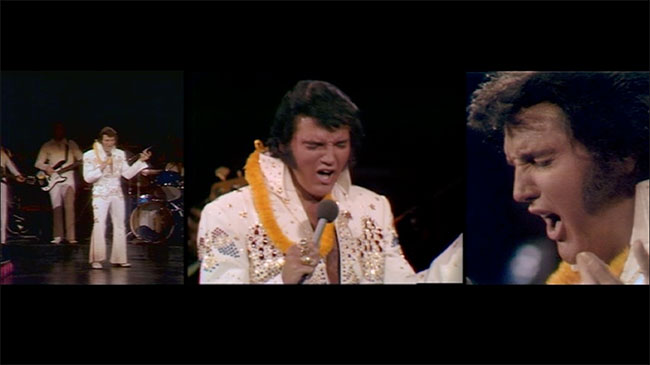
Simulation of original 1973 ALOHA FROM HAWAII image on a modern 16:9 widescreen television

Simulation of 2013 ALOHA FROM HAWAII: 40TH ANNIVERSARY EDITION image on a modern 16:9 widescreen television

Simulation of 2013 ALOHA FROM HAWAII: 40TH ANNIVERSARY EDITION image on a modern 16:9 widescreen television

Hanging Out Upstairs at Graceland

When I place Aloha 40th in the disc player for the first time, I do not know what to expect. I am always excited to watch a new Elvis DVD, but I am also afraid that this one will be disappointing. Will the contents be treated in the same amateur fashion as the packaging?

At first, the opening moments are fantastic, with bits of the Aloha press conferences interspersed with shots of the Earth from space.

Then, it zooms down to Graceland in Memphis, Tennessee, and things quickly go awry.

As the camera closes in on Elvis’ bedroom window, there is a knock on the door. The scene cuts inside and the camera takes on the point-of-view of someone exiting his room upstairs at Graceland.

Jerry Schilling is waiting in the hallway for this person, who turns out to be an Elvis imitator wearing an American eagle jumpsuit. Though shot in the present day, the footage is made to look vintage. In fact, it is made to look much older than 1973 for some reason.

In the background, the annoying “Also Sprach Zarathustra” substitute song that was used during backstage portions of Elvis On Tour (1972) and This Is Elvis (1981) plays. With fake “Also Sprach Zarathustra” as his introduction, is fake Elvis about to take the stage for a concert right there in real Graceland?

Not quite. The real Jerry takes fake Elvis down the stairs, through the den, and out real Graceland’s back door.

In the backyard, the real Joe Esposito is waiting to take them to a blue and white helicopter that has landed in the pasture.

These opening moments are reminiscent of both This Is Elvis and Elvis Lives: The 25th Anniversary Concert (released 2007). Ignoring for a moment that the unnecessary use of an Elvis imitator made me queasy, the new opening also left me with more questions than answers:

  • Jerry and Joe are both their present-day selves, so if this footage represents 2013, who exactly are they supposed to be retrieving from Elvis’ bedroom? His spirit?
  • If this footage is supposed to represent 1973, then why is (fake) Elvis already wearing his jumpsuit? Graceland is over 4,000 miles from Honolulu.
  • Where is that helicopter supposed to be taking fake Elvis anyway? To the airport? Elvis always took a car to the airport.

Surely, the creators of this segment are not trying to imply that fake Elvis, after being put out to pasture wearing his fake jumpsuit, rides that helicopter all the way to Honolulu? Everyone knows that when (real) Elvis arrives in Honolulu, he is in a green helicopter and wearing a corduroy suit.

Besides, if they really wanted to impress me, they would have loaded fake Elvis on the real Lisa Marie airplane and used CGI to show the plane take off for Hawaii right from Elvis Presley Boulevard. Sure, Elvis had not yet acquired his own plane at the time of Aloha, but why try to introduce logic into this insanity now?

Yes, I am nitpicking what is obviously supposed to be a fun little segment played for laughs. However, I watch Aloha to see the genuine article, not an imitation, so this poor opening almost spoiled the DVD for me.

Almost.

Then, the scene cuts to the familiar 1973 show opening – enhanced for widescreen. As the satellite graphic appears on screen, morse code begins to spell out E-L-V-I-S.

Soon enough, fake Elvis is wiped from memory as real Elvis takes the stage in all his dazzling glory. Except now, there are three of him!

The Triple Elvis Threat

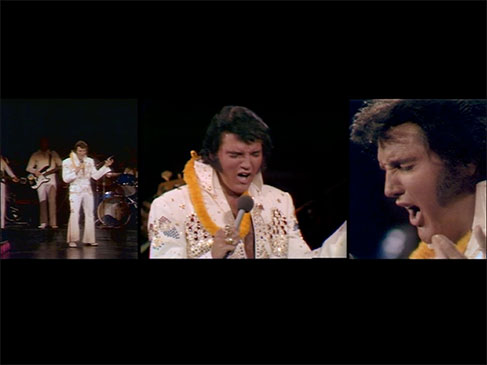
Example of the split screen technique used in ALOHA FROM HAWAII: 40TH ANNIVERSARY EDITION

Example of the split screen technique used in ALOHA FROM HAWAII: 40TH ANNIVERSARY EDITION

Throughout most of Aloha 40th, there is a main camera angle in the middle section of the screen, with two slightly smaller, cropped angles on the left and right sections of the screen. This configuration is used in one of three ways:

  • One angle: Same angle repeated in all three sections
  • Two angles: One angle in middle section, a second angle repeated on both sides
  • Three angles: A different angle in each section

I did not attempt to measure this, but my rough observation is that the two angle configuration of the three sections is used most often, while the three angle configuration is used least often.

The real power of Aloha 40th is being able to view multiple angles at once, so I found the one angle use to be disappointing in most cases. However, when used appropriately, it could still be effective.

With at least two different camera angles on screen at most times, there are undoubtedly some new angles mixed in there that have not been seen on previous releases. One of my favorites that I have noticed so far is Elvis giving a nervous look directly into the camera during James Burton’s “Steamroller Blues” guitar solo. I love moments like this, which humanize Elvis. He has become such a legend, such an icon in death, that his underlying humanity is sometimes lost. He was a real man, after all, who could get nervous on stage.

Watching the split screen angles is a treat, but it also gives my eyes a real workout. I keep scanning back and forth, trying not to miss anything. Meanwhile, the fast, modern editing techniques, including many jump-cuts, also leave me trying not to blink.

While the screen contains three sections most of the time, there are also segments where it splits into dozens of images at once – though still only one or two different angles. Those segments, which are thankfully brief, look like cheap gimmicks, as if someone was allowed to play with Microsoft Movie Maker too long.

"There is nothing wrong with your television set." Visual overloads, such as the above, are thankfully rare in ALOHA FROM HAWAII: 40TH ANNIVERSARY EDITION

“There is nothing wrong with your television set.” Visual overloads, such as the above, are thankfully rare in ALOHA FROM HAWAII: 40TH ANNIVERSARY EDITION

To be fair, I am certain that the visual overload segments look far better in the environment for which this edit was originally created: Display on a huge movie screen in a large concert arena.

As for the concert, the complete version is used, meaning it includes the “lying like a rug,” “general flunky,” Jack Lord introduction, and other small lines cut from the NBC version.

All of the concert songs appear, including “Johnny B. Goode,” the song Warner Home Video was unable to secure usage rights for in its 2010 Blu-ray and DVD release of Elvis On Tour. EPE was either better at securing a deal with Chuck Berry than Warner, or the terms of its circa-2004 deal allowed for this release as well.

Insert Songs

Most of the “insert” songs from the NBC version of the special are included as well. Different imagery appears in these songs than in the 1973 versions, though.

Inserted between “You Gave Me A Mountain” and “Steamroller Blues,” “Early Morning Rain” contains various shots of Hawaii while Elvis is shown singing on stage after the audience has left.

“Blue Hawaii” features Elvis on stage again, but this time the additional sections are used as a scrapbook of sorts, showing various still photos of Elvis in Hawaii over the years, including production photos from Blue Hawaii, Girls! Girls! Girls!, and Paradise, Hawaiian Style. There are several images that I do not recall seeing before. However, I am not a photo collector, so they might be common.

Since Elvis sings most of “Blue Hawaii” with his eyes closed, the impression is given that he is thinking back on the events shown in the montage. It is an extremely effective sequence, though, in reality, Elvis is probably thinking, “Man, I just finished the biggest show of my career, why am I still stuck here singing to an empty room?”

While previously inserted between “Hound Dog” and “What Now My Love,” “Blue Hawaii” is now placed between “I Can’t Stop Loving You” and “Hound Dog” for some reason. Perhaps the “lying like a rug” line seemed too abrupt of a stopping point to move to the insert. I prefer it in its original position, though.

“Hawaiian Wedding Song” is omitted (as is “No More,” technically, but that was left out of the 1973 broadcast as well, so I am not counting that one). It is the only missing song, and its absence after “I’ll Remember You” does not leave near the same hole as the absence of “Johnny B. Goode” did for the opening of Elvis On Tour.

The remaining insert song is “Ku-u-i-po,” which appears in its traditional spot after “Long Tall Sally/Whole Lotta Shakin’ Goin’ On.” At first, I am annoyed that only two sections of screen appear, neither of which include Elvis singing in 1973.

Then, it happens.

The Surprise

Right there, in the middle of “Ku-u-i-po,” with no fanfare, no preparation, comes footage of Elvis appearing live in Hawaii.

In 1957.

In color.

It is 30 seconds long.

But . . . wow.

This previously unreleased footage is part of a new exhibit at Graceland, called Elvis’ Hawaii: Concerts, Movies and More.

While the split screen techniques of Aloha 40th will someday seem as dated as the 1973 versions did by 2004, the real legacy of this release, what it will be remembered for long-term, will be those 30 seconds of 1957 footage.

Audio

In no way do I claim to be an audio expert, so all I can do is present my subjective opinion on this topic as a layman. My first impression of Aloha 40th‘s 5.1 audio was that I did not like the new mix.

For instance, there seemed to be little use of the rear speakers, except for background singers. In addition, Elvis’ vocal was far too prominent for my taste.

As a comparison, I played “An American Trilogy” from the original pressing of the 2004 edit of Aloha versus the same song on the 2013 edit. While the 2004 mix also has room for improvement, it is far better, in my view, than the 2013 mix. The 2004 mix has a fuller sound with more ambience.

The difference in mixes is best exemplified by what I refer to as the musical “cannon fire” portion of “Battle Hymn of the Republic,” the part where the orchestra goes, boom! Boom!! BOOM!!!

On the 2004 mix, you are the one under fire. In the 2013 mix, the cannons are merely firing off at someone else in the distance.

My primary listening for Aloha 40th was on a six-speaker surround system that used the Dolby Digital encoding (left, center, right, left rear, right rear, and sub). I also listened to selections on a standard two-speaker stereo setup (left and right).

Unlike the 2004 edition, there is not a dedicated stereo track available. Presumably, this means it is left to one’s audio equipment to convert the 5.1 sound to 2.0. In my case, it sounded fine. In some ways, I enjoyed it more than the true 5.1 version, but that might be due to having lower expectations.

Video

As shown in the aspect ratio image examples above, the tradeoff of the multiple angles on Aloha 40th is that the visuals are now smaller overall, using less screen space.

That being said, video quality never jumped out at me as a significant issue on this release. I also do not claim to be a video expert, though, so I only present my perspective as a fan who has watched and enjoyed Aloha From Hawaii for years.

Overall image quality is about the same as the 2004 edition, which was very clean. Once again, I used “An American Trilogy” to make most of my comparisons.

Some of the video footage this time out has an occasional darker look, though, but that may be an intentional effect. Though I noted it, it was not distracting.

Coloring sometimes varies from angle to angle. For instance, Elvis’ jumpsuit sometimes looks white, while other times it is an off-white. Due to the many factors that could cause this, though, I am not prepared to blame the variances on this release in particular. In fact, I am almost sure this has always been the case. The split screens simply make it easier to detect.

One of the things that surprised me was that the 2013 image often appeared crisper than the 2004 version. Since I was watching on a high-definition television, this unexpected benefit was likely due to the comparatively low-resolution image not having to be artificially expanded as much for the increased resolution of modern TVs.

My primary viewing of Aloha 40th was on a 73-inch widescreen TV, from a distance of about ten feet. I also viewed selections on a 27-inch widescreen monitor, from a distance of about three feet. Unfortunately, I did not have ready access to an old-style TV to test how Aloha 40th appears in that format.

Due to the extremely wide aspect ratio and split screen technology, larger, widescreen televisions will obviously have better results than smaller units. However, even on the 27-inch widescreen, Aloha 40th was still enjoyable.

Extras

Aloha 40th also includes the following bonus content:

  • 40th Anniversary Aloha From Hawaii Celebration: A four-minute documentary, which, combined with the main show, certainly makes this DVD a fine souvenir for those fortunate enough to participate in Graceland’s Elvis-themed Hawaiian vacation package earlier this year. It just makes the rest of us jealous, though.
  • Elvis’ Hawaii: Concerts, Movies, and More! Exhibit: A five-minute documentary about Graceland’s new exhibit, narrated by Angie Marchese, EPE’s Director of Archives, who created the exhibit. This documentary does a great job in the time allotted explaining what went into creating the new exhibit, as well as giving a nice walkthrough of its contents. This is another chance to see that spectacular 1957 concert footage, by the way. This documentary also reminds me that I really need to go back to Graceland one day.
  • Aloha From Hawaii Press Conferences: Five minutes worth of footage from Elvis’ September and November 1972 press conferences. I have seen this footage elsewhere in better condition.

Though I will not watch them very often, the extras are fine. I especially enjoyed the one about the exhibit, which acts as a commercial for Graceland without being obvious about it.

The only additional item I would have preferred in a release of this nature would have been a “making of” documentary about the 2013 edit.

Booklet

The booklet that accompanies the Aloha 40th DVD is actually a modified version of the program given at the 40th anniversary event in January. Though it is nicely assembled, the 12-page booklet contains typical information and pictures. It contains no further details about the DVD. Even the song-listing included is noted as supposedly being for the 1973 NBC broadcast version.

Overall Verdict

Ultimately, the wide format and split screens of Aloha 40th work better than I imagined they would, and they serve to shed new light and energy upon a concert that has become so familiar to Elvis fans. Use of split screen technology returns Aloha to its roots, albeit in modern form.

Aloha 40th should not replace previous edits of Aloha From Hawaii, though. Instead, it should stand alongside them as another viewing alternative.

I know there are some fans who do not enjoy Aloha From Hawaii. They criticize it for a multitude of reasons: Elvis is sluggish, Elvis is nervous, Elvis disrespects his older hits, etc.

While many of those kinds of observations are indeed valid to some extent, I cannot help but love Aloha From Hawaii anyway. While Elvis was alive, it was really his last moment in the international spotlight. Though it might never be in serious contention as his best show, I still find it hugely entertaining and compelling.

If you have not been a fan of Aloha From Hawaii to this point, this DVD is not likely to change your mind. No amount of special editing could ever do that.

If, on the other hand, you already enjoy Aloha From Hawaii and are willing to embrace change, then the Elvis: Aloha From Hawaii – 40th Anniversary Edition DVD is a must.

Once Elvis took the stage, I had a big smile on my face the entire time.

It’s Elvis. It’s fun. What more could I ask?

Booklet cover for ELVIS: ALOHA FROM HAWAII - 40TH ANNIVERSARY EDITION (2013)
Booklet cover for ELVIS: ALOHA FROM HAWAII – 40TH ANNIVERSARY EDITION (2013)