That’s The Way It Is reveals a different side of Elvis

My favorite album released during Elvis Presley’s lifetime is That’s The Way It Is. First hitting record stores in November 1970, it features studio material from his June recordings in Nashville as well as four live cuts from his August Las Vegas engagement. It serves as a soundtrack of sorts for the excellent documentary of the same name, also released that month.

Despite the status I give it, the album is not perfect. Rock ‘n’ roll fans sometimes dismiss it as an easy-listening bore. One of the causes of that issue, I believe, is the sequencing of songs. Many of them should have been presented in a different order. For instance, the album unfortunately begins with a live version of the sleepy B.J. Thomas hit “I Just Can’t Help Believin'” and establishes the wrong tone.

Adding to the trouble, two of the live performances, “Patch It Up” and “I’ve Lost You,” are not as powerful as their studio counterparts, which should have been used instead. The studio recordings had been released as singles prior to the album, so the live versions were likely considered bonuses for fans that already had the 45s. The artistry of the album should have taken priority, though.

Apparently to complete the “feel” of a live album, RCA overdubbed applause on the end of the studio version of “Bridge Over Troubled Water,” which closed out That’s The Way It Is. Elvis’ vocals on the first verse of the song are also very faint in the mix, either on purpose or due to a technical glitch. You can better hear Elvis’ beautiful performance of this song, with his voice louder on the first verse and without the annoying applause overdubs, on Heart & Soul and the Elvis: Walk A Mile In My Shoes-The Essential 70s Masters boxed set.
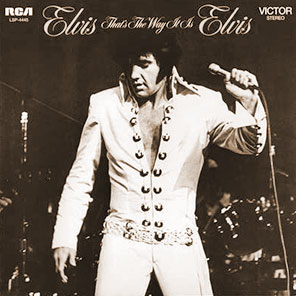
That's The Way It Is (1970)

Side 1

“I Just Can’t Help Believin'”
Live Master–8/11/1970 Dinner Show (DS): As noted above, the song does not serve well as an album opener. While it is misplaced on the album, the performance is strong. I love the little traces of humor in his voice. He sounds on the verge of laughing a couple of times. Also memorable is his interaction with the Sweet Inspirations throughout (“Sing the song, baby”). Elvis would never be quite as incredible again live as he was in this engagement.

“Twenty Days And Twenty Nights”
Master–Take 9: For me, this song represents the adult Elvis, the recording artist that is too often overlooked. “Twenty Days And Twenty Nights” is about a man who regrets leaving his wife, and Elvis evokes this character through music as well as any actor could on screen. The performance plays through the range of emotions, even striking a hopeful tone (“One day soon I’m going back…”) before falling back into despair as he laments “Oh, how I miss her,” over and over at the end.

“How The Web Was Woven”
Master–Take 3: The highlight of the album, “How The Web Was Woven” is a love song that ranks right up there with the better-known “Can’t Help Falling In Love.” From the acoustic guitar opening to the accompanying piano, the arrangement on this one works very well. “At last, I’m where you want me . . . Don’t you know that’s where, where I wanna be,” he sings with a passion that, for this listener anyway, exceeds even the incredible American Sound sessions in Memphis the year before.

“Patch It Up”
Live Master–8/12/1970 DS: Compared to the excellent studio take, this live version sounds almost like a throwaway. Watching this same energetic performance in the film, though, is an entire other experience.

“Mary In The Morning”
Master–Take 5: This is a pretty, if forgettable, love song. It goes on a bit too long and eventually becomes tiresome.

“You Don’t Have To Say You Love Me”
Master–Take 3: Though it is a fine performance, I would have chosen “How The Web Was Woven” or one of the others as a single over Elvis’ version of the Dusty Springfield hit.

Side 2

“You’ve Lost That Lovin’ Feelin'”
Live Master–8/12/1970 MS: This live performance is the definitive version of this song by anyone. This is Elvis at his best: “It makes me just feel like cryin,’ ’cause baby . . . something beau-ti-ful’s dy-in.'” The Righteous Brothers sound like they are singing a lullaby in the original recording compared to the Elvis version. Even Elvis was never able to equal his own performance again in other concerts.

“I’ve Lost You”
Live Master–8/11/1970 DS: While I love this live performance of “I’ve Lost You,” I prefer the studio version featuring more complicated lyrics and arrangement. That being said, this is still a highlight.

“Just Pretend”
Master–Take 3: Picking up where “Twenty Days And Twenty Nights” left off, this turns the despair of a man who left his lover and turns it back to hope for reconciliation. “Now I know, it was wrong to go, I belong there by your side,” he sings, bordering on the type of apology song that Elvis would perfect a couple of years later with “Always On My Mind.” The impressive “Just Pretend,” with a gospel-inspired arrangement, is another all-time favorite.

“Stranger In The Crowd”
Master–Take 9: This is yet another highlight. The band really cooks on this one. For some, Elvis Presley brings to mind “Hound Dog,” “Don’t Be Cruel,” “All Shook Up,” and similar tunes. While those are all fine, when I think of Elvis, I think of songs like “How The Web Was Woven,” “I’ve Lost You,” and “Stranger In The Crowd.”

“The Next Step Is Love”
Master–Take 11: Here’s one studio song where I actually prefer the live version. “The Next Step Is Love” is a little hokey either way, but the studio arrangement, complete with xylophone(!), does not help matters.

“Bridge Over Trouble Water”
Master–Studio Take 8 (with overdubbed applause): I stopped listening to the original album version of this song once RCA finally released a proper studio track. The one on this album simply does not do justice to his performance. The Heart & Soul version, though, I would contend as the best version of this song by anyone.

Upon its original release, That’s The Way It Is faced stiff competition from none other than Elvis himself. In their infinite wisdom, his record label released the following Elvis music in October and November of 1970:

  • Almost In Love album (an excellent “budget” release)
  • “You Don’t Have To Say You Love Me”/”Patch It Up” single
  • Elvis In Person album (re-release of record 1 of the previous year’s From Memphis To Vegas/From Vegas To Memphis double album)
  • Back In Memphis album (re-release of record 2 of From Memphis To Vegas/From Vegas To Memphis)
  • Elvis’ Christmas Album (“budget” repackaging)
  • That’s The Way It Is album
  • “I Really Don’t Want To Know”/”There Goes My Everything” single

Despite the oversaturation, That’s The Way It Is made it to number 21 on the charts and obtained gold record status. It probably would have done even better had fans not been so bombarded with Elvis product in the fall of 1970.
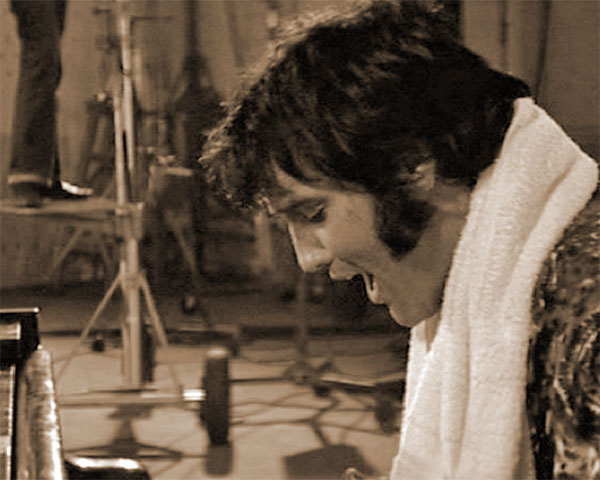
Elvis rehearsing How The Web Was Woven, 1970

Elvis rehearsing How The Web Was Woven, 1970

While a wonderful album, That’s The Way It Is also would have been greatly improved if a couple of different song versions had been used and the album had been sequenced as below in my imaginary version of That’s The Way It Is.

Side 1

  • “Stranger In The Crowd” (studio, as on original)
  • “I’ve Lost You” (substitute studio version)
  • “How The Web Was Woven” (studio, as on original)
  • “You Don’t Have To Say You Love Me” (studio, as on original)
  • “Bridge Over Troubled Water” (substitute Heart & Soul studio version without overdubbed applause)
  • “I Just Can’t Help Believin'” (live, as on original)

Side 2

  • “Patch It Up” (substitute studio version)
  • “Twenty Days And Twenty Nights” (studio, as on original)
  • “Just Pretend” (studio, as on original)
  • “The Next Step Is Love” (studio, as on original)
  • “Mary In The Morning” (studio, as on original)
  • “You’ve Lost That Lovin’ Feelin'” (live, as on original)

No matter the order you listen, though, That’s The Way It Is represents a true Elvis masterpiece.


Portions of the above review originally appeared on my now defunct pop culture blog on May 21, 2008.

From 1956 to 2012: Follow Elvis’ journey through Richmond

Despite his enduring popularity, Elvis Presley is rarely given his due as an artist. Though this has improved considerably over the last ten to twenty years, the general public still tends to latch on to things like wacky souvenirs, bad impersonators, and “alive” hoaxes.

My favorite Elvis writer of late has been Sheila O’Malley of the Sheila Variations blog. With a fresh voice, she presents new perspectives on Elvis the artist. Rarely fluff pieces like you might see on other blogs (including this one), Sheila’s posts tend to be demanding reads. Invest the time and there are always insightful payoffs.

I discovered the Sheila Variations not through Elvis but through baseball. A few years ago, I was writing a post about baseball movies for my now-extinct pop culture blog. One of my favorites is Field Of Dreams, adapted from W.P. Kinsella’s Shoeless Joe. While researching the film, I came across Sheila’s blog and a number of extremely helpful posts.

When I find a new blog I love, I tend to search it for other topics of interest. Though it was only one post, I was delighted to find a reference to Elvis there as well. The 2005 post promised of more to come, eventually. “I’ll know when I’m ready,” she said at the time.

I bookmarked the blog and checked it every now and then. Always finding something to enjoy while patiently waiting for the topic of Elvis to return. It took over six years for Sheila to know she was ready to write about Elvis, but when she was, the resulting series of Elvis Essays that began last August 16 and continue to this day have been nothing short of astounding. I’m hoping that she will eventually compile her observations into a book, a documentary, a multi-media experience, or all of the above.

I was quite happy, therefore, when Sheila last month posted a short preview of a future Elvis post centered around Richmond, Virginia. Inspired by the excellent “In Search Of Elvis In Richmond, VA” posts on the Smithsonian’s Elvis At Twenty One blog, Sheila took a road trip from New Jersey to visit some of Richmond’s Elvis sites in person – as well as take in the Elvis At 21 exhibition at the Virginia Museum of Fine Arts. This turned out not to result in just one post, but four.

The Sheila Variations: The Richmond Saga

Part I June 30, 1956: Elvis Presley in Richmond, Virginia – Moment By Moment

Part II The Jefferson Hotel

Part III The Mosque and The Monuments

Part IV The Train Station, the Water Tower, and “Elvis at 21″ at VMFA

Sometimes, I’ll read something and think, “I wish I had written that.” This is definitely one of those times.
The Sheila Variations
My favorite random moments:

  • “I showed the really nice guy at the front desk the things I wanted to see. […] I asked him if it was ‘walkable’. He said, ‘Oh, no. It’s about two miles.’ Just one of the many cultural differences between living in NYC and living somewhere else which is more of a car culture.” (from Richmond Snapshots)
  • “Peter Guralnick, in his introduction to his second volume of Elvis’ biography, says that the years from 1958 until 1977 were all about ‘the disappearance’ of Elvis Presley, a sentiment I disagree with entirely. He did not disappear. He was always there. It’s just we didn’t get to see him anymore, unless we went to the movies, or, in the 70s, saw him in concert. […] I know Guralnick means “disappeared” on another level, but I disagree with THAT level as well. How you can say that someone who put out the two gospel albums he did in the 60s […] disappeared is a mystery to me. How you can feel he disappeared when you consider his record-breaking appearances in Vegas [and] at Madison Square Garden, the albums from the 70s, especially Promised Land […] the continued innovation in his music, the continued personal aspect of it […] The nerve of that Elvis guy to follow his own path.” (from Part I) [This segment, which should be read in context in its entirety in the original post for full effect, literally left me wanting to cheer. –Ty]
  • “The Jefferson Hotel certainly isn’t hurting for customers, but they do say on their website: ‘Stay where Elvis stayed!'” (from Part II)
  • “New York often doesn’t honor its history, architecturally anyway. I never even saw the original Penn Station, but it is like a wound in my soul to think of what was torn down. […] But there the Mosque stands, now called The Landmark, with a giant Lion King banner, and the ghosts of Duke Ellington and Ethel Barrymore and Frank Sinatra and Elvis Presley literally shimmering in the foreground.” (from Part III)
  • “What would Elvis at 21, strolling down that hallway, have thought if he knew that one day an entire exhibit devoted to his time in Richmond would be on display at the Museum there? It’s all so strange. And beautiful. And perfect. Elvis couldn’t know, he couldn’t predict. He could just believe in himself, and keep launching himself out there into the spotlight. That is what he did.” (from Part IV)

* * *

Today was the final day of the Elvis At 21 exhibition here in Richmond. Though I regret not being able to make it out to see photographer Alfred Wertheimer when he visited the museum for an Elvis panel discussion in January, I did at least have the opportunity to take in the exhibition one more time a couple weekends back.

For my return visit, I brought along my Mom, who became an Elvis fan in 1956. It was nice to walk through the exhibit without having to worry about writing a review this time. We followed the museum visit up by watching Elvis ’56 and my Mom’s all-time favorite, Aloha From Hawaii. It was a perfect day.

Elvis At 21 is not over, though. The tour continues at the Dwight D. Eisenhower Presidential Library and Museum in Abilene, Kansas, starting April 7 (more info here).

From an art museum to a Presidential library . . . maybe Elvis really is starting to get his due.

Luck of the Elvish overcomes St. Patrick’s Day blues

I’m hard-pressed this morning to come up with a St. Patrick’s Day or Irish-themed post related to Elvis.

I thought about comparing all of his versions of “Danny Boy,” but I’m still missing one or two. Maybe next year.

I then considered listing all of his songs with “green” in the title, but it turns out there are only two. I suppose I could rank them and end this post right here, but I’m not even sure two songs constitutes a list.

If only St. Patrick’s Day revolved around blue instead of green, then Elvis would be the go-to man. He recorded at least 19 different songs with a form of “blue” in the title.

For a brief moment, I believed I had found the answer by returning to an idea that I had for St. Patrick’s Day last year – ranking all of his “lucky” songs. In fact, I had to go back to make sure I didn’t already write that post.

When Valentine’s Day rolled around this year, I almost used the exact same post idea as last year. Fortunately, I caught myself in time and just bumped the old post to the top for the day.

Today, I soon found there was a very good reason I didn’t use last year’s St. Patrick’s Day idea at that time. There are only four Elvis songs with “luck” in the title. That’s twice as good as a green list, at least.

What’s a blogger to do? Combine all of these concepts, of course!

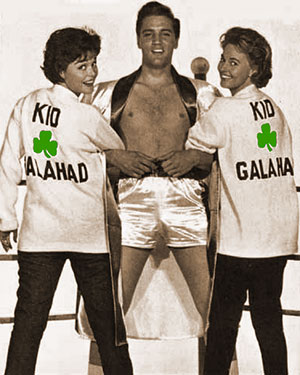
Kid GalahadHere’s a ranking of Elvis Presley’s lucky green songs – with a “Danny Boy” thrown in for good measure.

#1 Danny Boy (1976)
From Elvis Presley Boulevard, Memphis, Tennessee

#2 Good Luck Charm (1961)
Elvis’ Golden Records, Volume 3

#3 Hard Luck (1965)
Frankie And Johnny

#4 Green, Green Grass Of Home (1975)
Elvis Today

#5 Beginner’s Luck (1965)
Frankie And Johnny

#6 I Got Lucky (1961)
I Got Lucky

#7 A Little Bit Of Green (1969)
From Memphis To Vegas/From Vegas To Memphis

I must be doing something right, because it turned out to be seven songs. Have a fun day, everyone.

The Audition

Witness one anxious singer as she enters her final audition, in a place located just north of… the edge of reality.

When was the last time she had truly auditioned for anything? She could not remember. As she sat in the little lobby, waiting her turn, someone continued pounding the piano in a bombastic style in the next room, just beyond a closed door.

Over the piano, she could also hear a male voice. “I need your love,” the captivating voice sang. He sounded so familiar, but she could not place him. “God… speed your love… to… me,” he finished on a high note and added a flourish of piano keys.

No trace of doubt. No trace of strain. Every note perfect.

Was this her competition?

How could she top that?

She hated that she had to ask those questions. At one time, it would not have mattered. Her voice would have carried her well beyond any challenger. But now, things were different.

Dressed in blue, the guard rose and fished through dangling keys on a ring before inserting one into the doorknob. “You can go in,” he said, holding the door open for her.

“You really have this place locked down. You must get a lot of crime here.”

“No, not exactly,” he said, and ushered her inside.

She walked into a large, dim studio. The only thing cutting through the darkness was a single spotlight, shining down on a young man sitting before a grand piano.

“Hello?” her voice squeaked. After hearing the awe-inspiring song from the lobby, she was completely nervous. So much for all the practicing.

“I’m ready when you are,” he said.

She could not even remember what she planned to perform.

As if sensing this, the young man began playing a quiet melody. She knew the song. She had practically grown up singing it.

“Yes, Jesus loves me…” she began singing. She knew immediately. Her voice, her gift, was finally back. Like it was before. Full of joy, she wanted to cry, but she kept going, “…for the Bible tells me so.”

The song seemed to come from within her. The more she sang, the more she realized this was not like before. Even then, she had not been able to sing like this.

She wanted to go on singing forever, but she soon came to the end of the song. She realized she was now within the warmth of the spotlight, too. The young man behind the piano was smiling.

“Have we met? You seem so familiar,” she said.

“Yes, but you were just a little girl back then.”

She laughed. “When I was a little girl? You’re not even half my age, you know.”

“It depends on the day,” he said. “And, by the way, welcome to the show.”

“You mean, I made it? I’m in? No call-backs?”

His blue eyes sparkled in amusement. “You made it as soon as he let you through that door,” he said.

“Then, what was all this?”

“I just wanted to hear you sing. Back then, I had to go, before I ever had the chance. Your voice is so powerful.”

“I know… I don’t know where that came from.” The tears began flowing from her eyes.

“Honey, don’t cry.” His voice was suddenly different, like that of a father. She looked at him again, and he seemed older. She felt younger, like she was six-years-old again.

She recognized him now.

His hands began playing another melody on the keyboard. An old country song. His voice boomed as he sang, “In the twilight glow, I see her…”

He stopped and said, “That new strength in your voice, part of it comes from joy, you see. Your music brings happiness to millions of people, and now you have all of that joy within you. They are sharing it with you.”

She understood now. “But I did so many things wrong,” she said.

“So did I,” he said and shook his head, lost in thought for a moment. “So did all of us.”

“Then, how did we make it here?” she asked.

“Our audience is very forgiving.”

“He’s here with us?”

“He always has been, Whitney. He always has been,” said Elvis.

Two legends, united in destiny and still making music on… the edge of reality.

[With apologies to Serling.]

The Audition


Last Saturday night, I was browsing through some of my favorite sites before I went to bed. I checked The Sheila Variations blog for any new pieces. The top story featured an embedded video of Whitney Houston singing “The Star-Spangled Banner.”

The story had no text, but Sheila’s headline was simple, effective, and haunting: How I Will Always Remember Her.

The words sent a chill through me. Why would she title her post something like that? My heart did not want to know, but my mind understood exactly what it meant.

Still feeling cold, I went to Yahoo News and confirmed the worst. Whitney Houston was dead. As I began to read the story, I queued up “The Greatest Love Of All,” the first Whitney song I’d ever heard. Memories of being a fifth-grader in elementary school came flooding back. My teacher, a gifted educator and vocalist, sang this to us one day and told us all about a young singer named Whitney Houston.

Next up, I played “I Will Always Love You,” a song that Whitney simply owned. No one, not even the songwriter, can sing that one like Whitney did in her prime. Not even close.

I’m not going to pretend I’ve been a huge Whitney Houston fan for all of these years. For a period of time in the early 1990s, though, she was one of my favorite singers. Eventually, I overplayed her albums and moved on to other artists.

I didn’t follow her as closely after that, but I still rooted for her. I was sorry to learn of her struggles, and I was always hoping that, somehow, she would work things out and stage a huge comeback.

“Now, she won’t get her comeback,” is actually one of the first things I thought about when learning she had passed away. In fact, that thought was the beginning of the above short story.

The night Whitney Houston died, I concluded my impromptu tribute by playing the “Star-Spangled Banner.” I remembered watching the live television broadcast of Super Bowl XXV in 1991 when she performed what would soon become the gold standard against which all other versions of the National Anthem are judged.

The song ended, but before I could close iTunes, Whitney’s version of “America The Beautiful” began. I just couldn’t turn it off, so I considered it an encore.

Farewell, Whitney. Thank you for the music.


This post is dedicated with respect to the memory of Whitney Houston, 1963-2012. Her music lives on.

Elvis Today Blog reviews Elvis Today album

Mike Hermenet, who contributed a guest post here on The Mystery Train just a few weeks ago with a very popular review of FTD’s Promised Land, has now offered up another fine piece of writing. This time, he’s guest blogging over at Elvis Today Blog.

Elvis TodayAfter nearly five years, isn’t it about time that the Elvis Today Blog reviewed the Elvis Today album?
Mike has stepped up and done just that. Check it out over on Elvis Today Blog: Bringing It Back.

Fantastic work, Mike.

Some Elvis songs go from rumor to reality

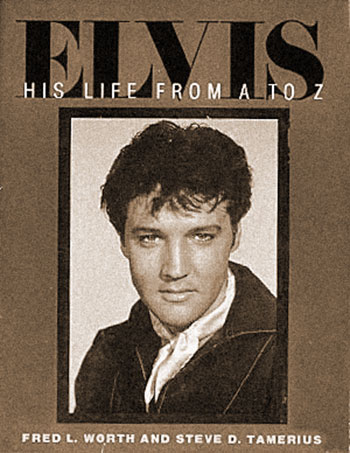
As I’ve mentioned before, the first Elvis reference book I ever owned was the 1992 edition of ELVIS: His Life From A To Z by Fred L. Worth and Steve D. Tamerius. The oversized hardcover contains 620 pages of Elvis information, presented in an encyclopedia-like format.

It is divided into three main sections:

  • The Man – people, places, things, and trivialities in his life
  • The Performer – movies, television appearances, radio shows, and concerts
  • His Music – songs, albums, bootlegs, and other music-related items

Elvis His Life From A To Z (Worth and Tamerius)I used to spend hours flipping though this book. Twenty years later, it is literally falling apart at the seams. A lot of the information is now outdated, and these days there are better Elvis references (though multiples are needed to replace this single volume), particularly online – but I still pull it out every now and then.

One of the areas I spent the most time in over the years was the Songs sub-section of His Music. For each song, the book presents background information, such as the writer, the original artist recording details, Elvis recording information, and single, LP, and bootleg releases.

Some of the songs listed did not have releases at the time. Those were the ones I found most interesting, for I wondered if I would ever get to hear them. The book notes that the recording information is as of June 1, 1990. Think of all of the Elvis recordings released since that time. Pretty much the entire Ernst Jorgensen era has taken place since then.

I thought it might be fun to take a look at some of the many songs that the book lists as either unreleased or only rumored to exist that have since been officially released.

Blowin’ In The Wind: The book states that “Elvis sang ‘Blowin’ in the Wind’ in concert on a few occasions in the 1970s.” If true, I’m not aware of any live recordings surfacing of this song. However, two different 1966 home recordings of Elvis singing “Blowin’ In The Wind” have since been released on A Life In Music and In A Private Moment.

The Cattle Call: A to Z says that Elvis sang this one “in concert on at least a couple of occassions in the 1950s.” If so, that remains unreleased. However, A Life In Music and One Night In Vegas have since included two different rehearsal (really, “just foolin’ around”) versions of this song from 1970. It also featured in the 1992 video Elvis: The Lost Performances.

Dominick: At the time, this movie tune from Stay Away, Joe, was only available on bootleg. It has since been released officially on Double Features: Kissin’ Cousins/Clambake/Stay Away, Joe.

Fool, Fool, Fool: “It’s been reported by some that Elvis recorded ‘Fool, Fool, Fool’ while at Sun Records. No proof of that has yet come forth,” states A to Z. A 1955 acetate of this song was later released on The King Of Rock ‘n’ Roll.

Happy Birthday To You: The book notes that Elvis occasionally sang this tune in concert. Various live performances have since been released, including one on Collectors Gold from 1969 (to James Burton).

I’ll Never Stand In Your Way: Elvis’ second demo, recorded in 1954, consisted of this song and “It Wouldn’t Be The Same Without You.” At the time of A to Z, the recording had not yet surfaced. It wrongly lists “Casual Love Affair” as the B-side. “Reportedly, a tape of the acetate still exists,” the book states. “I’ll Never Stand In Your Way” was first released on A Life In Music. “It Wouldn’t Be The Same Without You” later appeared on Sunrise.

I’m Leavin’ It All Up To You: Listed as only available on bootleg back then, a rehearsal version has since surfaced on Stage Rehearsal.

Jambalaya: Listed as only available on bootleg, a brief, 1975 live performance of this song has since been released on Southern Nights.

My Happiness / That’s When Your Heartaches Begin: Elvis’ first demo recording from 1953 was also not yet released at the time of A to Z. Here’s an interesting snippet from the text, “At the time of this writing, plans are to release ‘My Happiness’ / ‘That’s When Your Heartaches Begin’ on the soundtrack of a two-video package, Elvis’ Greatest Hits, Volumes 1 & 2, a joint venture of Disney’s Touchstone Films and RCA.” Apparently, this project became the two-video set Elvis: The Great Performances (1990). “My Happiness” featured in both the video and the soundtrack CD. However, the demo version of “That’s When Your Heartaches Begin” would not be released until 1992’s The King Of Rock ‘n’ Roll.

A Little Less Conversation: While a studio master and an alternate of this song were of course released during Elvis’ lifetime, the book mentions, “An instrumental track was recorded for the 1968 TV special ‘Elvis,’ but it was decided not to use the song in the program.” It would later turn out that Elvis did indeed record a vocal for the song for possible use in the ELVIS special, as first released on 1998’s Memories. In turn, this would later become the basis of the “Elvis vs. JXL” remix version of the song that first featured in a 2002 Nike commercial during the World Cup and later achieved international hit status with a single release and on the album ELV1S 30 #1 Hits.

MacArthur Park: Listed as only on bootleg, Elvis singing a few lines of this song live in 1968 has since surfaced on a few official releases, including Tiger Man.

Poor Man’s Gold: A to Z notes that an instrumental track was recorded for one of his 1969 American Sound Studio sessions, but that he never recorded the vocal. Since then, a line or two of Elvis singing the song was released on Suspicious Minds.

Portrait Of My Love: Listed at the time as only available on bootleg, a rehearsal version has since been released on Stage Rehearsal.

Running Scared: A to Z states that Elvis recorded this song during the 1976 Graceland sessions. I’m not sure if that’s true, but a line or two of the song from 1970 have been released a couple of times since then, including on Walk A Mike In My Shoes.

The Twelfth Of Never: According to the book, a live concert version of this song was released on the bootleg Elvis Special, Volume 2. More than likely, this is actually referring to the August 16, 1974, rehearsal of this song that first became officially available on Walk A Mile In My Shoes.

When The Snow Is On The Roses: Out of all of the above songs, the one that fascinated me the most when flipping through this book in the 1990s was “When The Snow Is On The Roses.” It was only available on bootleg at the time, but the text stated, “Elvis sang ‘When The Snow Is On The Roses’ with only his own piano accompaniment on August 24, 1970, in Las Vegas. It was the first time that he played the piano in concert.” A photo included with 1992’s King of Rock ‘n’ Roll that showed Elvis playing piano during a 1956 concert quickly proved part of the text wrong. In any event, this 1970 audience recording later received an official release on Live In Las Vegas. It was wonderful to finally hear it.

There are a ton more rumor songs listed in A to Z that we have not yet heard. Perhaps they don’t exist. Or, perhaps, in another twenty years, some other Elvis fan will be able to do a list like the above.

Sayaka having fun with Elvis

I don’t normally post links to videos of other people singing Elvis songs. These Sayaka Alessandra videos are just so much fun, though, that I thought you might want to check them out, too.

“Baby, Let’s Play House” (2009) – Sayaka Alessandra

“Return To Sender” (2008) – Sayaka Alessandra

“Cross My Heart And Hope To Die” (2010) – Sayaka Alessandra

“Blue Moon” (2010) – Sayaka Alessandra

That’s what being an Elvis fan is all about! If you enjoyed the above videos as much as I did, you can also hear Sayaka do formal versions of the Elvis songs “That’s All Right” and “You Don’t Know Me” on her album Love Me Light, available on iTunes and Amazon. For more information on Sayaka, check out her site.

[Thank you to Francesca for making me aware of Sayaka.]