Readers,
I sincerely hope you like my new FTD Album review.
My best wishes,
Tygrrius
A review of the new FTD edition of From Elvis Presley Boulevard
The Original Album
Long-form essays and analytical pieces that represent deeper explorations of Elvis, his work, and his cultural legacy. These posts cut across categories and eras and reflect moments where a subject warranted sustained focus.
Readers,
I sincerely hope you like my new FTD Album review.
My best wishes,
Tygrrius
The Original Album
This is Part 4 of an ongoing series reviewing Elvis: The Complete Masters Collection. Read Part 3.
This volume of The Franklin Mint‘s 36-disc Elvis: The Complete Masters Collection (mastered by Vic Anesini) presents songs falling under the theme of “Heartache.” The booklet describes this disc as “Twenty haunting melodies that reveal Elvis’ familiarity with the darker side of love.”
Heartache is certainly a theme Elvis revisited often in his recordings over the years. Many of my favorite Elvis songs would probably fit into this category, so I’m excited to give Heartache a spin.
01. That’s When Your Heartaches Begin: Elvis actually first recorded “That’s When Your Heartaches Begin” as a demo at the Memphis Recording Service in 1953. This is his professional version, though, recorded four eventful years later for RCA. He does a masterful job with the song, including the spoken-word recital in the middle – a technique that he would perfect even further a few years later with the similar “Are You Lonesome Tonight.” (Recorded: 1957)
02. Don’t: If you listen too closely to the words to “Don’t,” it can actually sound creepy from a modern perspective:
“Don’t, don’t,” that’s what you say each time that I hold you this way. When I feel like this and I want to kiss you, baby don’t say “don’t.”
This song should be judged within the context of innocence from which it sprang, though. The Jerry Leiber & Mike Stoller song features masterful lyrics, indicative of the quality of material Elvis lost out on when his association with that team ended. “Don’t” includes a quite beautiful and sincere love pledge:
I’m your love and yours I will stay. This you can believe, I will never leave you, Heaven knows I won’t.
Oddly, this track has about ten seconds of extra silence at the end once the song concludes – not reflected in the runtime on the CD sleeve, either. (1957)
03. Are You Lonesome Tonight?: “Are You Lonesome Tonight” is an Elvis masterpiece, recorded shortly after the end of his stint in the US Army. Listen to that voice. He was back, better than ever. (1960)
04. Starting Today: “Starting Today” is the first of four songs written by Don Robertson that appear on Heartache. This is a quiet, likable song. (1961)
05. (Marie’s The Name) His Latest Flame: “His Latest Flame” is one of three Doc Pomus songs on this disc. “His Latest Flame” is fantastic and includes a much-needed increase in tempo over the opening songs of Heartache. (1961)
06. Anything That’s Part Of You: Another Don Robertson song, “Anything That’s Part Of You” is as relevant to broken relationships today as it was when first recorded. This is a perfect, subtle performance by Elvis. (1961)
07. Just Tell Her Jim Said Hello: It’s hard for me to believe this weak number is from Leiber & Stoller, yet it is. “Just Tell Her Jim Said Hello” sounds like it should be a movie tune. (1962)
08. Suspicion: Doc Pomus delivers the goods again, this time with the fantastic “Suspicion.” I first heard this song on a cassette variant of Elvis Country and have loved it ever since. (1962)
09. She’s Not You: “I’d trade all of someone new for anything that’s part of you,” lamented Elvis in “Anything That’s Part Of You.” On “She’s Not You,” though the writers are different, he continues that theme: “She’s everything a girl should be, but she’s not you.” For this song, Doc Pomus teamed up with Leiber & Stoller, ensuring a sure-fire hit when also combined with another great performance by Elvis. The original pressing of Franklin Mint’s Elvis: The Complete Masters Collection contained an error on this track – the last several seconds were missing. They issued replacement discs and subsequent pressings (including mine) have not had this error [6]. (1962)
10. They Remind Me Too Much Of You: More from the pen of Don Robertson, “They Remind Me Too Much Of You” again continues the theme of “Anything That’s Part Of You” and “She’s Not You,” except now the singer has reached the stage where he wants all reminders of the love gone wrong wiped away. Robertson’s lyrics are masterful at portraying the anguish: “Must I evermore be haunted, day after day my whole life through, by the memory of each moment that I spent alone with you?” (1962)
11. What Now, What Next, Where To: “What Now, What Next, Where To,” while still lamenting a lost love, manages to strike some hopeful tones as well. This is the fourth and final Robertson composition on Heartache, wrapping up this mini-storyline as the singer finally moves on. I have to give the compiler credit for putting all of these songs together, actually making for a coherent album of sorts. (1963)
12. Blue River: I can’t stand this song and hardly ever play it. The sooner “Blue River” ends, the better. (1963)
13. It Ain’t No Big Thing (But It’s Growing): I had to go and say that, didn’t I? As soon as “Blue River” ends, an even worse song begins, “It Ain’t No Big Thing.” While Elvis’ June 1970 marathon recording session in Nashville produced some of the best songs of his career, it also produced junk like “It’s Ain’t No Big Thing.” Nearly unlistenable. (1970)
14. I’ve Lost You [Live]: After two duds in a row, Elvis’ live version of “I’ve Lost You” is a welcome reprieve. While not as interesting as the studio version, this is still a fine performance in its own right. I love how his voice nearly blends with the Sweet Inspirations as the chorus repeats at the song’s end. (1970)
15. When I’m Over You: Like most songs, “When I’m Over You” is better than “It Ain’t No Big Thing,” but it is still one of the weaker songs from the 1970 Nashville sessions. I do enjoy the gospel sound that the background vocalists bring to the song. (1970)
16. I Will Be True: Accompanying himself on piano, Elvis takes on the Ivory Joe Hunter song “I Will Be True.” A decent performance, with much conviction. (1971)
17. Love Me, Love The Life I Lead: Elvis did not write this song, but it sure sounds like he could have:
If you’re gonna love me, love the life I lead. Need the things I need. Don’t try to change me. If you’re gonna take me, take me for what I am. I can’t be another man. I can’t be free from the life I lead.
Unfortunately, though Elvis must have connected with the lyrics, the song never really develops – a good song that probably could have been better. (1971)
18. Thinking About You: Featured on the Promised Land album and recorded at Stax Studio in Memphis, “Thinking About You” is one of Elvis’ best country songs. Wow, does it sound great on this set. Nice to have the original mix back. (1973)
19. Mr. Songman: “Mr. Songman” is a decent album cut that also served well as the flip-side to 1975’s “T-R-O-U-B-L-E.” (1973)
20. Woman Without Love: “Woman Without Love” is the worst of the songs Elvis recorded at his March 1975 Hollywood session that produced the very solid Today album. Unless I’m listening to the entire album in context, I always skip this dreadful song. (1975)
Though it contains a few duds (this is a complete masters collection, after all), Heartache is overall a stellar collection of songs. The early 1960s tracks in particular are real highlights.
(6) “Complete Masters compared/contrasted with Franklin Mint” by elvissessions, For Elvis CD Collectors Forum, 2010.
This is Part 3 of an ongoing series reviewing Elvis: The Complete Masters Collection. Read Part 2.
Volume 5 of The Franklin Mint‘s 36-disc Elvis: The Complete Masters Collection (mastered by Vic Anesini) presents the 1973 concert album Aloha From Hawaii via Satellite as well as bonus songs recorded for insertion into the NBC version of the Elvis: Aloha From Hawaii TV special.

This disc features the original mix of the 1973 double album. In 1998, BMG/RCA released a CD with a new mix and mastering by Dennis Ferrante. At that time, I tried to keep my Elvis CD collection consolidated. Since I much preferred the new mix, I gave away my older Aloha From Hawaii via Satellite CD with the original mix. Therefore, I do not have anything to make fair sound comparisons against for this CD. These days, I put more stock into owning the original mixes as released during Elvis’ lifetime than I did back then.
Elvis recorded all songs on the Complete Aloha From Hawaii Concert on January 14, 1973. Though it aired live in some parts of the world, Aloha From Hawaii did not air in the United States until April 4 of that year. To this day, many Americans wrongly believe they saw the special live. In reality, it had an even longer “tape delay” than NBC’s abysmal Summer Olympics 2012 coverage.
01. Also Sprach Zarathusta/02. See See Rider: “Also Sprach Zarathustra” (used as the theme for 2001: A Space Odyssey) was the perfect way to open Elvis concerts in the 1970s. This is a particularly fine version, beginning with low rumbles and building into a fantastic crescendo as Elvis appears on stage and quickly rocks into “See See Rider.” Listen to James Burton’s guitar work on the solo, sounding better than I remember it.
03. Burning Love: Elvis moves right into another rocker, “Burning Love.” The sound on this CD is so incredible, I can already tell I may go back to this mix when I want to listen to Aloha, over the 1998 version. Elvis just kills the song on the end during the “Hunka’ hunka’ burnin’ love” segment. What a fantastic opening to the live broadcast. Sounding sheepish, Elvis quietly tells the audience after the song, “Good evening, and I hope you enjoy our show tonight. We’re gonna try to do all the songs you wanna hear, you know.”
04. Something: For this third song of the international event, Elvis launches into a Beatles number, “Something.” The performance is okay, but a bit of a letdown after the concert’s stellar opening. Wow, this CD sure does sound awesome, though. It can make an okay song sound a little better.
05. You Gave Me A Mountain: Elvis had first tackled Marty Robbins’ “You Gave Me A Mountain” while on tour in 1972, including one performance used in the 1972 documentary Elvis On Tour. While this version is a step down from that one, Elvis still sounds great here.
06. Steamroller Blues: Next up, Elvis takes on James Taylor with “Steamroller Blues,” adding some much-needed energy back into the show. Elvis earned a top 20 hit when RCA released this performance as a single (backed with the 1972 studio cut “Fool”). Authentic to the original album (the end of side 1), the CD fades on the applause after the song ends.
07. My Way: As with the original album, “My Way” begins with the piano strains, leaving out Elvis’ introduction of the song. This is a fine, though not very compelling, version of the Frank Sinatra hit. In the first six songs of his live event, Elvis has already tackled the blues, rock ‘n’ roll, the Beatles, country, James Taylor, and Frank Sinatra.
08. Love Me: Before the song, Elvis mentions that he’s planning to do a medley of his records later in the show, to which an audience member shouts, “Do all of them!” Elvis hears this and replies, “Okay, I’ll do it, all 429 of ’em. I’ll do it.” He then dips back into his own catalog for a disappointing version of 1956’s “Love Me.” The song borders on being a throwaway, which is a shame.
09. Johnny B. Goode: James Burton carries this Chuck Berry classic on guitar, as Elvis forgets some of the lyrics early on (the song was added to fill time when a rehearsal revealed the planned show was too short). Still, Elvis rocks the song and the show benefits from its inclusion.
10. It’s Over: “I’ll watch you walk away somehow, I have to let you go, because it’s over,” Elvis sings in what must have been another heart-wrencher for him, as his own marriage was ending at this time. Unfortunately, “It’s Over” is otherwise forgettable.
11. Blue Suede Shoes: It’s back to rock ‘n’ roll, this time with a rousing but short rendition of Carl Perkins’ “Blue Suede Shoes.”
12. I’m So Lonesome I Could Cry: Elvis introduces the Hank Williams classic “I’m So Lonesome I Could Cry” as “the saddest song I’ve ever heard” and proceeds to do a commendable job.
13. I Can’t Stop Loving You: Next, Elvis moves right into “I Can’t Stop Loving You.” Though the arrangement is the same, Elvis sounds much more subdued here compared to the rocking version found on the previous year’s As Recorded At Madison Square Garden.
14. Hound Dog: Elvis then launches into a perfunctory version of “Hound Dog,” lasting a mere 45 seconds and leaving me to wonder, “Why bother?” As with the record, the CD fades out shortly after the song ends, leaving out Elvis’ joke about first performing that song when he was twelve-years-old.
15. What Now My Love: Elvis gets serious again and puts more effort into “What Now My Love” than his own hit material. This is one of the highlights of the show, and the sound quality on this CD makes it shine even more.
16. Fever: Maybe it’s because I heard this one first, but I’ve always preferred this live version of “Fever” over Elvis’ 1960 recording of the song for the Elvis Is Back! album. The song just works better in a concert setting. I also see this as the point in Aloha From Hawaii where Elvis finally shakes off the rest of his nerves and really loosens up – making for a better second half to the show.
17. Welcome To My World: This is a lightweight song that serves as a breather for Elvis between “Fever” and “Suspicious Minds.”
18. Suspicious Minds: Growing up, the first versions I heard of “Suspicious Minds” were on this album and the similar one released on As Recorded At Madison Square Garden. It took me a long time to become accustomed to the studio version. While I now prefer the studio and early live versions best, I still enjoy the 1972 and 1973 versions. Great to hear Elvis rocking on one of his more contemporary hits.
19. Introductions By Elvis: I’m not going to start reviewing band introduction tracks, but I will point out that this is the edited version as released on the original album (i.e., Elvis calling Charlie Hodge a “general flunky” and later mentioning Hawaii Five-O star Jack Lord have been omitted).
20. I’ll Remember You: Also omitted is Elvis explaining that proceeds from the concert would benefit the Kui Lee Cancer Fund. “I’ll Remember You,” first recorded by Elvis in 1966, was written by Kuiokalani Lee, who passed away from cancer that same year. The lyrics take on even more signficance if you listen with that in mind: “I’ll remember you long after this endless summer is gone. I’ll be lonely, oh so lonely, living only to remember you.” Though a decent live version that matches the mood of the show, “I’ll Remember You” really does not live up to Elvis’ 1966 recording – both in terms of the vocals and the percussion.
21. Long Tall Sally/Whole Lotta Shakin’ Goin’ On: The closest thing the show gets to the promised medley is this combination of Little Richard’s “Long Tall Sally,” which Elvis recorded in 1956, and “Whole Lotta Shakin’ Goin’ On,” popularized by Jerry Lee Lewis in 1957 and recorded by Elvis in 1970. While the medley works in the show and picks up the pace as needed, both songs pale next to Elvis’ studio efforts. “Whole Lotta Shakin’ Goin’ On” in particular has a completely different, watered-down arrangement compared to Elvis’ version from less than 3 years earlier.
22. An American Trilogy: Reportedly, when asked what kind of costume he wanted for the live broadcast, Elvis noted that he wanted something that said “America.” The custom-designed American Eagle jumpsuit fit the bill visually, while “An American Trilogy” sealed the deal on the musical side. This is both the climax of the show and the most impressive performance on the album. An argument could even be made that this moment was the climax of his career as well. Though not evident on the record, Elvis throws his jewel-studded belt into the audience shortly after this song.
23. A Big Hunk O’ Love: Serving as a bookend of sorts with the similar “Burning Love,” Elvis reaches back to 1958 for this hit and serves up a great rendition. If only he had treated his other classics with this respect for this show. “A Big Hunk O’ Love” provides a powerful rock ‘n’ roll ending for the live broadcast.
24. Can’t Help Falling In Love: Finally, Elvis closes out the show with a quick version of “Can’t Help Falling In Love.” It is not in the same league as his 1968 or 1969 live versions, but it almost does not matter at this point. The power of the overall concert wins out, and it ends in utter excitement. What a performer.
25. Blue Hawaii [Re-recording]: For the NBC version of the special, Elvis recorded several “insert” songs without an audience to extend the length of the special. This is a fine version of the title song to his 1961 movie Blue Hawaii.
26. Ku-U-I-Po [Re-recording]: The remaining songs on this CD were first released after Elvis’ death, on the 1978 album Mahalo From Elvis. Though they are technically outside of the parameters of Franklin Mint’s Elvis: The Complete Masters Collection, I am happy to have them as bonuses. This is a great re-recording of “Ku-U-I-Po” from Blue Hawaii.
27. No More [Re-recording]: Though recorded for the NBC version of the show, “No More” actually went unused. The visual portion of this performance was first released on DVD in 2004. This is another strong re-recording of a song from Blue Hawaii.
28. Hawaiian Wedding Song [Re-recording]: “Hawaiian Wedding Song” was featured in the finale of Blue Hawaii. Elvis does another good job on this re-recording. Perhaps he should have performed one or two of these Blue Hawaii songs during the actual concert. Why not drop “Welcome To My World” or “It’s Over” for one of these? (Other than the fact that the other two songs had never been released before by Elvis.)
29. Early Mornin’ Rain [Re-recording]: Though Elvis had first recorded it only two years earlier, this re-recording of “Early Mornin’ Rain” has a different vibe. I enjoy both versions. Again, this would have made a great number for the actual concert.
The sound is terrific, and so is the show. This will now become my go-to edition of Aloha From Hawaii.
* * *
I was about 13-years-old before my older brother would allow me to touch his record collection. As a small child, I had a bad habit of accidentally destroying his stuff (Star Trek posters, a trumpet, and pretty much anything else I could get my curious little hands on), so his records were off limits for a long time.
Of his fifty or sixty Elvis albums, the one I considered the most special was Aloha From Hawaii via Satellite. I was sure at the time that this was the greatest Elvis concert ever. Though I could name dozens of live recordings now that would top it, I did relive some of that youthful exuberance when listening to the Complete Aloha From Hawaii Concert. While I do not have the older release to compare, I am sure this album has never sounded better on CD.
* * *
With thirty-one CDs still to go, continue to look for future installments here on The Mystery Train Blog.
This is Part 2 of an ongoing series reviewing Elvis: The Complete Masters Collection. Read Part 1.
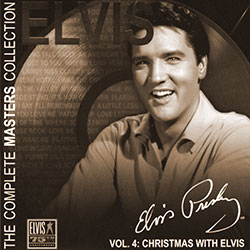
We haven’t finished the summer yet, folks, but why not take a break from the heatwave to enjoy a Christmas-themed review?
This volume of The Franklin Mint‘s 36-disc Elvis: The Complete Masters Collection (mastered by Vic Anesini) presents nearly all of the Christmas songs that Elvis released during his lifetime (a live version of “Blue Christmas” appears on a later disc).
Christmas With Elvis contains each of the Christmas songs featured on Elvis’ Christmas Album (1957), his 1966 Christmas single, and Elvis Sings The Wonderful World Of Christmas (1971).
01. Blue Christmas: I think of “Blue Christmas” as the “Hound Dog” of Elvis Christmas songs. It’s the one the general public most associates with him. It is an okay recording and certainly appropriate to kick off this CD. I wish it had less or no backing vocals, though. I much prefer his live versions from 1968. (Recorded: 1957)
02. White Christmas: “Blue Christmas” does not transition very well into “White Christmas,” but the compiler has once again taken the easy way out and confined the song sequencing of this disc to recording order. I’m actually not a huge fan of “White Christmas” by Elvis. For this one, my go-to versions tend to be those by The Drifters (whose 1954 recording inspired the Elvis one) or Burl Ives (1965). Incidentally, this track differs from the one released during Elvis’ lifetime in that a finger-snap near the beginning of the song has been omitted (5). I must admit, I would never have noticed such a small detail on my own. That’s the wonder of the For Elvis CD Collectors Forum. (1957)
03. Here Comes Santa Claus (Right Down Santa Claus Lane): You’ll be happy to know that no finger-snapping has been omitted from this terrific version of “Here Comes Santa Claus.” I love how Elvis swings some of the lyrics. (1957)
04. Silent Night: I probably would have saved “Silent Night” for the closer, but what a beautiful recording. For the gentle voice of a 22-year-old to convey this kind of passion and conviction speaks volumes about the faith of Elvis Presley. (1957)
05. O Little Town Of Bethlehem: On the other hand, Elvis’ version of “O Little Town Of Bethlehem” tends to wear on me a bit. Like “White Christmas,” it is an okay performance, but nothing special. Nat King Cole’s 1960 recording tends to be my go-to version of this one. (1957)
06. Santa Bring My Baby Back (To Me): It’s more finger-snapping fun on “Santa Bring My Baby Back.” What’s not to love? (1957)
07. Santa Claus Is Back In Town: Here it is, not only Elvis’ best Christmas song, but also one of his best blues numbers – right up there with 1960’s “Reconsider Baby.” When it comes to Elvis performances, they do not get much better than “Santa Claus Is Back In Town.” Incredible. (1957)
08. I’ll Be Home For Christmas: Elvis delivers yet another stunning performance on his classic version of “I’ll Be Home For Christmas.” This also would have worked as a great album closer. Sound quality is noticeably cleaner here than it was on 1994’s If Every Day Was Like Christmas CD, my previous source. (1957)
09. If Every Day Was Like Christmas: Recorded just a couple of weeks after the session that produced the How Great Thou Art album, the unique “If Every Day Was Like Christmas” makes me wish Elvis had recorded a few more Christmas tunes at this time. This one seems to have slightly more reverb than my previous source on the same 1994 CD. As I’ve not seen any experts make note of this, I assume this reflects the original release. (1966)
10. It Won’t Seem Like Christmas: Flash forward five years now to May 1971 and the sessions that produced Elvis Sings The Wonderful World Of Christmas, my favorite of his Christmas albums. I used to write off “It Won’t Seem Like Christmas” as too depressing for a Christmas song, but it has definitely grown on me over the years. (1971)
11. If I Get Home On Christmas Day: Though it covers much the same theme as “It Won’t Seem Like Christmas,” “If I Get Home On Christmas Day” sounds much more hopeful. A very enjoyable performance. (1971)
12. Holly Leaves And Christmas Trees: Written by Elvis’ longtime friend Red West, “Holly Leaves And Christmas Trees” takes its place among the best of Elvis’ Christmas recordings. (1971)
13. Merry Christmas Baby [Album Master]: While it does not quite meet the stature of “Santa Claus Is Back In Town,” “Merry Christmas Baby” is another solid blues take on the holiday season by Elvis. This studio jam ran for well over eight minutes, about 5:45 of which appeared on the Elvis Sings The Wonderful World Of Christmas album. The single version, edited to 3:15, does not appear in The Complete Masters Collection. (1971)
14. Silver Bells: Elvis delivers a fine rendition of “Silver Bells,” a Christmas classic. (1971)
15. I’ll Be Home On Christmas Day: Written by Michael Jarrett (“I’m Leavin'”), “I’ll Be Home On Christmas Day” is a perfect Christmas song for Elvis. I put this one just below “Santa Claus Is Back In Town” as his best Christmas recording ever. Really, one of his best-ever songs, period. It is always a highlight of any album on which it appears. (1971)
16. On A Snowy Christmas Night: Though it does not often get mentioned, I love “On A Snowy Christmas Night,” especially the reminder to “Give thanks for all that you’ve been blessed with and hold your loved ones tight.” (1971)
17. Winter Wonderland: For some reason, many Elvis fans criticize this performance of “Winter Wonderland.” Even Thomas over at Elvis Today Blog, with whom I almost always agree, called it “spiritless.” I don’t hear it that way at all. Perhaps some feel this song should remain in the territory of a performer like Johnny Mathis, whose 1958 version is horrible. For me, Elvis owns “Winter Wonderland” – particularly by adding on his signature ending style. This sounds exactly like “Winter Wonderland” as interpreted by Elvis should: Perfect. (1971)
18. O Come All Ye Faithful: “O Come All Ye Faithful” is the “Silent Night” of the second Christmas album and is just as effective. This is a great arrangement, too. I love the percussion leading into “Sing choirs of angels…” (1971)
19. The First Noel: While I would not call it “spiritless,” Elvis does begin to sound a bit tired on “The First Noel.” To continue the comparison, “The First Noel” is the “O Little Town Of Bethlehem” of the 1971 album. Good, but not great. (1971)
20. The Wonderful World Of Christmas: It is strange that “The Wonderful World Of Christmas,” the weakest song of the 1971 Christmas album session, became the title track. It also does not serve very well as the closing track here. (1971)
As I stated last time, since The Franklin Mint has chosen to theme their CDs anyway, I would have preferred the compiler put more thought into the sequencing. It is much easier to intermingle Elvis’ Christmas music from different decades than many of his other recordings (also true of his gospel music), so this is a missed opportunity on this CD.
However, Christmas With Elvis at least gathers his Christmas masters in one place. It’s really hard to go wrong with an Elvis Christmas CD and this one is no exception. With upgraded audio, I’m all set for the Christmas season in a few months.
* * *
In Part 1 of this review, I mentioned that I was planning to frame the reproduction of the 1954 SUN 45 “That’s All Right” b/w “Blue Moon Of Kentucky” that came with this set. Here are the results, and it looks beautiful.
I’ve just obtained an RCA vintage-1977 edition of “Way Down” b/w “Pledging My Love” to hang beneath it. Just waiting for the frame to arrive.
Well, that’s four CDs down and … wow … thirty-two to go. Continue to look for future installments here on The Mystery Train Blog. I hope to finish within the next eight or nine years.
(5) “Re: Complete Masters compared/contrasted with Franklin Mint” by Claus, For Elvis CD Collectors Forum, 2010.
The package first arrived here 58 years to the day of Elvis Presley making his first record. However, I was not home to sign for it the afternoon of July 5. That would have been just too cool. Instead, on July 6, the special delivery successfully made its way inside my front door.
For over two years now, I have been living vicariously through reviews and other online postings of fellow fans who obtained either the budget-friendly Elvis: The Complete Masters Collection from The Franklin Mint or its rich cousin, Sony’s The Complete Elvis Presley Masters. Now, I can finally experience these masters for myself.
Sony’s The Complete Elvis Presley Masters (2010) is a 30-CD set containing 711 master recordings and 103 “rarities” (alternates, informal recordings, rehearsals, etc.). It also includes a 240-page book and a massive, foldout display case. For the most part, songs are sequenced in the order in which Elvis recorded them. Sony’s premium release is, no doubt, a luxurious and finely packaged collection of Elvis music.
Franklin Mint’s Elvis: The Complete Masters Collection (2009) is a 36-CD set that contains the same 711 master recordings, but none of the rarities. It includes a 24-page booklet, a record-player-inspired display case, and a reproduction of Elvis’ first single, the SUN record “That’s All Right” backed with “Blue Moon of Kentucky.” Each of the CDs has a theme, so songs often appear in a non-standard order.
Perhaps the packaging and sequencing of the Franklin Mint set are chintzy in comparison with the Sony version, but it does check in at about half the price. It also includes individual sleeves for the CDs, while the more expensive Sony version has them inserted into the cardboard of the display case. Both sets are occasionally on sale, so if you are in the market for either one, be patient and avoid paying full price.
Ultimately, once a good deal synched up with my budget, I chose the Franklin Mint set. I bought it well aware that the packaging and presentation would be lesser than that of the Sony set. “Never judge a book by its cover” is an adage I have long heeded. In this case, I decided to take a chance and hope that “Never judge a CD set by its packaging” would hold just as true.
For me, as always, it is all about the music. With this Franklin Mint set, I now have the identical 711 Elvis masters as presented on the Sony set. I have been buying Elvis CDs for over twenty years, so my music library already had nearly all of the masters in some form. Sound quality, mixes, and masterings vary widely in those two decades worth of CDs. My goal was to achieve a more uniform sound quality by upgrading my Elvis masters to Vic Anesini’s remastered versions from 2007.
Sony’s Elvis chief, Ernst Jorgensen, explains:
“In March of 2007 SONY decided to go through all Elvis masters […]. We retransferred everything [and] remastered all tracks including repairing as many clicks, pops, bad edits and dropouts as we could. Vic Anesini spent literally hundreds of hours on the project, as did Sebastian Jeansson, who worked as our audio consultant […] tirelessly pushing Vic and I to try new ways of improving the sound (1).”
Selections from the 2007 remasters have also appeared sporadically on other releases – including Elvis 75: Good Rockin’ Tonight, I Believe: The Gospel Masters, and various Legacy Edition releases. With some exceptions, I have attempted to avoid collecting these individual releases, as I have known I would eventually buy one of the full sets.
Most of the Anesini remasters feature the original mixes from Elvis’ lifetime. The most notable category of exceptions is that stereo mixes were favored over mono mixes for applicable 1960s and 1970s singles. I would love to hear a subsequent compilation with the original mono mixes to those singles. The mono singles released on the Legacy Edition of From Elvis In Memphis are terrific.
As with the masters, I already have all of the so-called “rarities” in my collection from other releases. Most reviews indicate that the sound upgrades on the rarities are negligible compared to that of the masters. Even with Sony’s larger set, the 711 masters are the real stars. [For the purposes of this discussion, I am going to defer to what Sony considers the 711 masters released during Elvis’ lifetime, rather than using my personal list.]

Now that The Complete Masters Collection is finally here, what am I going to do with it? To quote Elvis, “Just play it, man, play the @!#?@! out of it!”
No doubt, my next mission is to play all 711 tracks, some 31 hours of music. The real question is, in what order should I listen? It would seem that I have at least three options:
Originally, I was leaning towards recording order. However, using my existing library, I have previously explored Elvis’ lifetime releases in both release order and recording order.
Instead, I have decided to “embrace the themes” for my first listen to this set. After all, I bought the Franklin Mint set, not the Sony set, so I want to try it out in the manner they presented before changing it around to suit my tastes. Besides, I think it will be fun to listen to these songs in such a non-standard way.
Originally, I did not plan to write a formal review of the set. First of all, it is nearly three years old. Most people have already made up their minds as to whether to buy this one. Second, properly reviewing a 36-CD set is a massive undertaking. The closest thing I have done to this before is reviewing 2006’s Superman: The Ultimate Collector’s Edition, a 14-DVD set. My eleven-part review took me nine months to complete. That’s right, it takes women the same amount of time to have babies as does for me to review a Superman DVD set.
Forget Superman, though. This is Elvis! Not only that, but the 2007 remastering effort rates among the top three or four most important Presley projects since his death in 1977. How could I not take a moment, or several, to review them on my little blog devoted to Elvis?
So, a couple of years late, but just as enthusiastic as I would have been back then, I now begin my review of Elvis: The Complete Masters Collection.
The Franklin Mint set arrives relatively well-secured in a large white shipping box. The black display case comes bubble-wrapped and also surrounded in the box by four padded envelopes, labeled 1 through 4.
The first envelope contains the SUN record reproduction, the booklet, a needless certificate of authenticity, an equally needless welcome letter, and the first three CDs. Though I think this service is no longer available, Franklin Mint originally provided a subscription option for the set, where you could buy three CDs a month. Of course, the overall cost was more expensive that way. Since the first shipment to subscribers also included the display case and record, the first three discs are more like samplers with extremely short running times.
The subscription option also explains the relatively short running times of most other discs in the set. While the Sony set presents 814 tracks spread over 30 discs, the Mint spreads its 711 tracks over 36 discs. More discs meant the subscription lasted longer. The subscription model probably contributed as well to the decision to arrange the songs in themes rather than simply placing them in recording order. Otherwise, 1950s fans might have canceled out right after the last 1958 song, while 1970s fans may have tired of waiting to get to their favorite decade.
The remaining envelopes contain the other 33 discs. Each disc is housed in a lightweight card stock sleeve – reminiscent of the ones used in the ELVIS: The Complete ’68 Comeback Special CD set, but not as wide.
Each sleeve is individually shrink-wrapped. Unfortunately, two or three of the sleeves arrived with creases in them. I am not truly a “collector” as such, and the damage did not affect the actual CDs, so I was not concerned enough about this to request replacements, which I am sure Franklin Mint would have provided. Plus, I will not be upset when I inevitably damage one of the sleeves myself at some point since the set already has its first dents.
Though I know it has been criticized in some circles, I actually rather like the art design on Franklin Mint’s sleeve covers and disc labels. Incidentally, the back cover of each Franklin Mint CD sleeve includes RCA, Legacy, and Franklin Mint logos. Each disc contains the RCA and Legacy logos and is noted as a product of RCA/JIVE Label Group, a unit of Sony Music Entertainment.

If only Franklin Mint had invested another few dollars into the display case, it might have been special. At a glance, it appears like a quality item. The “gold”-embossed depiction of a classic Elvis pose on top is perfect. Though it includes a carrying handle, the fatal flaw of the case is that it inexplicably has no latch to lock the top.
Underneath the covers, things get worse. First, there is a faux record player illustration. Though I have no plans of leaving it there, the SUN 45 is apparently supposed to reside on it. Underneath this layer are the slotted compartments that house the CDs.
The CDs are difficult to place in the poorly-designed slots. The cheap slot trays also feel as if they could break away from the bottom of the display case at any moment. By the time I made it to disc 36, though, I finally had the hang of it.
The display case could have been so much more with just an inexpensive tweak or two. Instead, it is barely functional. Fortunately, I do not plan to remove the original discs very often.
The barebones booklet begins with a one-page, marketing-style introduction (uncredited). The remaining pages note the theme and track listings of each CD. Though this is probably the easiest way to find a specific song on the 36 discs, no one is buying this set in order to obtain this meager booklet. The booklet is noted as a product of Sony Music Entertainment.
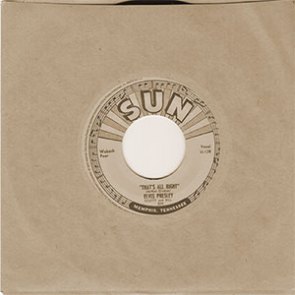
As I said before, my interest in this set is about the music. What better way to represent the music of Elvis Presley than to include a wonderful reproduction of the very record that started it all? This is the closest I can come right now to owning SUN 209: “That’s All Right”/”Blue Moon Of Kentucky” by “Elvis Presley, Scotty and Bill.” Given the shortcomings of the rest of this set’s accessories, this incredible record is a welcome surprise. In fact, I like it so much that I have ordered a frame for it. Maybe someday I can swap out this reproduction for the real thing.
Before I begin the actual CD reviews, I want to acknowledge the spectacular coverage of Vic Anesini’s remastering efforts on these 711 tracks over on the For Elvis CD Collectors forum. Members elvissessions, luckyjackson1, Matthew, Claus, and others are far more knowledgeable than I am on the particulars of the Elvis masters. While the opinions I present are my own, I have consulted their observations many times over to expand the context of my listening experience. Here are links to some of the relevant threads:
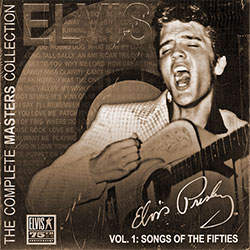
This volume gives a brief sampling of songs that Elvis recorded between 1954 and 1958. Appropriately, the image on the cover and CD is derived from his debut album, 1956’s Elvis Presley.
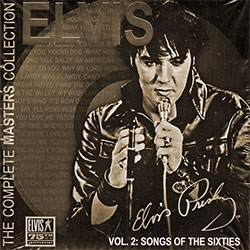
01. That’s All Right: And we’re off! This journey has a perfect beginning, too, with the A-Side of Elvis’ first record. There’s something special about “That’s All Right.” Though this was originally a blues number, you can hear the joy in his voice. (Recorded: 1954)
02. Heartbreak Hotel: Leaving the SUN years behind for now, the set now moves to the A-Side of Elvis’ first new record with RCA. I love Scotty Moore’s guitar solo on “Heartbreak Hotel,” segueing into Floyd Cramer on piano. (1956)
03. I Was The One: Flip “Heartbreak Hotel” over and you get one of my all-time favorites, “I Was The One.” You can definitely hear a new maturity in his voice here versus the raw SUN years. (1956)
04. Don’t Be Cruel: This is the A-Side of what was arguably his most popular single. In July 1956, with “Hound Dog” as the B-Side, Elvis fans must have had a hard time deciding which side of this record to play first. As for me, I’m definitely more of a “Don’t Be Cruel” kinda guy. Scotty Moore’s opening guitar lick sells this one right from the start. (1956)
05. When My Blue Moon Turns To Gold Again: Is it country? Is it rock ‘n’ roll? Does it matter? Though lesser known, “When My Blue Moon Turns To Gold Again” is one of those perfect “Elvis blend” songs, and his delivery oozes cool. (1956)
06. (There’ll Be) Peace In The Valley (For Me): While in the midst of a public controversy regarding rock ‘n’ roll, Elvis records a gospel EP – naturally. Though the song suffers from overexposure on too many compilations these days, “Peace In The Valley” features another stellar vocal performance from Elvis. (1957)
07. My Wish Came True: Six perfect songs in a row, and the title of this next tune reflects what I’m thinking. Unfortunately, though, the trend does not continue. Elvis receives much criticism for the overblown nature of some of his 1970s song arrangements, including the background vocalists. Overpowering background vocals on Elvis recordings did not begin in that decade, though, as evidenced by the positively obnoxious vocals of the Jordanaires and Millie Kirkham on “My Wish Came True.” I often wish for a “Jordanaires mute button,” but this is one of those times where I would like a “Millie Kirkham mute button,” too. A good song ruined. (1957)
08. Doncha’ Think It’s Time [Single Master]: It took me years to warm up to this song, but now I absolutely love it. This is Elvis at his coolest. Just listen to that laid-back, yet effective vocal. This is a case where a B-Side outshines the A-Side in terms of quality. (1958)
09. Wear My Ring Around Your Neck: What do you get when you take 45-seconds of mediocre song and repeat them three times? The boring “Wear My Ring Around Your Neck,” which was the A-Side of “Doncha’ Think It’s Time.” (1958)
10. I Got Stung: “I Got Stung” is a song that just tries too hard, bordering on parody at times. Notably, this is one of only five songs that Elvis formally recorded while in the Army. (1958)
While a very short CD, Songs Of The Fifties is comparable in length to albums of that time period (e.g., For LP Fans Only and 50,000,000 Elvis Fans Can’t Be Wrong). In the CD era, we have become accustomed to longer albums.
The disc does an effective job of presenting a high-level overview of his 1950s recordings, acting as a teaser for subsequent albums in the collection. It touches on the SUN era, his early RCA records, gospel, and his final professional recordings as he entered the Army. The only songs notably lacking are tunes from his first four movies. Sound quality is stellar throughout.
This volume samples 1960 through 1969. The famous cover shot is from the 1968 ELVIS television special, though none of its songs feature in this volume.
01. It’s Now Or Never: Based on the Italian song “O Sole Mio,” “It’s Now Or Never” became one of Elvis’ big hits after he returned from the Army. A good song, though I much prefer “Are You Lonesome Tonight” from the same era. (1960)
02. Blue Hawaii: The set’s first movie song, “Blue Hawaii” features Elvis in fine form. (1961)
03. Good Luck Charm: “Good Luck Charm” is one of those simple but fun songs that would have been right at home in his 1950s repertoire. (1961)
04. (You’re The) Devil In Disguise: Here is a terrific, 40-second song. Rather than fully developing beyond that, however, it just repeats over and over until it is long enough to be a single. I love the clap-filled instrumental break near the end of this hit, though. “Devil In Disguise” is not one of his greatest, but it is definitely a fun song. (1963)
05. What’d I Say: Wow, this song finally sounds as wonderful as I remember it from the vinyl days! My previous CD source, 1993’s Double Features: Viva Las Vegas/Roustabout, sounds abysmal and often makes me avoid this song. This huge sound improvement has me playing this one over and over now. Incredible. Ray Charles owns the definitive version of “What’d I Say,” of course, but there’s still much of interest here in this performance for Elvis fans. They could have toned down the kazoo a touch for my tastes, though. (1963)
06. I’m Yours [Single Master]: The single version of “I’m Yours” is actually new to me. Unlike the version from Pot Luck, the single lacks Elvis’ harmony vocals and recitation overdubs. Background instrumentation ruins both versions of “I’m Yours.” I hardly ever play the album version, and I doubt this single version will get much play, either. Still, it is an interesting variant to finally have in my collection. Maybe it is the sound quality and the relative “newness,” but after repeated plays, this one seemed to grow on me a little. Incidentally, to this point in the collection, all of the tracks within a particular themed CD have been presented in recording order. “I’m Yours” is the first that is out of sequence. I assume the compiler moved it here as a buffer so that the “dirty” “What’d I Say” would not have to transition right into the gospel “How Great Thou Art.” (1961)
07. How Great Thou Art: Elvis creates a true masterpiece with “How Great Thou Art,” one of his most beautiful recordings. The How Great Thou Art album went on to earn Elvis his first Grammy. I consider this session the opening round of the comeback. (1966)
08. I’ll Remember You: I first knew “I’ll Remember You” from the live version on Aloha From Hawaii. In fact, I wrongly thought for years that it was one of the “new” songs for that show. When From Nashville To Memphis came out in 1993, the studio version was a revelation to me. In addition to Elvis’ smooth vocals, I love Buddy Harman’s tympani work on this. (1966)
09. In The Ghetto: Hot off the heels of the ELVIS special, Elvis returned to the studio and the top of the charts. Though I prefer the alternate takes with simpler backgrounds, “In The Ghetto” is a classic not to be missed. (1969)
10. Kentucky Rain: “Kentucky Rain” is country, Elvis style, and another of his best-ever recordings. Listen to that musical “thunder” – reminiscent of “How Great Thou Art,” actually. (1969)
Elvis recorded more songs in the 1960s than any other decade. It is difficult to cover such a broad range of material with only 10 songs. Given that limitation, Songs Of The Sixties is effective. While the first disc started with a bang and ended with a fizzle, this one starts with a fizzle and ends with a bang.
You folks are pretty smart, so I bet you have already guessed that Songs Of The Seventies provides a sampling of songs Elvis recorded in the 1970s.
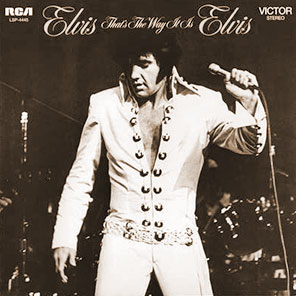
01. You Don’t Have To Say You Love Me: What a poor choice of song to begin this CD. Unfortunately, it seems the compiler continues to feel compelled to go in recording order within the confines of each disc. Why not take advantage of the theme concept and be a little more creative? That being said, “You Don’t Have To Say You Love Me” is a fine performance. It just should not be the leadoff track. (1970)
02. Love Letters [Re-recording]: This is not one of my favorite songs, no matter the version. I usually give this re-recording of “Love Letters” a slight edge over Elvis’ 1966 original, though. (1970)
03. Patch It Up: This is the version of “Patch It Up” that should have been included on the original That’s The Way It Is album, rather than the comparatively weak live performance. Great song. (1970)
04. We Can Make The Morning: This stunning performance is all too often overlooked. “We Can Make The Morning” starts out as a quiet, unassuming song and builds into a powerful vocal showcase. (1971)
05. Where Do I Go From Here: “”Where Do I Go From Here” is a good, but ultimately unremarkable, performance. Using these lyrics, I think Story Without Meaning would make a good album title, though. (1972)
06. Burning Love: How can the compiler include “Burning Love” on this CD and not use it as the leadoff track? Anyway, this is the song that proved to doubters that Elvis could still rock in the 1970s. “Burning Love” is one of those all-time classics that I just have to crank up each time it comes on. The mix on this is awesome, too! (1972)
07. It’s A Matter Of Time: Turn “Burning Love” over and you get its flipside, “It’s A Matter Of Time.” This is an okay song that works well as a B-Side. It offers pleasant enough support without overshadowing the A-Side. Oddly, this 10-song compilation includes a full half of the cuts released during Elvis’ lifetime from this 1972 studio session. Why not space them out a bit? (1972)
08. Raised On Rock: I searched for this song for years when I was growing up. I assumed it would be a rocker in the same vein as “Burning Love.” When I finally found a used 45 of it, I realized, boy, was I wrong. Ironically, “Raised On Rock” sounds more like country than rock ‘n’ roll. It is an all right song, but not one that I play too often. As Elvis once said, “That don’t move me.” (1973)
09. Promised Land: Unfortunately, this track begins with a flaw. The first split-second of “Promised Land” is missing. On FECC, this has been referred to as the “missing initial cowbell strike” (2), though I believe the beginning of the guitar lick is also chopped. I wondered if an absent cowbell strike would really make a difference for someone like me, who is not an audiophile. Now that I can play the track on my own system, yes, it is very obvious that the song starts in progress, and it does ruin the beginning of “Promised Land.” Sony corrected the issue in time for the subsequent pressing of the 4-CD set Elvis 75: Good Rockin’ Tonight. However, unbelievably, Sony issued its premium The Complete Elvis Presley Masters over ten months later with this error again present on “Promised Land” (3). Apparently, the “glass master” used to create the CD had already been finalized for that release well in advance (4). For one of Elvis Presley’s best performances, of any decade, I find this completely unacceptable – particularly on a premium release like the Sony set. In reality, they should have fixed this one on both sets. For what it is worth, the rest of the track sounds terrific. You will want to source it from Good Rockin’ Tonight, though. Can you imagine if the first split-second of “Don’t Be Cruel” had been chopped off? I guarantee, glass master or not, this would have been fixed. For me, “Promised Land” should be treated the same way. In fact, I personally like “Promised Land” more than “Don’t Be Cruel.” A sacrilege, I know. (1973)
10. Bringin’ It Back: “Bringin’ It Back” is one of Elvis’ most modern-sounding recordings. This beautiful song is my absolute favorite of the Hollywood sessions that produced Elvis Today. (1975)
And with that, the disc ends . . . because, as we all know, Elvis did not record anything after 1975. Oh wait! That’s right, the 1976 Graceland sessions and the 1977 live recordings have been snubbed on Songs Of The Seventies.
Out of the three sampler discs, this one seems the most haphazard – as if the compiler really did not “get” Elvis in the 1970s. Overall, it is a disappointing disc – made worse by the error on “Promised Land.”
Speaking of “Promised Land,” why would someone include both “Promised Land” and “Burning Love” on the same disc of a 36-CD collection? Elvis recorded so few rockers in the studio in the 1970s, yet two of them are used up right off the bat here on a 10-song CD. “Promised Land” (complete with the first cowbell strike) should have been saved for a later disc, while a much more representative 10-song sampler for the 1970s should have been compiled.
Though not as cohesive as the first two volumes, Songs Of The Seventies manages to work only because of the strong Elvis performances.
* * *
What is really important here, though, is not the thematic song selections or the sequencing, but the sound, the sound, the sound. Sometimes, I wish I were an audiophile, because I might be able to more effectively communicate to you how incredible it is to hear all of these songs – recorded over a span of some 21 years – in such a uniform and pristine sound quality.
However, I am not going to lie to you. While I could tell at least a slight difference on most songs, on some songs, I could not hear any difference compared to my existing CD versions from 2006 or earlier. To an extent, the point of these masters is to duplicate the sound of the original releases from Elvis’ lifetime. With that in mind, it is probably to be expected that there is not a huge difference on every single track. In addition, I am sure my amateur ears are missing many subtleties.
For me, the most striking upgrade so far is “What’d I Say.” I just keep playing that one. It is like rediscovering an old friend.
“Rediscovering old friends,” maybe that best sums up being on this new journey through Elvis’ complete masters. Look for future installments here on The Mystery Train Blog.
(1) “Re: ISRCs ‘Franklin Mint Set’ (Selected Discs Only)” by Ernst Jørgensen, For Elvis CD Collectors Forum, 2009.
(2) “Re: Complete Masters compared/contrasted with Franklin Mint” by elvissessions, For Elvis CD Collectors Forum, 2010.
(3) “Re: … and the BEST about the SONY BOX is … CONTINUED…” by luckyjackson1, For Elvis CD Collectors Forum, 2010.
(4) “Re: Out of a possible 10 – Rate the Complete Elvis Masters Box?” by Matthew, For Elvis CD Collectors Forum, 2011.
My favorite album released during Elvis Presley’s lifetime is That’s The Way It Is. First hitting record stores in November 1970, it features studio material from his June recordings in Nashville as well as four live cuts from his August Las Vegas engagement. It serves as a soundtrack of sorts for the excellent documentary of the same name, also released that month.
Despite the status I give it, the album is not perfect. Rock ‘n’ roll fans sometimes dismiss it as an easy-listening bore. One of the causes of that issue, I believe, is the sequencing of songs. Many of them should have been presented in a different order. For instance, the album unfortunately begins with a live version of the sleepy B.J. Thomas hit “I Just Can’t Help Believin'” and establishes the wrong tone.
Adding to the trouble, two of the live performances, “Patch It Up” and “I’ve Lost You,” are not as powerful as their studio counterparts, which should have been used instead. The studio recordings had been released as singles prior to the album, so the live versions were likely considered bonuses for fans that already had the 45s. The artistry of the album should have taken priority, though.
Apparently to complete the “feel” of a live album, RCA overdubbed applause on the end of the studio version of “Bridge Over Troubled Water,” which closed out That’s The Way It Is. Elvis’ vocals on the first verse of the song are also very faint in the mix, either on purpose or due to a technical glitch. You can better hear Elvis’ beautiful performance of this song, with his voice louder on the first verse and without the annoying applause overdubs, on Heart & Soul and the Elvis: Walk A Mile In My Shoes-The Essential 70s Masters boxed set.
Side 1
“I Just Can’t Help Believin'”
Live Master–8/11/1970 Dinner Show (DS): As noted above, the song does not serve well as an album opener. While it is misplaced on the album, the performance is strong. I love the little traces of humor in his voice. He sounds on the verge of laughing a couple of times. Also memorable is his interaction with the Sweet Inspirations throughout (“Sing the song, baby”). Elvis would never be quite as incredible again live as he was in this engagement.
“Twenty Days And Twenty Nights”
Master–Take 9: For me, this song represents the adult Elvis, the recording artist that is too often overlooked. “Twenty Days And Twenty Nights” is about a man who regrets leaving his wife, and Elvis evokes this character through music as well as any actor could on screen. The performance plays through the range of emotions, even striking a hopeful tone (“One day soon I’m going back…”) before falling back into despair as he laments “Oh, how I miss her,” over and over at the end.
“How The Web Was Woven”
Master–Take 3: The highlight of the album, “How The Web Was Woven” is a love song that ranks right up there with the better-known “Can’t Help Falling In Love.” From the acoustic guitar opening to the accompanying piano, the arrangement on this one works very well. “At last, I’m where you want me . . . Don’t you know that’s where, where I wanna be,” he sings with a passion that, for this listener anyway, exceeds even the incredible American Sound sessions in Memphis the year before.
“Patch It Up”
Live Master–8/12/1970 DS: Compared to the excellent studio take, this live version sounds almost like a throwaway. Watching this same energetic performance in the film, though, is an entire other experience.
“Mary In The Morning”
Master–Take 5: This is a pretty, if forgettable, love song. It goes on a bit too long and eventually becomes tiresome.
“You Don’t Have To Say You Love Me”
Master–Take 3: Though it is a fine performance, I would have chosen “How The Web Was Woven” or one of the others as a single over Elvis’ version of the Dusty Springfield hit.
Side 2
“You’ve Lost That Lovin’ Feelin'”
Live Master–8/12/1970 MS: This live performance is the definitive version of this song by anyone. This is Elvis at his best: “It makes me just feel like cryin,’ ’cause baby . . . something beau-ti-ful’s dy-in.'” The Righteous Brothers sound like they are singing a lullaby in the original recording compared to the Elvis version. Even Elvis was never able to equal his own performance again in other concerts.
“I’ve Lost You”
Live Master–8/11/1970 DS: While I love this live performance of “I’ve Lost You,” I prefer the studio version featuring more complicated lyrics and arrangement. That being said, this is still a highlight.
“Just Pretend”
Master–Take 3: Picking up where “Twenty Days And Twenty Nights” left off, this turns the despair of a man who left his lover and turns it back to hope for reconciliation. “Now I know, it was wrong to go, I belong there by your side,” he sings, bordering on the type of apology song that Elvis would perfect a couple of years later with “Always On My Mind.” The impressive “Just Pretend,” with a gospel-inspired arrangement, is another all-time favorite.
“Stranger In The Crowd”
Master–Take 9: This is yet another highlight. The band really cooks on this one. For some, Elvis Presley brings to mind “Hound Dog,” “Don’t Be Cruel,” “All Shook Up,” and similar tunes. While those are all fine, when I think of Elvis, I think of songs like “How The Web Was Woven,” “I’ve Lost You,” and “Stranger In The Crowd.”
“The Next Step Is Love”
Master–Take 11: Here’s one studio song where I actually prefer the live version. “The Next Step Is Love” is a little hokey either way, but the studio arrangement, complete with xylophone(!), does not help matters.
“Bridge Over Trouble Water”
Master–Studio Take 8 (with overdubbed applause): I stopped listening to the original album version of this song once RCA finally released a proper studio track. The one on this album simply does not do justice to his performance. The Heart & Soul version, though, I would contend as the best version of this song by anyone.
Upon its original release, That’s The Way It Is faced stiff competition from none other than Elvis himself. In their infinite wisdom, his record label released the following Elvis music in October and November of 1970:
Despite the oversaturation, That’s The Way It Is made it to number 21 on the charts and obtained gold record status. It probably would have done even better had fans not been so bombarded with Elvis product in the fall of 1970.

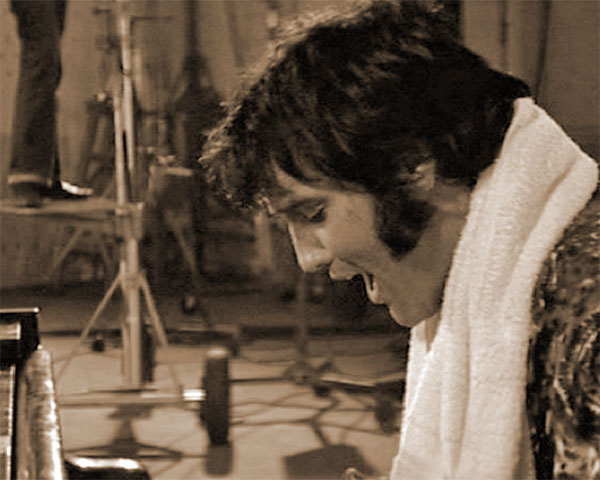
Elvis rehearsing How The Web Was Woven, 1970
While a wonderful album, That’s The Way It Is also would have been greatly improved if a couple of different song versions had been used and the album had been sequenced as below in my imaginary version of That’s The Way It Is.
Side 1
Side 2
No matter the order you listen, though, That’s The Way It Is represents a true Elvis masterpiece.
Portions of the above review originally appeared on my now defunct pop culture blog on May 21, 2008.
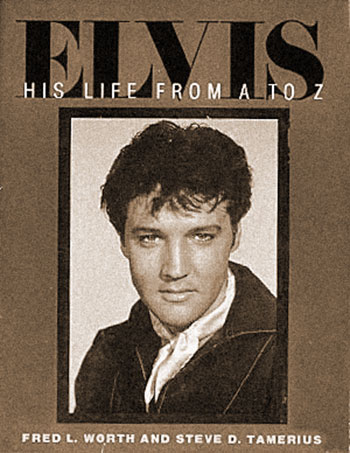
As I’ve mentioned before, the first Elvis reference book I ever owned was the 1992 edition of ELVIS: His Life From A To Z by Fred L. Worth and Steve D. Tamerius. The oversized hardcover contains 620 pages of Elvis information, presented in an encyclopedia-like format.
It is divided into three main sections:
I used to spend hours flipping though this book. Twenty years later, it is literally falling apart at the seams. A lot of the information is now outdated, and these days there are better Elvis references (though multiples are needed to replace this single volume), particularly online – but I still pull it out every now and then.
One of the areas I spent the most time in over the years was the Songs sub-section of His Music. For each song, the book presents background information, such as the writer, the original artist recording details, Elvis recording information, and single, LP, and bootleg releases.
Some of the songs listed did not have releases at the time. Those were the ones I found most interesting, for I wondered if I would ever get to hear them. The book notes that the recording information is as of June 1, 1990. Think of all of the Elvis recordings released since that time. Pretty much the entire Ernst Jorgensen era has taken place since then.
I thought it might be fun to take a look at some of the many songs that the book lists as either unreleased or only rumored to exist that have since been officially released.
Blowin’ In The Wind: The book states that “Elvis sang ‘Blowin’ in the Wind’ in concert on a few occasions in the 1970s.” If true, I’m not aware of any live recordings surfacing of this song. However, two different 1966 home recordings of Elvis singing “Blowin’ In The Wind” have since been released on A Life In Music and In A Private Moment.
The Cattle Call: A to Z says that Elvis sang this one “in concert on at least a couple of occassions in the 1950s.” If so, that remains unreleased. However, A Life In Music and One Night In Vegas have since included two different rehearsal (really, “just foolin’ around”) versions of this song from 1970. It also featured in the 1992 video Elvis: The Lost Performances.
Dominick: At the time, this movie tune from Stay Away, Joe, was only available on bootleg. It has since been released officially on Double Features: Kissin’ Cousins/Clambake/Stay Away, Joe.
Fool, Fool, Fool: “It’s been reported by some that Elvis recorded ‘Fool, Fool, Fool’ while at Sun Records. No proof of that has yet come forth,” states A to Z. A 1955 acetate of this song was later released on The King Of Rock ‘n’ Roll.
Happy Birthday To You: The book notes that Elvis occasionally sang this tune in concert. Various live performances have since been released, including one on Collectors Gold from 1969 (to James Burton).
I’ll Never Stand In Your Way: Elvis’ second demo, recorded in 1954, consisted of this song and “It Wouldn’t Be The Same Without You.” At the time of A to Z, the recording had not yet surfaced. It wrongly lists “Casual Love Affair” as the B-side. “Reportedly, a tape of the acetate still exists,” the book states. “I’ll Never Stand In Your Way” was first released on A Life In Music. “It Wouldn’t Be The Same Without You” later appeared on Sunrise.
I’m Leavin’ It All Up To You: Listed as only available on bootleg back then, a rehearsal version has since surfaced on Stage Rehearsal.
Jambalaya: Listed as only available on bootleg, a brief, 1975 live performance of this song has since been released on Southern Nights.
My Happiness / That’s When Your Heartaches Begin: Elvis’ first demo recording from 1953 was also not yet released at the time of A to Z. Here’s an interesting snippet from the text, “At the time of this writing, plans are to release ‘My Happiness’ / ‘That’s When Your Heartaches Begin’ on the soundtrack of a two-video package, Elvis’ Greatest Hits, Volumes 1 & 2, a joint venture of Disney’s Touchstone Films and RCA.” Apparently, this project became the two-video set Elvis: The Great Performances (1990). “My Happiness” featured in both the video and the soundtrack CD. However, the demo version of “That’s When Your Heartaches Begin” would not be released until 1992’s The King Of Rock ‘n’ Roll.
A Little Less Conversation: While a studio master and an alternate of this song were of course released during Elvis’ lifetime, the book mentions, “An instrumental track was recorded for the 1968 TV special ‘Elvis,’ but it was decided not to use the song in the program.” It would later turn out that Elvis did indeed record a vocal for the song for possible use in the ELVIS special, as first released on 1998’s Memories. In turn, this would later become the basis of the “Elvis vs. JXL” remix version of the song that first featured in a 2002 Nike commercial during the World Cup and later achieved international hit status with a single release and on the album ELV1S 30 #1 Hits.
MacArthur Park: Listed as only on bootleg, Elvis singing a few lines of this song live in 1968 has since surfaced on a few official releases, including Tiger Man.
Poor Man’s Gold: A to Z notes that an instrumental track was recorded for one of his 1969 American Sound Studio sessions, but that he never recorded the vocal. Since then, a line or two of Elvis singing the song was released on Suspicious Minds.
Portrait Of My Love: Listed at the time as only available on bootleg, a rehearsal version has since been released on Stage Rehearsal.
Running Scared: A to Z states that Elvis recorded this song during the 1976 Graceland sessions. I’m not sure if that’s true, but a line or two of the song from 1970 have been released a couple of times since then, including on Walk A Mike In My Shoes.
The Twelfth Of Never: According to the book, a live concert version of this song was released on the bootleg Elvis Special, Volume 2. More than likely, this is actually referring to the August 16, 1974, rehearsal of this song that first became officially available on Walk A Mile In My Shoes.
When The Snow Is On The Roses: Out of all of the above songs, the one that fascinated me the most when flipping through this book in the 1990s was “When The Snow Is On The Roses.” It was only available on bootleg at the time, but the text stated, “Elvis sang ‘When The Snow Is On The Roses’ with only his own piano accompaniment on August 24, 1970, in Las Vegas. It was the first time that he played the piano in concert.” A photo included with 1992’s King of Rock ‘n’ Roll that showed Elvis playing piano during a 1956 concert quickly proved part of the text wrong. In any event, this 1970 audience recording later received an official release on Live In Las Vegas. It was wonderful to finally hear it.
There are a ton more rumor songs listed in A to Z that we have not yet heard. Perhaps they don’t exist. Or, perhaps, in another twenty years, some other Elvis fan will be able to do a list like the above.